
Orquesta conocimientos de IA para convertirlos en acción

Tendencias
Categories
FG pledges sustained aviation reforms to boost jobs, investment

FG Pledges Sustained Aviation Reforms to Boost Jobs, Investment
The Federal Government of Nigeria has reaffirmed its dedication to ongoing reforms within the country’s aviation sector, with the objective of enhancing safety, modernising infrastructure, generating employment, and attracting investment. These initiatives form part of a comprehensive strategy to establish Nigeria’s aviation industry as a key driver of economic growth and global competitiveness.
Strategic Engagement and Sectoral Progress
At the Second Quarter 2026 Hybrid Stakeholders and Citizen Engagement on Presidential Priorities and Ministerial Deliverables in the Aviation Sector held in Abuja, the Minister of Aviation and Aerospace Development, Festus Keyamo, represented by the Ministry’s Permanent Secretary, Mahmud Adam Kambari, underscored the government’s commitment to transparency, accountability, and innovation. These principles align with President Bola Ahmed Tinubu’s Renewed Hope Agenda, which guides the sector’s reform agenda.
Kambari described the quarterly engagement as a vital platform for collaboration among government officials, industry operators, development partners, and citizens. It serves to assess progress, exchange ideas, and shape the future trajectory of Nigeria’s aviation and aerospace industry. He highlighted notable achievements, including improvements in aviation safety and security, expansion of critical infrastructure, modernisation of airports and air navigation systems, promotion of local content and employment, and enhancement of the passenger experience.
Navigating Global Challenges and Aligning with International Trends
The government’s reform efforts are unfolding amid significant global challenges affecting the aviation industry, such as rising operating costs, geopolitical uncertainties, and increasing demands for sustainability. Internationally, major airlines like Lufthansa and Air France-KLM are pursuing consolidation strategies to address these pressures, while companies such as Malaysia Aviation Group focus on workforce development and business diversification to build resilience. Similarly, Italy’s dnata is expanding permanent employment to improve airport operations and passenger services.
In response, Nigeria is actively engaging with leading aircraft manufacturers to modernise its fleet, aiming to bolster the capacity of local operators and align with global trends in sustainability and workforce development. Kambari emphasised the aviation sector’s critical role as an enabler of national development, facilitating trade, tourism, investment, regional integration, and global connectivity.
“The continued collaboration of government, private sector operators, development partners, and citizens is essential to building a resilient, efficient, and globally competitive aviation industry,” he stated.
Commitment to Standards and Future Directions
The engagement also provided a forum to review lessons learned, identify emerging challenges, and solicit stakeholder feedback to enhance policy implementation and service delivery. Kambari encouraged participants to contribute constructive recommendations and innovative ideas to support evidence-based decision-making and accelerate the Ministry’s strategic objectives.
Reaffirming the Federal Government’s commitment to meeting global aviation standards, Kambari assured that the Ministry would persist in pursuing policies designed to stimulate economic growth, create sustainable employment, attract investment, and deliver world-class services to both domestic and international travellers.
Presentations from various aviation agencies during the event highlighted progress in airport infrastructure development, staff capacity-building, aviation safety and security systems, and inter-agency collaboration. These agencies reiterated their dedication to full compliance with International Civil Aviation Organisation (ICAO) Standards and Recommended Practices, reinforcing efforts to build a safer, more efficient, and sustainable aviation industry.
Kambari expressed confidence that the outcomes of the engagement would translate into practical actions, strengthening collaboration and accelerating growth within the sector.

Etihad and Swissport Extend Global Partnership

Sepehran Airlines B737 Returns to Mashhad After Tyre and Engine Issues

Etihad Deploys Widebody Fleet to Meet Strong Demand

Korean Air Finalizes $36.2 Billion Deal with Boeing
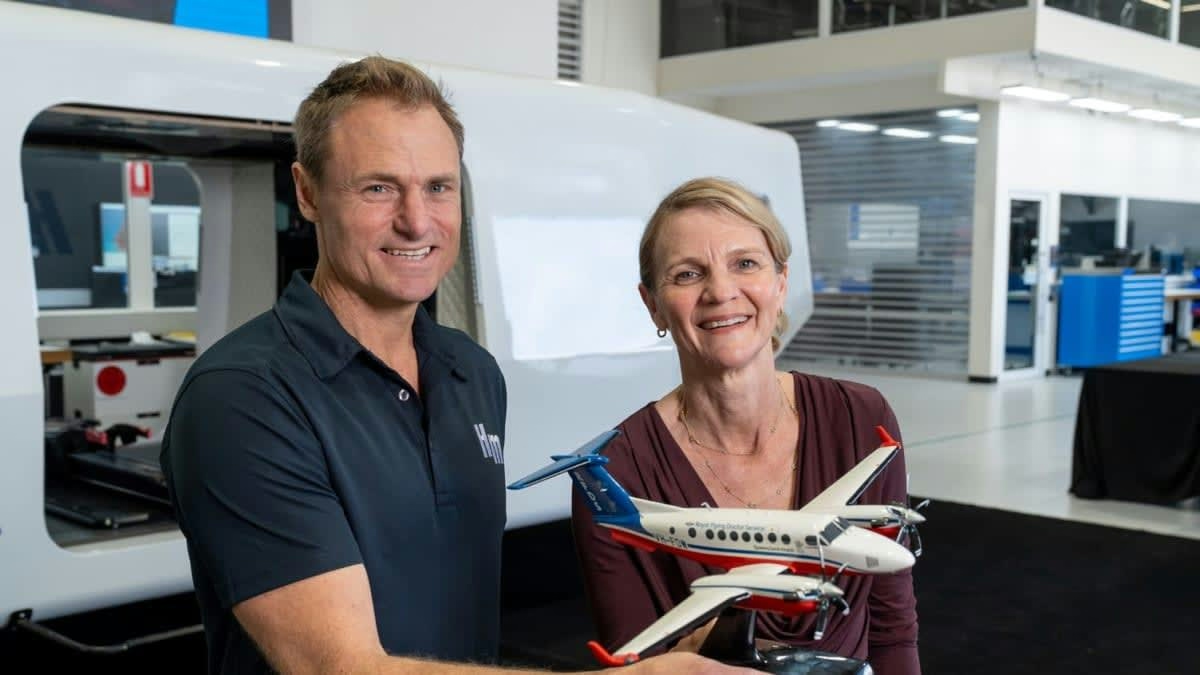
Australia’s RFDS Queensland Section Orders Six King Air 260Cs

Korean Air Finalizes Order for 103 Boeing Jets and Engines
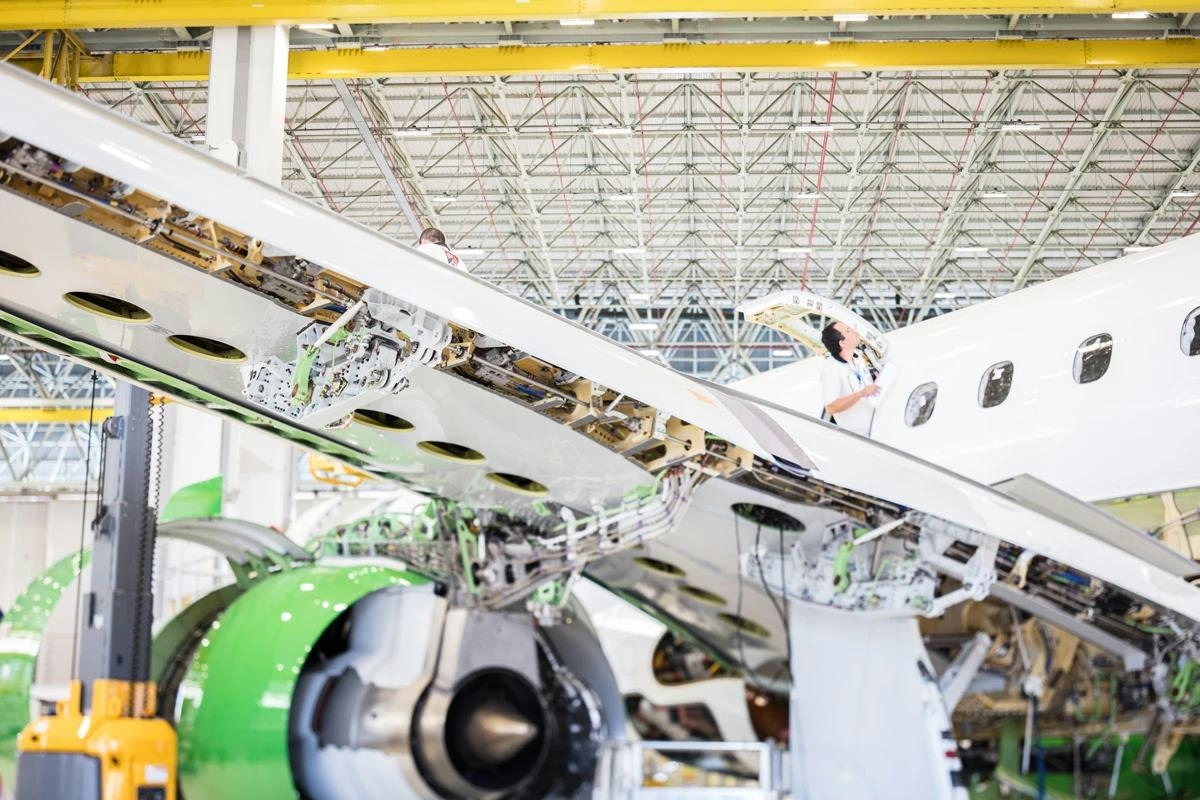
Embraer E195-E2 Features Distinctive Engine Placement Among Regional Jets

What Passengers Can Expect on Boeing’s New 777X Jet
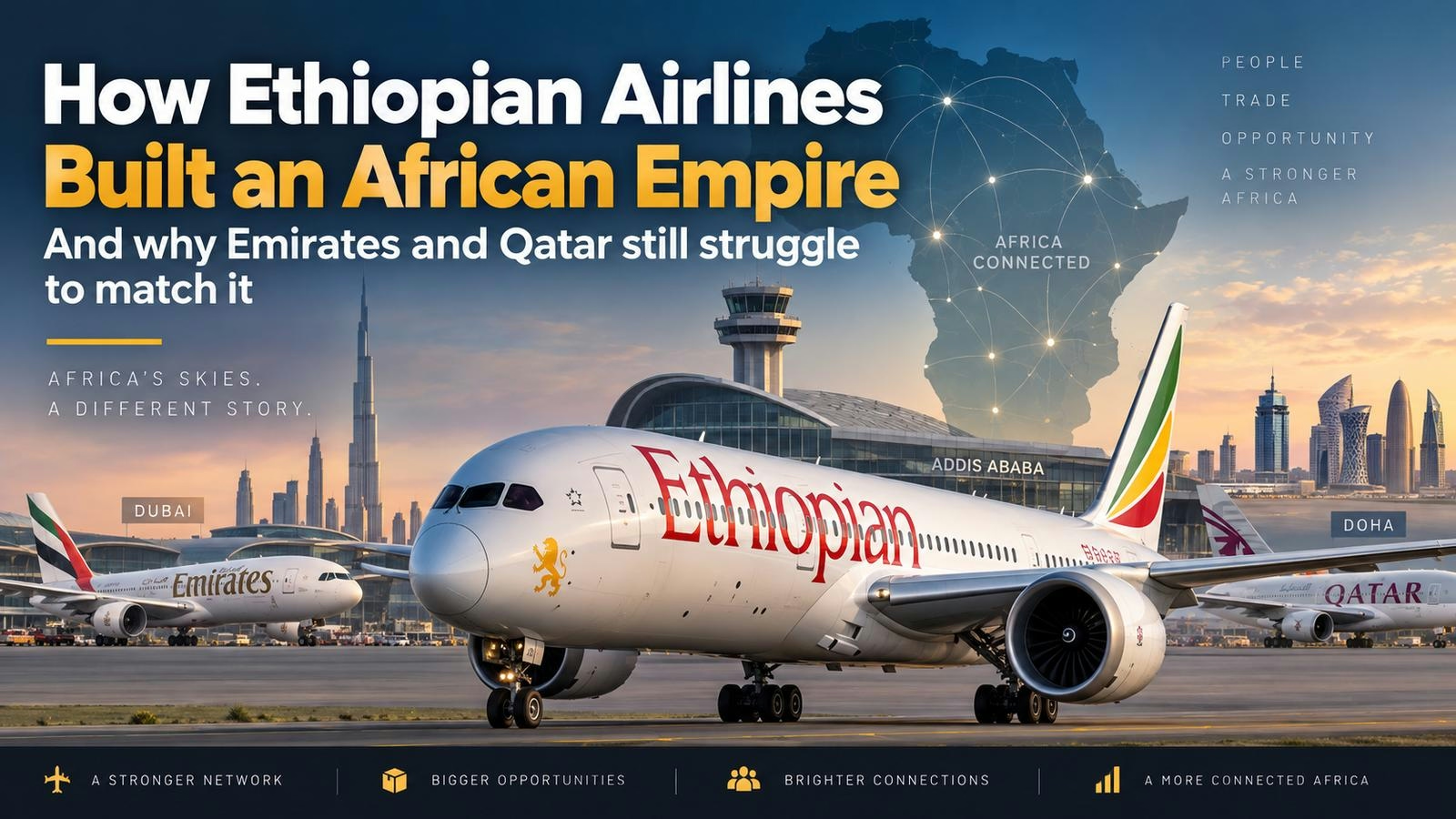
How Ethiopian Airlines Became Africa’s Leading Carrier Amid Gulf Competition

Joby Aviation Extends Autonomous Flight Capabilities with Cross-Country Tour
