
Orquesta conocimientos de IA para convertirlos en acción

Tendencias
Categories
GE Aerospace Announces Advance in Hybrid-Electric Flight Technology

GE Aerospace Advances Hybrid-Electric Flight Technology at Farnborough Airshow
Milestone in Hybrid-Electric Aviation
GE Aerospace announced a significant breakthrough in hybrid-electric aviation with the completion of the world’s first high-altitude flight assisted by hybrid-electric propulsion. The achievement was unveiled on July 20 at the Farnborough Airshow in England, marking a pivotal step toward the development of next-generation jet engines. The test flight, conducted above 30,000 feet using a Saab 340 aircraft, is part of a series of discreet trials that began in May. This aircraft, developed in collaboration with NASA and electric aerospace firm BETA Technologies, recently completed a transatlantic journey with multiple stopovers before its public debut at the event.
This development comes amid a competitive push among engine manufacturers to create technologies capable of powering future replacements for popular models such as the Boeing 737 and Airbus A320neo. Hybrid-electric propulsion, which integrates traditional and electric power sources, is viewed as a promising approach to enhance aircraft climb efficiency while reducing fuel consumption and emissions—critical objectives for the aviation industry’s sustainability goals.
Industry Collaboration and Technological Innovation
Kyle Clark, CEO of BETA Technologies, described the hybrid system as a crucial advancement in aviation propulsion during a news conference. The hybrid technology is one of four core research areas within the RISE engine concept, a project led by CFM International, a joint venture between GE and France’s Safran. Alongside hybridisation, CFM is exploring a radical open-fan engine design and a more conventional enclosed engine alternative known as AD-L or ADNB.
After years of presenting digital renderings and conceptual designs, engine manufacturers are now under increasing pressure to demonstrate tangible progress. Mohamed Ali, CEO of GE Aerospace Commercial Engines, emphasized this shift, stating, “Simulation has given way to real world innovation.” GE’s announcement arrives amid intensifying competition from rivals Pratt & Whitney and Rolls-Royce, both expected to provide updates on their engine research later in the week. This competitive environment is accelerating innovation, with GE recently raising its 2026 profit forecast, citing strong aftermarket services and robust parts spending from airlines. Market reactions have been positive, reflecting confidence in GE’s technological direction, though responses from competitors remain forthcoming.
Challenges and Industry Perspectives
Ali refrained from detailing how the high-voltage hybrid system—currently replacing one of the Saab 340’s conventional engines—might be integrated into future commercial products, noting only that it “certainly would become a significant enabling technology.” Industry insiders have observed that Boeing, which has shown less enthusiasm than Airbus for open-fan designs, has expressed concerns regarding the additional weight imposed by hybrid systems, particularly those requiring extra cooling inlets. Ali acknowledged that balancing weight and performance remains a standard challenge in engine development.
As the Farnborough Airshow progresses, attention remains focused on how GE Aerospace and its competitors will influence the trajectory of sustainable aviation through continued innovation in hybrid-electric propulsion and other emerging technologies.

Etihad and Swissport Extend Global Partnership

Sepehran Airlines B737 Returns to Mashhad After Tyre and Engine Issues

Etihad Deploys Widebody Fleet to Meet Strong Demand

Korean Air Finalizes $36.2 Billion Deal with Boeing
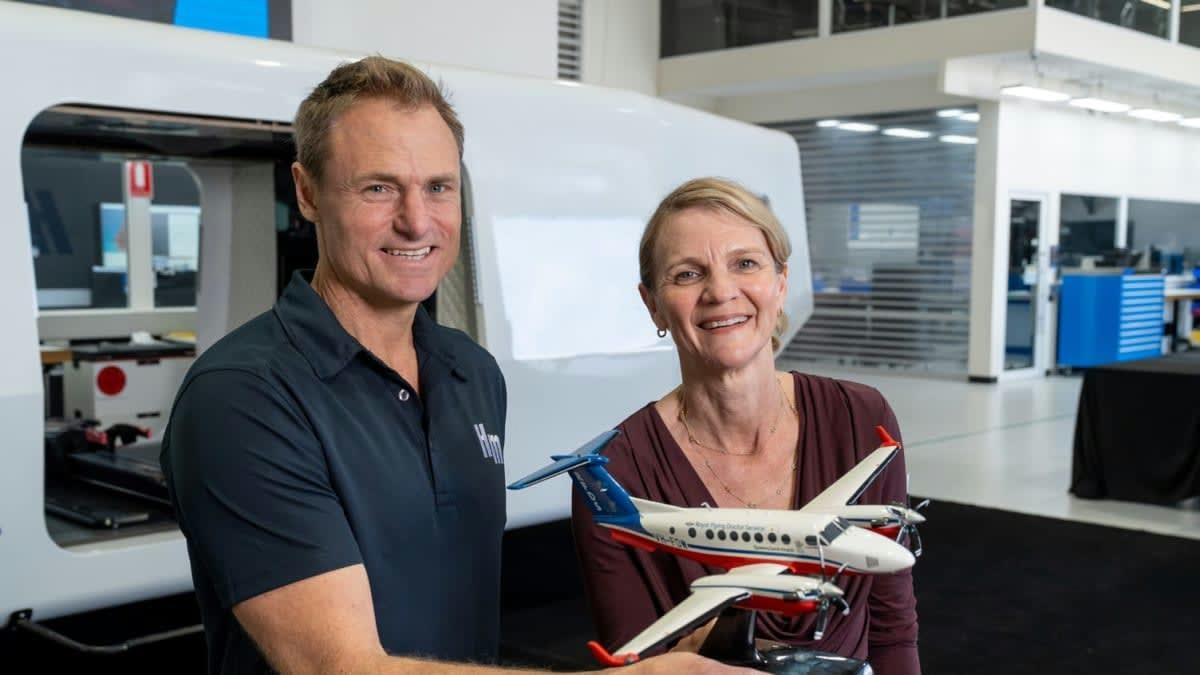
Australia’s RFDS Queensland Section Orders Six King Air 260Cs

Korean Air Finalizes Order for 103 Boeing Jets and Engines

Embraer E195-E2 Features Distinctive Engine Placement Among Regional Jets
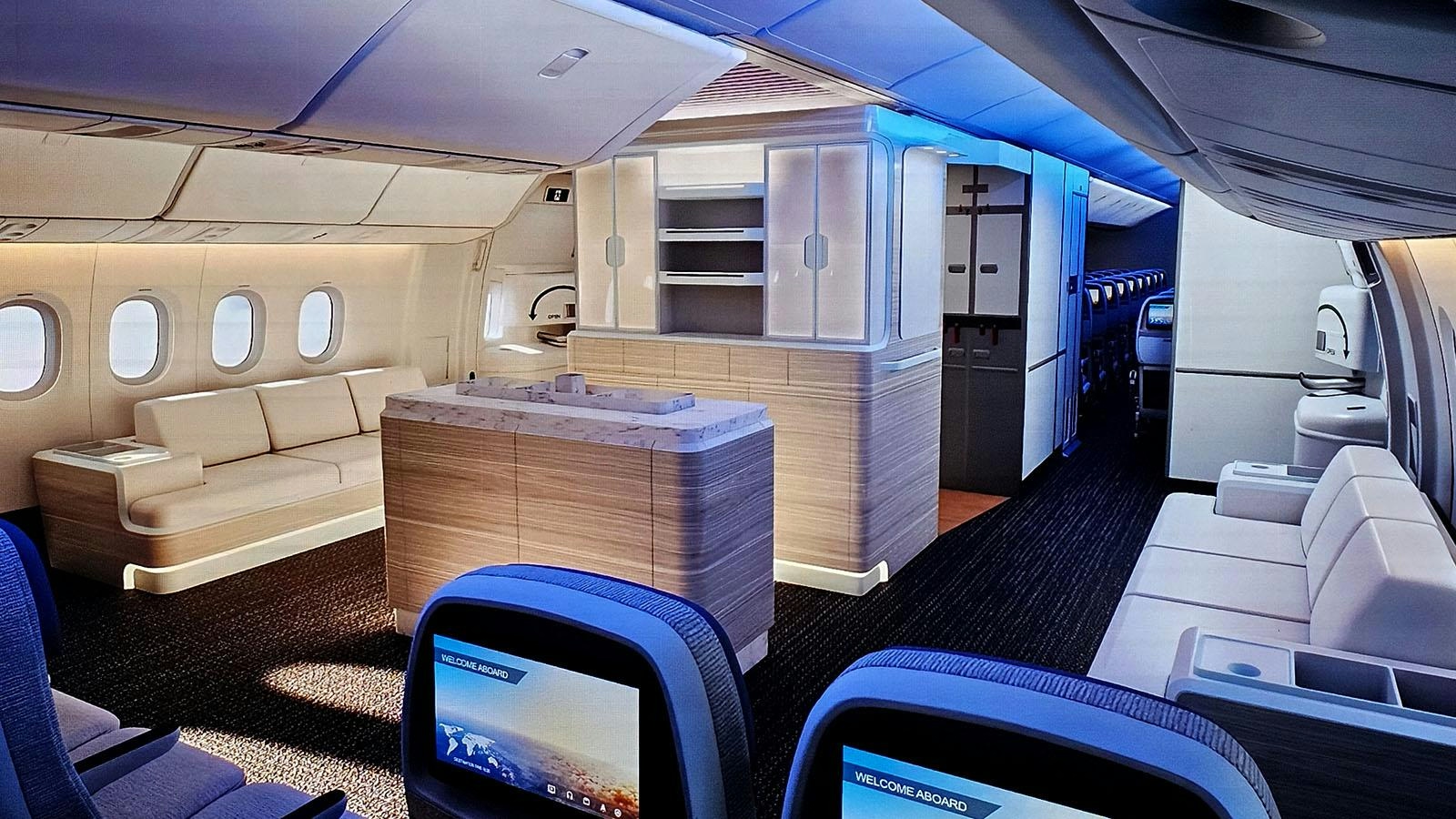
What Passengers Can Expect on Boeing’s New 777X Jet

How Ethiopian Airlines Became Africa’s Leading Carrier Amid Gulf Competition

Joby Aviation Extends Autonomous Flight Capabilities with Cross-Country Tour
