
Orquesta conocimientos de IA para convertirlos en acción

Tendencias
Categories
GE Aerospace Completes First Hydrogen Engine Altitude Restart Test
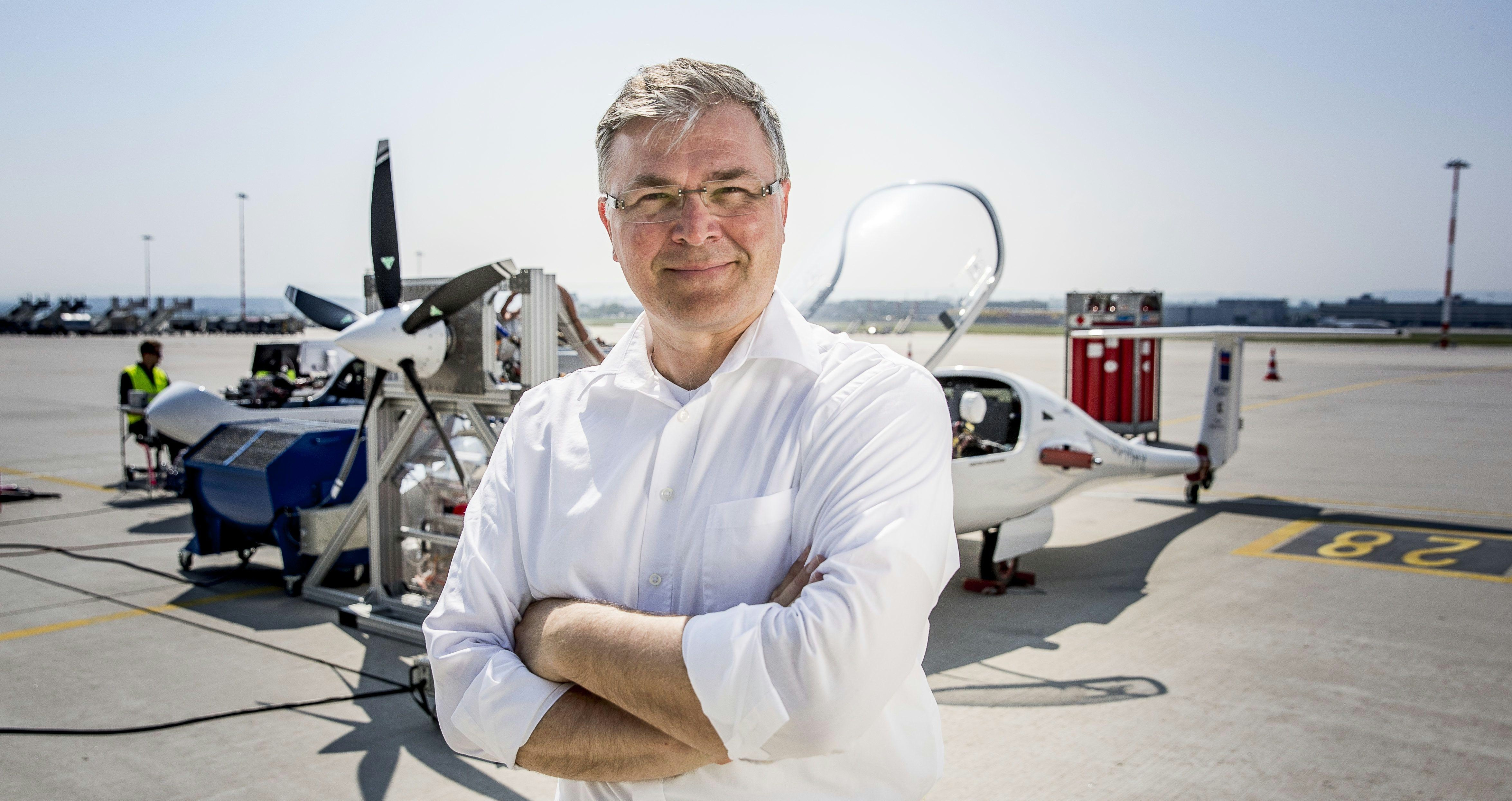
GE Aerospace Completes First Hydrogen Engine Altitude Restart Test
Pioneering Hydrogen-Powered Aviation
GE Aerospace, together with its subsidiary Avio Aero, has successfully completed the first engine restart test using hydrogen fuel under simulated high-altitude conditions. This milestone represents a significant advancement in the development of hydrogen-powered aviation. The test was conducted at the German Aerospace Center (DLR) Institute of Space Propulsion in Lampoldshausen, Germany, as part of the European Union-funded HYDEA (HYdrogen DEmonstrator for Aviation) project led by Avio Aero.
Hydrogen combustion poses unique challenges for aviation due to its faster and hotter burn characteristics compared to conventional jet fuel. One of the critical technical hurdles is ensuring reliable engine restarts in the thin, cold air encountered at high altitudes. To replicate these conditions, engineers employed a custom hydrogen sector combustor test rig equipped with a synthetic air generator that vaporizes liquid oxygen and nitrogen. This setup allowed for precise simulation of real-world altitude environments.
The test successfully established a relight operability envelope for hydrogen combustion. The ignition system, developed by Unison—a GE Aerospace company—performed as designed. Utilizing a multi-cup combustor configuration, the test rig provided a more representative geometry, enabling researchers to observe flame propagation and igniter interactions through high-speed cameras. The data collected will inform the design of a full annular hydrogen combustor rig, advancing the technology toward practical application.
Industry Implications and Future Prospects
This achievement supports the broader objectives of the CFM International RISE (Revolutionary Innovation for Sustainable Engines) technology demonstration program, a collaboration between GE Aerospace and Safran Aircraft Engines. The RISE program aims to demonstrate the viability of hydrogen propulsion for aircraft engines through ground testing by 2026. It targets a fuel burn reduction exceeding 20 percent compared to current engines by leveraging advanced architectures such as open fan designs, compact cores, and hybrid-electric systems. To date, the program has conducted over 350 tests and 3,000 engine cycles.
Concurrently, the Clean Aviation project AMBER has recently validated a megawatt-class fuel cell system at DLR’s BALIS facility, demonstrating its dynamic response and performance under simulated flight conditions. AMBER focuses on hybrid-electric propulsion by integrating fuel cells, power electronics, and electric drives tailored for regional aircraft.
Industry analysts have responded positively to these developments, emphasizing their potential to reduce emissions and operational costs. Nonetheless, GE Aerospace faces ongoing challenges in ensuring the reliability and efficiency of hydrogen engine technology, navigating regulatory and safety frameworks, and maintaining competitiveness against established aviation engine manufacturers. The progress made by GE is expected to accelerate similar hybrid and hydrogen engine development efforts across the industry.
Commitment to Sustainable Aviation
Luca Bedon, head of research and technology at Avio Aero, expressed pride in the collaborative efforts driving these innovations: “Avio Aero and GE Aerospace teams in Europe are proud to be at the forefront of new technology innovation. Together with our European partners and research institutions, we’re turning ideas into real, tested capability.” Roman Seele, future of flight leader for GE Aerospace in Germany, added, “The future of flight is more electric. We’re proud to partner with DLR and others around the world to advance the building blocks to help make hybrid-electric flight a reality.”
These advancements highlight GE Aerospace’s dedication to sustainable aviation and reinforce its position as a leader in the development of next-generation, low-emission propulsion technologies.

Etihad Airways Suspends Airbus A380 Flights on Key Route

Aditya Birla Group Seeks Approval for Aircraft Leasing in GIFT City

Qatar Airways Highlights Innovation and Connectivity at Arabian Travel Market 2026

Hong Kong's Five-Year Plan Includes Andrew Fan's Aircraft Parts Processing Hub Proposal

ACIA Aero Leasing Delivers ATR72-600 to Air Nostrum

RTX Appoints Jill Albertelli as Head of Pratt & Whitney

TAT Technologies Joins Beyond Aero Hydrogen Aircraft Program

AURAK Study Highlights Barriers to Air Taxi Adoption in Emerging Economies

Xiamen Air Selects Altitude for 787 Maintenance at Heathrow

Etihad and Swissport Extend Global Partnership
