
Orquesta conocimientos de IA para convertirlos en acción

Tendencias
Categories
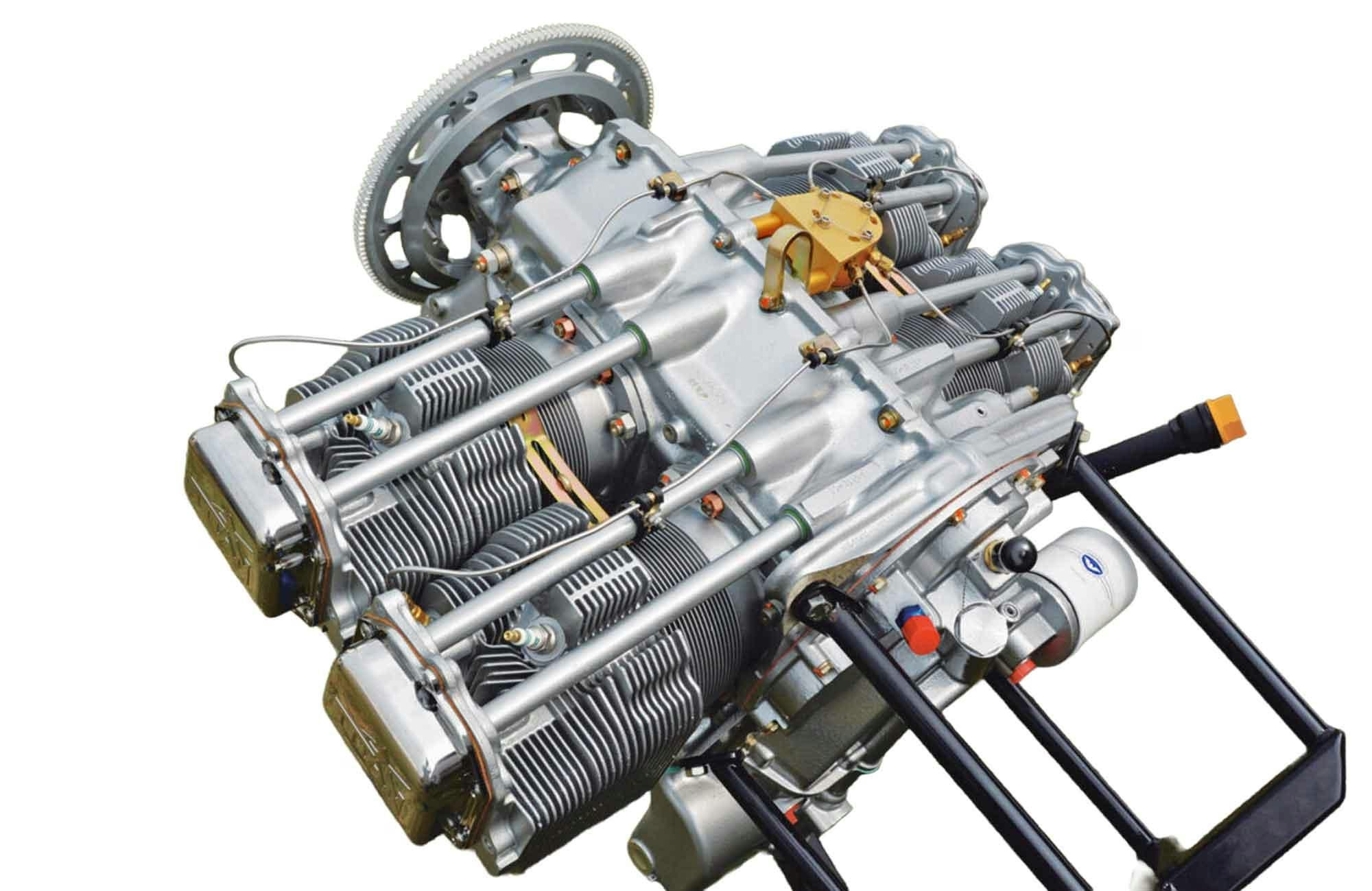
How the Piston Connects to the Connecting Rod in Engine Design
How the Piston Connects to the Connecting Rod in Engine Design
The Titan-IO-320 engine from Continental represents the quintessential configuration in general aviation: a horizontally opposed, four-cylinder, air-cooled powerplant. For many novice pilots and aircraft builders, often lacking extensive mechanical experience, grasping the fundamental principles of engine mechanics is vital for ensuring safer, more economical, and enjoyable flying.
The Core Mechanism of Piston Engines
Central to any piston engine is the cylinder, within which the piston moves vertically. The piston is linked to the crankshaft—a shaft featuring offset cranks analogous to bicycle pedals—through the connecting rod. During combustion, the rapid expansion of hot gases forces the piston downward. This linear motion is transmitted via the connecting rod to the crankshaft, causing it to rotate. When a propeller is attached to the crankshaft, this rotational energy becomes the driving force behind most light aircraft.
The engine’s operation follows a four-stroke cycle: intake, compression, power, and exhaust. Positioned above the piston is the combustion chamber, enclosed by the cylinder head. This chamber contains intake and exhaust valves, as well as spark plugs responsible for igniting the air-fuel mixture. The process is straightforward: air and fuel enter the chamber, ignite, expand, and push the piston downward, which in turn drives the crankshaft.
Engineering Challenges at the Piston-Connecting Rod Interface
While the overall concept is familiar to anyone acquainted with automotive engines, the connection between the piston and connecting rod presents significant engineering challenges. Material compatibility is paramount; both components must endure extreme pressures and temperatures without deforming or deteriorating. Variations in thermal expansion rates between the piston and connecting rod materials can induce stress, necessitating meticulous selection and engineering of alloys.
Manufacturing precision is equally critical. Any misalignment or imperfection in the connection can lead to accelerated wear, diminished efficiency, or even catastrophic engine failure. These technical demands have spurred a growing market for advanced materials and manufacturing techniques aimed at enhancing durability and performance. In response, manufacturers are innovating with new piston and connecting rod designs to improve efficiency, reduce weight, and better manage the stresses generated during combustion.
Balancing Power and Complexity
Fundamentally, a piston engine functions as an air pump, with its power output dependent on the volume of air it can process. Increasing cylinder size, the number of cylinders, or engine speed all serve to boost airflow and, consequently, power. However, these enhancements also introduce greater complexity and heighten the need for precise engineering, particularly at the critical junction where the piston connects to the connecting rod.
An essential principle underpinning engine operation is the “fire triangle”: the presence of fuel, oxygen, and an ignition source. Maintaining this balance is crucial for reliable performance. For pilots and builders alike, understanding these foundational concepts—and the intricate engineering behind the piston-connecting rod connection—provides a robust basis for safe and efficient flight.

Bangladesh Launches Initiative to Become Regional Aviation Hub
Russia Transports PD-8 Engine to India for International Certification

Kyrgyzstan to Adopt EMPIC GmbH Software for Flight Safety Oversight

Why Hawaiian Airlines Is Waiting Until 2028 To Add A Premium Economy Cabin To Its Airbus A330 Fleet

Engine Fault Causes Royal Navy Helicopter Crash Fatality

Joby Aviation Begins Texas Air Taxi Test Flights Amid Stock Decline

Iberia Receives Full Approval for Airbus A350 Heavy Maintenance

NetJets to Construct Terminal and Hangar at Dallas Love Field

Using AI in Aircraft Purchases

CIAM Unveils RPD-150T Engine to Replace Rotax 150 hp Model
