Imagen

AeroGenie — Tu copiloto inteligente.

Pregunta cualquier cosa. Analiza todo. Actúa al instante.

Tendencias

Categories

Human by Design: How AIX 2026 Redrew the Aircraft Cabin
April 25, 2026By ePlane AI
Human by Design: How AIX 2026 Redrew the Aircraft Cabin
0
0
Aircraft Interiors Expo
Cabin Accessibility
Airbus Airspace U Suite

Human by Design: How AIX 2026 Redrew the Aircraft Cabin

The 25th Aircraft Interiors Expo (AIX), held in Hamburg this April, brought together over 450 exhibitors and 13,000 industry professionals to explore the future of passenger air travel. Under the theme “The Convergent Cabin,” the 2026 event highlighted the integration of artificial intelligence, high-speed connectivity, and sustainable materials, all aimed at creating travel experiences that are more personalized, inclusive, and environmentally responsible.

Innovations in Accessibility and Premium Comfort

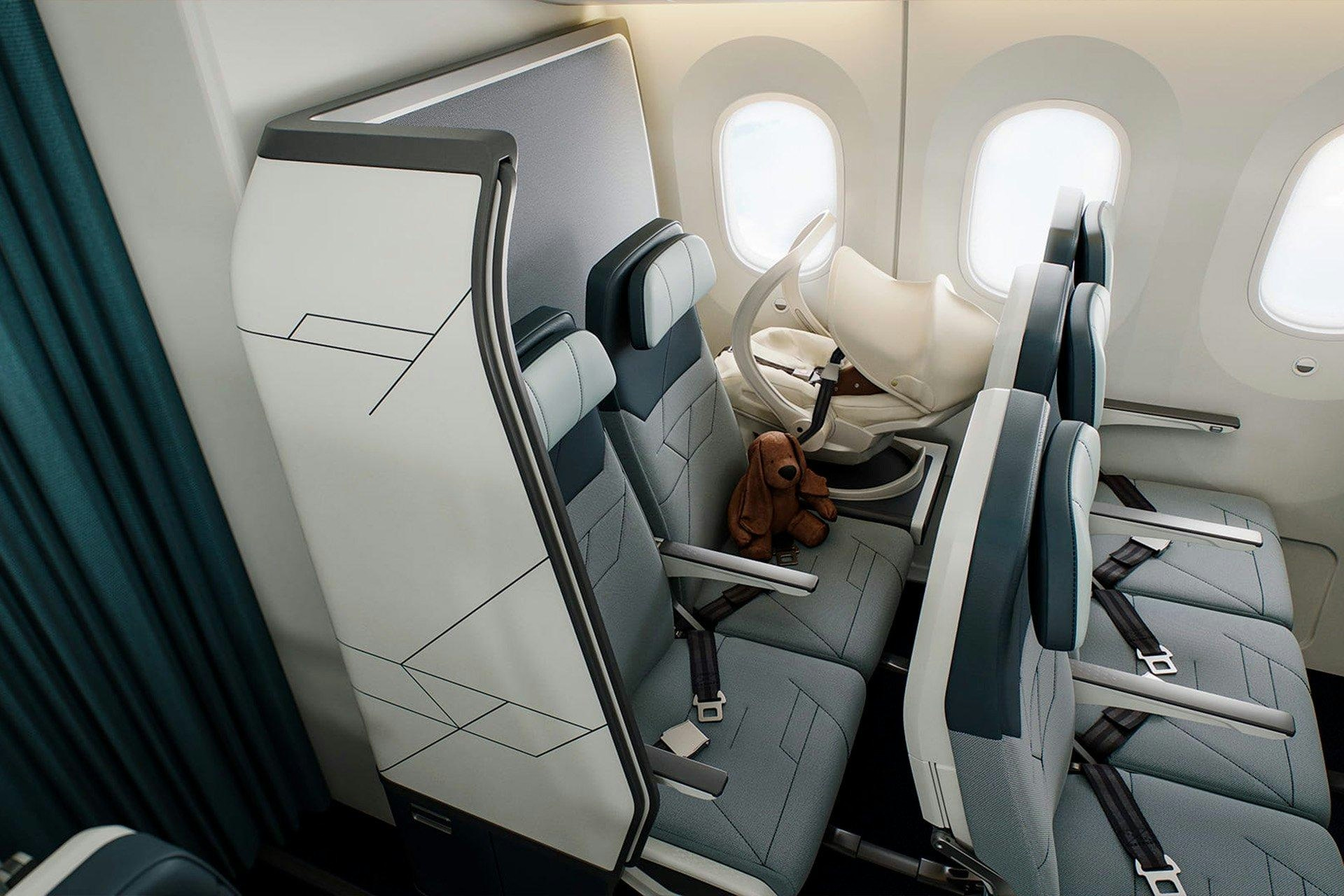
Airbus made a significant contribution to the conversation on accessibility with its Airspace U Suite, a solution designed to address the longstanding challenges faced by wheelchair users in air travel. Traditionally, passengers with reduced mobility have endured stressful transfers and the risk of damage to their personal wheelchairs. The U Suite allows travelers to remain in their own chairs, which are securely fastened directly to the cabin floor. In March, Airbus Design Office Engineer Dirk Thalheim, himself a wheelchair user, successfully completed a flight test of the system, validating its ergonomic design. The next steps include comprehensive compartment testing, with certification and initial deliveries anticipated by 2032. The suite’s adaptable layout also enables rapid reconfiguration to accommodate families, business meetings, or standard lie-flat seating.

For premium travelers, Airbus unveiled the A350-1000 First Class Master Suite, featuring a 1-1-1 configuration that includes a central double bed, a private bar, and a dedicated lavatory. By relocating storage to a newly designed Centre Module at the front of the cabin, Airbus has effectively reduced noise and foot traffic within the premium zone. Additionally, the A321XLR narrowbody now offers widebody-level comfort on long-haul routes, achieved in part by lowering the cabin altitude to 6,000 feet to reduce passenger fatigue.

Advancing Sustainability and Expanding Global Presence

Sustainability emerged as a tangible priority at AIX 2026, moving beyond conceptual discussions to practical implementation. RECARO showcased seats made from recycled materials, already deployed by Iberia, while Boeing introduced its CirculAir Playbook, demonstrating measurable progress in eco-friendly cabin solutions. The event also marked a significant milestone for India, which made its global debut with a DGCA-certified seat platform and aerospace-grade foam products. This development signals a shift in an industry traditionally dominated by Western suppliers, reflecting a broader diversification of the aerospace supply chain.

Digital Immersion and the Connected Passenger

The expo also underscored the growing emphasis on digital immersion and personalization. Safran, in collaboration with RAVE Aerospace, presented the Origin concept—a premium suite that replaces the conventional seatback screen with a sweeping U-shaped micro-LED display. This innovation offers passengers a deeply immersive digital experience, aligning with the industry’s broader trend toward hyper-personalization and enhanced connectivity.

Balancing Innovation with Inclusivity

AIX 2026 highlighted the ongoing challenge of balancing cutting-edge innovation with universal accessibility. Boeing’s initiatives to improve cabin accessibility exemplify the industry’s commitment to inclusivity, even as airlines and manufacturers strive to deliver greater efficiency and premium experiences. This dual focus reflects a recognition that technological advancement must be accompanied by equitable design.

Competitive Dynamics and Future Outlook

The competitive landscape was marked by a range of responses to evolving passenger expectations. Lufthansa Technik and Designworks introduced a modular narrowbody cabin concept, while other exhibitors showcased advanced materials and technologies aimed at maintaining a competitive edge in a rapidly changing market. As the industry moves forward, the emphasis on accessibility, sustainability, and connectivity is poised to shape the next decade of air travel.

More news
France Joins EU Shift to U.S. Jet Fuel Amid Middle East Supply Disruptions, Triggering Airfare Increases and Travel Disruptions

France Joins EU Shift to U.S. Jet Fuel Amid Middle East Supply Disruptions, Triggering Airfare Increases and Travel Disruptions

France Joins EU Shift to U.S. Jet Fuel Amid Middle East Supply Disruptions France has aligned with several European Union countries, including the Netherlands, Italy, Germany, and Sweden, in redirecting jet fuel imports from the Middle East to the United States. This strategic shift responds to escalating supply disruptions in the Gulf region, particularly near the Strait of Hormuz, a vital maritime corridor responsible for nearly 20% of global oil trade. The disruption has triggered a surge in jet fuel prices, exerting significant pressure on the aviation sector, leading to increased airfares, strained airline finances, and widespread travel disturbances across Europe. Middle East Supply Crisis and EU Diversification Efforts Europe has traditionally depended on the Middle East for approximately 45 to 50 percent of its jet fuel imports, benefiting from cost efficiencies and well-established trade routes. However, recent geopolitical tensions and heightened shipping risks in the Strait of Hormuz—affecting key exporters such as Kuwait, the United Arab Emirates, and Saudi Arabia—have tightened supply conditions and intensified price volatility. Although a full blockade has not materialized, increased insurance premiums, rerouting expenses, and delivery delays have collectively raised the effective cost of jet fuel for European carriers. This added “risk premium” is already impacting the continent’s airlines, where fuel expenses typically constitute 20 to 30 percent of operating costs. The rising prices are being transferred to consumers through higher ticket prices, with some airlines cautioning about potential flight cancellations and capacity reductions, especially on long-haul routes. Challenges for Airlines and Travelers Amid Rising Costs The interconnected nature of global energy markets means that disruptions in the Middle East reverberate through domestic European fuel prices. Airlines are compelled to respond swiftly to these challenges. For instance, carriers like Qantas have begun adjusting their capacity and reallocating resources to mitigate the financial impact of elevated fuel costs and supply uncertainties. Others are exploring alternative flight paths to circumvent the most affected regions, though such measures often increase operational complexity and expenses. This crisis is also accelerating a broader shift in the European Union’s energy strategy. Beyond increasing imports from the United States—where jet fuel prices are comparatively higher—European airlines and policymakers are intensifying efforts to adopt sustainable aviation fuels. However, these alternatives remain insufficiently developed to address the immediate shortfall in supply. Long-Term Implications for European Travel and Tourism The current supply disruptions are anticipated to persist longer than previous fuel shocks, owing to unique logistical challenges and limited policy options available to European governments. The consequent rise in airfares is undermining Europe’s competitiveness as a travel destination and dampening tourism demand. Industry experts warn that sustained high fuel prices may prompt further airline restructuring and induce lasting changes in travel behavior. As France and its EU counterparts confront this evolving crisis, the aviation sector faces an uncertain future characterized by escalating costs, operational hurdles, and an urgent imperative to diversify energy sources.
Boeing Employs AI to Accelerate Parts Validation

Boeing Employs AI to Accelerate Parts Validation

Boeing Employs AI to Accelerate Parts Validation Advancing Aerospace Manufacturing with Artificial Intelligence Boeing is enhancing its manufacturing operations by integrating artificial intelligence (AI) to improve the accuracy and efficiency of aerospace parts validation. At its Renton and Everett facilities in Washington, the company has introduced a new AI-powered handheld device developed internally. This tool enables inspectors to rapidly verify the correct installation of aircraft components by capturing images of parts, thereby reducing manual effort, minimizing errors, and automatically updating part information within Boeing’s digital systems. Maintaining traceability of aircraft parts remains a critical priority for Boeing, ensuring both safety and regulatory compliance. The company’s Aircraft Readiness Log (ARL) meticulously records the origin, manufacturing details, usage, and maintenance history of every component installed on an aircraft. This comprehensive documentation not only guarantees transparency and adherence to standards but also serves as a safeguard against the introduction of unapproved or counterfeit parts into the supply chain. Collaborative Development and Operational Impact The AI tool represents a collaborative achievement involving Boeing engineers across the United States, the Boeing Korea Engineering & Technology Center (BKTEC), and Boeing Artificial Intelligence (BAI). Utilizing Optical Character Recognition (OCR), the device captures serial numbers and cross-references them against master databases. This automation streamlines data entry, enhances first-pass accuracy, and facilitates seamless integration of digital information across multiple systems, thereby optimizing the inspection workflow. Wanbin Song, AI team lead at BKTEC, emphasized the importance of user input in the tool’s design, noting that quality inspectors identified challenges in existing processes and helped shape a solution that minimizes disruption to established workflows. Hector Silva, Vice President of Regulatory Compliance and Core Quality at Boeing, highlighted the extensive collaboration between engineers and inspectors on the factory floor to ensure the tool’s smooth adoption. Currently, the AI device supports validation for over 1,400 parts of the Boeing 737, with plans for broader implementation across other models. The technology delivers significant benefits by reducing manual data entry, improving data quality through accurate serial number capture, saving time and costs by minimizing rework, and enabling integrated digital data management. Challenges and Industry Implications Despite these advancements, Boeing faces challenges in workforce adaptation to AI-driven processes and the need for consistent, accessible data to support AI systems effectively. Additionally, geopolitical tensions pose risks to delivery schedules and order volumes, complicating the company’s global operations. Market analysts are closely monitoring Boeing’s return to profitability, with many attributing operational improvements to AI integration. The broader aerospace industry is also responding to this technological shift; for instance, SpaceX’s collaboration with Cursor AI exemplifies the growing emphasis on AI adoption in aerospace manufacturing. Boeing’s AI initiatives are not only enhancing quality, efficiency, and safety in aircraft production but are also accelerating digital transformation across the aerospace sector.
U.S. Food Delivery Drones Now Transport Over 8 Pounds

U.S. Food Delivery Drones Now Transport Over 8 Pounds

U.S. Food Delivery Drones Now Transport Over 8 Pounds Expanding Payload Capacities in Drone Delivery The food delivery drone industry in the United States has historically been constrained by payload limitations, with most drones capable of carrying only around five pounds. This capacity sufficed for small orders such as chicken wings, ice cream, or groceries but restricted the scope of drone delivery services. Recently, however, several operators have begun to push these boundaries by introducing drones capable of transporting heavier loads, signaling a significant shift in the sector. Flytrex, a company operating in both the U.S. and Israel, has launched its new Sky2 drone, which it claims is the first on-demand delivery drone able to carry up to 8.8 pounds. This payload capacity is sufficient to transport two large pizzas, bread bites, and sodas in a single trip. This development aligns with the capabilities of Irish company Manna’s flagship drone, which can carry up to four kilograms (approximately 8.8 pounds) and reportedly deliver four 15-inch pizzas simultaneously. Manna’s CEO, Bobby Healy, has emphasized that managing volume presents a greater challenge than weight in drone delivery, underscoring the complexities involved in optimizing both capacity and efficiency. Other U.S. operators are also enhancing their payload limits. Zipline’s P2 drone can carry up to eight pounds, while Amazon Prime Air’s MK30, Dexa’s DE-2020, and Wing’s flagship model each have a maximum payload of five pounds. Matternet’s M2 drone is limited to approximately 4.4 pounds. Flytrex’s previous model supported payloads up to 6.6 pounds, making the Sky2 a notable advancement in the company’s delivery capabilities. Technological Innovations and Operational Deployment The Sky2 is an autonomous octocopter being introduced through a partnership with Little Caesars, initially launching at a single store in Wylie, Texas. Customers place orders via the Flytrex app, after which drones collect the food from outside the restaurant and deliver it within an average of 4.5 minutes. The drone employs AI-based flight logic for navigation and uses a tether system to gently lower cargo to the ground. This method is designed to enhance delivery accuracy and safety, offering an improvement over parachute drops or simple hovering releases. Flytrex CEO Amit Regev highlighted the company’s commitment to making drone delivery practical for everyday consumers, stating, “A big part of advancing this market is making sure people can get the food they actually want, when they want it.” The Sky2 also extends Flytrex’s delivery radius from 2.5 to 4 miles, thereby expanding its potential customer base. Collaborations with platforms such as Uber Eats further broaden the reach of these services. Challenges and Industry Outlook Despite these technological advancements, the expansion of drone delivery faces significant challenges. Regulatory approval remains a major hurdle, particularly concerning beyond visual line of sight (BVLOS) operations, which are stringently regulated by the Federal Aviation Administration (FAA). Public acceptance and competition from traditional delivery services also present obstacles to widespread adoption. Recent reports from Amazon customers about damaged drone deliveries highlight the ongoing need to improve reliability and customer satisfaction. Market responses have been mixed, with increasing interest from businesses seeking efficiency gains through drone delivery. In turn, competitors are investing in technological enhancements aimed at improving delivery accuracy and safety. Meanwhile, some manufacturers are developing larger cargo drones, such as Elroy Air’s Chaparral, which is designed to carry up to 300 pounds over long distances. This represents a different use case from the rapid, local deliveries targeted by food delivery drones. As drone technology continues to evolve, operators must carefully balance payload capacity, regulatory compliance, and operational reliability to establish drone delivery as a viable and trusted option for consumers.
Vertical Aerospace’s VX4 Passes Key Test for Electric Air Taxi Passenger Flights

Vertical Aerospace’s VX4 Passes Key Test for Electric Air Taxi Passenger Flights

Vertical Aerospace’s VX4 Passes Key Test for Electric Air Taxi Passenger Flights A Pivotal Flight Demonstration at Cotswold Airport On April 14, 2026, Vertical Aerospace’s VX4 electric vertical takeoff and landing (eVTOL) aircraft successfully completed a critical test flight at Cotswold Airport in southwest England, marking a significant advancement toward commercial passenger operations. During the demonstration, a test pilot executed a complex sequence: the VX4 lifted vertically using its eight propellers, transitioned smoothly to forward flight as the four front propellers tilted forward, and then reversed the process to hover and land vertically. This piloted two-way transition—from helicopter-like vertical flight to airplane mode and back—is widely regarded as one of the most challenging technical milestones in eVTOL development. Founded in 2016 and headquartered in Bristol, Vertical Aerospace is among the first Western companies to achieve this feat in a full-scale tiltrotor eVTOL. While other developers have demonstrated similar capabilities, Vertical’s accomplishment is distinguished by its alignment with regulatory certification pathways from the outset. David King, Vertical’s chief engineer, emphasized the importance of this approach, noting that the flight was conducted in a manner consistent with the stringent safety standards required for commercial certification. This distinction is critical, as prototypes may operate under test conditions, but commercial aircraft must meet rigorous regulatory requirements to carry paying passengers. Positioning and Challenges in the Emerging eVTOL Market The successful April flight has garnered positive market attention, positioning Vertical Aerospace as a leading contender in the rapidly evolving eVTOL sector. The company is now the second globally to complete a piloted two-way transition flight in a full-scale tiltrotor eVTOL, a milestone that is likely to intensify competition with rivals such as Joby Aviation. Despite this progress, Vertical faces substantial challenges ahead. The path to commercial service demands significant investment in further flight testing, certification processes, and manufacturing scale-up. The company projects net cash outflows of approximately $195 million over the next 12 months as it advances toward these objectives. David King’s expertise in tiltrotor technology has been a driving force behind Vertical’s achievements. With a career beginning at Boeing in 1989 working on the V-22 Osprey—the first production tiltrotor aircraft—King later contributed to civil tiltrotor projects at Bell and Leonardo before joining Vertical in 2023. He highlighted the inherent advantages of tiltrotor designs, explaining, “The beauty of the tiltrotor is it takes you less than a minute from the time you apply power to cruising on a wing.” King described the fundamental transition from thrustborne to wingborne flight as “proven,” while acknowledging that the remaining challenge lies in refining the system to accommodate varying payloads, weather conditions, and flight routes. Looking Ahead: The Valo and Certification Pathways Building on the VX4’s achievements, Vertical Aerospace unveiled its next-generation commercial eVTOL, the Valo, in December 2025. As the company progresses toward certification, industry experts underscore the demanding nature of the regulatory process, which will require sustained technical innovation and financial commitment. Nonetheless, Vertical’s recent milestone represents tangible progress toward realizing the vision of electric air taxis as a viable mode of passenger transport in the near future.
Delta CEO Ed Bastian Critiques the Term ‘Artificial Intelligence’

Delta CEO Ed Bastian Critiques the Term ‘Artificial Intelligence’

Delta CEO Ed Bastian Critiques the Term ‘Artificial Intelligence’ Delta Air Lines CEO Ed Bastian has expressed significant reservations about the widespread use of the term “artificial intelligence,” arguing that it mischaracterizes the technology’s role in the workplace and risks creating unnecessary fear among employees and the public. Bastian contends that the phrase “augmented intelligence” more accurately reflects the technology’s function as a tool designed to empower rather than replace human workers. Reframing AI as a Tool for Empowerment Bastian emphasized that AI should be viewed as an enhancement to employee capabilities rather than a threat to job security. “I want our employees to see it as a tool to enable them to do their jobs better, not to replace them, but to enhance them,” he stated. While acknowledging that AI-driven efficiencies may reduce the demand for certain roles, such as gate agents or call center staff, Bastian assured that Delta’s strategy involves redeploying affected employees to other customer service positions rather than eliminating jobs outright. “To the extent there’s less need for more people at a gate or more people on a phone, we’ll redeploy those people to better serve customers even more,” he explained. Industry Challenges and Strategic Adaptation Bastian’s remarks come amid a period of rapid technological transformation and intensifying competition within the airline industry. He highlighted the necessity for carriers to reorganize in order to survive, underscoring the importance of maintaining a robust financial position—a “fortress balance sheet”—to navigate ongoing industry shifts. His critique of AI terminology has sparked broader debate within the sector, with some analysts suggesting that his cautious stance may fuel skepticism regarding the actual impact of AI on operational efficiency and customer service enhancements. This uncertainty could have immediate market repercussions, including potential downward pressure on Delta’s stock price as investors reassess the company’s technology strategy. Meanwhile, competitors may view this as an opportunity to accelerate their own AI investments, seeking to capture greater market share and intensify competition across the industry. Commitment to Safety and Human Oversight Despite the push toward innovation, Bastian reassured customers that certain core aspects of air travel will remain unchanged. “I’m never getting on an airplane without two Delta pilots on it commercially, and I don’t think that’s going to change anytime soon,” he affirmed, underscoring the airline’s commitment to safety and human oversight. As the airline industry continues to navigate the evolving landscape of AI and automation, Bastian’s comments highlight the delicate balance between embracing technological advancements and maintaining trust among employees, customers, and investors.
Loganair Adds ATR72-500 Aircraft Through Wet Lease to Expand UK Regional Service

Loganair Adds ATR72-500 Aircraft Through Wet Lease to Expand UK Regional Service

Loganair Expands UK Regional Network with Wet-Leased ATR72-500 Aircraft Loganair, the United Kingdom’s largest regional airline, is enhancing its domestic service by introducing an ATR72-500 aircraft through a wet lease agreement. This strategic initiative is designed to increase capacity and improve connectivity on key regional routes, addressing the growing demand for accessible air travel across the UK. The ATR72-500, a proven and efficient turboprop, will allow Loganair to accommodate more passengers while continuing to focus on underserved regional destinations. By opting for a wet lease—where the aircraft, crew, maintenance, and insurance are provided by the lessor—Loganair can rapidly expand its operations without the substantial capital expenditure associated with purchasing new aircraft. This approach offers the airline valuable operational flexibility amid shifting market dynamics and evolving passenger requirements. Operational Flexibility Through Wet Leasing Wet leasing provides airlines like Loganair with the ability to augment their fleets and enhance service offerings without committing to long-term investments. For Loganair, this translates into increased flight frequency and greater seating capacity on popular domestic routes, particularly those served by airports with limited infrastructure. The ATR72-500, which accommodates approximately 70 to 78 passengers, is well-suited for short-haul flights and can efficiently operate from smaller airports with shorter runways. This arrangement not only bolsters Loganair’s operational efficiency but also positions the airline to respond swiftly to fluctuations in regional demand. The move comes amid close scrutiny of the regional aviation market, where competitors may adjust their fleet strategies or pursue similar wet lease agreements to maintain market share and competitive positioning. Commitment to Sustainability and Industry Trends The ATR72-500’s fuel-efficient design aligns with the aviation sector’s increasing focus on sustainability. As airlines face mounting pressure to reduce carbon emissions and explore greener technologies, including electric aircraft, Loganair’s selection of a fuel-efficient turboprop reflects a pragmatic balance between immediate operational needs and longer-term environmental objectives. This commitment to sustainability is expected to influence the airline’s future fleet decisions as the industry continues to evolve. Strengthening Regional Connectivity The introduction of the wet-leased ATR72-500 forms part of Loganair’s broader strategy to expand its regional network and provide passengers with enhanced travel options. The aircraft’s versatility and cost-effective operation make it particularly well-suited for connecting smaller cities and towns, areas often underserved by larger carriers. By increasing frequency and capacity on these routes, Loganair aims to make regional air travel more convenient and accessible. As Loganair integrates the ATR72-500 into its fleet, industry observers will monitor the impact on regional connectivity, competitive dynamics, and the ongoing transition toward sustainable aviation. This latest development underscores Loganair’s dedication to serving the UK’s regional communities and adapting to the evolving landscape of domestic air travel.
Catering Truck Strikes Singapore Airlines A380 Engine, Delaying Frankfurt Flight

Catering Truck Strikes Singapore Airlines A380 Engine, Delaying Frankfurt Flight

Catering Truck Incident Delays Singapore Airlines A380 Flight to Frankfurt A Singapore Airlines flight bound for Frankfurt experienced a substantial delay after a catering truck struck one of the Airbus A380’s engines at Singapore’s Changi Airport. The incident occurred during ground handling prior to passenger boarding, necessitating immediate technical inspections and operational adjustments to ensure safety. Flight SQ326, initially scheduled to depart at 12:35 pm, was held on the ground after the catering vehicle grazed the engine cowling. Although airline officials characterized the contact as minor, engineers conducted detailed assessments to verify the engine’s structural integrity. To mitigate extended disruption, Singapore Airlines deployed a replacement aircraft in accordance with established safety protocols. No passengers were present on board at the time of the incident, and no injuries were reported. The damaged engine cowling was subsequently repaired, allowing the aircraft to return to service. Following the aircraft substitution, SQ326 departed at 2:13 pm, nearly two hours behind schedule, carrying 452 passengers and 28 crew members. The flight arrived in Frankfurt at 8:40 pm local time. The delay had further operational consequences. The return flight, SQ325 from Frankfurt to Singapore, was cancelled due to curfew restrictions at Frankfurt Airport, which prohibit late-night departures. Singapore Airlines responded by providing affected passengers with refreshments, hotel accommodations where necessary, and assistance with rebooking onward connections. The airline reiterated its commitment to safety and underscored the critical importance of close coordination between ground handlers and flight crews to prevent similar incidents, particularly in busy airport environments. Broader Industry Context and Operational Challenges This disruption occurs amid wider challenges facing the aviation sector. Rising fuel costs and capacity constraints are anticipated to cause additional operational disruptions during the peak summer travel season, with potential repercussions for the hospitality industry. Airlines globally are adjusting capacity and flight schedules in response to these pressures. Meanwhile, Lufthansa, a key competitor, continues to grapple with operational difficulties stemming from ongoing labor disputes. Widespread strikes have left tens of thousands of passengers stranded and forced the cancellation of most long-haul flights. In response, Lufthansa is accelerating the retirement of certain aircraft fleets and exploring outsourcing options. These developments may influence how other carriers, including Singapore Airlines, manage their operations amid increasing market pressures. The incident at Changi highlights the complexity of ground operations at major international hubs. Even minor contact between ground vehicles and aircraft can lead to significant delays due to the necessity of comprehensive safety inspections. As airlines confront both immediate operational incidents and broader industry challenges, maintaining safety standards while minimizing passenger inconvenience remains a central focus of their response strategies.
Japan Airlines Ventures Partners with Counter Club Japan to Advance Innovation in Aviation and Technology

Japan Airlines Ventures Partners with Counter Club Japan to Advance Innovation in Aviation and Technology

Japan Airlines Ventures Partners with Counter Club Japan to Advance Innovation in Aviation and Technology Strategic Alliance to Foster Industry Transformation Japan Airlines Ventures (JALV), the corporate venture capital arm of Japan Airlines Co., Ltd. (JAL), has formally joined Counter Club Japan (CCJ), a leading community for corporate venture capitalists (CVCs) and business leaders. This collaboration is designed to accelerate innovation within the aviation sector and emerging technologies, positioning JALV as a key player in driving industry transformation both domestically and internationally. Headquartered in Silicon Valley, JALV brings extensive global expertise and a strong international network to Japan’s growing innovation ecosystem. Through its membership in CCJ, which comprises over 750 CVC organizations, JALV gains access to a broad platform for startup development, knowledge sharing, and engagement with global technological trends. This strategic move is intended to enhance Japan’s competitiveness in the global business arena by fostering closer ties between startups and established corporations. Focus on Sustainable and Next-Generation Technologies JALV’s investment portfolio targets startups specializing in sustainable aviation fuels, autonomous flight systems, and next-generation mobility solutions. These areas align closely with the broader objectives of the JAL Group, which emphasize sustainability, technological advancement, and customer-centric innovation. By leveraging the collaborative environment of CCJ, JALV aims to bridge decision-making gaps and support Japanese companies in overcoming challenges related to global market expansion. Navigating Industry Challenges Amid Expansion The partnership emerges amid significant challenges facing the aviation industry. Japan Airlines and other carriers are preparing for the commercial introduction of advanced air mobility (AAM) operations, anticipated between 2027 and 2028, which will require careful navigation of complex regulatory frameworks. Concurrently, the competitive landscape is intensifying, with regional airlines such as Malaysia Airlines expanding their routes to China and Japan, potentially altering market dynamics. Fuel price volatility remains a pressing concern, prompting both Japan Airlines and All Nippon Airways to adjust fuel surcharges in response to recent price surges. Additionally, Japan’s initiative to enhance carbon dioxide monitoring through satellite and aircraft technologies may establish new industry standards, influencing operational costs and sustainability benchmarks across carriers. Building a Collaborative Innovation Ecosystem Since its launch in February 2026, Counter Club Japan has become a crucial hub for over 300 CVC professionals, fostering collaboration and the exchange of innovative ideas. Shiro Matsuzaki, Managing Partner of JALV, has been appointed as one of CCJ’s inaugural ambassadors, underscoring his leadership in advancing corporate venture capital practices in Japan. Matsuzaki is committed to cultivating a dynamic innovation ecosystem where startups and established companies can thrive in unison. As the partnership between JALV and CCJ deepens, it is poised to play a significant role in shaping the future of aviation and technology in Japan. By harnessing global networks and addressing regulatory, competitive, and sustainability challenges, Japan Airlines Ventures seeks to elevate Japanese innovation on the international stage.
Fuel Consumption of the Airbus A350-1000 During Takeoff

Fuel Consumption of the Airbus A350-1000 During Takeoff

Fuel Consumption of the Airbus A350-1000 During Takeoff The Airbus A350-1000, the largest aircraft currently produced by Airbus, is distinguished by its impressive size and advanced efficiency. Equipped with two Rolls-Royce XWB-97 turbofan engines, each generating 97,000 pounds of thrust, this twin-engine jet can lift over 300 tons into the air. However, this remarkable capability comes with a significant fuel consumption cost during takeoff, a concern that has gained heightened importance amid the ongoing global fuel crisis of 2026. Takeoff Fuel Burn and Economic Impact During takeoff and the initial climb phase, the A350-1000 consumes between 2.5 and 3 tons of jet fuel within the first few minutes, an amount comparable to approximately ten minutes of cruising flight. This equates to a fuel burn rate exceeding 1,000 kilograms per minute. Under typical market conditions, the cost of this fuel consumption ranges from $500 to $1,000 per minute. However, with jet fuel prices having doubled over the past eight weeks due to the crisis, these costs have surged beyond $2,000 per minute, exerting considerable pressure on airline operating budgets. Despite the substantial fuel burn required to achieve takeoff, the A350-1000 is engineered for optimal efficiency at cruising altitudes. Once stabilized in cruise, its fuel consumption decreases dramatically to around 100 kilograms per minute, roughly one-tenth of the takeoff rate. This efficiency is largely attributable to the aircraft’s advanced carbon-fiber composite structure and the latest generation Rolls-Royce Trent XWB engines, which collectively render the A350-1000 approximately 25% more fuel-efficient than earlier widebody aircraft. Strategic Advantages Amid the Fuel Crisis The current fuel crisis has compelled airlines to reassess their fleets and operational strategies. Carriers such as KLM are incorporating the A350-1000 into their fleet renewal programs, aiming to phase out older, less efficient models like the Boeing 777-200ER. The A350-1000’s reduced fuel consumption—estimated to be 25% lower than that of its competitors—provides a critical advantage as airlines grapple with soaring fuel costs and potential supply constraints. To mitigate these rising expenses, many airlines have been forced to increase ticket prices by at least 20%, a challenging adjustment given the unique logistical and policy limitations imposed by the 2026 crisis. The A350-1000’s capacity to deliver high thrust during takeoff, even from demanding “hot and high” airports, is balanced by its exceptional long-range fuel efficiency. This balance enables airlines to maintain operational flexibility while optimizing fuel consumption on ultra-long-haul routes. In a competitive market that includes the Boeing 777 and 787 Dreamliner, the A350-1000’s combination of payload capacity and fuel economy positions it as a preferred choice for airlines navigating the complexities of today’s volatile fuel environment. While the A350-1000’s fuel consumption during takeoff remains substantial, its overall efficiency and cutting-edge technology make it an indispensable asset for airlines striving to control costs and sustain service amid unprecedented fuel price volatility.
Berlin and Dubai Collaborate on Private Bathrooms for First-Class Airline Passengers

Berlin and Dubai Collaborate on Private Bathrooms for First-Class Airline Passengers

Berlin and Dubai Collaborate on Private Bathrooms for First-Class Airline Passengers The aviation industry stands on the threshold of a significant transformation in luxury air travel as Emirates explores the possibility of introducing fully private en-suite bathrooms for every first-class passenger. This ambitious initiative, discussed at the recent CAPA Airline Leader Summit in Berlin, could redefine the standards of comfort, exclusivity, and premium service in commercial aviation. A New Standard in First-Class Luxury Emirates, widely recognized for its pioneering approach to premium air travel, is considering a comprehensive redesign of its first-class cabins. Tim Clark, President of Emirates, disclosed that the airline is actively assessing the feasibility of incorporating individual bathrooms within each first-class suite. Such a development would establish a new benchmark in the industry, elevating the concept of personal space and privacy to levels typically associated with private jets. Currently, even the most luxurious first-class cabins rely on shared restroom facilities. Emirates’ flagship Airbus A380 offers private suites, onboard shower spas, and exclusive lounges, yet these amenities remain communal. The introduction of en-suite bathrooms would transform first-class suites into fully self-contained personal environments, significantly enhancing the passenger experience. Challenges and Industry Implications The implementation of private bathrooms for every first-class passenger presents considerable challenges. It would necessitate substantial financial investment, potentially reduce overall seat capacity, and require extensive development and certification processes. Despite these obstacles, the initiative aligns with a broader industry trend toward enhancing first-class offerings to bolster brand prestige and attract affluent travelers. This shift also reflects evolving dynamics in first-class pricing strategies. Airlines are increasingly focused on maximizing profitability from premium seats rather than using them solely as loss leaders for brand positioning. This indicates a market willing to pay a premium for unprecedented levels of comfort and privacy, rendering such innovations commercially viable. Emirates’ Legacy of Innovation Since its inception in 1985, Emirates has consistently pushed the boundaries of onboard luxury. Its A380 first-class cabins feature private suites with sliding doors, access to onboard shower spas, exclusive lounges and bars, as well as high-end dining and personalized service. The Boeing 777 fleet complements this with fully enclosed floor-to-ceiling suites, virtual windows for middle seats, and advanced entertainment systems, underscoring the airline’s commitment to privacy and technological sophistication. Despite these advancements, no commercial airline currently offers a private bathroom for every first-class passenger. The closest comparison is Etihad Airways’ ultra-premium “The Residence” on select A380 aircraft, which includes a private living room, bedroom, and bathroom, but is limited to a single suite per plane. Competitive Response Emirates’ bold vision is expected to prompt reactions from rival carriers, who may seek to match these luxury features or develop alternative enhancements to maintain their competitive position in the lucrative first-class market. As airlines continue to push the boundaries of premium travel, Emirates’ pursuit of private en-suite bathrooms could mark a pivotal moment, ushering in a new era of privacy and comfort previously unimaginable in commercial aviation.
line










