
Orquesta conocimientos de IA para convertirlos en acción

Tendencias
Categories
Iran Ranks Among Top Five Countries in Flight Safety Technology
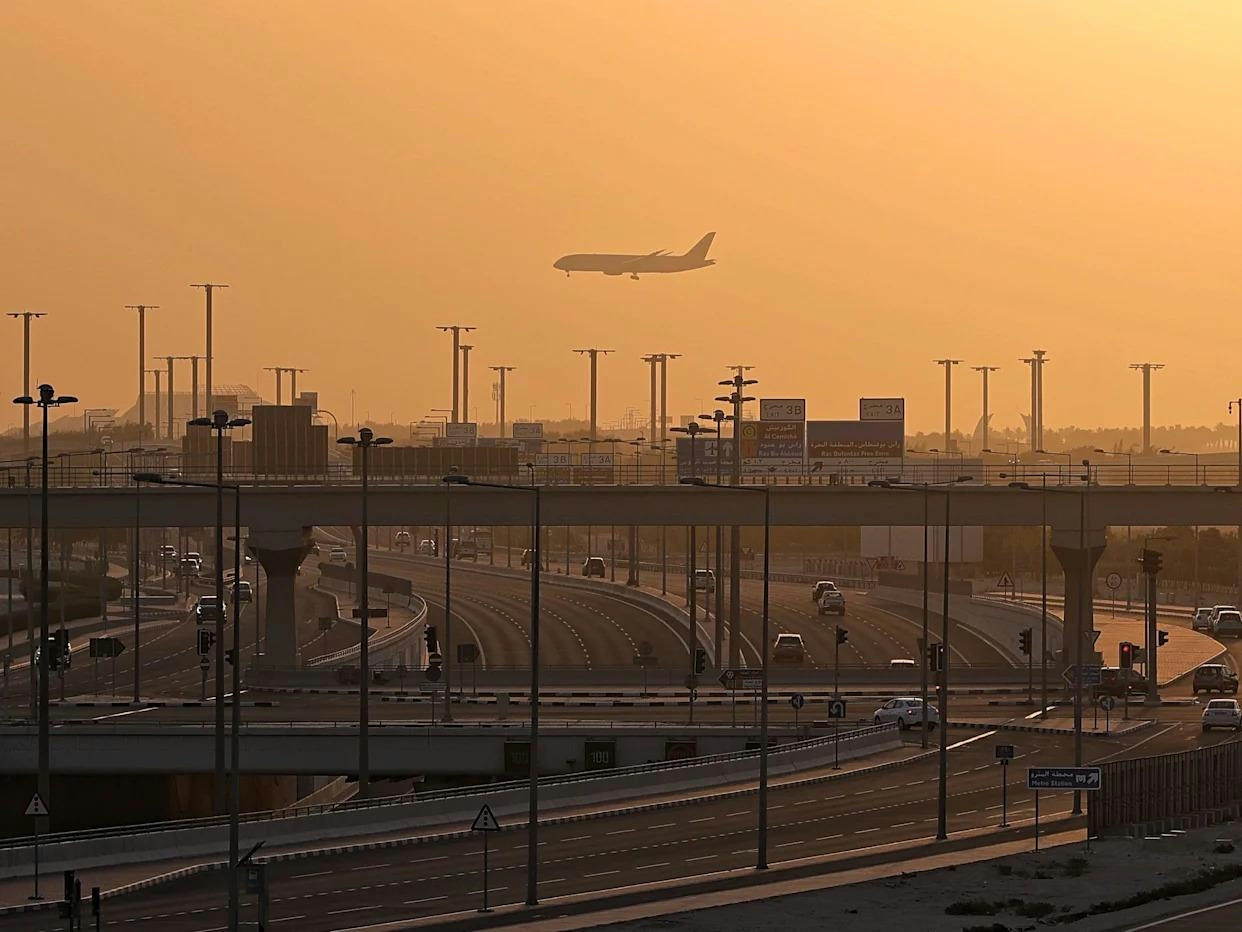
Iran Emerges Among Top Five Nations in Flight Safety Technology
WANA (Oct 29) – Iran has secured a position among the world’s leading developers of intelligent flight safety technologies, following the international registration of two domestically developed software systems with the World Intellectual Property Organization (WIPO). This milestone represents a significant advancement toward technological self-reliance and data-driven governance within the country’s aviation sector.
Indigenous Innovation in Flight Safety Systems
The two specialized Flight Safety Management System (FSMS) platforms—AV.SOS, commercially known as RASA, and AV.SIS, referred to as RABIN—were created by Iranian experts and have now gained recognition alongside comparable systems from the United States, France, Russia, and China. Siamand Abdollahzadeh, CEO of Qeshm Air, emphasized the importance of this achievement, attributing it to the dedicated efforts of Iranian innovators who developed fully indigenous software compliant with international aviation standards.
These systems offer an integrated framework for intelligent flight safety monitoring, encompassing risk analysis, quality auditing, and human error management within commercial aviation. Masoud Eskandari, Deputy Director for Safety and Quality Assurance, noted that the software adheres strictly to ICAO Annex 19 requirements and aligns with the State Safety Programme (SSP) and Safety Management System (SMS) frameworks. He highlighted that these platforms embody the principle of “Data-Driven Safety Governance” in Iran’s aviation industry.
Technological Capabilities and Global Implications
Leveraging advanced data infrastructures and real-time risk analysis algorithms, the technologies enable continuous monitoring of flight safety and provide preventive alerts to flight operations managers. This innovation not only enhances flight reliability and reduces dependence on foreign software but also positions Iran as an emerging competitor in the global market for flight safety technologies.
Despite this progress, Iran faces considerable challenges, including the impact of ongoing international sanctions that complicate access to global markets and partnerships. Sustaining technological advancement amid geopolitical tensions and securing international collaborations will be essential for maintaining its newly acquired status. Nevertheless, the registration of these systems has already generated increased interest from global airlines and aviation companies in Iran’s safety protocols and technological innovations.
This development may also prompt established aviation technology leaders to intensify their efforts to maintain or improve their global rankings. As the international aviation industry continues to prioritize safety and innovation, Iran’s breakthrough underscores its growing scientific self-sufficiency and engineering capabilities.
The international recognition of Iran’s flight safety systems marks not only a technological milestone for the country but also signals a shift in the global aviation safety landscape, with new players emerging alongside traditional leaders.

Etihad Airways Suspends Airbus A380 Flights on Key Route

Aditya Birla Group Seeks Approval for Aircraft Leasing in GIFT City

Qatar Airways Highlights Innovation and Connectivity at Arabian Travel Market 2026

Hong Kong's Five-Year Plan Includes Andrew Fan's Aircraft Parts Processing Hub Proposal

ACIA Aero Leasing Delivers ATR72-600 to Air Nostrum

RTX Appoints Jill Albertelli as Head of Pratt & Whitney

TAT Technologies Joins Beyond Aero Hydrogen Aircraft Program

AURAK Study Highlights Barriers to Air Taxi Adoption in Emerging Economies

Xiamen Air Selects Altitude for 787 Maintenance at Heathrow

Etihad and Swissport Extend Global Partnership
