Imagen

AeroGenie — Tu copiloto inteligente.

Pregunta cualquier cosa. Analiza todo. Actúa al instante.

Tendencias

Categories

Joby Begins Nationwide Air Taxi Tour with Bay Area Flight
March 13, 2026By ePlane AI
Joby Begins Nationwide Air Taxi Tour with Bay Area Flight
0
0
Joby Aviation
eVTOL Air Taxi
FAA Certification

Joby Begins Nationwide Air Taxi Tour with Bay Area Flight

A Milestone Demonstration in the San Francisco Bay Area

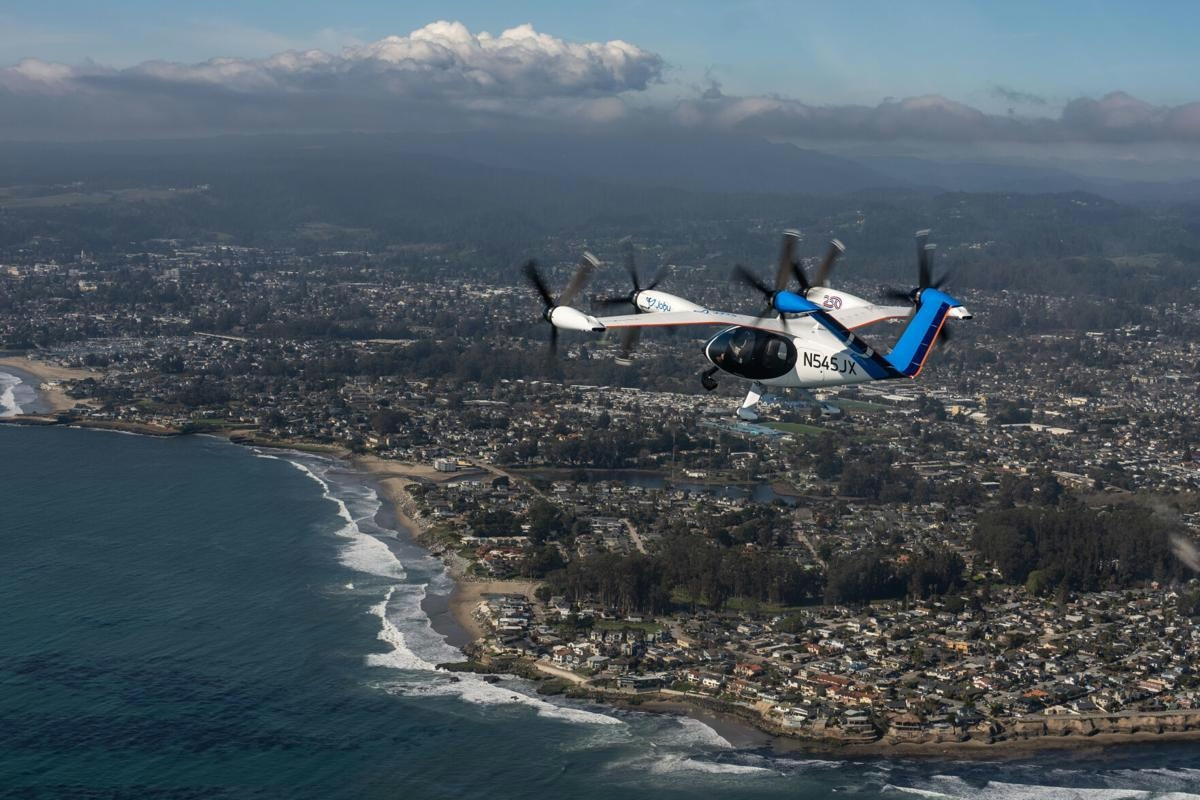
On Thursday, residents of the San Francisco Bay Area witnessed a significant advancement in urban transportation as Joby Aviation’s electric vertical takeoff and landing (eVTOL) air taxi took flight over the bay, circling the iconic Golden Gate Bridge. This event marked the launch of Joby’s “Electric Skies Tour,” a nationwide initiative designed to showcase the potential of electric air taxis in celebration of the United States’ 250th anniversary. Although the company has yet to reveal the full itinerary, it confirmed that the tour will include demonstrations at various airports across the country.

Joby’s flagship air taxi, which is currently piloted, is engineered to carry up to four passengers on short urban trips at speeds of approximately 200 miles per hour. The aircraft’s six propellers enable vertical takeoff and landing, similar to a helicopter, before swiveling forward to transition into efficient wing-borne flight. While the flight on Thursday utilized a preproduction prototype, designated N545JX, the company recently announced the commencement of flights with its first “FAA-conforming” air taxi—an aircraft model intended for future certification and commercial operation. The Bay Area flight originated from Oakland San Francisco Bay International Airport.

Innovation Rooted in the Bay Area

Headquartered in Santa Cruz, Joby Aviation has leveraged the Bay Area’s dynamic technology ecosystem to advance its development. Founder and CEO JoeBen Bevirt emphasized the region’s heavy traffic congestion and distinctive geography as ideal conditions for demonstrating the benefits of clean, quiet air taxi services. Bevirt stated, “By providing clean, quiet service with minimal infrastructure investment, we are making flight an everyday reality for the community.”

During the demonstration, the aircraft flew across the bay, maneuvered near the Marin Headlands, and circled Alcatraz Island. Observers, including members of the media invited to view the flight from a local yacht club, noted the aircraft’s remarkably quiet operation, underscoring one of the key advantages of electric propulsion.

Context and Challenges in the Emerging Urban Air Mobility Market

Joby’s tour arrives amid growing real-world applications of electric aircraft. In 2025, Beta Technologies completed an extensive six-week journey covering 8,000 nautical miles across 25 states with its Alia electric aircraft, which included the first electric passenger flight into New York’s JFK Airport. Unlike Beta’s conventional takeoff and landing (CTOL) aircraft, Joby’s tour could become the most comprehensive demonstration to date of a VTOL model, which has largely remained confined to controlled testing environments.

Despite these advancements, Joby faces considerable challenges. Rival company Archer Aviation has filed a countersuit alleging that Joby concealed business ties to China in order to secure U.S. government contracts, intensifying competition within the rapidly evolving urban air mobility sector. Joby’s ability to successfully launch its aerial ridesharing service remains uncertain, as does the broader market’s growth trajectory. The company must also contend with securing future capital, navigating evolving regulatory frameworks, and maintaining a competitive edge—all critical factors that will influence its path to commercial operations.

As the Electric Skies Tour progresses, Joby aims to demonstrate not only the technical capabilities of its aircraft but also its broader vision for transforming urban transportation, even as it confronts the realities of a competitive and uncertain market environment.

More news
Vietnam Strengthens Aviation Ties with China, Opening New Routes

Vietnam Strengthens Aviation Ties with China, Opening New Routes

Vietnam Strengthens Aviation Ties with China, Opening New Routes Vietnam’s aviation sector is poised for significant advancement following a strategic partnership between Vietjet and AVIC Cabin Systems, a subsidiary of the Aviation Industry Corporation of China (AVIC). The agreement, signed in Beijing in the presence of senior officials including Vietnam’s Deputy Prime Minister Phan Van Giang, highlights the deepening cooperation between Vietnam and China within the framework of their Comprehensive Strategic Cooperative Partnership, with a particular emphasis on aviation. Advancing a Sustainable Aviation Ecosystem At the heart of this collaboration is a commitment to enhancing aircraft interior solutions and expanding manufacturing capabilities for both Vietjet and AVIC Cabin Systems. The partnership seeks to localize supply chains and facilitate technology transfers, thereby positioning Vietnam as a more integral participant in the global aviation supply chain. By leveraging AVIC’s extensive resources and expertise, Vietjet aims to accelerate the development of advanced aviation technologies, supporting the sustainable growth of Vietnam’s aviation industry. This initiative aligns with Vietjet’s broader strategy to deepen regional connectivity and technological cooperation. Recent agreements with Chinese manufacturers, including the Commercial Aircraft Corporation of China (Comac), further underscore Vietjet’s ambition to modernize its fleet and expand operational capabilities. Expanding International Connectivity with New Routes In addition to industrial collaboration, Vietjet is rapidly broadening its international network. The airline has announced five new routes to China, including Hanoi-Hangzhou, Hanoi-Enshi, Ho Chi Minh City-Guilin, and Ho Chi Minh City-Huangshan. Scheduled to commence in early April 2026, these routes are expected to enhance economic, cultural, and tourism exchanges, reinforcing the objectives of the Vietnam-China Tourism Cooperation Year and strengthening bilateral relations. These new connections are anticipated to increase passenger traffic and generate economic benefits for both countries. They also position Vietjet to capitalize on the growing demand for travel between Vietnam and China, further integrating the two markets. Navigating Challenges in a Competitive Landscape Despite these promising developments, Vietjet faces a complex and competitive environment. Regulatory challenges, competition from established carriers such as Malaysia Airlines, and potential geopolitical tensions could impede sustained growth. As Vietjet deepens its partnerships with Chinese entities and expands its fleet, other regional airlines may respond by enhancing their own services to China, intensifying competition within the Asia-Pacific aviation market. Future Prospects Vietjet’s vision to evolve into a multinational aviation group is driving its investments in technology, fleet expansion, and international partnerships. As Vietnam strengthens its aviation ties with China, the country is set to assume a more prominent role in the regional aviation ecosystem. The success of these initiatives will depend on Vietjet’s ability to navigate regulatory complexities, respond to competitive pressures, and adapt to shifting geopolitical dynamics, while delivering enhanced connectivity and economic value for both nations.
WATS Maintenance Stream Focuses on Key Issues

WATS Maintenance Stream Focuses on Key Issues

WATS Maintenance Stream Focuses on Key Issues in Aviation Training The upcoming World Aviation Training Summit (WATS), set for May 5–7, 2026, will spotlight critical challenges within the Maintenance Stream, particularly the barriers to artificial intelligence (AI) adoption in aviation maintenance training and the evolving role of instructors in the classroom. These topics are increasingly relevant as the Maintenance, Repair, and Overhaul (MRO) sector navigates rapid growth, supply chain disruptions, and geopolitical uncertainties. Unlocking AI’s Potential Through Structured Data On May 5, Tim Welch will lead Session 5 with his presentation, *From Documents to Data: Enabling AI Innovation in Aviation Maintenance Training*. Welch emphasizes a significant obstacle: the aviation maintenance industry’s continued reliance on unstructured data formats such as Word documents, PDFs, and static courseware. This dependence limits the effective integration of AI technologies, which are essential for personalizing training, automating assessments, and creating predictive scenarios that mirror real-world aircraft conditions. Welch advocates for the adoption of open data standards, including S1000D for technical publications and S6000T for maintenance and training analysis. By transitioning to structured, machine-readable data, organizations can better align workforce competencies with specific task requirements, thereby closing skill gaps and enhancing operational readiness. His session will offer practical case studies and a strategic roadmap for modernizing training ecosystems. The urgency of this transformation is underscored by recent surveys, such as those conducted by MAU, which identify technology and AI adoption as top priorities within manufacturing and maintenance workforces. Reevaluating the Role of Instructors in Maintenance Training The following day, Ryan Thomas will open Session 7 with a presentation titled *Instructor Selection, Training, and Standardization. Are You an Instructor?* Thomas challenges the industry’s tendency to assign instructor roles by default rather than through deliberate selection. He proposes a framework based on four key factors: motivation, experience, ability, and job satisfaction, with motivation serving as the primary criterion. Thomas stresses that prospective instructors must fully comprehend the demands of the role, particularly as it often requires stepping away from hands-on technical work. His central message is unequivocal: “An instructor is not a position that is filled. It is a position that is invested into.” The quality of instruction directly influences the skills and safety of both maintainers and pilots. As the aviation maintenance sector evolves, strategic workforce development becomes increasingly vital, with competitors responding through partnerships and market repositioning, as highlighted in recent DataM Intelligence reports. Addressing Industry Challenges Amidst Change These sessions collectively reflect the broader challenges and opportunities confronting aviation maintenance training today. As the MRO sector adapts to high growth, supply chain pressures, and shifting workforce expectations, WATS offers a timely platform for industry leaders to engage with these pressing issues. With limited seats available, the summit presents a crucial opportunity for stakeholders to participate in shaping the future of aviation maintenance training.
JetBlue Urges Maintenance Suppliers to Increase U.S. Operations Amid Tariffs

JetBlue Urges Maintenance Suppliers to Increase U.S. Operations Amid Tariffs

JetBlue Urges Maintenance Suppliers to Expand U.S. Operations Amid Tariffs JetBlue Airways is intensifying efforts to encourage its maintenance suppliers to increase their operations within the United States as a strategic response to ongoing tariffs on aluminum, steel, and Chinese imports. The airline, along with much of the U.S. airline and aerospace industry, continues to navigate the challenges posed by tariffs imposed over the past year. Although the sector has secured exemptions from some of the broadest import duties introduced during the Trump administration, significant trade barriers remain. Navigating a Complex Tariff Landscape JetBlue is conducting thorough audits of its suppliers to verify the accuracy of tariff surcharges passed on to the airline, a task complicated by the intricate nature of the current tariff regime. Dave Marcontell, JetBlue’s vice-president of technical operations, emphasized the airline’s strategic shift at the MRO Americas exhibition in Orlando. He noted that the company is adapting to a future where tariffs on products are expected to persist, prompting a concerted push for the maintenance, repair, and overhaul (MRO) supply chain to establish greater capabilities domestically. This approach aims to mitigate risks associated with fluctuating trade policies. Material sourcing decisions are increasingly influenced by the location of maintenance work and the airline’s exposure to tariffs. Marcontell highlighted that JetBlue’s strategy reflects a wider industry trend, with 82 percent of small and medium-sized businesses having raised prices due to tariffs. Many companies face pressure across multiple regions in their sourcing portfolios, underscoring the complexity of global supply chains in the current trade environment. Impact of Tariffs on Aerospace Maintenance While aircraft and their parts have largely been exempted from tariffs through agreements with trading partners and a recent global 10% import duty, the aerospace sector has not been immune to trade disruptions. Tariffs on aluminum, steel, and Chinese imports continue to affect aerospace components, and the U.S. administration is still considering additional duties on civilian aircraft and parts under the “Section 232” authority. Such measures could further complicate the industry’s supply chain and cost structure. Marcontell explained that sourcing decisions are closely tied to where maintenance work is performed and the associated tariff exposure. Many of JetBlue’s suppliers have already passed tariff costs onto the airline, making it essential for JetBlue to monitor and verify these charges carefully. Historically, some U.S. airlines, including JetBlue, have outsourced heavy airframe maintenance to China, where labor costs are lower despite U.S. tariffs on the “value added” portion of such work. Bruce Spear, a partner at consulting firm Oliver Wyman, noted the significance of this arrangement, pointing out that substantial heavy maintenance for U.S. and international carriers continues to be conducted in China. Shifting Maintenance Strategies Amid Trade Uncertainty The persistent tariff environment is prompting JetBlue and other carriers to reconsider their maintenance sourcing strategies. The potential imposition of new import duties under the Section 232 investigation adds to the uncertainty. JetBlue’s push for expanded domestic maintenance capabilities reflects a broader effort to reduce vulnerability to unpredictable trade policies and to maintain cost stability in its operations. This strategic realignment underscores the airline’s commitment to managing supply chain risks in an increasingly complex global trade landscape.
Delta Boeing 767 Over 30 Years Old Returns to Origin Airport

Delta Boeing 767 Over 30 Years Old Returns to Origin Airport

Delta Boeing 767 Returns to JFK Following Mechanical Issue A Delta Air Lines Boeing 767, over three decades old, was compelled to return to New York’s John F. Kennedy International Airport (JFK) on Saturday, April 25, 2026, after encountering a mechanical problem shortly after takeoff. The incident has intensified scrutiny over the reliability of Delta’s aging widebody fleet and sparked debate about the continued deployment of older aircraft on international routes. Flight Incident and Immediate Response Delta Flight DL92, operated by a Boeing 767-300ER registered as N185DN, departed JFK at approximately 9:30 PM, destined for Berlin Brandenburg Airport (BER). Following a routine ascent from Runway 4L, the aircraft reached a cruising altitude of 33,000 feet over the Atlantic Ocean. Less than an hour into the flight, the flight crew identified a technical anomaly and, prioritizing passenger safety, elected to abort the transatlantic crossing. The pilots executed a turnaround maneuver and safely returned to JFK, landing approximately 90 minutes after departure. All 200 passengers and crew members disembarked without injury. Delta confirmed the diversion, attributing it to a “mechanical issue.” The aircraft remains grounded in New York as maintenance teams conduct a comprehensive inspection. Implications of an Aging Fleet The Boeing 767 involved in the incident, N185DN, is 31 years old, ranking it among the oldest aircraft in Delta’s active fleet. While many major U.S. carriers have transitioned to newer, more fuel-efficient models for long-haul operations, Delta continues to rely heavily on the 767-300ER for certain transatlantic routes. Aviation analysts have noted an increase in technical returns and diversions involving Delta’s 767 fleet over the past 18 months, highlighting the operational challenges inherent in maintaining older aircraft. The advanced age of these jets not only raises the probability of mechanical faults but also invites heightened regulatory scrutiny and public concern. Passengers may question the safety of flying on older planes, compelling airlines to reinforce their commitment to rigorous maintenance and safety standards. Concurrently, competitors may leverage their investment in modern fleets to attract travelers, potentially influencing market dynamics. Delta’s Strategy and Industry Outlook Delta has initiated the gradual introduction of newer widebody aircraft, including the Airbus A330neo and A350, yet the 767 remains integral to serving “thin” long-haul markets where passenger demand does not justify larger aircraft. The airline faces the complex task of balancing operational requirements with maintaining passenger confidence and meeting evolving market expectations. As the aviation industry advances toward fleet modernization, incidents such as this recent diversion may intensify calls for accelerated renewal of aging aircraft. Meanwhile, Delta’s maintenance teams continue their thorough examination of the veteran 767, as the airline seeks to reassure both passengers and regulators of its unwavering commitment to safety.
Boeing Tests Autonomous Landing System on CH-47F Chinook Helicopter

Boeing Tests Autonomous Landing System on CH-47F Chinook Helicopter

Boeing Advances Autonomous Landing System on CH-47F Chinook Helicopter Boeing has achieved a significant milestone in autonomous flight technology by successfully completing the first fully automated approach and landing of a CH-47F Chinook helicopter. This accomplishment highlights the progress of Boeing’s Approach-to-X (A2X) technology, integrated with an upgraded Digital Automated Flight Control System (DAFCS), which enables the helicopter to land precisely with all four wheels touching down without any pilot intervention. Flight Testing and System Capabilities Since its initial flight on a U.S. Army CH-47F in January, the autonomous system has undergone more than 150 approaches under various conditions, ranging from 100-foot hovers to full landings. These tests have demonstrated remarkable precision, with an average final positioning error of less than five feet. The system allows pilots to input key parameters such as landing zone, final altitude, approach angle, and starting speed, while the software autonomously manages the approach and landing sequence. Pilots retain the ability to override or adjust the flight path and glide slope if operational circumstances require it. Deanna DiBernardi, Boeing’s H-47 Human Factors Engineering lead, explained that the interface and control laws were designed to align with how pilots naturally conduct an approach. The primary objective is to reduce pilot workload, enabling crews to maintain greater situational awareness during tactical operations. By automating the landing process, the system allows pilots to focus more on monitoring their environment, enhancing overall mission safety and effectiveness. Industry Context and Future Prospects Boeing plans to continue flight testing before delivering a finalized software package to the U.S. Army, which may consider integrating the technology across its Chinook fleet. While the system has received positive market feedback and reflects the Army’s growing confidence in autonomous capabilities, Boeing faces challenges related to regulatory approval and integration with existing military protocols. The competitive landscape is intensifying, with rivals such as Sikorsky developing similar autonomous systems for platforms like the UH-60 Black Hawk, currently under Army evaluation. Sikorsky’s unmanned variant, capable of transporting heavier payloads, further underscores the evolving race in military aviation autonomy. Boeing’s recent return to profitability and ongoing industrial restructuring position the company well to navigate these challenges. However, broader geopolitical tensions, particularly with China, may influence future development trajectories and market opportunities. As the pursuit of autonomous military aircraft accelerates, Boeing’s advancements with the CH-47F Chinook exemplify both the potential and complexity inherent in integrating advanced automation into defense aviation.
Futuristic ‘air taxi’ has potential to cut travel times significantly

Futuristic ‘air taxi’ has potential to cut travel times significantly

Futuristic ‘Air Taxi’ Has Potential to Cut Travel Times Significantly Advancements in Urban Air Mobility A new chapter in urban transportation is unfolding above New York City as Joby Aviation collaborates with the Port Authority of New York and New Jersey to test electric vertical takeoff and landing (eVTOL) aircraft. Recently, Joby demonstrated its all-electric air taxi at JFK Airport, unveiling a vehicle capable of carrying five passengers, including the pilot. This aircraft operates with zero emissions and produces significantly less noise compared to conventional helicopters, highlighting its potential as a sustainable and quieter alternative for urban travel. Joby Aviation envisions a transformative impact on city commutes, with the air taxi capable of reducing travel times from an hour to just ten minutes. The company aims to offer this service at a price point comparable to premium ride-hailing options, targeting customers who prioritize speed and convenience in their daily journeys. Challenges to Widespread Adoption Despite the promising outlook, the path to mainstream adoption of air taxis remains fraught with challenges. The sector is highly competitive, exemplified by the ongoing legal dispute between Joby Aviation and rival Archer Aviation over trade secrets and business dealings. This rivalry reflects the intense pressure on companies to secure leadership in the emerging advanced air mobility market. In addition to competition, several practical obstacles must be addressed. The initial high cost of air taxi services may restrict access for many commuters. Regulatory approval and safety certification are critical steps yet to be fully achieved. While Joby has conducted test flights in New York City to validate the safety and feasibility of its technology, comprehensive certification from aviation authorities is still pending. Insurance and liability issues further complicate the commercial rollout of air taxis. Establishing robust safety protocols and managing potential risks will be vital to securing public confidence and regulatory endorsement. As Joby Aviation and other companies continue to refine their technologies and navigate these regulatory and market challenges, the vision of drastically shortened urban commutes is gradually moving closer to realization.
Airbus Advances Cybersecurity Efforts and Prepares A321XLR Launch

Airbus Advances Cybersecurity Efforts and Prepares A321XLR Launch

Airbus Advances Cybersecurity Efforts and Prepares A321XLR Launch Strengthening Cybersecurity Across Europe Airbus is intensifying its cybersecurity initiatives with the recent announcement of its plan to acquire Quarkslab, a Paris-based firm specializing in advanced cybersecurity solutions. Quarkslab is recognized for its QShield technology, which safeguards software and hardware against AI-driven threats and reverse engineering attacks. This acquisition, expected to finalize later this year pending regulatory approval, represents a strategic move to enhance Airbus’s digital defenses amid increasing cyber risks. Financial terms of the deal were not disclosed. This acquisition follows closely on the heels of Airbus’s March 2026 purchase of UK-based Ultra Cyber and the earlier integration of Germany’s Infodas in 2024. Together, these moves are building a comprehensive pan-European cybersecurity network that spans France, Germany, the UK, Spain, and Finland. Airbus aims to not only protect its own operations but also to strengthen its Defence and Space division, positioning it as a key growth driver beyond the company’s traditional commercial aircraft business. The aerospace sector is expected to see heightened cybersecurity competition as rivals respond to Airbus’s expanded capabilities. Defence Sector Growth and Commercial Aviation Milestone Airbus’s defence segment continues to demonstrate robust momentum, with a record €17.7 billion in order intake reported in 2025 and double-digit revenue growth reaching €13.4 billion. The company’s book-to-bill ratio of 1.3 indicates that new orders are outpacing deliveries, providing a solid foundation for further investment, particularly in cybersecurity and related technologies. In commercial aviation, Airbus has achieved a significant milestone with the delivery of the first A321XLR to Air Canada at its Hamburg facility. This delivery marks Air Canada as the first Canadian operator of the ultra-long-range narrowbody aircraft. The jet, leased from SMBC Aviation Capital, is the initial unit of 30 firm orders. Despite certification delays that postponed delivery by over two years, the A321XLR’s entry into service is notable for its extended range of up to 4,700 nautical miles and its fuel efficiency, consuming nearly a third less fuel per seat compared to older models. Air Canada plans to deploy the A321XLR on routes from Montreal to Palma de Mallorca starting in June, with additional destinations including Berlin, Nantes, Toulouse, and Edinburgh to follow. The airline is outfitting the aircraft with lie-flat beds, a first for a single-aisle jet in its fleet, and holds options for ten more A321XLRs alongside orders for eight A350-1000 widebodies as part of its fleet modernization strategy. The A321XLR’s capabilities are expected to reshape market dynamics, with competitors such as United Airlines also introducing the model with premium features, signaling a shift toward upgrading narrow-body fleets and expanding long-haul route networks. Market Context and Outlook Despite these strategic advances, Airbus’s stock has declined by 16% this year to €41.20, reflecting investor caution ahead of the company’s first-quarter results. The juxtaposition of strong operational progress with market skepticism highlights the challenges Airbus faces in balancing innovation and execution within a rapidly evolving aerospace landscape. With a record backlog and targeted investments in cybersecurity, Airbus is positioning itself for sustained growth amid these complexities.
Aviation Fuel Prices Set Between N1,760 and N2,037 per Litre

Aviation Fuel Prices Set Between N1,760 and N2,037 per Litre

Aviation Fuel Prices Projected Between N1,760 and N2,037 per Litre The Federal Government of Nigeria has announced that aviation fuel prices are expected to range between N1,760 and N2,037 per litre. This projection follows a series of high-level meetings aimed at stabilising fuel supply and addressing the escalating debt crisis within the country’s aviation sector. Stakeholder Engagement and Pricing Recommendations The price forecast emerged from a two-day summit held on April 22 and 23, 2026, convened by the Minister of Aviation and Airspace Management. The meeting brought together key representatives from the aviation and petroleum industries, including officials from the Ministry of Aviation, Ministry of Petroleum Resources, Nigerian Midstream and Downstream Petroleum Regulatory Authority (NMDPRA), Federal Airports Authority of Nigeria (FAAN), Nigerian Airspace Management Agency (NAMA), Nigerian Civil Aviation Authority (NCAA), airline operators, and aviation fuel marketers. Following these discussions, a technical committee was established to investigate ongoing supply and pricing challenges and to propose actionable solutions. Meeting on April 24, the committee recommended that the indicative end-user price of aviation turbine kerosene (ATK) be set between N1,760 and N1,988 per litre in Lagos, and between N1,809 and N2,037 per litre in Abuja. These figures were derived from Platts average rates recorded between April 17 and 23, 2026. The committee, however, cautioned that prices may fluctuate beyond these ranges due to market volatility, geopolitical tensions, and differing operational costs among suppliers. Impact on the Aviation Sector and Policy Responses The sharp rise in aviation fuel prices—doubling within an eight-week period—has placed considerable strain on airline operating budgets, with fuel costs now constituting 20 to 30 percent of total expenses. This surge threatens to increase airfares and exacerbates financial pressures on airlines already contending with rising operational costs. Given the global nature of energy markets, domestic fuel prices remain heavily influenced by international rates, while ongoing supply disruptions in Europe and Asia further complicate the situation. The absence of policy instruments such as a Strategic Petroleum Reserve has limited the government’s capacity to mitigate these impacts. To address these challenges, the committee recommended that the NMDPRA instruct marketers to sell aviation fuel directly to airline operators during the specified period to enhance distribution efficiency. It also called for regulatory reviews of pricing components, including recent premium adjustments and refinery cost variations, to promote greater price stability. Further recommendations included enhanced collaboration among the NMDPRA, FAAN, and NCAA to streamline airside operations by validating distributors with adequate infrastructure and reducing the number of operators based on agreed criteria. Regarding the mounting debts within the sector, the Ministry of Aviation was urged to facilitate consultative meetings between oil marketers and airline operators to resolve outstanding financial obligations. The committee also proposed that marketers consider offering a 30-day credit window to alleviate financial pressures on airlines. Industry Responses and Future Considerations In response to the fuel price crisis, airlines are exploring various strategies to mitigate the impact, including fare adjustments and the potential adoption of alternative sustainable aviation fuels (SAF). However, uncertainties remain regarding the pricing and availability of SAF. The current situation is regarded as unprecedented, with unique logistical challenges and limited policy flexibility potentially resulting in prolonged effects on demand and industry operations. The committee further proposed incorporating aviation fuel into the Federal Government’s naira-for-crude initiative as part of broader efforts to stabilise supply and pricing within the sector.
Aerospace Maintenance Chemicals Expected to Grow Through 2035 Amid Fleet Expansion and Composite Repairs

Aerospace Maintenance Chemicals Expected to Grow Through 2035 Amid Fleet Expansion and Composite Repairs

Aerospace Maintenance Chemicals Market Set for Sustained Growth Through 2035 The global aerospace maintenance chemicals market is anticipated to experience robust expansion through 2035, driven by the growth of commercial aviation fleets, the aging of existing aircraft, and increasingly stringent safety and environmental regulations. According to the latest IndexBox report, as the industry moves into 2026, demand dynamics are broadening, procurement processes are becoming more disciplined, and supply chains are diversifying across regions. Market Segmentation and Competitive Dynamics Aerospace maintenance chemicals encompass a range of products including corrosion inhibitors, degreasers, sealants, deicing fluids, and composite repair resins. These chemicals are critical for maintaining airworthiness, operational efficiency, and the longevity of key aircraft components such as airframes, engines, landing gear, and cabin interiors. The market is divided into two primary segments: a high-volume, price-sensitive category catering to routine cleaning and non-critical maintenance at regional maintenance, repair, and overhaul (MRO) facilities and airlines; and a low-volume, ultra-premium segment focused on safety-critical applications where certification, traceability, and performance assurance justify higher prices. Control over distribution channels remains a significant competitive advantage. Specialized chemical distributors and direct sales teams are often integrated into broader MRO supply contracts, reinforcing supplier relationships. Innovation within the sector is largely driven by regulatory mandates and operational challenges, including the adoption of new aircraft materials such as composites and advanced alloys, stricter limits on volatile organic compound (VOC) emissions, and the demand for faster curing times in maintenance processes. Market Challenges and Strategic Responses Despite positive growth prospects, the market faces challenges from potential supply chain disruptions. The expansion of fleets and increased use of composite materials are elevating demand for specialized chemicals, intensifying competition among suppliers. This environment is fostering innovation in areas such as self-healing polymers and advanced titanium alloys. In response, industry players are increasingly engaging in strategic partnerships, mergers, and acquisitions to consolidate market share and enhance technological capabilities. The long-term trajectory of the aerospace maintenance chemicals market is closely linked to global air traffic growth, fleet age, and the complexity of next-generation aircraft. Commercial air traffic is projected to grow at an average annual rate of 3.5% to 4.0%, supported by rising middle-class populations in the Asia-Pacific and Middle East regions, as well as network expansions by low-cost carriers. This growth results in higher aircraft utilization rates and more frequent maintenance cycles. The global aircraft fleet is expected to increase from approximately 28,000 in 2025 to over 40,000 by 2035. A significant portion of this growth will consist of next-generation models such as the Boeing 787 and Airbus A350, which require specialized composite repair chemicals and advanced sealants. Additionally, the aging of the current fleet—averaging 12 to 14 years in service—heightens the demand for intensive corrosion control, cleaning, and lubrication. Regulatory and Supply Considerations Regulatory developments, including tighter VOC emission limits imposed by authorities such as the Federal Aviation Administration (FAA) and the European Union Aviation Safety Agency (EASA), are accelerating the transition toward water-based and low-VOC chemical formulations. On the supply side, raw material costs for specialty silicones, fluoropolymers, and epoxy resins are expected to remain stable with moderate inflationary pressures, while logistics costs are normalizing following the disruptions caused by the COVID-19 pandemic. The expansion of MRO capacity in the Asia-Pacific and Middle East regions further supports market growth, as new facilities are established to service rapidly growing regional fleets. Provided there are no major geopolitical disruptions or prolonged economic downturns, the aerospace maintenance chemicals market is forecast to grow at a compound annual growth rate (CAGR) of 4.8% from 2026 to 2035. The market index, with 2025 as the base year (index=100), is projected to reach 155 by 2035, reflecting cumulative real growth of 55% over the decade.
Aviation Industry Struggles Amid Worsening Jet Fuel Shortage

Aviation Industry Struggles Amid Worsening Jet Fuel Shortage

Aviation Industry Faces Severe Disruptions Amid Escalating Jet Fuel Shortage Nigeria’s aviation sector is currently confronting a severe jet fuel (Jet A1) shortage that has led to widespread flight delays, cancellations, and operational disruptions across major airports in Lagos, Abuja, and other key domestic routes. This crisis has been exacerbated by escalating geopolitical tensions and persistent supply chain constraints. Since the onset of the US-Israel conflict and the closure of the Strait of Hormuz—a vital maritime passage responsible for approximately one-fifth of the global fuel supply—jet fuel prices have surged by more than 300 percent. The shortage extends beyond Nigeria’s borders, affecting airlines worldwide. Jet fuel prices have doubled within weeks, significantly increasing operational costs for carriers globally. United Airlines CEO Scott Kirby recently indicated that airfares would need to increase by at least 20 percent for airlines to cover rising fuel expenses. The International Energy Agency has issued warnings that Europe may have only six weeks of jet fuel reserves remaining, heightening concerns over widespread flight cancellations and schedule reductions. Several major European airport hubs are already preparing for potential emergency fuel shortages, highlighting the global scale of the crisis. Impact on Nigeria’s Aviation Sector and Industry Response In Nigeria, the consequences have been immediate and profound. Airlines are struggling to maintain regular flight schedules, with Air Peace reducing its London-Heathrow service to three flights per week. Other carriers report extended waiting times and frequent rescheduling, sometimes multiple times within a single day. The Airline Operators of Nigeria (AON) recently threatened to shut down operations, prompting federal government intervention that urged a suspension of the planned action pending further stakeholder consultations. Following discussions involving the Ministry of Aviation and Aerospace Development and oil marketers, authorities approved a 30 percent discount on debts owed by airlines to service providers. Despite this concession, operators are demanding a full waiver of fees from the Federal Airports Authority of Nigeria (FAAN), Nigerian Civil Aviation Authority (NCAA), and Nigerian Airspace Management Agency (NAMA), arguing that the current relief measures are inadequate given the magnitude of the crisis. Adding to the sector’s challenges, the Aviation Ground Handlers Association of Nigeria (AGHAN) has issued a seven-day ultimatum warning that ground handling companies—including SAHCO and NAHCO—may suspend services from Tuesday, April 28, 2026, due to over N9 billion in outstanding debts owed by airlines. Industry analysts stress that the crisis is not attributable to mismanagement by individual carriers nor is it unique to Nigeria. Aviation analyst Fred Chukwuelobe noted, “This is a global aviation challenge driven by supply constraints, price volatility, and persistent disruptions in the fuel value chain.” The global pricing of jet fuel, even for domestic supply, has further complicated efforts to stabilize the sector. With logistical challenges intensifying and limited policy options available, observers warn that the aviation industry faces the prospect of prolonged disruptions unless immediate and coordinated interventions are undertaken. Both airlines and regulatory authorities are seeking a swift resolution, but the outlook remains uncertain as the crisis continues to evolve domestically and internationally.
line










