
Orquesta conocimientos de IA para convertirlos en acción

Tendencias
Categories
Kawasaki Partners with Dronamics to Develop Next-Generation UAV Engines
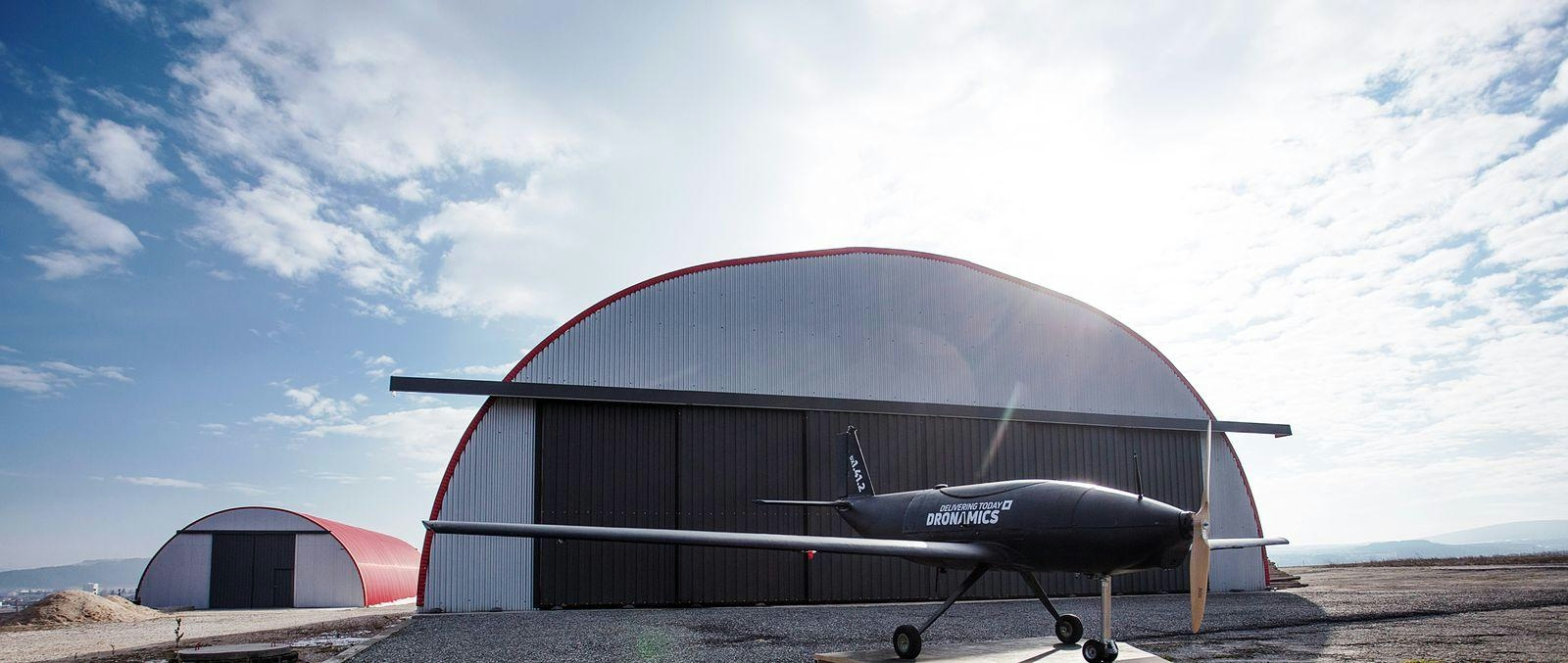
Kawasaki and Dronamics Collaborate on Advanced UAV Engine Development
Kawasaki Motors has entered into a strategic partnership with Dronamics to develop next-generation piston engines specifically designed for unmanned aerial vehicles (UAVs). The collaboration centers on enhancing the propulsion system of Dronamics’ flagship cargo UAV, the Black Swan. By combining Kawasaki’s extensive experience in engine design with Dronamics’ expertise in UAV technology, the partnership aims to establish new benchmarks in performance and efficiency for both unmanned and general aviation sectors.
Advancing Long-Distance Cargo UAV Capabilities
The Black Swan UAV is engineered to carry payloads of up to 350 kilograms across distances of up to 2,500 kilometres, representing a significant advancement in long-range cargo delivery solutions. Integrating Kawasaki’s state-of-the-art aero piston engines into the Black Swan platform is expected to elevate propulsion standards within the rapidly evolving UAV market. This integration seeks to enhance operational efficiency and reliability, positioning the Black Swan as a transformative asset in cargo aviation.
Comprehensive Development and Industry Impact
The partnership covers the entire engine development lifecycle, including joint research and development, integration engineering, flight testing, and performance validation. This holistic approach is intended to expedite the commercial deployment of advanced UAV propulsion systems while addressing challenges such as technological integration, regulatory compliance, and intensifying market competition.
Konstantin Rangelov, Co-Founder and CTO of Dronamics, highlighted the importance of the collaboration, stating that the alliance with Kawasaki Motors represents a pivotal advancement in unmanned aviation technology. He emphasized that the partnership goes beyond merely adopting Kawasaki’s aero piston engines, focusing instead on jointly shaping the future of aircraft performance. Rangelov also noted that Kawasaki’s choice to collaborate on the Black Swan platform reflects Dronamics’ robust technological foundation and signals Kawasaki’s renewed commitment to aviation propulsion innovation.
Industry analysts suggest that this collaboration may prompt competitors to accelerate their own UAV engine development efforts to remain competitive. Early market responses have been favorable, with expectations centered on innovation and enhanced performance in UAV propulsion technologies.
By leveraging their combined expertise, Kawasaki and Dronamics are positioning themselves at the forefront of sustainable and efficient unmanned cargo aviation. The long-term partnership is anticipated to not only strengthen the Black Swan’s market position but also stimulate broader technological advancements within the UAV industry.

Etihad Airways Suspends Airbus A380 Flights on Key Route

Aditya Birla Group Seeks Approval for Aircraft Leasing in GIFT City

Qatar Airways Highlights Innovation and Connectivity at Arabian Travel Market 2026

Hong Kong's Five-Year Plan Includes Andrew Fan's Aircraft Parts Processing Hub Proposal

ACIA Aero Leasing Delivers ATR72-600 to Air Nostrum

RTX Appoints Jill Albertelli as Head of Pratt & Whitney

TAT Technologies Joins Beyond Aero Hydrogen Aircraft Program

AURAK Study Highlights Barriers to Air Taxi Adoption in Emerging Economies

Xiamen Air Selects Altitude for 787 Maintenance at Heathrow

Etihad and Swissport Extend Global Partnership
