
Orquesta conocimientos de IA para convertirlos en acción

Tendencias
Categories
Key Considerations for Aviation Deals in Dubai
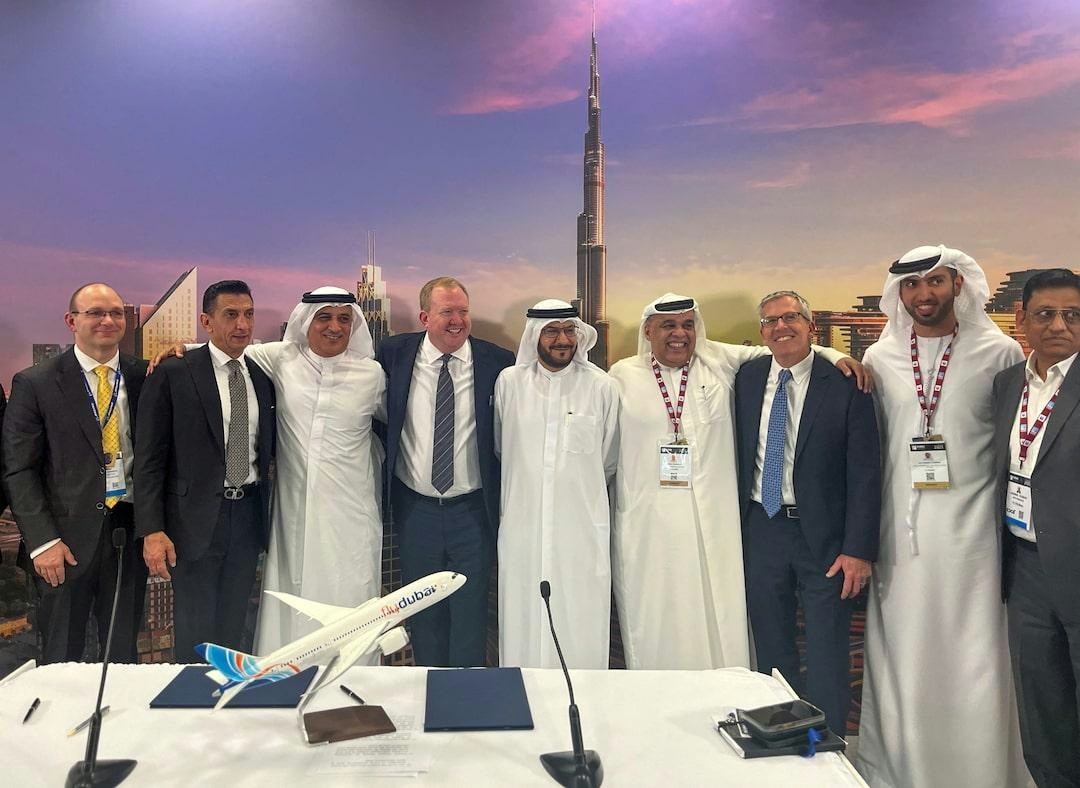
Key Considerations for Aviation Deals in Dubai
Aircraft Registration and Deregistration Procedures
Aircraft registration in Dubai is regulated under Part V of the Civil Aviation Regulations (CAR) and is administered by the General Civil Aviation Authority (GCAA). The process for corporate owners, operators, and mortgagees requires the submission of both online and hard copy application forms, accompanied by a comprehensive set of supporting documents. These documents typically include notarised powers of attorney authorizing representatives before the GCAA, certified copies of the owner’s constitutional documents and corporate registry extracts, registers of directors or equivalent records, and certified copies of the aircraft bill of sale, mortgage agreements (if applicable), and lease contracts. Additionally, applicants must provide the Irrevocable Deregistration and Export Request Authorization (IDERA), non-registration or deregistration certificates (except for new aircraft), notarised “no objection” letters from lessors and mortgagees, certified insurance certificates, and digital copies of all submitted documents on a CD or flash drive. The relevant registration fee must also be paid. The registration process for commercial aircraft generally spans two to six weeks, although this timeframe can vary depending on the operator and any preparatory measures undertaken prior to delivery.
Deregistration follows a similarly stringent protocol. Applicants are required to furnish the GCAA with detailed aircraft information, including make, model, and registration mark, along with the reason for deregistration and export registry details if applicable. Owner consent and evidence of corporate authority must be provided, as well as notarised no objection certificates from mortgagees. If the applicant is not the operator, an operator’s acknowledgment or evidence of lease termination is necessary. The process also demands the surrender of original certificates such as registration, noise, radio licence, and airworthiness certificates, proof of removal of registration marks, and cancellation of Mode S and ELT codes. Deregistration consent or IDERA revocation letters must accompany the application. Payment of the relevant fee and settlement of any outstanding charges are mandatory. Typically, deregistration is completed within one to two weeks, though timelines may vary based on the operator’s identity and preparatory actions.
Regulatory and Market Environment
Beyond procedural requirements, aviation transactions in Dubai are conducted within a complex and evolving regulatory and market landscape. Regulatory scrutiny has intensified, as evidenced by ongoing antitrust reviews in the merger clearance process for Dubai Aerospace Enterprise’s acquisition of Macquarie AirFinance. While the transaction has received approvals in Australia, India, and the European Union, it remains under review in other jurisdictions, underscoring the intricate nature of cross-border aviation deals.
Market conditions further complicate the environment for aviation deals. The UAE hospitality sector faced significant challenges in the first half of 2026, with regional disruptions adversely affecting international travel demand. Competitive pressures are also apparent, highlighted by Qatar Airways’ abrupt postponement of a planned 21-hour route, reflecting broader uncertainties within the industry. Additional challenges include delays in aircraft deliveries, volatile fuel prices, and concerns over profitability. These issues are exemplified by Boeing’s recent $280 million loss related to the Air Force One programme and Rolls-Royce’s upward revision of its financial guidance for 2026.
In this context, parties engaged in aviation transactions in Dubai must carefully navigate not only the detailed regulatory processes governing aircraft registration and deregistration but also the broader market and industry headwinds that may influence deal timelines, valuations, and strategic outcomes.

Etihad Airways Suspends Airbus A380 Flights on Key Route

Aditya Birla Group Seeks Approval for Aircraft Leasing in GIFT City

Qatar Airways Highlights Innovation and Connectivity at Arabian Travel Market 2026

Hong Kong's Five-Year Plan Includes Andrew Fan's Aircraft Parts Processing Hub Proposal

ACIA Aero Leasing Delivers ATR72-600 to Air Nostrum

RTX Appoints Jill Albertelli as Head of Pratt & Whitney

TAT Technologies Joins Beyond Aero Hydrogen Aircraft Program

AURAK Study Highlights Barriers to Air Taxi Adoption in Emerging Economies

Xiamen Air Selects Altitude for 787 Maintenance at Heathrow

Etihad and Swissport Extend Global Partnership
