Imagen

Orquesta conocimientos de IA para convertirlos en acción

¡Únete hoy a la lista de espera de AeroGenie!

Tendencias

Categories

Korean Air Showcases New Technologies at World Smart City Expo 2025
July 16, 2025By ePlane AI
Korean Air Showcases New Technologies at World Smart City Expo 2025
0
0
Korean Air
Advanced Air Mobility
Digital MRO

Korean Air Showcases New Technologies at World Smart City Expo 2025

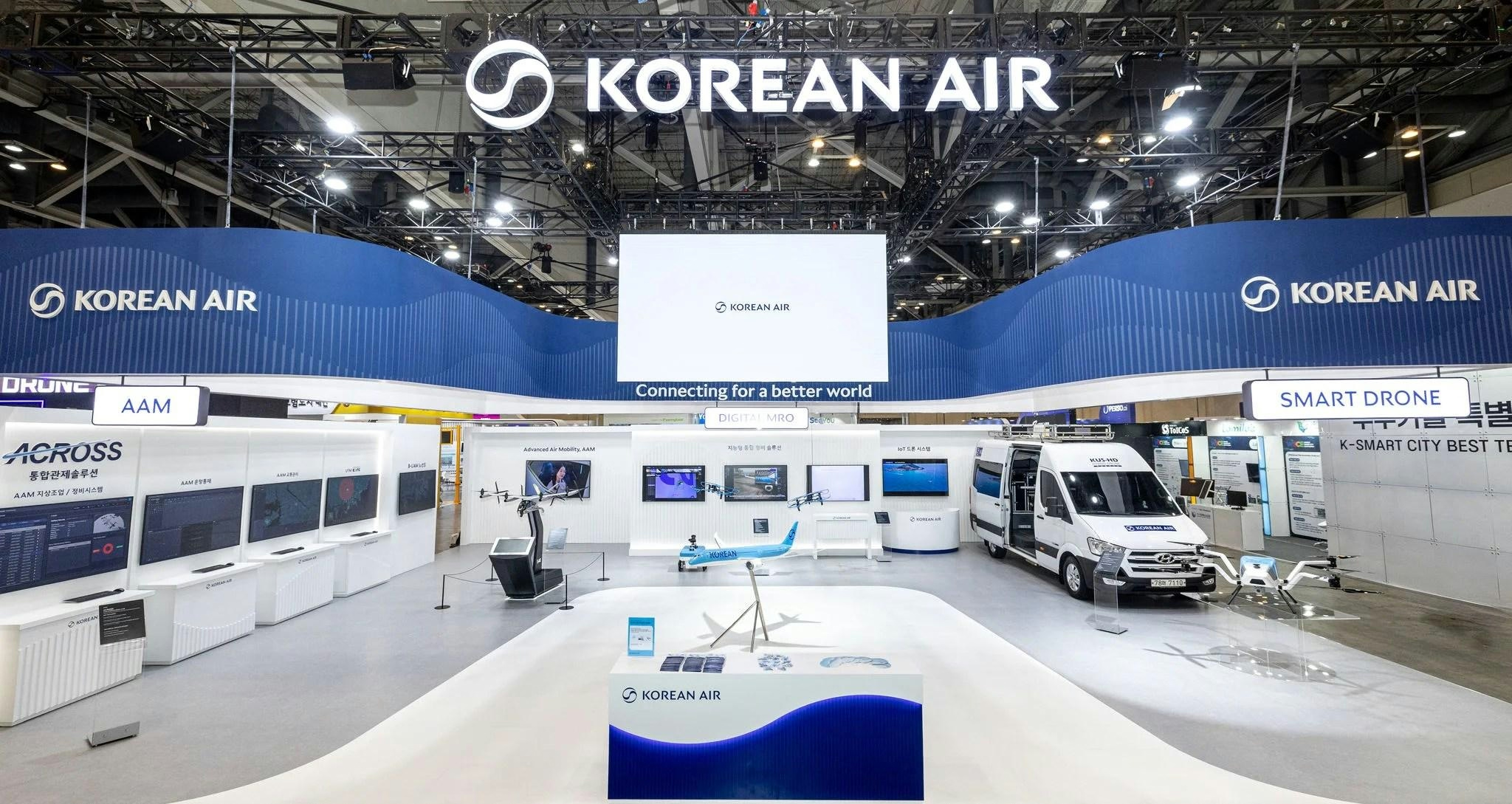
Busan, South Korea – July 16, 2025 – Korean Air is presenting its latest innovations in smart mobility and aviation at the World Smart City Expo 2025 (WSCE), held from July 15 to 17 at Busan BEXCO. Organized by South Korea’s Ministry of Land, Infrastructure and Transport alongside the Ministry of Science and ICT, the expo has established itself as Asia’s premier smart city exhibition since its inception in 2017.

Advancing Smart Mobility and Aviation

At this year’s event, Korean Air is emphasizing its leadership in future transportation by unveiling cutting-edge developments in three key areas: Advanced Air Mobility (AAM), digital Maintenance, Repair and Overhaul (MRO), and smart drone technology. These innovations form the cornerstone of the airline’s strategy to drive progress and sustainability within the aviation sector.

The World Smart City Expo serves as a global stage for next-generation urban and mobility solutions. Building on last year’s attendance of over 39,000 visitors and participation from more than 330 organizations across 70 countries, the 2025 edition aims to exceed these milestones and set new industry standards.

Korean Air’s commitment to digital transformation is demonstrated through its adoption of Urban Air Mobility (UAM) and other smart technologies. Among the highlights is an inspection drone equipped with Internet of Things (IoT) capabilities, designed to replace traditional boom lifts during aircraft inspections. This innovation enhances both safety and operational efficiency, positioning the drone as a vital asset for broader smart mobility applications.

In addition, the airline is introducing a hybrid drone with an extended operational range, capable of supporting land and maritime research, reconnaissance, and delivery missions. These advancements reflect Korean Air’s broader initiative to integrate smart technologies into its operations, thereby improving safety and efficiency.

AI-Driven Maintenance and Operational Efficiency

A significant feature of Korean Air’s exhibition is its AI-powered chatbot, which aids technicians in diagnosing and resolving maintenance issues with greater speed and accuracy. By leveraging sophisticated algorithms, the chatbot contributes to increased aircraft uptime and reduced operational costs. This AI-driven approach underscores the airline’s focus on smarter, more cost-effective maintenance solutions.

Nonetheless, the integration of such advanced technologies presents notable challenges. Korean Air must ensure the seamless incorporation of innovations like wearable robots into existing maintenance workflows, provide comprehensive training for its workforce, and manage the substantial costs associated with deploying these cutting-edge systems.

Industry Impact and Market Response

Korean Air is also highlighting its progress in Advanced Air Mobility, reinforcing its role in developing operational frameworks for next-generation air transport. These efforts align with a broader vision to transform urban transportation and establish new industry benchmarks.

Despite these technological strides, market reactions have been mixed. Some competitors remain skeptical about the feasibility and cost-effectiveness of rapid adoption. In response, rival airlines may either pursue similar innovations or explore alternative strategies to sustain their competitive positions.

Future Outlook

Korean Air’s participation at WSCE 2025 underscores both the opportunities and complexities inherent in the ongoing transformation of the aviation industry. The airline’s sustained investments in digital and sustainable technologies demonstrate its commitment to shaping the future of air travel, even as it navigates the challenges of technological integration and evolving market dynamics.

More news
Blackshape Unveils Hybrid-Electric ePrime Aircraft with 3-5 Hour Endurance, Targets Surveillance Use

Blackshape Unveils Hybrid-Electric ePrime Aircraft with 3-5 Hour Endurance, Targets Surveillance Use

Blackshape Unveils Hybrid-Electric ePrime Aircraft with 3-5 Hour Endurance, Targets Surveillance Market Italian aircraft manufacturer Blackshape has introduced the ePrime, a hybrid-electric demonstrator designed to offer between three and five hours of flight endurance while significantly reducing fuel consumption and emissions. This two-seat aircraft, presented as a technological testbed, aims to meet the growing demand for efficient, low-emission platforms suitable for both pilot training and surveillance operations. Innovative Hybrid Powertrain Inspired by Automotive Technology The ePrime employs a parallel hybrid system adapted from automotive engineering. A conventional combustion engine is positioned at the rear of the aircraft, responsible for cruise flight and functioning as an in-flight generator. Meanwhile, batteries located in the nose power electric motors during energy-intensive phases such as takeoff and climb. This dual system allows the combustion engine and electric motors to operate simultaneously, with the engine recharging the batteries during flight. This approach, proven in the automotive sector, represents a novel adaptation for aviation applications. Endurance Capabilities and Operational Flexibility Blackshape reports that the current battery configuration supports approximately three hours of flight time, with the potential to extend endurance to four or five hours as battery technology advances. Flight duration varies depending on passenger load and the number of battery modules installed. The ePrime’s performance is comparable to that of the conventional Prime model, which offers a 4.5-hour range on fuel alone. The modular battery design enables operators to customize the aircraft for specific missions, balancing endurance, payload capacity, and operational costs. Targeting Surveillance and Training Markets While the ePrime is positioned primarily as a sustainable trainer for private pilots and flight schools, Blackshape is also focusing on the surveillance sector. The aircraft’s extended loiter time and quiet electric operation make it well-suited for intelligence, surveillance, and reconnaissance (ISR) missions. Blackshape references previous optionally-piloted demonstrations conducted with the Italian Navy and envisions future autonomous, fully “dronized” ISR operations. The ePrime is intended to fill a niche between expensive turboprop aircraft and limited-endurance drones, offering persistent monitoring capabilities at a lower cost. Market Context and Competitive Challenges The hybrid-electric and uncrewed aircraft market is rapidly evolving, with numerous companies vying for leadership in surveillance and defense applications. Blackshape’s ePrime faces competition from platforms such as Xer Technologies’ X8 PRO, which offers similar endurance and payload capabilities. Industry reactions are mixed; some stakeholders express enthusiasm about the potential for reduced operating costs and carbon emissions, while others remain cautious, awaiting further technological maturation. Competitors may respond by enhancing their own hybrid-electric offerings or by targeting alternative market segments to differentiate themselves from Blackshape’s approach. Technological Significance and Industry Implications Blackshape describes the ePrime as a “technological test bench,” with its first flight anticipated soon, although certification timelines remain uncertain. The ePrime joins a growing roster of hybrid demonstrators, including RTX’s Dash 8 and AURA AERO’s ERA, but distinguishes itself by focusing on the light aircraft segment. By validating hybrid concepts at this scale, Blackshape aims to mitigate risks associated with the technology and facilitate broader adoption within general aviation. As the aviation industry faces mounting pressure to reduce emissions and operating costs, the ePrime represents a concrete step toward a hybrid future. It delivers innovation in a practical, two-seat platform that could have significant influence across both surveillance and pilot training markets.
ILA Berlin 2026 Showcases Large Drones, Military Aircraft, and Advanced Aerospace Technology

ILA Berlin 2026 Showcases Large Drones, Military Aircraft, and Advanced Aerospace Technology

ILA Berlin 2026 Highlights Large Drones, Military Aircraft, and Advanced Aerospace Technologies ILA Berlin 2026 is emerging as a landmark event in the international aerospace calendar, showcasing a range of large drones, sophisticated military aircraft, and innovative aerospace technologies. Against the backdrop of a rapidly evolving aviation sector, the exhibition presents developments that promise to redefine the future of flight, emphasizing both enhanced operational capabilities and sustainability. A Comprehensive Aerospace Showcase This year’s edition features over 750 exhibitors representing 37 countries, positioning ILA Berlin as one of Europe’s most extensive aerospace exhibitions. The event covers the full spectrum of the aviation industry, including commercial airliners, military platforms, helicopters, unmanned aerial vehicles, research projects, and cutting-edge technologies. Distinct from conventional trade fairs, ILA Berlin integrates live flight demonstrations conducted at Berlin Brandenburg Airport, allowing attendees to observe aircraft performance and technological advancements in authentic operational settings. Among the standout exhibits is the German Armed Forces’ Heron TP drone, a highly advanced unmanned aerial vehicle designed for long-range reconnaissance missions with extended endurance. The Heron TP will conduct flyovers during the event, transmitting high-resolution imagery in real time across the exhibition, thereby providing a direct demonstration of its surveillance capabilities. Another significant debut is the Leonardo AW249 combat helicopter, equipped with state-of-the-art sensor systems, network-enabled mission management, and a design optimized for future battlefield demands. These platforms exemplify the ongoing transformation in military aviation toward enhanced intelligence gathering, connectivity, and operational adaptability. Airbus also presents a series of innovations focused on improving efficiency and sustainability, reflecting the aerospace industry’s commitment to reducing environmental impact while pushing technological boundaries. The participation of leading manufacturers underscores the growing strategic importance of aerospace technology in economic growth, national security, and environmental responsibility. Challenges and Market Implications Despite the promising advancements, the rapid pace of innovation introduces considerable challenges. Securing adequate funding and political backing for advanced aerospace projects remains essential, alongside ensuring regulatory compliance for emerging technologies. The integration of drones and military aircraft into existing airspace frameworks presents additional complexities, necessitating close collaboration among manufacturers, regulatory bodies, and defense agencies. Market responses to ILA Berlin 2026 are anticipated to include increased interest from defense contractors and investors seeking to leverage new aerospace technologies. This dynamic is likely to prompt competitors to accelerate the development of comparable platforms and pursue strategic partnerships aimed at strengthening their innovation pipelines and market positions. Serving as both a commercial marketplace and a strategic forum, ILA Berlin 2026 brings together governments, airlines, defense organizations, and aerospace companies. By combining advanced engineering, sustainability initiatives, and live operational demonstrations, the event is set to influence the direction of global aerospace development in the years ahead.
TAT Technologies Secures $45 Million in Multi-Year MRO Contracts

TAT Technologies Secures $45 Million in Multi-Year MRO Contracts

TAT Technologies Secures $45 Million in Multi-Year MRO Contracts TAT Technologies announced on Wednesday that it has secured $45 million in new long-term maintenance, repair, and overhaul (MRO) contracts, marking a significant expansion of its service portfolio. These multi-year agreements, involving several partners within the aviation industry, will see the company provide comprehensive maintenance and repair services for a variety of aircraft components. The contracts are expected to ensure a steady workflow for TAT’s MRO facilities, which specialize in heat management systems and other critical aviation hardware. Expanding Market Presence and Operational Commitments By finalizing these deals, TAT Technologies is formalizing ongoing relationships with existing clients while broadening its operational commitments within the aerospace sector. The agreements are anticipated to strengthen the company’s position in the competitive MRO market and may offer a short-term boost in investor confidence. This development reflects TAT’s strategic focus on expanding its footprint in a sector that demands high technical expertise and reliability. Challenges in a Competitive Landscape Despite this positive momentum, TAT faces significant challenges as it moves forward. The MRO sector is marked by intense competition from well-established industry players, and TAT’s recent growth could trigger increased efforts by competitors to secure similar contracts. This heightened competition may result in price pressures and attract new entrants, further intensifying the competitive environment. The company’s ability to maintain cost-efficiency while delivering on its contractual obligations will be critical to sustaining these new agreements. The long-term success of these contracts will depend on TAT Technologies’ performance in meeting client expectations and managing operational costs effectively. As the company expands its service offerings, its execution will be closely monitored by both clients and investors, underscoring the importance of operational excellence in this dynamic market.
IATA Warns of Severe Impact on Airlines from Rising Jet Fuel Prices

IATA Warns of Severe Impact on Airlines from Rising Jet Fuel Prices

IATA Warns of Severe Impact on Airlines from Rising Jet Fuel Prices The global airline industry is confronting unprecedented challenges as jet fuel prices escalate sharply, with the International Air Transport Association (IATA) issuing a stark warning about the severe repercussions for carriers worldwide. At the S&P Global Energy Middle East Petroleum and Gas Conference, Daniel Chereau, IATA’s head of fuel, emphasized the detrimental impact of soaring refinery profit margins—referred to as crack spreads—on airline operations and financial performance. Middle East Conflict Disrupts Supply and Drives Prices Higher The ongoing conflict in the Middle East has been a principal factor exacerbating the crisis. This region, a vital supplier of aviation fuel, has experienced significant disruptions due to the effective closure of the Strait of Hormuz and repeated attacks on energy infrastructure. These developments have severely impaired jet fuel production and exports, resulting in acute shortages and historic price surges. IATA reports that jet fuel costs have surged by 101.3% compared to the previous year. In Northwest Europe, the jet fuel crack spread recently reached an unprecedented peak of over $121 per barrel, a stark increase from approximately $30 per barrel before the conflict intensified in late February. This dramatic rise has left many airlines, particularly those lacking sophisticated financial hedging mechanisms, highly vulnerable to market volatility. Financial and Operational Strains on Airlines While some carriers have temporarily mitigated the impact through advanced hedging strategies, many—especially low-cost airlines that depend on maintaining low ticket prices—are struggling to absorb the financial strain. The consequences are already evident in airline earnings; Singapore Airlines, for instance, reported a 57.4% decline in annual profit, attributing the downturn largely to escalating fuel expenses. The crisis has also precipitated operational disruptions. Chereau noted that “demand destruction” is now affecting the aviation sector, driven not only by rising airfares but also by fuel shortages that have forced some airlines to cancel flights. He highlighted that in certain regions, airports have experienced temporary fuel shortages, further complicating operations. Although IATA refrained from identifying specific airlines or regions most affected, the association cautioned that such fuel scarcities and flight cancellations are likely to become more frequent if the conflict persists. The financial repercussions for airlines are expected to intensify in the coming months amid ongoing uncertainty over fuel availability and sustained high costs. The broader aerospace industry may also face significant challenges as the situation continues to evolve. As the crisis develops, airlines are preparing for further operational disruptions, increased expenses, and potential reductions in service. The full scope of the impact will become clearer as the industry navigates this volatile and uncertain fuel market.
TAT Secures $45 Million in New Airline Repair Contracts Over Next Decade

TAT Secures $45 Million in New Airline Repair Contracts Over Next Decade

TAT Technologies Secures $45 Million in Long-Term Airline Repair Contracts CHARLOTTE, N.C., June 3, 2026 – TAT Technologies Ltd. (Nasdaq: TATT, TASE: TATT) has announced the signing of multiple long-term maintenance, repair, and overhaul (MRO) agreements with international commercial and cargo airlines. These contracts, valued at approximately $45 million in estimated revenue over the next five to ten years, encompass auxiliary power unit (APU) platforms under TAT’s original equipment manufacturer (OEM) authorization, as well as MRO services for heat exchangers. The agreements are expected to bolster the company’s standing in the global aviation aftermarket and improve revenue visibility. Strengthening Market Position Amid Industry Dynamics Igal Zamir, CEO and President of TAT, described the new contracts as a significant milestone in the company’s global sales efforts. He highlighted sustained strong demand across TAT’s MRO operations, driven by robust booking activity and growing engagement from both existing and new airline customers worldwide. According to Zamir, these agreements not only enhance revenue visibility and backlog but also expand TAT’s footprint across key international airline programs. The aviation MRO sector is currently experiencing what industry experts refer to as a “super cycle,” characterized by elevated demand and increased operational activity. Despite this growth, the sector faces considerable challenges, including ongoing labor and material shortages, supply chain disruptions, and rising costs. Geopolitical tensions, notably the ongoing Iran-U.S. conflict, have further complicated raw material supply chains, introducing additional uncertainty into long-term planning. Moreover, mounting sustainability pressures are prompting airlines and MRO providers to adopt more environmentally responsible repair strategies. Competitive Landscape and Strategic Moves TAT’s recent contract wins come amid heightened competition and consolidation within the MRO industry. Competitors are pursuing strategic acquisitions to broaden their capabilities and market share. A notable example is VSE Corporation’s $2 billion acquisition of Precision Aviation Group, signaling intensified competition and a trend toward consolidation as companies respond to the sector’s evolving challenges. In a related development, TAT announced the sale of its minority interest in an unconsolidated entity, a transaction expected to generate a one-time pre-tax gain of approximately $4 million in the second quarter of 2026. This move aligns with the company’s broader strategy to optimize its portfolio and strengthen financial performance. Zamir expressed confidence in the company’s trajectory, stating that the ongoing momentum positions TAT to achieve anticipated revenue growth and EBITDA expansion throughout 2026 and beyond. About TAT Technologies Ltd. TAT Technologies Ltd. is a leading provider of products and services for the commercial and military aerospace and ground defense sectors. The company specializes in OEM heat transfer solutions, aviation accessories, and MRO services for a variety of aircraft components. Its Limco subsidiary operates an FAA-certified repair station that serves airlines, cargo carriers, maintenance centers, and military clients worldwide. For further information, visit www.tat-technologies.com.
Assaia Achieves SOC 2 Type 2 Certification for Aviation AI Security

Assaia Achieves SOC 2 Type 2 Certification for Aviation AI Security

Assaia Achieves SOC 2 Type 2 Certification for Aviation AI Security Assaia, a prominent provider of AI-enabled turnaround management solutions, has attained the SOC 2 Type 2 certification, a significant benchmark in data security and compliance within aviation operations technology. This certification, awarded following an independent audit conducted by the global cybersecurity firm A-LIGN, places Assaia among a select group of technology providers that meet stringent, independently verified standards for enterprise security. Ensuring Security in Complex Aviation Environments Christiaan Hen, CEO of Assaia, emphasized the importance of this achievement in the context of highly interconnected airport and airline ecosystems. He noted that customers demand reliability and robust governance over operational and customer data. The SOC 2 Type 2 certification validates that Assaia’s security controls not only meet rigorous standards but are also consistently maintained over time. As artificial intelligence becomes increasingly integrated into daily aviation operations, maintaining this level of trust is critical. Developed by the American Institute of Certified Public Accountants (AICPA), the SOC 2 Type 2 framework is widely regarded as one of the most exacting standards for evaluating data security and risk management over an extended period. Assaia’s certification arrives amid growing emphasis within the aviation sector on advanced security solutions, particularly as AI-driven technologies gain prominence. Challenges and Industry Dynamics Despite this milestone, the certification also highlights the persistent challenges in the cybersecurity landscape. The rapid evolution of threats—many accelerated by advances in AI—means that compliance is an ongoing endeavor rather than a one-time achievement. While Assaia’s certification is expected to attract increased interest from aviation firms seeking robust security assurances, some industry experts remain cautious about the effectiveness of AI-driven Security Operations Centers (SOCs). Concerns persist regarding AI’s capacity to adapt to novel threats and the indispensable role of human oversight in critical security functions. In response to these market dynamics, competitors are intensifying their efforts. For instance, Exaforce recently secured $125 million in funding to advance its agentic SOC platform, reflecting a broader trend of investment in AI-powered security solutions. This competitive momentum is anticipated to fuel further innovation and scrutiny across the sector. The expanding use of AI in SOCs is also prompting important discussions about the future role of human analysts. While vendors highlight AI’s ability to streamline investigations and accelerate response times, they acknowledge that skilled professionals remain essential for supervising and validating AI-driven processes. Assaia’s SOC 2 Type 2 certification not only underscores its dedication to security and compliance but also mirrors the aviation industry’s ongoing challenge of balancing technological progress with the need for resilient and adaptive cybersecurity strategies. As AI continues to reshape aviation operations, the integration of automation with human expertise will be vital to sustaining trust and operational resilience.
Ascent Aviation and Israel Aerospace Industries Begin Next Phase of Boeing 777-300ER Conversion in Arizona

Ascent Aviation and Israel Aerospace Industries Begin Next Phase of Boeing 777-300ER Conversion in Arizona

Ascent Aviation and Israel Aerospace Industries Advance Boeing 777-300ER Freighter Conversion in Arizona Expansion of Conversion Facilities in Marana Ascent Aviation Services and Israel Aerospace Industries (IAI) have reached a pivotal milestone in their collaboration to expand the Boeing 777-300ERSF passenger-to-freighter conversion program in North America. The completion of two new widebody hangars at Ascent’s Pinal Air Park facility in Marana, Arizona, marks a significant investment of $70 million and triples the site’s widebody hangar capacity. These 90,000-square-foot facilities are purpose-built to support IAI’s global 777-300ERSF conversion program, positioning Arizona as a strategic hub for next-generation freighter conversions. Preparations are now underway to begin inducting Boeing 777-300ER aircraft for cargo conversion starting in the third quarter of 2026. Under a long-term agreement, Ascent will operate two Boeing 777-300ERSF conversion lines as IAI’s North American site. The converted aircraft are expected to address the growing global demand for long-haul cargo capacity by extending the operational life of 777-300ER passenger jets through IAI’s advanced freighter modification technology. David Querio, CEO of Ascent Aviation Services, described the new hangars as a “transformational moment” for both the company and the aviation industry in Arizona, emphasizing the partnership’s commitment to innovation, operational excellence, and sustained investment in the future of global air cargo. Program Developments and Industry Challenges IAI’s 777-300ERSF program is the first of its kind and has rapidly become a preferred solution for cargo operators seeking increased volume and efficiency. The Marana facility is expected to play a critical role in meeting the anticipated worldwide demand for widebody freighter aircraft. However, the program faces regulatory challenges, particularly with the Extended-range Twin-engine Operational Performance Standards (ETOPS) certification process, which is projected to extend into 2027. This may affect the timeline for full operational deployment of the converted aircraft. In parallel, IAI is advancing its A330-300 freighter conversion program, which is on track to achieve certification by the end of 2026. These initiatives come amid intensifying competition in the air cargo market, where IAI aims to consolidate its position as a leading provider of freighter conversion solutions. Yaacov Berkovitz, Executive Vice President and General Manager of IAI Aviation Group, highlighted the significance of the Marana hangars and the forthcoming induction of the first aircraft, underscoring the joint effort to establish a world-class conversion operation that supports the growth of the international cargo market. The expansion is also expected to generate hundreds of highly skilled aviation jobs in Southern Arizona, further cementing Marana’s reputation as a burgeoning aerospace and aviation center. The first Boeing 777-300ER aircraft is scheduled to arrive at the Marana facility in the third quarter of 2026 for conversion under IAI’s Supplemental Type Certificate (STC) program, as both companies continue to navigate regulatory and market dynamics to deliver next-generation cargo solutions.
Eco Innovation Promotes Sustainable Aviation Fuel to U.S. Airlines

Eco Innovation Promotes Sustainable Aviation Fuel to U.S. Airlines

Eco Innovation Group Advances Sustainable Aviation Fuel Adoption Among U.S. Airlines **Southlake, Texas, June 3, 2026** – Eco Innovation Group, Inc. (OTC: ECOX), operating under the name American EcoFuels, has launched a strategic outreach initiative aimed at fostering long-term sustainable aviation fuel (SAF) supply agreements with major U.S. airlines. Over the coming eight weeks, the company plans to engage with several leading carriers to explore commercial frameworks designed to accelerate the adoption of domestically produced SAF, thereby supporting the aviation sector’s broader decarbonization objectives. Addressing Industry Challenges and Market Dynamics The aviation industry is under increasing pressure to reduce its carbon footprint, yet sustainable aviation fuel accounted for only 0.6% of total jet fuel consumption in the United States last year. This limited uptake is primarily due to high production costs and constrained supply, challenges compounded by the continued prioritization of traditional fuel profit margins by major oil companies over SAF development. Airlines are simultaneously navigating consolidation pressures and volatile oil prices, with some pursuing mergers and acquisitions while others advocate for regulatory reforms to better align SAF supply with growing demand. This approach mirrors strategies adopted by international competitors such as Japan Airlines and All Nippon Airways. American EcoFuels’ initiative seeks to address these challenges by establishing the commercial and operational terms necessary to scale SAF production and supply. Discussions with airline stakeholders will focus on critical elements including long-term supply volumes, delivery schedules, contract durations, pricing mechanisms, carbon intensity targets, and lifecycle emissions reductions. Additional considerations include the allocation of environmental attributes and credits, eligibility under federal and state renewable fuel programs, sustainability certifications, approved feedstock sources, ASTM fuel certification, and airline operational requirements. The company will also address logistics, storage, blending, delivery infrastructure, performance guarantees, risk allocation, and financing support. Strategic Engagement to Secure Future Growth Executives at American EcoFuels emphasize that securing long-term offtake agreements is essential not only for guaranteeing fuel sales but also for providing demand visibility, which is crucial for project development and financing new production capacity. Brian Vitale, Director of Aviation for American EcoFuels, stated, “We are looking forward to engaging directly with airline stakeholders regarding their long-term fuel requirements, sustainability objectives, and operational priorities. Our goal is to develop commercial relationships that provide airlines with access to domestically produced SAF while creating the certainty needed for future production growth and infrastructure investment.” Brent Nelson, CEO of Kepler GTL Technologies Inc., underscored the importance of these discussions, noting, “Long-term offtake relationships are a critical component of commercializing any SAF platform. These discussions will help us better understand airline requirements and establish frameworks that support future production and financing initiatives. As regulatory requirements and sustainability commitments evolve, we believe airlines will increasingly seek reliable domestic SAF sources.” The meetings are scheduled throughout June and July 2026, representing a proactive effort by American EcoFuels to address both industry demand and the broader challenges impeding SAF adoption in the United States.
Azur Air Restrictions Lifted, Some Aircraft Grounded for Engine Maintenance

Azur Air Restrictions Lifted, Some Aircraft Grounded for Engine Maintenance

Azur Air Restrictions Lifted Amid Ongoing Maintenance Challenges Russia’s federal air transport regulator, Rosaviatsia, has lifted operational restrictions on leisure airline Azur Air, three months after imposing them due to concerns over flight delays and technical issues. The decision, announced on June 2, follows a thorough assessment confirming that Azur Air has implemented a corrective action plan to address the deficiencies identified during an unscheduled inspection. The initial restrictions were introduced after the inspection revealed excessive flight delays, cancellations, and technical problems within the airline’s fleet. At that time, Azur Air faced the potential revocation of its air operator’s certificate if it failed to rectify these issues promptly. Grounding of Aircraft and Enhanced Maintenance Protocols Despite the lifting of restrictions, Rosaviatsia has ordered three of Azur Air’s aircraft to remain grounded following borescope inspections that detected deviations in engine parameters. The remaining six aircraft in the fleet have been cleared for operation, according to Rosaviatsia chief Dmitry Yadrov. Azur Air’s chief executive, Evgeny Korolev, stressed that the grounded aircraft will only return to service in strict compliance with updated technical regulations. To strengthen safety measures, Azur Air has introduced new requirements for borescope examinations of engines and shortened inspection intervals for critical components to between 150 and 200 cycles. The airline has also invested in additional equipment to support these enhanced maintenance protocols. Furthermore, pilot training on Boeing 757 and 767 simulators has been intensified, with training frequency adjusted according to the number of aircraft types each pilot operates. Comprehensive aircraft inspections will now be conducted twice monthly, surpassing previous standards, and procedures have been revised to ensure adequate spare parts are stocked at Moscow Vnukovo and other line-maintenance stations. Operational Impact and Industry Implications Although the temporary reduction in fleet capacity poses challenges, Azur Air has assured that there will be no cancellations in its summer flight schedule. Nevertheless, the grounding of three aircraft highlights the ongoing necessity for rigorous maintenance and safety oversight. This situation has attracted scrutiny from passengers and industry observers, raising concerns about the airline’s reliability and long-term safety practices. Market analysts suggest that Azur Air’s operational difficulties may provide opportunities for competitors to increase their market share, particularly if the airline’s capacity constraints persist. The heightened maintenance requirements and regulatory oversight are also expected to elevate operational costs and could lead to delays as Azur Air works to restore full service. Rosaviatsia’s decision to lift restrictions signals confidence in the airline’s corrective measures, yet Azur Air’s ability to sustain reliability and safety will remain under close observation throughout the busy summer travel season.
Freebird Airlines Joins BARIG

Freebird Airlines Joins BARIG

Freebird Airlines Joins BARIG Amid Intensifying Competition in German Market The Board of Airline Representatives in Germany (BARIG) has announced the addition of Türkiye-based Freebird Airlines as its newest member, marking a significant expansion of the association’s representation of leisure-focused carriers within the German aviation sector. Approaching its 25th anniversary in 2026, Freebird Airlines operates flights to over 120 destinations, supported by its Malta-registered sister company, Freebird Airlines Europe. The group’s fleet of 14 Airbus A320 aircraft connects 16 German airports to popular holiday destinations including Antalya, Crete, and Fuerteventura. Strategic Importance of Freebird’s Membership Michael Hoppe, BARIG Chairman and Executive Director, emphasized the strategic value of Freebird’s inclusion, highlighting the airline’s strong commitment to the German market. He acknowledged Germany’s resilience as a travel hub but underscored the increasing challenges airlines face due to high government-imposed operating costs. Hoppe reaffirmed BARIG’s ongoing efforts, alongside its member airlines and industry partners, to advocate for improved regulatory and economic conditions that support sustainable aviation growth. Freebird Airlines operates under Gözen Holding, a diversified aviation group with over four decades of industry experience. The company offers a wide range of aviation services beyond passenger flights, including general sales agency operations, security, refuelling, and flight training. Selim Tükenmez, Managing Director of Freebird Airlines, described Germany as a key source market where the airline has maintained a strong presence since its inception. He noted that the expertise developed over the years enables Freebird to remain competitive in both charter and scheduled operations. Tükenmez also highlighted BARIG’s role as a valuable platform for addressing industry challenges and gaining insights critical to the airline’s business strategy. Navigating a Competitive and Regulatory Landscape Freebird’s entry into BARIG coincides with a period of heightened competition in the German aviation market. Established network carriers such as Lufthansa and Condor are expanding their transatlantic routes, intensifying pressure on leisure and budget airlines. Industry analysts suggest that Freebird may face increased scrutiny regarding cost management and operational efficiency, particularly in light of recent financial difficulties experienced by other budget carriers like Spirit Airlines. Legacy airlines are expected to respond with aggressive pricing strategies and targeted marketing campaigns to protect their market share. In addition to competitive pressures, Freebird Airlines will need to navigate complex regulatory and operational challenges as it integrates into BARIG’s collaborative network. While the association provides a forum for collective problem-solving, the evolving market dynamics and regulatory environment will demand strategic adaptation from all members. By joining BARIG, Freebird Airlines becomes part of a network of carriers committed to addressing shared industry issues and strengthening the aviation sector in Germany, even as competition and operational pressures continue to shape the market landscape.
line









