
Orquesta conocimientos de IA para convertirlos en acción

Tendencias
Categories
Lakeland Linder International Airport to Add New Gates and Air Taxi Services
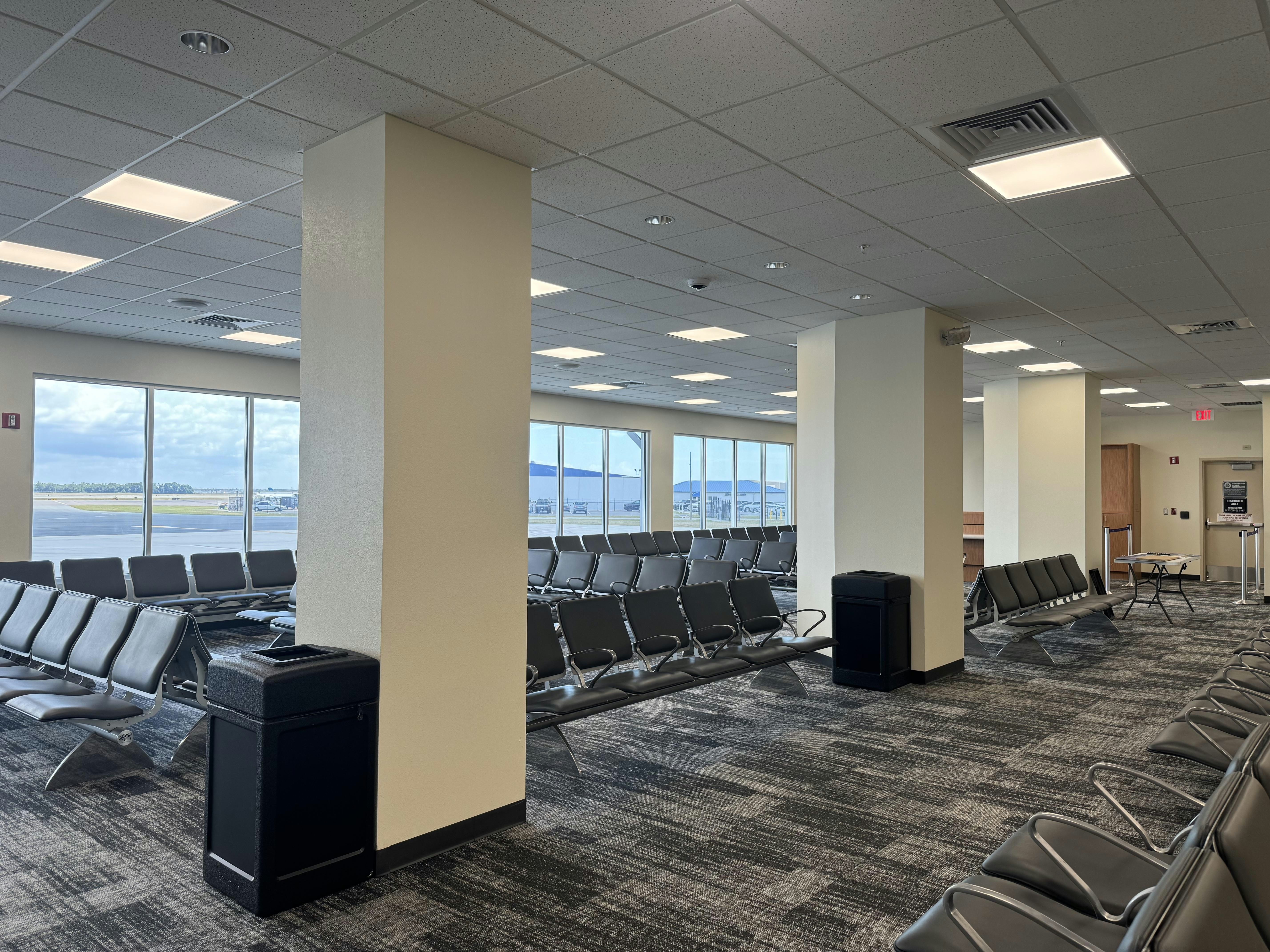
Lakeland Linder International Airport to Expand Facilities and Introduce Air Taxi Services
Lakeland Linder International Airport is embarking on a major expansion project supported by nearly $13 million in federal grants aimed at increasing capacity and integrating advanced air taxi technology. The planned upgrades include the addition of a new terminal gate and three aircraft holding bays, enhancing the airport’s ability to attract major carriers and prepare for emerging trends in air travel.
Federal Funding and Infrastructure Development
The expansion is being driven by two recently awarded federal grants. One grant, amounting to $4.8 million, will finance the construction of a second gate hold room within the terminal. The other grant will fund the development of three new aircraft holding bays. While these investments represent a significant boost for the airport, the $4.8 million allocation has raised budgetary concerns among local officials, who remain cautious about long-term financial commitments and the competitive nature of federal funding distribution.
Despite these reservations, the market response has been largely positive. The additional infrastructure is expected to accommodate increasing passenger volumes and enhance Lakeland Linder’s appeal to major airlines such as United, American, and Southwest. Interim Airport Director Adam Lunn highlighted that the expanded facilities will also support the rapid growth of Avelo Airlines, which currently operates from the airport.
Innovation and the Future of Air Travel
Beyond traditional expansion, Lakeland Linder is designating an area near the terminal for the testing of electric air taxis. These vehicles, envisioned as a future mode of urban air mobility, are planned for research and trial operations by the end of the year. Initial testing will focus on cargo transport, with passenger services anticipated in subsequent phases.
Local resident Brian Nelsen, who has lived in the area since 2005, compared the emerging air taxi technology to a scene from "The Jetsons," emphasizing the convenience of direct flights to destinations such as Houston. He noted that such services could reduce reliance on larger airports in Tampa and Orlando, offering a more streamlined travel experience.
Regional Competition and Project Timeline
The expansion at Lakeland Linder occurs amid heightened competition for federal grants among regional airports. For instance, Sugar Land Regional Airport recently secured $3.5 million in federal funding for runway reconstruction. As Lakeland Linder enhances its infrastructure and services, it may intensify competition for passengers and airline partnerships within Central Florida.
Construction on the new terminal hold room is scheduled to commence in September, followed by work on the aircraft holding bays beginning in October. These projects represent the initial phase of a broader development plan, which envisions a substantial terminal expansion targeted for completion around 2030.
With federal support and a commitment to innovation, Lakeland Linder International Airport is positioning itself as a significant player in the evolving regional air travel market, balancing immediate growth objectives with long-term strategic ambitions.

Etihad Airways Suspends Airbus A380 Flights on Key Route

Aditya Birla Group Seeks Approval for Aircraft Leasing in GIFT City

Qatar Airways Highlights Innovation and Connectivity at Arabian Travel Market 2026

Hong Kong's Five-Year Plan Includes Andrew Fan's Aircraft Parts Processing Hub Proposal

ACIA Aero Leasing Delivers ATR72-600 to Air Nostrum

RTX Appoints Jill Albertelli as Head of Pratt & Whitney

TAT Technologies Joins Beyond Aero Hydrogen Aircraft Program

AURAK Study Highlights Barriers to Air Taxi Adoption in Emerging Economies

Xiamen Air Selects Altitude for 787 Maintenance at Heathrow

Etihad and Swissport Extend Global Partnership
