
Orquesta conocimientos de IA para convertirlos en acción

Tendencias
Categories
MRO Growth Drives Demand for Skilled Workers, Including Military Retirees
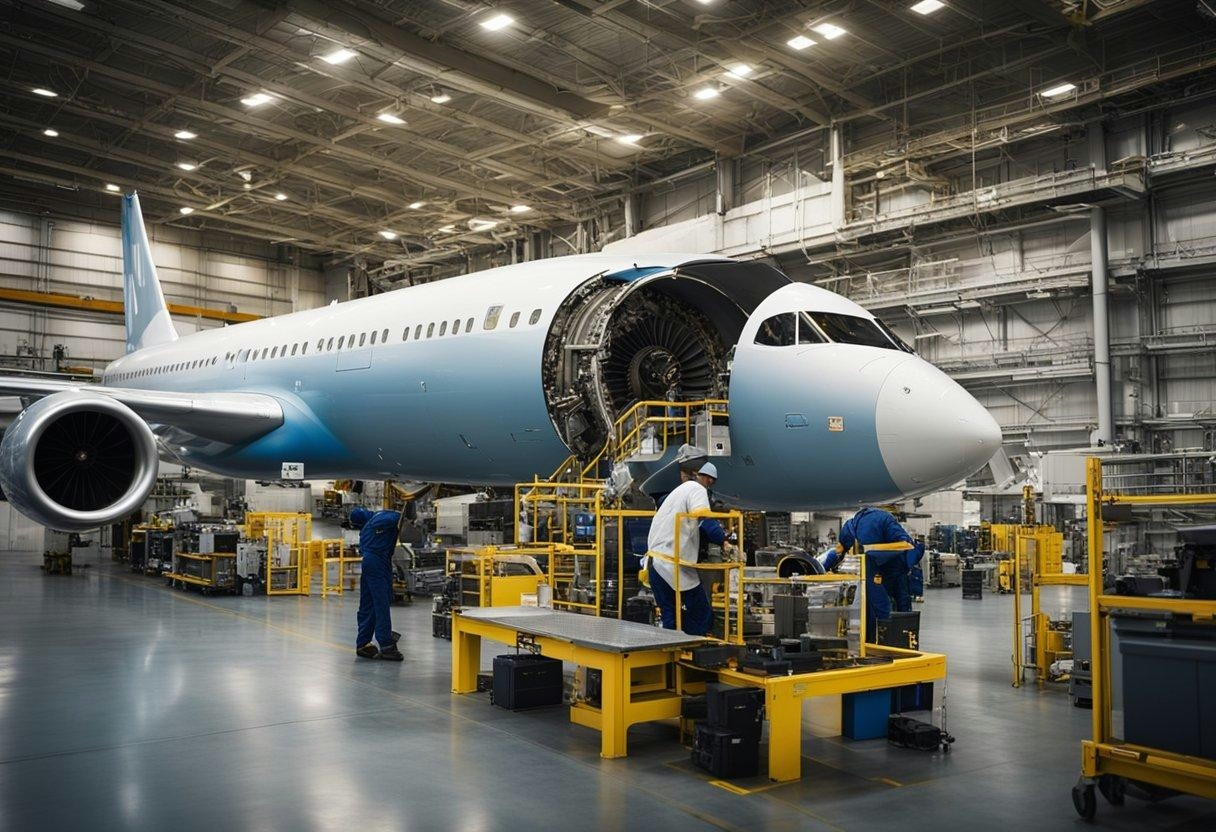
MRO Sector Expansion Spurs Demand for Skilled Workforce, Including Military Veterans
PUTRAJAYA (June 4) — Malaysia’s aircraft maintenance, repair, and overhaul (MRO) industry is experiencing significant growth, driven by increased investment in business aviation. This expansion is creating a heightened demand for skilled workers, with Malaysian Armed Forces (MAF) veterans emerging as a key talent pool to address the sector’s workforce needs, according to Transport Minister Anthony Loke.
Strategic Collaboration to Harness Military Expertise
Following a ceremony marking a strategic partnership between the Ministry of Transport (MOT) and the Ministry of Defence (Mindef) aimed at enhancing Technical and Vocational Education and Training (TVET) for MAF personnel, Minister Loke emphasized Malaysia’s rising status as a regional MRO and business aviation hub, particularly centered in Subang. He noted that the growth in aircraft numbers directly correlates with increased MRO requirements and a corresponding need for more technicians. The country’s appeal is further strengthened by substantial foreign investment in private jets and business aviation, with many international companies establishing MRO facilities in Subang.
Malaysia’s competitive operating costs and well-developed infrastructure have positioned it as a preferred MRO hub not only for the domestic market but also for the broader ASEAN region and beyond. Nonetheless, the sector faces challenges common to the global aviation industry, including labor shortages, supply chain constraints, geopolitical uncertainties, and tariff pressures, as outlined in a recent Oliver Wyman survey. These factors underscore the urgency of expanding the skilled workforce.
Minister Loke highlighted that MAF retirees possess technical skills and competencies that closely match industry demands. He stated, “The fastest group that can meet this demand is military retirees because they already have the necessary skill sets. They only require minimal additional training before they can be absorbed into the industry.” The MOT-Mindef TVET initiative seeks to capitalize on these existing skills across various transport subsectors, including air, sea, and land.
Facilitating Transition from Military to Civilian Roles
The collaboration between MOT and Mindef reflects a strong synergy, as the skill sets required in the transport sector are largely present among military retirees. Minister Loke explained that competencies developed in defence roles translate effectively to civilian industries. For instance, MAF retirees with experience operating trucks and heavy vehicles will be supported in converting their military licences to civilian Class E driving licences at no cost—a process that typically incurs fees ranging from RM4,000 to RM5,000.
This demand for skilled workers in Malaysia’s MRO and transport sectors aligns with global trends. The United Arab Emirates has reported a 1.5% growth in its skilled private-sector workforce, driven by international demand for specialised expertise. Similarly, the United States Bureau of Labor Statistics has documented rising demand for veterans in civilian sectors such as public safety, manufacturing, and infrastructure. Worldwide, organisations are actively working to reduce barriers to entry and expand training opportunities to attract new talent into skilled trades.
Defence Minister Datuk Seri Mohamed Khaled Nordin added that approximately 5,000 MAF personnel retire annually, with over 4,000 retirees aged 39 and above who remain in their productive years. Transition programmes overseen by the Armed Forces Veterans Affairs Corporation (Perhebat) are being restructured to better align with industry requirements and enhance employment prospects for future retirees. Personnel in pre-retirement transition phases continue to receive government salaries, as this period is considered part of their service. The transition lasts one year, including six months of industrial training, before personnel are integrated into civilian roles.

Etihad Airways Suspends Airbus A380 Flights on Key Route

Aditya Birla Group Seeks Approval for Aircraft Leasing in GIFT City

Qatar Airways Highlights Innovation and Connectivity at Arabian Travel Market 2026

Hong Kong's Five-Year Plan Includes Andrew Fan's Aircraft Parts Processing Hub Proposal

ACIA Aero Leasing Delivers ATR72-600 to Air Nostrum

RTX Appoints Jill Albertelli as Head of Pratt & Whitney

TAT Technologies Joins Beyond Aero Hydrogen Aircraft Program

AURAK Study Highlights Barriers to Air Taxi Adoption in Emerging Economies

Xiamen Air Selects Altitude for 787 Maintenance at Heathrow

Etihad and Swissport Extend Global Partnership
