Imagen

Orquesta conocimientos de IA para convertirlos en acción

¡Únete hoy a la lista de espera de AeroGenie!

Tendencias

Categories

Nepali Researchers Develop AI System to Enhance Mountain Flight Safety
July 23, 2026By ePlane AI
Nepali Researchers Develop AI System to Enhance Mountain Flight Safety
0
0
Mountain Flight Safety
Controlled Flight Into Terrain
Artificial Intelligence Systems

Nepali Researchers Develop AI System to Enhance Mountain Flight Safety

Addressing a Persistent Aviation Hazard

Kathmandu — Nepal’s challenging topography, marked by steep mountains and unpredictable weather, has long posed significant risks to aviation. Between 2013 and 2022, the Civil Aviation Authority of Nepal (CAAN) reported that 13 out of 24 aircraft accidents were classified as Controlled Flight Into Terrain (CFIT). These accidents occur when an aircraft, under full control, unintentionally collides with terrain or obstacles, often due to poor visibility caused by clouds or fog.

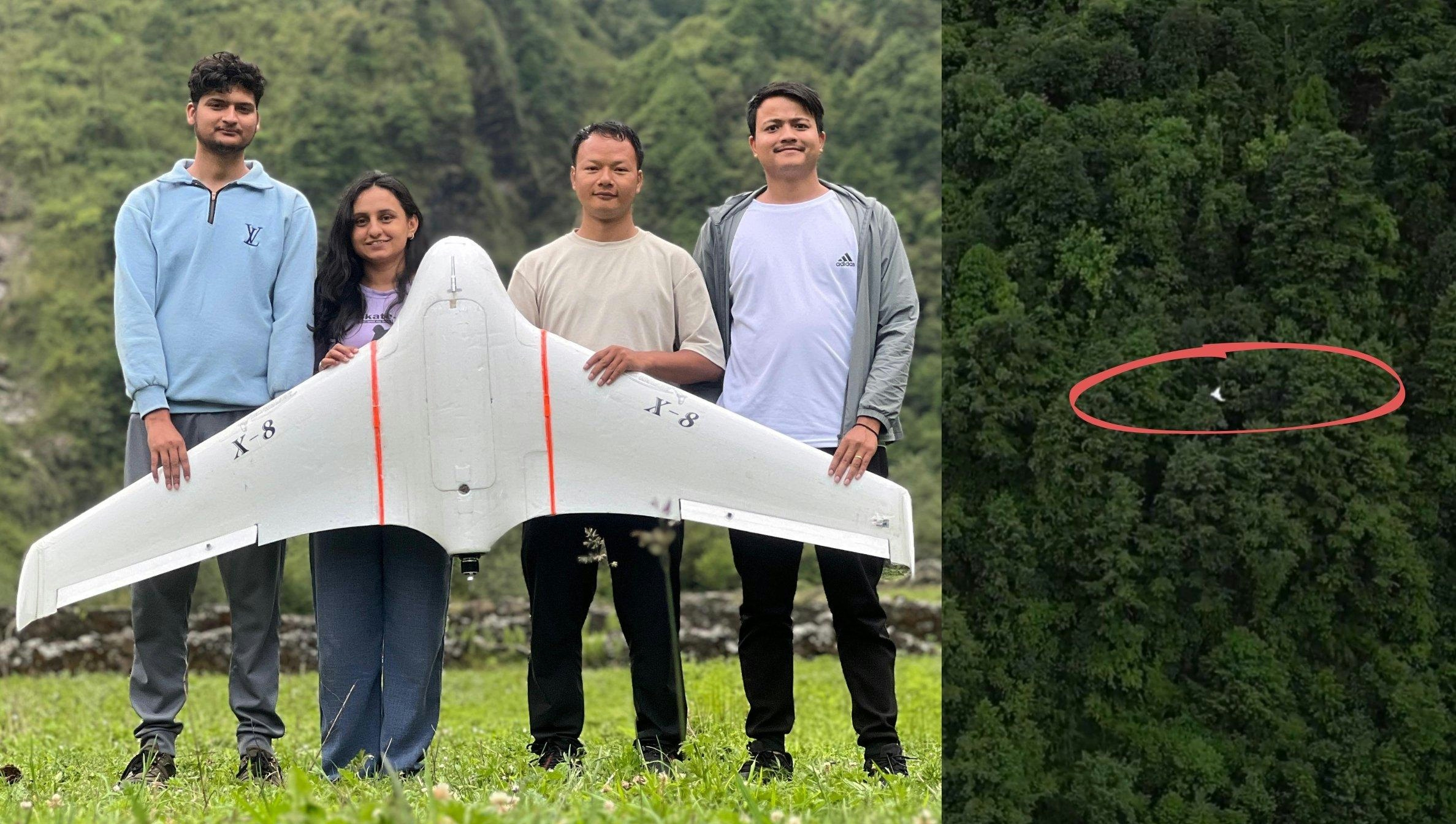
In response to this ongoing threat, a team of researchers at the Institute of Engineering, Tribhuvan University, has developed an innovative artificial intelligence system designed to enhance flight safety in Nepal’s rugged environment. Over the past 18 months, the team has focused on creating a real-time terrain analysis and autonomous navigation system aimed at preventing CFIT accidents.

Development and Capabilities of the AI System

The project, funded by the U.S. Air Force, is led by Dr. Sudip Bhattarai, with Professors Mahesh Chandra Luintel and Surya Prasad Adhikari serving as co-researchers. The team also includes Kamal Darlami, Ayush Bhattarai, Pratibha Bhandari, Nabin Bhandari, and Nischal Paudel. Dr. Bhattarai emphasized that the primary goal is to eliminate CFIT accidents in Nepal by ensuring aircraft safety even when visibility is severely limited.

The AI system continuously analyzes the surrounding terrain during flight and can autonomously guide the aircraft to avoid collisions if a risk is detected. This capability is particularly vital in Nepal, where natural disasters such as floods and landslides frequently isolate communities, making air delivery of emergency supplies both essential and hazardous.

Challenges and Industry Reception

Despite its potential, integrating this advanced technology into Nepal’s existing aviation infrastructure presents considerable challenges. The system’s reliability must be rigorously tested against the country’s volatile weather conditions. Additionally, the research team faces skepticism from pilots and aviation authorities who may be cautious about adopting automated systems in an industry where safety is paramount. Dr. Bhattarai acknowledged the resistance often encountered when introducing new technologies in aviation.

Market reactions are expected to focus on the promise of enhanced safety and accident reduction. However, traditional operators may hesitate to replace established procedures with AI-driven solutions. Meanwhile, international competitors are also advancing similar AI-based safety technologies, striving to maintain their competitive edge by emphasizing proven safety records.

Global Context and Future Prospects

CFIT accidents represent a significant global concern, causing billions of dollars in losses annually, particularly in the United States, where related research is ongoing. Although U.S. teams have developed systems enabling rapid aircraft climbs to avoid collisions, these technologies have yet to see widespread adoption. In Nepal, the consequences of CFIT accidents are often more severe, frequently resulting in tragic loss of life alongside financial costs.

As the Nepali research team continues to refine their AI system, its success will depend on overcoming technical, regulatory, and cultural barriers within the aviation sector. This development marks a crucial step toward safer mountain flights in Nepal, with the potential to transform aviation safety in similarly challenging environments worldwide.

More news
Astana to Host Demonstration Flight for Air Taxi

Astana to Host Demonstration Flight for Air Taxi

Astana to Host Demonstration Flight for Air Taxi Astana is preparing to host a demonstration flight of the AutoFlight Prosperity, an electric vertical take-off and landing (eVTOL) aircraft, as part of Kazakhstan’s broader initiative to advance urban air mobility. The event is scheduled for 9:00 a.m. on July 24 at the Kazanat hippodrome, although organizers have indicated that the timing may be subject to change depending on weather conditions. The AutoFlight Prosperity and Kazakhstan’s Urban Air Mobility Efforts The AutoFlight Prosperity is engineered to accommodate one pilot and five passengers, with a maximum speed of 200 kilometers per hour and a range of up to 200 kilometers. This demonstration follows Kazakhstan’s inaugural eVTOL flights conducted in Alatau in May 2026, reflecting the country’s ongoing commitment to developing the necessary infrastructure to support urban air taxi services. The event represents a significant milestone in Kazakhstan’s efforts to integrate innovative aerial transportation solutions into its urban landscape. Challenges Facing Air Taxi Adoption in Astana Despite the promising technology, Astana’s plans to showcase air taxi services confront several substantial challenges. High operational costs and the complexities involved in managing urban air traffic present significant obstacles. Moreover, gaining public acceptance remains a critical hurdle, as skepticism persists regarding the feasibility and safety of incorporating air taxis into densely populated urban environments. These concerns have been echoed by market observers and competitors alike, who are closely monitoring Kazakhstan’s approach while grappling with similar issues in their own air mobility projects. Compounding these challenges are recent operational disruptions experienced by Air Astana, attributed to regional security concerns. These disruptions have raised questions about the reliability of scheduled demonstration flights and the broader implementation timeline for air taxi services within the country. A Step Toward Modernizing Urban Transportation Despite these difficulties, the upcoming demonstration flight marks an important step in Kazakhstan’s ambition to modernize urban transportation. The event will not only test the capabilities of the AutoFlight Prosperity but will also assess Astana’s preparedness to address the operational, regulatory, and public perception challenges inherent in introducing air taxis to the city’s airspace.
Aerolíneas Argentinas to Expand Fleet with Boeing 737-10s

Aerolíneas Argentinas to Expand Fleet with Boeing 737-10s

Aerolíneas Argentinas to Expand Fleet with Boeing 737-10s Aerolíneas Argentinas has formalized lease agreements with Aviation Capital Group (ACG) for six Boeing 737-10 aircraft, marking a pivotal advancement in the airline’s ongoing fleet renewal and capacity expansion initiatives. The new aircraft are slated for delivery starting in 2028 and will operate primarily from the airline’s Buenos Aires hubs at Aeroparque Jorge Newbery Airport and Ezeiza Airport. These planes will serve a range of domestic and South American regional routes, aligning with the carrier’s strategic growth objectives. Strategic Fleet Renewal and Capacity Enhancement The incorporation of the Boeing 737-10s is central to Aerolíneas Argentinas’ 2027–2031 fleet strategy, which seeks to increase capacity on high-demand routes, improve operational efficiency, and reduce environmental impact. Fabián Lombardo, president and CEO of Aerolíneas Argentinas, emphasized the significance of the agreement, stating that the new aircraft will enable the airline to better meet passenger demand while maintaining a competitive service offering. The partnership with ACG underscores a commitment to modernizing the fleet through long-term leasing arrangements, a move that ACG has characterized as part of its broader support for airline modernization efforts. Context and Industry Implications This fleet expansion occurs amid ongoing scrutiny of Boeing’s 737 MAX series, which includes the 737-10 model. The MAX family has been under intense examination following two fatal crashes that resulted in global groundings and enduring reputational challenges for Boeing. Aerolíneas Argentinas’ decision to invest in the 737-10 signals confidence in the aircraft’s future viability, yet market reactions are expected to remain cautious as the industry continues to evaluate Boeing’s progress in addressing safety concerns and restoring trust. Competitors are likely to monitor Aerolíneas Argentinas’ operational experience with the 737-10 closely, as it may influence their own fleet acquisition strategies. The airline anticipates that the new aircraft will support rising passenger demand and enhance profitability, but broader market sentiment will hinge on Boeing’s ability to reassure both airlines and travelers regarding the safety and reliability of its products. The initial six aircraft will be sourced from ACG’s existing Boeing orderbook, with deliveries commencing in 2028. As Aerolíneas Argentinas advances its fleet renewal program, industry observers will be attentive to both the airline’s performance outcomes and Boeing’s efforts to regain market confidence.
Zenix Aerospace Pursues Growth with One Zenix Strategy

Zenix Aerospace Pursues Growth with One Zenix Strategy

Zenix Aerospace Pursues Growth with One Zenix Strategy A New Chapter in Aerospace Manufacturing Zenix Aerospace, a recently established entity, is embarking on an ambitious expansion plan by consolidating a portfolio of specialist manufacturing businesses under a unified global operating model. At the Farnborough International Airshow, Group CEO Scott McLarty emphasized that the company’s current operations serve as a foundation rather than a final destination. “This is a foundation for growth. It’s not the end game,” McLarty stated. “We’re going to go further, and we really want to be a global player in the industry.” The company was formed in January 2026 following the acquisition of the former aerostructures businesses of Senior plc by funds managed by Sullivan Street Partners. Zenix Aerospace integrates manufacturing operations with a heritage spanning over 80 years across the UK, US, Malaysia, and Thailand. Specializing in the production of complex components and structures from advanced materials such as titanium, Inconel, and aluminium, Zenix supplies critical parts for aircraft engines, fuselages, wings, and engine pylons. The company’s focus remains on challenging, mission-critical manufacturing tasks. Having completed a six-month transition period, Zenix is now assessing how to capitalize on the strengths of its constituent businesses. McLarty noted, “We’ve bought some very capable businesses and have things we want to do with those businesses. We’ve now reached the stage where we’re looking to grow and exploring how we can build upon the capabilities we already have.” The ‘One Zenix’ Operating Model At the core of Zenix’s growth strategy is the “One Zenix” operating model, designed to integrate previously independent sites into a cohesive global supplier network. While each facility maintains its specialist expertise as a centre of excellence, customers engage with Zenix through a single point of contact. The group coordinates work across its international network to provide seamless service. “What we’re trying to do is bring them together as one global team providing one solution,” McLarty explained. This integrated approach enables Zenix to offer comprehensive packages rather than isolated components, allowing for faster responses to customer demands and the ability to address more complex manufacturing challenges. By leveraging the combined capabilities of its sites, the company aims to enhance efficiency and innovation within the aerospace supply chain. Navigating Opportunities and Challenges Zenix is targeting growth in the commercial aerospace, defence, and space sectors, all of which are experiencing increasing demand. However, McLarty underscored that expanding capacity alone is insufficient. Reliability, quality, and strict adherence to safety and scheduling standards are equally vital. “There is a need for capacity, but there is also a need for reliable suppliers,” he said. “Our mission is really about being that supplier of choice, being a trusted partner and a solution provider.” The company’s path forward is not without challenges. The “One Zenix” strategy must contend with geopolitical uncertainties and ongoing supply chain restructuring, issues that have prompted similar dual-track approaches in other industries such as biopharmaceuticals. Market reactions may vary, with some investors expressing caution over the risks associated with rapid expansion and intensified competition. Competitors may also respond by adopting platform-based strategies to secure high-value opportunities, particularly in mature markets. Despite these hurdles, Zenix’s leadership team, which collectively brings over a century of industry experience, remains committed to establishing the company as a trusted and innovative partner within the global aerospace supply chain.
Aer Lingus Employee Wins AI Challenge with Hotel Concierge for Standby Flyers

Aer Lingus Employee Wins AI Challenge with Hotel Concierge for Standby Flyers

Aer Lingus Employee Triumphs in AI Challenge with Standby Hotel Concierge An Aer Lingus digital product manager has secured first place in the 21-day RouteStack Build Challenge by developing an innovative AI-powered hotel concierge tailored for airline employees flying standby. Valentina Borovaya, participating in her first hackathon, created StandByStay to tackle a longstanding issue faced by airline staff: the difficulty of booking hotels in advance when flights are confirmed at the last minute. StandByStay: AI-Driven Solution for Last-Minute Travel StandByStay employs artificial intelligence to simultaneously search multiple potential destinations, reserving both a preferred and a backup hotel in each city. The system only proceeds with booking once the traveler confirms their flight, streamlining the process through RouteStack’s platform. Borovaya utilized Claude Code to build the solution, showcasing how AI can simplify complex and time-sensitive travel arrangements for airline personnel. Other Notable Innovations in the Challenge The second-place prize was awarded to HotelZippo, developed by travel technology entrepreneur Varun Jain. This tool condenses extensive family-friendly hotel research—often requiring 30 to 40 hours—into a single conversational interface. HotelZippo analyzes hundreds of reviews per property and highlights critical issues such as ongoing refurbishments with clear alerts. Bookings are executed via RouteStack’s hotel API, with webhooks monitoring each order from initiation to confirmation. Third place went to MatchRoute, created by Stijn Risseeuw, a computer science and engineering student at TU Delft. MatchRoute transforms group trip planning from fragmented chats and spreadsheets into a centralized dashboard. An AI assistant facilitates coordination of budgets, dates, and destinations through interactive maps, calendars, and voting tools. Upon reaching consensus, the platform accesses live inventory from RouteStack to generate customized trip options. RouteStack’s Role and Industry Implications All three winning applications utilize RouteStack’s live inventory for flights, hotels, and rental cars, with integrated checkout and payout management. The entries were evaluated by a panel including industry expert Mike Coletta from Phocuswright, focusing on real-world applicability, originality, technical execution, and presentation quality. Yogesh Kapadne, CTO of RouteStack, emphasized the achievement: “Three individuals, working independently, delivered travel products within three weeks that search live inventory and complete real bookings. The supplier contracts, payments, and compliance were already in place. They brought the ideas.” The global challenge ran from June 8 to July 6, awarding the first-place winner a seven-night resort stay and $1,000 in RouteStack API credits. Second and third place winners received comparable resort stays and API credits, while all participants gained a year’s membership to a private travel club operated by Custom Travel Solutions, RouteStack’s parent company. Challenges and Future Outlook for Aer Lingus While Borovaya’s victory highlights Aer Lingus’s innovative capabilities, it also signals emerging challenges. As AI adoption accelerates within the airline and hospitality industries, Aer Lingus may encounter intensified competition from rivals deploying similar technologies. Integrating AI solutions like StandByStay into existing operational systems could present technical and logistical obstacles. Additionally, skepticism regarding AI’s effectiveness persists among both travelers and industry stakeholders. The broader trend toward AI-driven hotel sourcing and evolving corporate travel programs may influence Aer Lingus’s strategic direction as competitors escalate their own AI initiatives. Further details on the winning products and their creators are available at routestack.ai/event/build-challenge-winners.
The Exploration Company Uses Siemens Xcelerator Software to Advance Reusable Spacecraft Development

The Exploration Company Uses Siemens Xcelerator Software to Advance Reusable Spacecraft Development

The Exploration Company Advances Reusable Spacecraft Development with Siemens Xcelerator Software BERLIN — German aerospace startup The Exploration Company has integrated Siemens Xcelerator software into its engineering processes to accelerate the development of its reusable spacecraft. This strategic adoption aims to enhance collaboration and operational efficiency as the company scales its space transportation program amid a competitive and rapidly evolving market dominated by established aerospace players. The initiative addresses the significant technical and financial challenges inherent in advancing reusable spaceflight technologies. Founded in 2021, The Exploration Company is focused on developing the Nyx family of reusable spacecraft and propulsion systems, designed to transport cargo—and eventually crew—to destinations in Earth orbit and beyond. The company’s launcher-agnostic design philosophy enables its spacecraft to be compatible with multiple launch vehicles, providing operators with greater flexibility in selecting launch providers. Integrated Digital Engineering Environment The Exploration Company employs a suite of Siemens Xcelerator tools, including Designcenter for mechanical engineering, Simcenter for simulation, Capital for electrical systems design, and Teamcenter for product lifecycle management. This integrated digital environment unifies mechanical, electrical, and simulation engineering disciplines into a single source of product data. As a result, modifications in one area are automatically synchronized across related models, reducing rework and enhancing configuration management throughout the design evolution. A central feature of the Siemens platform is the creation of a digital twin—a comprehensive virtual representation of the spacecraft that merges design models with engineering simulations. This digital twin enables engineers to predict system interactions under real-world conditions, identify integration challenges early in the development cycle, and mitigate the risk of costly late-stage design changes. Furthermore, it supports the traceability requirements essential for aerospace certification processes. Addressing Complexity and Supporting Rapid Development Modern spacecraft incorporate a multitude of complex subsystems, ranging from mechanical structures to electrical architectures and thermal management systems. The Exploration Company leverages advanced simulation tools to evaluate system performance prior to manufacturing, thereby improving mission assurance and facilitating the early resolution of potential issues. The Siemens software suite is instrumental in supporting the ongoing development of the Nyx spacecraft family, initially targeting cargo transport to low Earth orbit with plans to expand into crewed missions. The company’s engineering approach has already demonstrated rapid progress; its Mission Bikini orbital demonstration capsule advanced from concept to flight hardware within nine months. As future spacecraft designs grow larger and more complex, the integrated digital engineering environment is expected to be critical in maintaining this accelerated development pace. Daniel Prudente Martins, principal EWIS and electrical interfaces engineer for Nyx Avionics at The Exploration Company, emphasized the impact of the collaboration: “Our mission is to make space more accessible through reusable technology. Working with Siemens and adopting its industrial software is helping us connect our engineering processes, reduce rework, accelerate development, and streamline manufacturing as we scale our operations.” Navigating Market and Technical Challenges Despite the advantages offered by Siemens Xcelerator, The Exploration Company continues to face significant challenges. Securing substantial funding, competing against established industry leaders such as SpaceX, and navigating complex regulatory frameworks remain critical hurdles. Recent setbacks in the industry, including SpaceX’s aborted Starship V3 launch, highlight the technical difficulties associated with developing reusable spacecraft and may influence investor sentiment and funding strategies. The company’s progress has attracted increased interest from investors and government agencies, while competitors are expected to intensify efforts to advance their own technologies and market positions. As the race for reusable space transportation accelerates, digital engineering tools are becoming indispensable for startups striving to innovate and compete on the global stage.
Budd’s Supersonic Aviation Modernization Act Advances to Senate Floor

Budd’s Supersonic Aviation Modernization Act Advances to Senate Floor

Budd’s Supersonic Aviation Modernization Act Advances to Senate Floor **Washington, D.C.** — The Supersonic Aviation Modernization (SAM) Act, introduced by Senator Ted Budd (R-N.C.), has successfully passed through the Senate Commerce, Science, and Transportation Committee with bipartisan backing and is now poised for consideration on the Senate floor. This legislative milestone marks a significant step toward reviving supersonic civil aviation in the United States. Lifting the Ban on Supersonic Flight Over Land The SAM Act seeks to overturn the longstanding federal prohibition on civil supersonic flight over land, a restriction originally enacted in 1973 due to concerns over sonic booms. Under the proposed legislation, the Federal Aviation Administration (FAA) would be mandated to develop new regulations that allow supersonic travel within U.S. airspace, contingent on the condition that no sonic boom is perceptible on the ground. Advocates argue that this regulatory reform could dramatically reduce cross-country flight times, potentially halving current durations and ushering in a new era of faster air travel. Senator Budd emphasized the strategic importance of the bill, stating, “If we want to maintain America’s global leadership in technological innovation, we must lift the outdated ban on civil supersonic flight.” He further highlighted the competitive dimension, asserting that the SAM Act would position the United States to outpace China in the development of next-generation supersonic aircraft. Bipartisan Support and Industry Endorsement The bill has attracted support from a diverse group of senators, including Republicans Thom Tillis (N.C.), Mike Lee (Utah), Tim Sheehy (Mont.), and Democrats John Hickenlooper and Michael Bennet, both from Colorado. Senator Lee underscored the national security implications, warning that “outdated regulations are keeping America’s supersonic innovation grounded while China soars full speed ahead.” He called for the removal of regulatory barriers to maintain U.S. technological leadership. Senator Sheehy echoed this sentiment, describing the legislation as “common sense,” noting that supersonic flight should be permitted if sonic booms do not impact the ground. He emphasized that the SAM Act balances the need to eliminate excessive regulatory hurdles with the imperative to safeguard public safety and property. Industry leaders have also welcomed the bill’s advancement. Blake Scholl, Founder and CEO of Boom Supersonic, described the legislation as “historic,” highlighting its potential to make supersonic passenger flights a reality in the United States. The prospect of regulatory reform has spurred several aerospace companies to accelerate the development of next-generation supersonic jets, anticipating a more conducive environment for innovation. Challenges and Future Outlook Despite the optimism surrounding the SAM Act, significant challenges remain. The FAA is expected to introduce updated noise standards to replace the 1973 ban, aiming to balance the benefits of faster travel with the need to minimize sonic disturbances for communities. Additionally, the aviation sector must address issues related to air traffic control modernization, airport capacity constraints, and the pursuit of sustainability goals, all while striving to attract premium passengers to supersonic services. Global competition is intensifying, with international aviation players likely to expand their own supersonic initiatives in response to evolving regulatory landscapes. As the SAM Act moves to the Senate floor, it is being closely monitored by lawmakers and industry stakeholders who view it as a critical step toward reestablishing U.S. leadership in civil aviation innovation, while carefully considering safety and environmental concerns.
Boeing and Airbus Sell More Than Jets: The Cockpit Experience

Boeing and Airbus Sell More Than Jets: The Cockpit Experience

Boeing and Airbus Sell More Than Jets: The Cockpit Experience Airlines invest billions in advanced technologies such as winglets, lightweight carbon-fiber wings, and ultra-efficient engines to enhance fuel efficiency and aerodynamics. However, the most significant financial considerations influencing fleet decisions often lie within the cockpit. Beyond the physical aircraft, airlines place considerable emphasis on cockpit design because the flight deck interface can substantially reduce pilot training costs and improve staffing flexibility, frequently outweighing minor differences in fuel consumption. The Cost and Complexity of Pilot Training Pilot training represents one of the largest fixed expenses for major carriers. Introducing a new aircraft type entails substantial investments in simulator leases, classroom instruction, and practical flight training. Obtaining a new type rating is a rigorous process, typically requiring eight to eleven weeks of dedicated study and simulator time. High-fidelity simulators, which can cost hundreds of dollars per hour to operate, contribute significantly to these expenses. Additionally, the salaries of pilots who are temporarily removed from active duty during training further increase costs. Compounding these challenges, approximately 60% of pilots fail simulator training at major airlines, resulting in lost investments and operational disruptions. Cockpit Commonality as a Strategic Advantage Given these factors, cockpit commonality has emerged as a critical competitive arena for aircraft manufacturers. Boeing and Airbus strive to design flight decks that maintain consistent functionality and feel across different models, whether narrowbody or widebody. This approach enables airlines to consolidate type rating programs, reducing the need for separate pilot pools and fostering a more flexible, cross-functional workforce. Consequently, the cockpit interface serves as a powerful tool for customer retention, as pilots represent the largest source of both expenditure and operational risk for airlines. Challenges and Market Outlook Expanding cockpit commonality offerings presents notable challenges. Boeing, for instance, faces financial constraints and requires several more years to strengthen its balance sheet before launching a new jet program. Meanwhile, airlines remain focused on fulfilling existing fleet orders rather than investing in new models. Airbus plans to introduce a next-generation single-aisle aircraft around 2030, but market reactions remain uncertain as many carriers prioritize current deliveries over future innovations. As both manufacturers look ahead, competition in the narrow-body market is expected to intensify. Airlines will continue to balance the operational and financial advantages of cockpit commonality against their budgetary constraints and delivery schedules. While the battle for market share unfolds in the skies, the decisive factors shaping airline profitability are determined in simulator bays—where training timelines, staffing flexibility, and cockpit design converge long before the first passenger boards.
Liability Issues in Aviation AI

Liability Issues in Aviation AI

Liability Issues in Aviation AI Panel Discussion at the 13th Air Law Conference In June 2026, Clifford Law Offices Partner Tracy A. Brammeier participated as a panelist at the 13th Air Law Conference held in Rome, Italy. The event, organized by Pierallini Studio Legale in collaboration with the Institute of Air and Space Law at McGill University, LUISS University, and the Italian Civil Aviation Authority (ENAC), is a leading international forum dedicated to the evolving challenges in aviation law. Brammeier contributed to the session titled “Focus on Artificial Intelligence in Aviation: Regulation, Operations and Liability,” which explored the transformative impact of artificial intelligence on aviation, particularly in regulatory frameworks, operational practices, and liability concerns. Challenges of AI Integration in Aviation The panel addressed the increasing integration of AI technologies within aviation systems and the complex legal challenges that arise as a result. A central issue discussed was the difficulty in assigning accountability when AI systems err or contribute to accidents. Brammeier highlighted the utility of AI as a tool for legal practitioners, noting its ability to organize extensive records, construct timelines, summarize deposition transcripts, compare document versions, and assist in compliance reviews. However, she cautioned that AI does not provide definitive answers and cannot replace the nuanced judgment required in legal analysis. Drawing on her extensive experience in aviation litigation, Brammeier referenced her role as court-appointed Liaison Counsel for plaintiffs in the litigation following the 2019 Ethiopian Airlines Flight 302 crash, as well as her involvement in cases related to Malaysian Airlines Flight 370, Colgan Air Flight 3407, and the January 2025 crash of American Eagle Flight 5342 in Washington, D.C. Her insights underscored the critical balance between leveraging AI’s capabilities and maintaining rigorous human oversight in legal proceedings. Regulatory and Industry Implications The panel further examined the broader implications of AI’s rapid advancement in aviation, noting that technological progress often outpaces the development of regulatory safeguards. This regulatory lag complicates the establishment of clear liability frameworks, raising pressing questions about responsibility when AI-driven systems malfunction. In response, aviation industry competitors are investing in enhanced safety protocols and transparent AI governance structures. Concurrently, some stakeholders are advocating for regulatory measures that explicitly define liability boundaries to address these emerging challenges. Market reactions have mirrored these concerns, with investors and customers exhibiting increased scrutiny and skepticism toward AI-driven aviation technologies. This heightened vigilance underscores the urgent need for transparent safety measures and accountability mechanisms. As artificial intelligence continues to reshape the aviation sector, sustained dialogue among legal experts, regulators, and industry leaders remains vital to uphold safety, accountability, and public trust alongside ongoing technological innovation.
AUVSI Responds to Senate Progress on Aviation Innovation and Vehicle Security Legislation

AUVSI Responds to Senate Progress on Aviation Innovation and Vehicle Security Legislation

AUVSI Applauds Senate Committee Advancement of Key Aviation and Vehicle Security Legislation The Association for Uncrewed Vehicle Systems International (AUVSI) has expressed strong support for the Senate Commerce, Science, and Transportation Committee’s recent progress on two significant legislative initiatives: the Aviation Innovation and Global Competitiveness Act and the Connected Vehicle Security Act. Legislative Measures to Foster Innovation and Security The Aviation Innovation and Global Competitiveness Act is designed to facilitate the integration of advanced air mobility and electric vertical takeoff and landing (eVTOL) aircraft into U.S. airspace. By establishing standardized timelines for the Federal Aviation Administration’s (FAA) type certification process, the legislation aims to provide manufacturers with greater regulatory clarity and predictability. This framework is anticipated to stimulate investment and innovation, thereby reinforcing the United States’ leadership in cutting-edge aviation technologies. Concurrently, the Connected Vehicle Security Act addresses escalating national security concerns related to the automotive sector. As vehicles become increasingly connected, autonomous, and reliant on sophisticated software, the bill seeks to protect the U.S. automotive industrial base from vulnerabilities posed by foreign adversaries’ access to connected vehicle technologies. The legislation is intended to safeguard critical technologies and supply chains, thereby supporting American competitiveness in a rapidly evolving market. Michael Robbins, President and CEO of AUVSI, emphasized the significance of the committee’s action, stating, “The Aviation Innovation and Global Competitiveness Act provides the regulatory certainty innovators need to bring advanced air mobility technologies into the national airspace, while the Connected Vehicle Security Act helps protect America’s automotive industrial base from foreign adversaries as vehicles become increasingly connected and autonomous. Together, these bipartisan measures will strengthen U.S. innovation, competitiveness, and national security.” Robbins also expressed appreciation for the committee’s leadership and affirmed AUVSI’s commitment to working with Congress to advance both bills toward enactment. Challenges and Industry Implications Despite this legislative momentum, AUVSI acknowledges the challenges that lie ahead. The organization highlights the complexity of navigating an evolving regulatory environment, which will demand continuous adaptation to emerging compliance and security standards. Integrating advanced technologies into existing systems remains a significant hurdle, particularly in light of recent developments such as partnerships in quantum navigation systems and the FAA’s recommendations for avionics upgrades. These factors underscore the dynamic nature of the transportation technology market and the necessity for agility among industry stakeholders. The Senate’s progress is expected to influence market dynamics, potentially increasing investor interest in companies capable of swiftly adapting to new regulatory requirements. At the same time, competitors are likely to intensify their innovation and security efforts to maintain a competitive advantage. AUVSI extended its gratitude to Senators Welch, Budd, Moreno, Slotkin, and their co-sponsors for their leadership in advancing these bipartisan bills. The organization remains dedicated to collaborating with Congress to ensure the successful passage and implementation of both measures, with the goal of enhancing U.S. innovation, security, and global competitiveness in the transportation sector.
Farnborough Day Three Deals Total $5.2 Billion, Led by Airbus Orders

Farnborough Day Three Deals Total $5.2 Billion, Led by Airbus Orders

Farnborough Day Three Deals Total $5.2 Billion, Led by Airbus Orders On the third day of the Farnborough International Airshow, announced deals reached a total value of $5.2 billion (£3.8 billion) at list prices, driven predominantly by firm orders for 35 Airbus aircraft. This strong performance by the European manufacturer highlights its prominent position at the event. According to the ADS Group, these agreements are estimated to contribute approximately $1 billion (£765 million) to the UK aerospace sector, underscoring the domestic industry's significant involvement. Market Activity and Competitive Dynamics The third day’s transactions followed two particularly active opening days, with the first three days collectively generating deals valued at $84.4 billion (£62.7 billion), including $14.6 billion (£10.8 billion) linked to UK content. These figures, compiled by ADS Group—the UK trade association for aerospace, defence, security, and space—are based on publicly announced aircraft and engine orders and calculated using an exchange rate of £0.743 to $1. It is important to recognize that list prices often exceed actual transaction values, as commercial aircraft sales typically involve confidential discounts. While Airbus dominated Day Three, the competitive environment remains fluid. Boeing, currently under scrutiny for production and delivery challenges with its early 777-9 models—sometimes referred to as the "terrible teens"—faces potential impacts on market confidence. In response, Boeing, alongside competitors such as Embraer, is actively pursuing new orders to strengthen its market position. During the show, Boeing secured contracts with AerCap, Luxair, MSC Air Cargo, and Uganda Airlines, reflecting ongoing rivalry within the commercial aircraft sector. Shifting Strategies Among Airlines and Manufacturers Market reactions to the evolving landscape have been varied. Some airlines are reaffirming their commitments to Airbus, while others are exploring opportunities in regional markets through partnerships with manufacturers like ATR and Embraer. This dynamic underscores the strategic adjustments being made by major industry players as they compete for market share amid changing airline priorities and broader market uncertainties. Farnborough International Limited, the event organizer wholly owned by ADS, continues to serve as a focal point for industry developments. As the airshow progresses, attention remains fixed on how manufacturers will navigate the challenges posed by competitive pressures and shifting market conditions.
line









