
Orquesta conocimientos de IA para convertirlos en acción

Tendencias
Categories
New Crew Rostering System Introduces AI-Based Scheduling Tools
New Crew Rostering System Introduces AI-Based Scheduling Tools
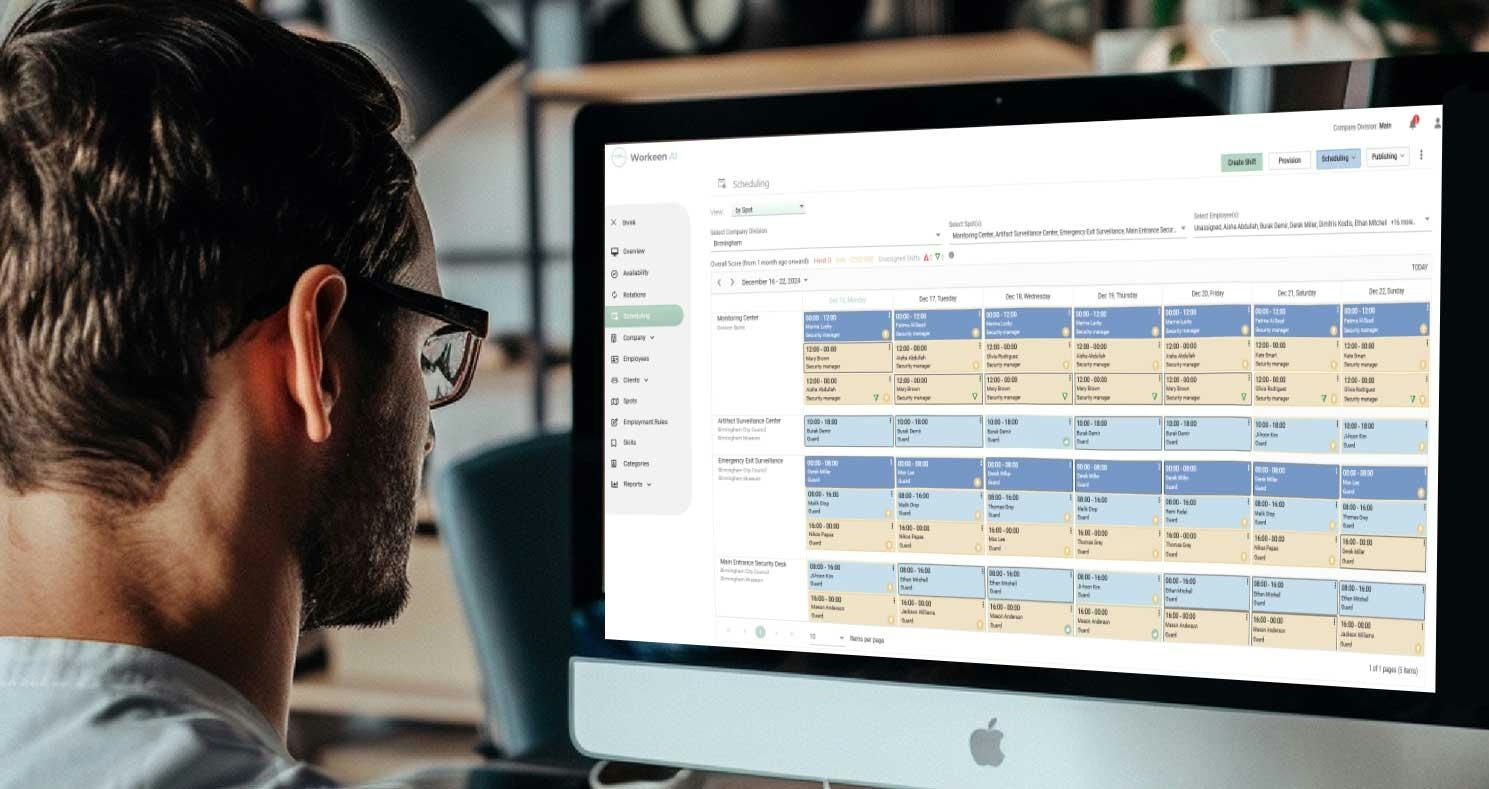
Astrom Training Solutions has launched its latest Crew Rostering System, featuring advanced artificial intelligence to optimize crew pairing, rostering, and flight scheduling. The platform is engineered to assist airlines in efficiently generating, managing, and recovering crew schedules during both routine operations and irregular operations (IROPS). Among its key functionalities are real-time re-rostering, regulatory compliance management, and fatigue risk assessment, all designed to promote safe and effective crew utilization.
Integrated Optimization Enhances Operational Efficiency
A defining characteristic of the new system is its synchronized optimization capability, which simultaneously aligns crew pairing, rostering, and flight scheduling. This integrated approach allows airlines to optimize crew and aircraft plans in tandem, thereby enhancing operational resilience, reducing the impact of disruptions, and improving resource efficiency across the network. The system also extends this synchronization to simulator scheduling, creating a cohesive environment that balances operational demands with training requirements.
Additional features include scenario-based pairing optimization, AI-driven disruption prediction, and seamless integration of training event scheduling. These tools provide airlines with increased flexibility and foresight in managing the complexities of crew operations, enabling more proactive and adaptive scheduling strategies.
Industry Challenges and Market Response
The introduction of AI-based scheduling tools arrives amid ongoing industry debates regarding the scalability and reliability of such technologies. Research from Infor underscores the difficulties in expanding AI solutions beyond initial pilot phases, raising concerns about their long-term viability across extensive airline networks. Furthermore, recent high-profile crew scheduling disruptions at Delta have intensified skepticism among some industry stakeholders about the dependability of AI-driven systems.
Market reactions to Astrom’s new platform are expected to be varied. While some airlines may embrace AI tools to enhance operational efficiency, others are likely to adopt a more cautious stance in light of recent incidents. Competitors are anticipated to respond by incorporating similar AI capabilities into their own offerings or by developing proprietary solutions aimed at reducing dependence on third-party providers.
Astrom Training Solutions will present the new Crew Rostering System at WATS 2026, booth 308, providing industry professionals an opportunity to explore the platform’s features and engage in discussions about the evolving role of AI in airline operations.

Etihad Airways Suspends Airbus A380 Flights on Key Route

Aditya Birla Group Seeks Approval for Aircraft Leasing in GIFT City

Qatar Airways Highlights Innovation and Connectivity at Arabian Travel Market 2026

Hong Kong's Five-Year Plan Includes Andrew Fan's Aircraft Parts Processing Hub Proposal

ACIA Aero Leasing Delivers ATR72-600 to Air Nostrum

RTX Appoints Jill Albertelli as Head of Pratt & Whitney

TAT Technologies Joins Beyond Aero Hydrogen Aircraft Program

AURAK Study Highlights Barriers to Air Taxi Adoption in Emerging Economies

Xiamen Air Selects Altitude for 787 Maintenance at Heathrow

Etihad and Swissport Extend Global Partnership
