
Orquesta conocimientos de IA para convertirlos en acción

Tendencias
Categories
Operating Costs of a Boeing 787-9 Dreamliner Per Hour in 2026
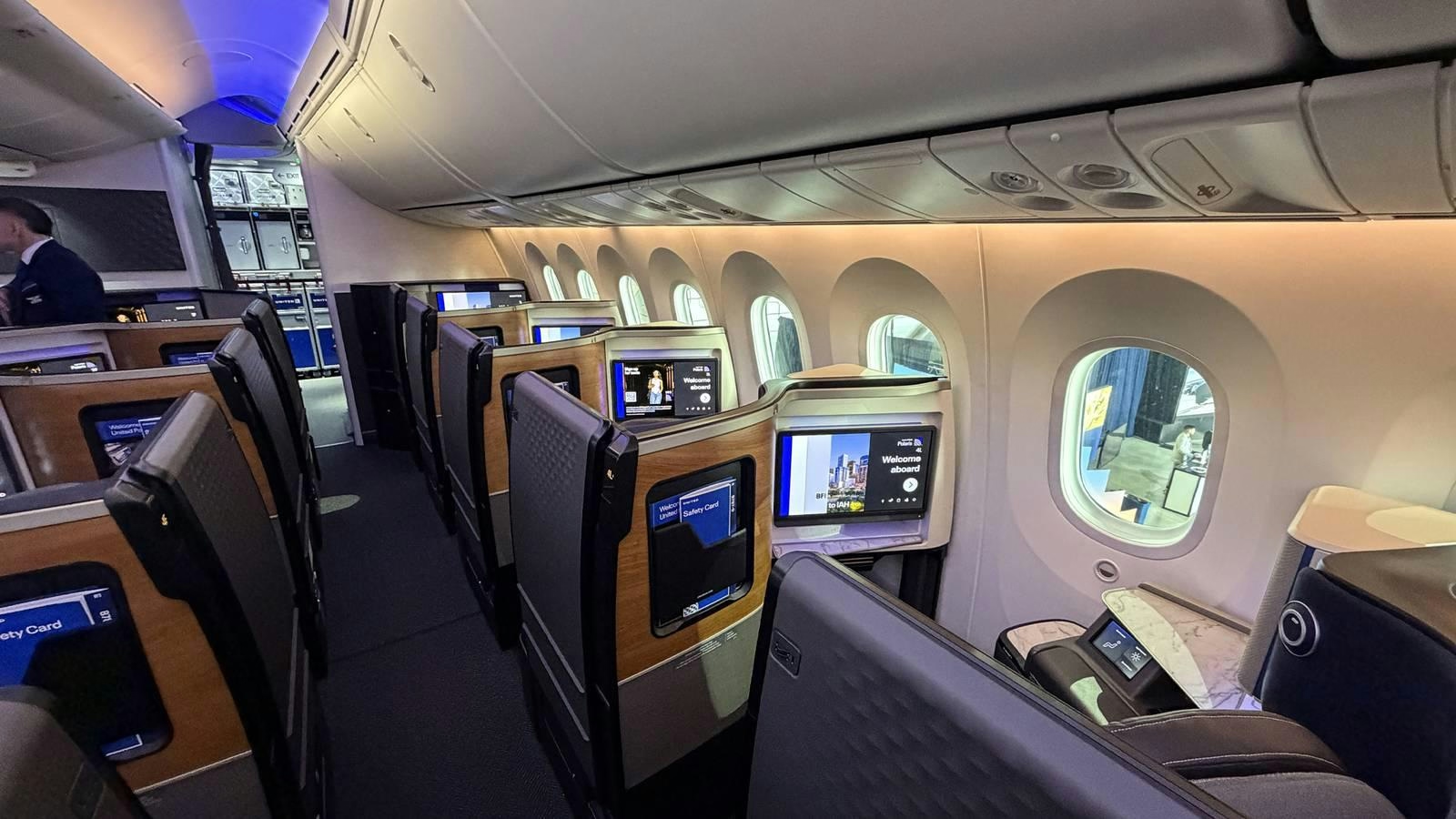
Operating Costs of a Boeing 787-9 Dreamliner Per Hour in 2026
The Boeing 787-9 Dreamliner is widely recognized as a premier long-haul aircraft, valued for its fuel efficiency and extended range. However, establishing a definitive hourly operating cost for the 787-9 is challenging due to the variability of numerous factors. These include fluctuating fuel prices, maintenance agreements, crew wages, airport fees, aircraft utilization rates, and differing ownership models, all of which significantly influence overall expenses.
Estimated Hourly Costs and Variability
Industry estimates for 2026 indicate that the variable operating cost of a Boeing 787-9 will range between $13,000 and $14,000 per flight hour. This estimate generally encompasses fuel, maintenance, crew salaries, ground handling, and navigation fees. When fixed costs and ownership-related expenses—such as depreciation, financing, or leasing—are factored in, the total hourly cost can escalate to between $15,500 and $22,000. These figures are highly sensitive to the specific operational practices and business models employed by individual airlines.
It is important to emphasize that no universal hourly cost exists for the 787-9. Airlines operating longer routes with high utilization rates may achieve lower per-hour costs compared to those flying shorter sectors with more frequent ground time. Variations in maintenance contracts, labor agreements, airport networks, and financing arrangements further differentiate the cost structures among operators. For instance, JetHunter estimates variable operating expenses at approximately $13,160 per flight hour, though this figure is contingent on particular fuel price assumptions and should be regarded as a reference rather than a definitive benchmark.
Fuel Costs and Market Challenges
Fuel remains the largest and most volatile component of the 787-9’s operating costs. Boeing highlights that the aircraft’s advanced aerodynamics, modern engines, and composite materials contribute to up to 25% better fuel efficiency compared to older models. This efficiency is especially critical for ultra-long-haul routes such as London to Perth or San Francisco to Singapore. Despite these advantages, fuel expenses can still account for roughly $7,000 per flight hour, and any increase in global fuel prices could substantially raise this cost.
Looking ahead to 2026, rising fuel prices pose a significant challenge that could markedly increase operational expenses for airlines. In response, carriers may adjust ticket pricing, optimize route networks, or pursue alternative, more fuel-efficient aircraft to manage costs effectively. Additionally, airlines might negotiate more favorable supplier contracts or reallocate capacity to more profitable routes to mitigate financial pressures.
Regulatory developments are also expected to impact the cost environment. For example, proposed regulatory measures in Russia aimed at tightening criteria for airlines seeking international routes could affect operational flexibility and cost structures, particularly for carriers operating in or transiting through affected regions.
Conclusion
While the Boeing 787-9 Dreamliner offers substantial economic and operational benefits, its hourly operating cost in 2026 will be shaped by a complex interplay of fuel prices, operational strategies, and evolving regulatory frameworks. Airlines will need to maintain agility and adapt to both market dynamics and regulatory changes to sustain profitability on long-haul routes.

Etihad Airways Suspends Airbus A380 Flights on Key Route

Aditya Birla Group Seeks Approval for Aircraft Leasing in GIFT City

Qatar Airways Highlights Innovation and Connectivity at Arabian Travel Market 2026

Hong Kong's Five-Year Plan Includes Andrew Fan's Aircraft Parts Processing Hub Proposal

ACIA Aero Leasing Delivers ATR72-600 to Air Nostrum

RTX Appoints Jill Albertelli as Head of Pratt & Whitney

TAT Technologies Joins Beyond Aero Hydrogen Aircraft Program

AURAK Study Highlights Barriers to Air Taxi Adoption in Emerging Economies

Xiamen Air Selects Altitude for 787 Maintenance at Heathrow

Etihad and Swissport Extend Global Partnership
