
Orquesta conocimientos de IA para convertirlos en acción

Tendencias
Categories
Rolls-Royce Delivers Trent XWB-97 Engines for Airbus A350-1000ULR
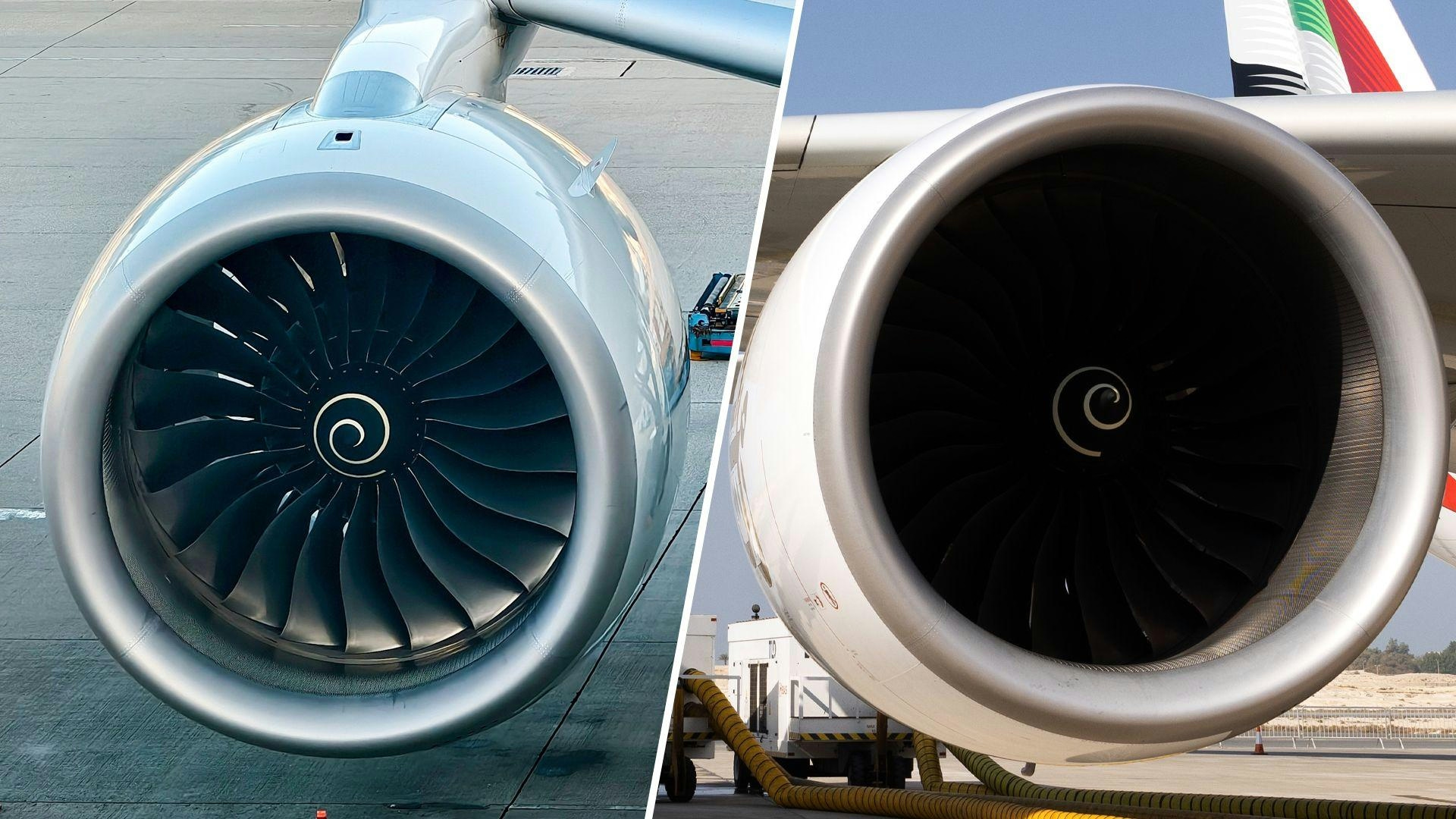
Rolls-Royce Delivers Trent XWB-97 Engines for Airbus A350-1000ULR
Rolls-Royce has delivered its advanced Trent XWB-97 engines to Airbus for installation on the first A350-1000 ULR (Ultra Long Range) aircraft, marking a pivotal development in Qantas’s Project Sunrise initiative. This aircraft is poised to become the world’s longest-range airliner, capable of flying nonstop for over 20 hours and covering distances up to 9,800 nautical miles (18,000 kilometers).
Aircraft Development and Capabilities
The initial A350-1000 ULR, identified as MSN 707, completed its final assembly in November 2023. Flight testing is scheduled to commence in the coming months, with Qantas expected to take delivery by the end of the year. The aircraft is slated to enter commercial service in the first half of 2027. Compared to the standard A350-1000, the ULR variant incorporates several system enhancements, most notably a 20,000-liter Rear Center Tank (RCT) that significantly increases fuel capacity. This upgrade enables the aircraft to operate ultra-long-haul routes, including Qantas’s planned nonstop flights from Sydney to London and New York. These routes, part of the airline’s “Kangaroo Route” program, aim to reduce current travel times by up to four hours by eliminating intermediate stops.
Qantas has placed an order for 12 of these aircraft, underscoring its commitment to advancing ultra-long-haul travel. Rolls-Royce has maintained a longstanding partnership with the Australian carrier, having supplied engines since 1979. The airline’s first Rolls-Royce-powered aircraft was a Boeing 747 fitted with RB211 engines, followed by the Trent 900-powered Airbus A380 fleet delivered from 2008 onwards.
Technical and Market Implications
The integration of the Trent XWB-97 engines into the A350-1000 ULR presents significant technical challenges for Rolls-Royce, including adherence to rigorous aviation standards and the complexities of global engine supply and maintenance. The company is also addressing logistical demands to ensure dependable support for Qantas’s ultra-long-range operations.
Market reaction to the engine delivery has been favorable, with industry analysts noting Rolls-Royce’s potential to capture a substantial share of the ultra-long-range aircraft engine market. This development has intensified competition, prompting rivals such as Boeing to modernize their B-52 bomber fleet with new engines. Concurrently, Rolls-Royce is expanding its maintenance, repair, and overhaul (MRO) services in strategic locations including China and Turkey.
As the A350-1000 ULR prepares for its inaugural flights, the collaboration between Rolls-Royce, Airbus, and Qantas highlights the increasing demand for ultra-long-haul air travel and the technological innovations necessary to support this evolving sector.

Etihad Airways Suspends Airbus A380 Flights on Key Route

Aditya Birla Group Seeks Approval for Aircraft Leasing in GIFT City

Qatar Airways Highlights Innovation and Connectivity at Arabian Travel Market 2026

Hong Kong's Five-Year Plan Includes Andrew Fan's Aircraft Parts Processing Hub Proposal

ACIA Aero Leasing Delivers ATR72-600 to Air Nostrum

RTX Appoints Jill Albertelli as Head of Pratt & Whitney

TAT Technologies Joins Beyond Aero Hydrogen Aircraft Program

AURAK Study Highlights Barriers to Air Taxi Adoption in Emerging Economies

Xiamen Air Selects Altitude for 787 Maintenance at Heathrow

Etihad and Swissport Extend Global Partnership
