Imagen

Orquesta conocimientos de IA para convertirlos en acción

¡Únete hoy a la lista de espera de AeroGenie!

Tendencias

Categories

Rolls-Royce secures JD Airlines as Trent 700 customer for A330-200P2F
February 13, 2026By ePlane AI
Rolls-Royce secures JD Airlines as Trent 700 customer for A330-200P2F
0
0
Rolls-Royce
Trent 700
A330-200P2F

Rolls-Royce Secures JD Airlines as Trent 700 Customer for A330-200P2F

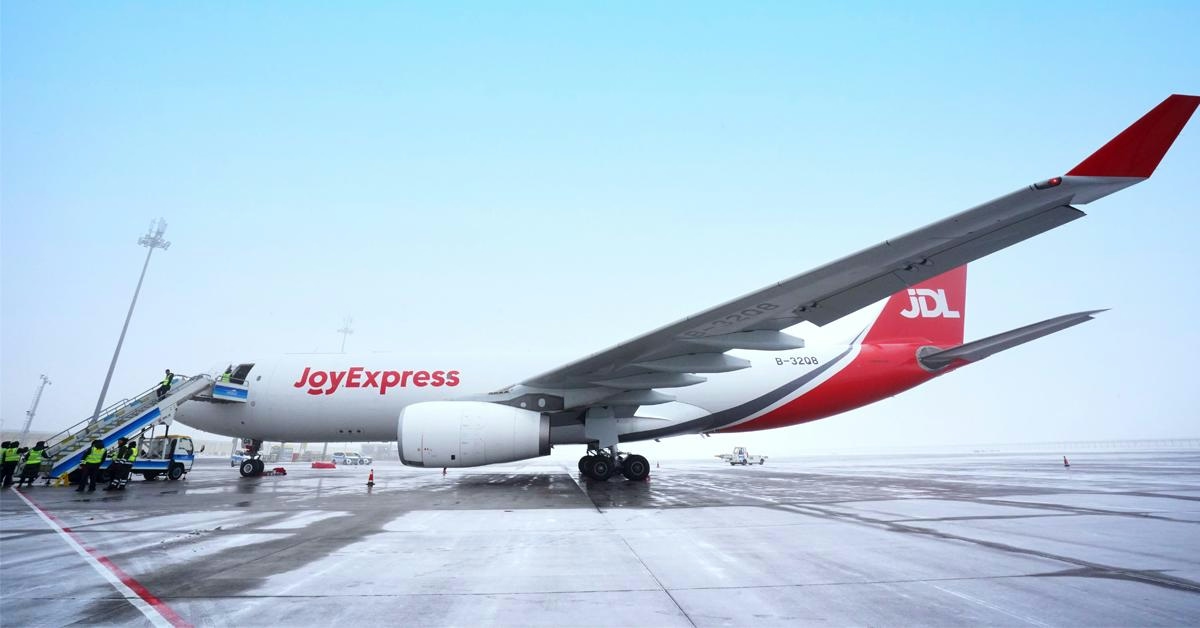
JD Airlines has commenced operations with its first Airbus A330-200P2F freighter, equipped with Rolls-Royce Trent 700 engines, marking a significant milestone in the carrier’s expansion into long-haul cargo services. This development aligns with the broader growth of China’s dedicated freighter fleet, which is being propelled by increasing demand in e-commerce, express logistics, and international supply chains.

Strategic Importance of the A330-200P2F and Engine Selection

The introduction of the A330-200P2F highlights the sustained demand for converted widebody freighters within the express and e-commerce sectors, where payload flexibility and operational efficiency are paramount. Engine choice remains a critical factor influencing lifecycle economics, reliability, and fuel efficiency. For Chinese carriers such as JD Airlines, selecting the Trent 700 engine supports their ambitions to expand international route networks while maintaining competitive operational performance.

Rolls-Royce’s success in securing JD Airlines as a Trent 700 customer underscores the company’s efforts to sustain its competitive position in the global engine market. The firm faces mounting competition from rivals like GE Aerospace, particularly as it advances upgrades for its Trent 1000 engines. Industry analysts are closely monitoring Rolls-Royce’s capacity to deliver on these enhancements and preserve its market share amid intensifying competition.

Market Dynamics and Strategic Partnerships

In response to Rolls-Royce’s advancements, competitors such as GE Aerospace are expected to bolster their GEnx engine offerings. Concurrently, Rolls-Royce’s recent expansion into China’s maintenance, repair, and overhaul (MRO) sector through a joint venture with Air China may provide strategic advantages in servicing Chinese operators. However, this expansion introduces additional complexities, including navigating international operations and regulatory frameworks.

For JD Airlines, the deployment of the Trent 700-powered A330-200P2F enhances its long-haul cargo capabilities and aligns with China’s broader strategy to increase air freight capacity. The carrier, which operates both cargo and passenger services across domestic and international markets, continues to invest in dedicated freighter aircraft to address the evolving demands of the logistics industry.

The partnership between JD Airlines and Rolls-Royce not only reflects the momentum behind China’s long-haul cargo ambitions but also underscores the enduring significance of mid-life widebody conversions in the global air freight market. As engine technology and support infrastructure continue to evolve, the decisions made by airlines like JD Airlines will be instrumental in shaping the future landscape of international air cargo operations.

More news
Bell Australia Expands Aftermarket Services with New Hydraulics Capabilities

Bell Australia Expands Aftermarket Services with New Hydraulics Capabilities

Bell Australia Expands Aftermarket Services with New Hydraulics Capabilities Bell Textron has significantly enhanced its component, repair, and overhaul (CRO) facility in Clontarf, Brisbane, by introducing hydraulic component maintenance and repair services for the first time in the Asia-Pacific (APAC) region. This development marks a substantial expansion of the facility, which has grown from a modest 50m² workshop to an 800m² standalone site, underscoring Bell’s deepening commitment to the Australian rotary wing market. Facility Upgrades and Service Enhancements The expansion includes a major upgrade to non-destructive testing (NDT) capabilities, featuring a new NDT room that is three times larger than the original space. Alongside this, Bell has increased the number of qualified technicians to meet growing demand. The upgraded CRO shop now offers a comprehensive range of hydraulic services, including inspection, testing, repair, and overhaul of Bell aircraft components and assemblies. These enhancements are designed to reduce operator downtime, lower maintenance costs, and provide tailored support that aligns with customers’ operational and budgetary needs. Over the past year, these improvements have contributed to a 50% increase in Bell’s component capability. Dean Ashton, general manager of Bell Textron Australia, emphasized the strategic importance of the expansion, stating, “This expansion reflects a major investment in our operations and a clear, long-term commitment to the Australian rotary wing market. By upgrading our facilities, introducing new services, and growing our team, we are strengthening our ability to provide reliable, responsive, and locally driven support for operators across Australia and the wider Asia-Pacific region.” Industry Challenges and Strategic Responses Bell’s expansion occurs amid broader industry challenges, notably a shortage of structural technicians within the Australian automotive aftermarket sector. This shortage poses potential risks to service capacity and response times as Bell scales its new hydraulics capabilities. Nevertheless, the market response is anticipated to be positive, given Bell’s strong reputation and the increasing demand for dependable aftermarket support in the region. The move may also encourage competitors to enhance their own service offerings or differentiate their capabilities to maintain market share. To further support its customers, Bell Australia has established a dedicated CRO logistics team aimed at streamlining freight forwarding, improving turnaround times, and optimizing spares management through better demand forecasting and inventory control. The expansion has also created new employment opportunities, with the CRO shop doubling its workforce over the past 18 months. Bell has invested in apprenticeship programs and expanded factory training for technicians, thereby building a robust pipeline of skilled talent while maintaining rigorous quality standards. Certifications and Future Outlook The Clontarf facility holds certifications from CASA 145, FAA, and TCCA, ensuring compliance with global aviation standards. Bell Australia’s hydraulic services currently encompass the overhaul and repair of hydraulic servos for Bell 205, 206, 212, 407, and 412 models. Additionally, integrated servo and valve assemblies are available for the Bell 212 and 412, with further capability expansions planned. As Bell continues to invest in its Australian operations, the company aims to develop a comprehensive aftermarket support ecosystem that addresses the evolving needs of customers across the APAC region, positioning itself for sustained growth and service excellence in the years ahead.
Vietnam's Aviation Law 2025: Implications for Investment and Aircraft Financing

Vietnam's Aviation Law 2025: Implications for Investment and Aircraft Financing

Vietnam’s 2025 Aviation Law: Transforming Investment and Aircraft Financing Vietnam has embarked on a significant overhaul of its aviation regulatory framework with the enactment of the Law on Civil Aviation of Vietnam No. 130/2025/QH15, known as the 2025 Aviation Law. Replacing the previous 2006 legislation, this law will take effect on 1 July 2026 and aims to modernize the sector by providing a clearer legal foundation for aircraft financing, facilitating non-state investment in airports, and regulating cross-border aircraft operations. These reforms are designed to attract increased foreign investment and enhance the efficiency of industry practices. Modernizing Infrastructure and Expanding Capacity The 2025 Aviation Law is a cornerstone of Vietnam’s broader strategy to upgrade its aviation infrastructure in line with ambitious national development goals. The government’s revised airport plan envisions a network of 36 airports capable of handling over 249 million passengers annually by 2030. Achieving this expansion will require an estimated investment of VND 577.572 trillion (approximately US$22.2 billion). The rapid growth of Vietnam’s aviation market is evident in 2025 figures, which recorded 83.5 million passengers and 1.5 million tonnes of cargo, representing year-on-year increases of 10.7% and 18.5%, respectively. These trends highlight the sector’s dynamic development and the expanding opportunities for foreign investors seeking to participate in Vietnam’s aviation market. Enhanced Legal Protections for Aircraft Lessors and Financiers A notable advancement under the new law is the strengthened legal framework supporting creditor rights in aircraft financing. The 2025 Aviation Law explicitly incorporates Irrevocable Deregistration and Export Request Authorisations (IDERAs) into primary legislation. Article 21 empowers the Civil Aviation Authority of Vietnam (CAAV) to revoke an aircraft’s registration and airworthiness certificates and to deregister the aircraft without prior court approval when acting on a registered IDERA. Furthermore, Article 15 clarifies that an export certificate of airworthiness is not mandatory unless stipulated by the importing jurisdiction. Despite these improvements, Article 21 primarily addresses deregistration, export procedures, and inter-agency cooperation, but does not elaborate on the transfer of possession, technical records, or the resolution of local liabilities. Vietnam’s adherence to the Cape Town Convention preserves certain non-consensual interests, including the right to arrest or detain aircraft for unpaid taxes or public service fees. Consequently, lessors and financiers are advised to complement IDERAs with enforcement strategies tailored to Vietnam’s specific regulatory environment to effectively manage these local considerations. Facilitating Private Investment in Airport Infrastructure The 2025 Aviation Law also establishes a more transparent and supportive regulatory environment for private sector participation in airport development. Article 5 promotes business freedom, fair competition, and the protection of foreign investors’ lawful interests, thereby encouraging diverse investment models. Article 30 permits public-private partnerships (PPP) and other business investment arrangements, subject to market access and investor selection criteria. Investors are also authorized to develop dual-use facilities and enhance public airport assets without the need to transfer land-use rights or asset ownership, providing greater flexibility in infrastructure development. Industry Response and Emerging Challenges The aviation market is expected to respond favorably to the new law, which modernizes aircraft leasing regulations and reinforces the legal basis for private investment in airport infrastructure. However, airlines will face new requirements related to fleet development planning, potentially increasing operational costs and complexity. Regional competitors may adjust their strategies to align with the evolving regulatory landscape or risk losing ground as Vietnam’s aviation sector becomes more streamlined and attractive to investors. The 2025 Aviation Law represents a pivotal development for Vietnam’s aviation industry, offering enhanced protections for financiers and clearer pathways for private and foreign investment, while simultaneously introducing new operational challenges for industry stakeholders.
Manna Air Launches Delivery Service in Tulsa

Manna Air Launches Delivery Service in Tulsa

Manna Air Launches Drone Delivery Service in Tulsa Manna Air Delivery has officially inaugurated its first commercial drone delivery service in Tulsa, marking a significant advancement in urban logistics. Operating from its base near Cherry Street, the company now offers rapid delivery of food and everyday essentials using unmanned aircraft. This initiative represents a novel approach to meeting consumer demand for swift and contactless delivery options. Demonstration and Early Partnerships The launch event included a live demonstration flight, illustrating the process by which orders are loaded onto the drone before it ascends to an altitude of 200 feet. The aircraft then travels to the customer’s location, descending to approximately 50 feet to ensure a gentle and precise delivery. Manna Air reports that once an order is loaded, delivery can be completed in as little as three minutes. Several local businesses have partnered with Manna Air to participate in this pioneering service. Among them are Andolini’s Pizzeria, Paréa Coffee, Sapori, and Firefly Brew. Mike Bausch, owner of Andolini’s, highlighted the adaptations made to accommodate the drone’s size and weight restrictions, noting the excitement of witnessing food deliveries by air. Similarly, Rashel Hudson of Firefly Brew expressed optimism about drone delivery as a disruptive alternative to traditional platforms such as DoorDash and Uber Eats. Al Hashemi, owner of Sapori, emphasized the mutual benefits the service offers to both restaurants and consumers. Service Area, Operations, and Community Response Currently, Manna Air’s delivery radius extends two miles from its Cherry Street base. Customers can verify eligibility through the Manna app by entering their address, which also facilitates order placement and real-time tracking of the drone during delivery. Initially, the service will operate on a limited schedule, with plans to expand to daily operations from 9 a.m. to 9 p.m. as the program develops. Orders are collected from partner businesses by Manna staff, who then load the packages onto drones that undergo rigorous pre-flight and weekly safety inspections. Certified personnel monitor each flight in real time to ensure operational safety. Terri O’Keeffe, director of corporate affairs for Manna Air Delivery, cited Tulsa’s rich aviation heritage and skilled workforce as key factors in selecting the city for the service launch. While the reception among Tulsa residents has been largely positive, with many appreciating the convenience and affordability of drone delivery, some community members have raised concerns regarding potential noise pollution and the impact on residential neighborhoods. Despite these concerns, competitive responses have been minimal as Manna Air focuses on establishing its presence in a market with growing demand for drone-based delivery solutions. Looking ahead, Manna Air intends to expand its service area within Tulsa, although no specific timeline has been announced for this growth.
Royal Aeronautical Society Australia Broadens Eligibility for David Warren Innovation Award

Royal Aeronautical Society Australia Broadens Eligibility for David Warren Innovation Award

Royal Aeronautical Society Australia Broadens Eligibility for David Warren Innovation Award The Royal Aeronautical Society Australian Division has announced a significant expansion in the eligibility criteria for its inaugural David Warren Innovation Award. Originally limited to Australian companies, the award now welcomes submissions from individual innovators, including independent researchers, engineers, and inventors. This change reflects the Society’s commitment to fostering inclusivity and recognising the diverse origins of innovation within the aerospace sector. Alongside this broadened eligibility, the submission deadline has been extended to 5:00pm on Tuesday, 18 August 2026, allowing additional time for applicants to prepare their entries. Honouring Independent Ingenuity in Aerospace Innovation Named after Dr David Warren, the Australian scientist credited with inventing the first flight data and cockpit voice recorder—commonly known as the “black box”—the award aims to celebrate the spirit of independent creativity that has had a profound impact on global aviation safety. Air Vice-Marshal Margaret Staib AM AM(Mil) CSC FRAeS, President of the Royal Aeronautical Society Australian Division, emphasised the importance of recognising individual contributions. She noted that innovation often arises from the dedication of a single visionary, citing Dr Warren’s experience overcoming scepticism as an individual inventor before his breakthrough transformed aviation safety worldwide. By opening the award to individuals, the Society seeks to honour this legacy and provide a platform for Australia’s most talented independent minds to influence the future of aerospace. Encouraging Diverse Innovation Across Aerospace Fields The Society invites nominations from both individuals and organisations engaged in civil and military aerospace sectors. Eligible fields include advanced materials, propulsion systems, avionics, and flight scheduling software, among others. Applicants are required to demonstrate how their innovations address current industry challenges and contribute to improved operational outcomes. The expanded eligibility and extended deadline are expected to attract a wider and more diverse range of applicants, enhancing the competitiveness of the award. The Society has also highlighted the importance of clear communication to ensure potential candidates fully understand the revised criteria. Industry analysts suggest that this development may inspire other organisations to introduce similar innovation awards, potentially with unique criteria or additional incentives aimed at attracting top-tier innovators. The recipient of the David Warren Innovation Award will be granted a $5,000 travel stipend to support further professional development and engagement within the aerospace community. Entries are currently open and will close at 5:00pm on Tuesday, 18 August 2026.
Boeing Chief Says Company Needs More Time to Stabilize Finances Before Launching New Jet

Boeing Chief Says Company Needs More Time to Stabilize Finances Before Launching New Jet

Boeing Prioritizes Financial Stability Over New Jet Development Boeing has announced a delay in launching an all-new commercial aircraft as the company concentrates on restoring its financial health and stabilizing production of its existing models. Chief Executive Kelly Ortberg indicated that Boeing requires “a couple more years” before it is prepared to initiate development of a new jet, which could eventually succeed the 737 MAX. This measured approach reflects a cautious financial strategy with significant implications for both Boeing and the broader aviation sector. Financial and Operational Challenges Ortberg outlined three critical prerequisites for committing to a new airplane program: robust financial footing, mature technology, and adequate market demand. Speaking to CNBC, he stressed that achieving these conditions will take additional time. Boeing’s current financial position underscores this prudence, with the company closing the first quarter of 2026 carrying $47.2 billion in debt alongside $20.9 billion in cash and marketable securities. The launch of a new aircraft would necessitate substantial investments in engineering, certification processes, factory modernization, and supplier agreements. These demands come at a time when Boeing is still addressing quality control issues, increasing production rates, and resolving delays in existing programs. Airline customers have reinforced Boeing’s cautious stance. According to Ortberg, carriers are urging the manufacturer to “focus on your existing product line” and improve reliability before introducing new models. This customer feedback has led Boeing to prioritize financial recovery and the dependability of its current fleet rather than accelerating new aircraft development. Industry analysts now anticipate that Boeing will not unveil a new narrow-body jet until later in the decade, as the company aims to position itself more competitively against Airbus’ A320 family in the future. Environmental Considerations and Industry Outlook Despite postponing a new aircraft launch, Boeing highlights the environmental advancements achieved with its current fleet. The 737 MAX series, for instance, consumes 20% less fuel and emits 20% less carbon dioxide compared to the aircraft it replaces. Each new-generation 737 can reduce carbon dioxide emissions by up to 8 million pounds annually, offering airlines immediate benefits in fuel savings and emissions reductions. These gains can be realized more quickly by replacing older jets with more efficient models rather than waiting for a clean-sheet design. However, the distinction between fleet growth and fleet replacement remains critical. Introducing more efficient aircraft while older models remain operational can still lead to an overall increase in emissions. Delaying the introduction of a new aircraft also postpones the next significant advancement in fuel efficiency. The International Air Transport Association (IATA) notes that each new generation of aircraft has historically cut emissions by 15 to 20%, contributing to an 80% improvement in fleet fuel efficiency over the past five decades. IATA projects that technological progress could prevent between 138 million and 154 million U.S. tons of carbon dioxide emissions by 2050, potentially reducing aviation’s in-flight energy consumption by up to 10%. While technological innovation is vital, it alone will not resolve aviation’s climate challenges. Sustainable aviation fuels are expected to play a crucial role in achieving future emissions targets. For now, Boeing remains focused on stabilizing its financial and operational foundations, laying the groundwork for a potential new aircraft program when both the company and the market are ready.
American Airlines Removes Passengers from Connecting Flights They Could Still Reach

American Airlines Removes Passengers from Connecting Flights They Could Still Reach

American Airlines Faces Criticism Over Removal of Passengers from Reachable Connecting Flights American Airlines has come under increasing scrutiny as passengers report being removed from connecting flights they were still able to board. This practice, driven by the airline’s automated rebooking systems, has generated significant frustration and raised questions about compliance with federal regulations governing denied boarding compensation. Regulatory Framework and Passenger Rights Under Department of Transportation (DOT) rules, passengers who are involuntarily denied boarding despite having checked in on time, holding a confirmed seat and boarding pass, and arriving at the gate at least 15 minutes before departure, may be entitled to compensation. According to industry sources such as View From The Wing, if a passenger’s final arrival is delayed by more than two hours due to denied boarding, compensation can amount to up to 400% of the one-way fare, capped at $2,150. Airlines are required to provide this compensation at the airport on the day of the incident, or within 24 hours if alternative transportation is arranged too quickly for immediate payment. Impact of Automated Rebooking and Operational Challenges The airline’s increasing reliance on automated rebooking has become a focal point of passenger dissatisfaction. Many travelers report being removed from flights without their consent, even when they could have made their connections. This loss of control over travel plans has left passengers scrambling to find alternatives, exacerbating frustration and eroding trust in the carrier’s service. These operational difficulties come at a critical juncture for American Airlines, which is striving to close a $3 billion profit gap. CEO Robert Isom has emphasized the importance of maintaining high-touch service levels to achieve this goal. However, the current issues with automated rebooking risk undermining customer satisfaction and complicating efforts to enhance profitability. Market Reactions and Industry Implications The negative publicity surrounding these incidents has raised concerns about American Airlines’ reliability. Competitors have capitalized on the situation, promoting their own services as more dependable alternatives. In an intensely competitive industry, how American Airlines manages these challenges could have significant repercussions for its reputation and financial performance. Passengers affected by these practices are advised to familiarize themselves with their rights under DOT regulations and to assert their entitlement to compensation when applicable. As American Airlines continues to address these operational issues, the tension between efficiency and customer service remains a critical area of focus.
Ryanair Expands AI Capabilities Using Google Cloud

Ryanair Expands AI Capabilities Using Google Cloud

Ryanair Expands AI Capabilities Through Strategic Google Cloud Partnership Ryanair has entered into a five-year partnership with Google Cloud to integrate advanced data analytics and artificial intelligence technologies across its operations. This initiative aims to streamline daily processes and support the airline’s ambitious growth strategy, which targets carrying 300 million passengers annually by 2034. Currently, the Irish ultra-low-cost carrier transports approximately 216 million passengers each year, operating around 3,900 daily flights across 35 countries. Enhancing Infrastructure and Operational Resilience As part of the agreement, Ryanair will implement Google Workspace and Google Cloud services for its workforce of 35,000 employees. This collaboration will complement the airline’s existing infrastructure, which includes Amazon Web Services (AWS), following a five-year contract extension signed in July 2026. By adopting a dual-cloud framework, Ryanair aims to enhance infrastructure resilience, reduce the risk of technical outages, and ensure uninterrupted flight operations. The partnership reflects a broader industry trend, with airlines increasingly embracing digital transformation to improve operational efficiency and customer experience. However, Ryanair faces challenges in deploying advanced AI technologies, including navigating regulatory constraints and managing the substantial investment required for large-scale integration. Additionally, maintaining high levels of customer satisfaction remains critical, as some passengers may express concerns about the impact of increased automation and digitalization on traditional service models. Market Implications and Competitive Landscape Market analysts suggest that Ryanair’s strategic alliance with Google Cloud could attract increased investor interest due to the potential for enhanced operational performance and scalability. The move may also intensify competitive pressures, prompting rival airlines to upgrade their technological capabilities in an industry where digital innovation is becoming a key differentiator. Ryanair’s leadership underscores that leveraging AI and cloud technologies is central to sustaining its long-term growth and preserving its position as Europe’s leading low-cost carrier.
Boeing to Scrap Early 777X Jet from Everett Production Line

Boeing to Scrap Early 777X Jet from Everett Production Line

Boeing Scraps Early 777X Jet Amid Persistent Program Challenges Boeing has officially dismantled WH007, the seventh 777-9 aircraft produced under its protracted 777X program, choosing not to complete the partially assembled jet. This decision, confirmed by Boeing Commercial Airplanes CEO Stephanie Pope ahead of the 2026 Farnborough Airshow, underscores the ongoing difficulties the company faces with design modifications and certification delays. Pope revealed that the choice to scrap WH007 was made some time ago and has already been incorporated into Boeing’s financial reporting. The scrapping of WH007 symbolizes the broader challenges confronting Boeing’s 777X initiative. The company has included the abandoned aircraft in the $15 billion of accounting charges associated with the program, highlighting the extensive rework and redesign efforts necessary to bring the new widebody aircraft to market. Boeing stated that WH007 was dismantled following industry best practices for recycling, and no other early 777X airframes have been scrapped to date. Rationale Behind Abandoning WH007 Boeing anticipated that its earliest 777X jets would require substantial modifications as the aircraft’s design and certification requirements evolved. This process, known as “change incorporation,” involves applying updates tailored to each aircraft depending on its stage of assembly. CEO Stephanie Pope explained that Boeing continuously evaluates the cost of implementing these changes against the value and capabilities of the finished product, as well as customer expectations. While some early jets remain viable candidates for rework, WH007 was ultimately judged not worth completing. The rework process is currently underway at Boeing’s Everett, Washington facility, managed by a dedicated team separate from the standard 777X production line. CEO Kelly Ortberg has indicated that approximately 30 aircraft will undergo this extensive rework, a process expected to span several years. Delays, Financial Impact, and Market Response The 777X program has been plagued by delays and escalating costs. Boeing recorded a $4.9 billion pretax charge related to the program in October 2025, with the anticipated first delivery date slipping from an initial target of 2020 to 2027—a delay of seven years. As of July 2026, the 777-9 test fleet had accumulated over 4,800 flight hours and 1,700 flights, with roughly half of the planned certification testing completed. Although most Type Inspection Authorizations have been granted, several critical approvals remain outstanding. Market reactions to these setbacks have been mixed. Emirates, a key customer, remains committed to the 777X despite rejecting the initial batch of jets due to the high costs and complexity of retrofitting. Competitors have largely responded with speculation, but the situation highlights the significant rework and design challenges Boeing must overcome before the aircraft can enter service. Environmental Promises and Contradictions Boeing has positioned the 777X as a major advancement in efficiency, promoting a 20% reduction in fuel consumption and emissions compared to previous models, alongside a 40% smaller noise footprint. These environmental benefits are largely attributed to innovations such as a high-span composite wing, folding wingtips, and new engine technology. However, WH007 will never realize these advantages. While recycling the airframe may recover some material value, it cannot compensate for the labor, components, and resources already expended, nor can it deliver the decades of improved efficiency originally anticipated. The dismantling of WH007 provides a concrete example of the technical, financial, and environmental challenges Boeing continues to face as it strives to bring the 777X to market.
Il-114-300 Enters Series Production as Deliveries to Airlines Begin; Tu-214 Ready for Mass Production

Il-114-300 Enters Series Production as Deliveries to Airlines Begin; Tu-214 Ready for Mass Production

Il-114-300 Enters Series Production with Initial Deliveries Underway Russia has commenced the first deliveries of its new regional aircraft, the Il-114-300, marking a pivotal advancement in the nation’s civil aviation sector. This development was announced on August 12 by First Deputy Prime Minister Denis Manturov during a session at the National Center "Russia." Manturov highlighted the strategic significance of establishing a modern domestic fleet, underscoring that the program has now transitioned from development to practical implementation. The Il-114-300 represents the first aircraft in a new generation of Russian civil aviation to move from certification to active service. After receiving its type certificate in June 2026, the aircraft is currently being leased to the 2nd Arkhangelsk Air Detachment, with initial agreements covering three units. Designed to accommodate up to 66 passengers, the Il-114-300 is optimized for regional routes and is capable of operating from airfields with limited infrastructure and short runways, addressing a critical need in Russia’s vast and often remote regions. United Aircraft Corporation (OAK) anticipates annual production volumes ranging from six to twelve aircraft, contingent on market demand. However, the transition to full series production presents challenges. The Il-114-300 is scheduled to undergo high-temperature testing aimed at expanding its operational capabilities, a process that may uncover unforeseen technical issues. Furthermore, airlines may adopt a cautious stance toward the new model due to its recent certification, potentially influencing initial market acceptance. Tu-214 Prepared for Mass Production Amidst Growing Competition As the Il-114-300 enters service, the competitive landscape within Russian civil aviation is intensifying. Rival manufacturers are expected to bolster efforts to promote their turboprop and twinjet models, including the Tu-214 and MC-21-310, in an effort to maintain market share. Manturov confirmed that the Tu-214 is now ready for mass production, signaling a forthcoming increase in availability and potential competitive pricing. Airlines are likely to respond with targeted fleet acquisitions, seeking reliable and cost-effective options to meet diverse route requirements. Simultaneously, the MC-21 and Superjet programs are approaching the final stages of their testing and certification processes. Collectively, these aircraft are poised to offer Russian carriers a comprehensive fleet lineup, spanning regional to medium-haul operations. As Russia advances its civil aviation ambitions, the performance and market reception of the Il-114-300 and its counterparts will be closely watched in the coming months, amid a rapidly evolving and competitive environment.
The Industry Supporting Aircraft Operations in the UAE

The Industry Supporting Aircraft Operations in the UAE

The Industry Supporting Aircraft Operations in the UAE The United Arab Emirates’ aviation sector is widely recognized for its bustling airports, world-class airlines, and impressive fleets of wide-body aircraft. However, beneath the visible surface of passenger travel lies a sophisticated and vital network of engineers, component suppliers, maintenance specialists, and technical-service providers who ensure that aircraft remain operational and safe. This often-overlooked segment plays a crucial role in sustaining the region’s aviation ecosystem. Growing Importance of Maintenance, Repair, and Overhaul Historically, aircraft maintenance, repair, and overhaul (MRO) activities have received less public attention compared to new aircraft orders or airport expansions. Yet, recent industry dynamics have elevated the aftermarket sector’s significance. Persistent delays in aircraft deliveries, ongoing supply chain pressures, and a surge in air travel demand have compelled airlines to extend the service life of their existing fleets. With manufacturers facing a backlog exceeding 18,000 undelivered commercial aircraft, the demand for maintenance, replacement parts, and technical support has intensified. This evolving landscape presents a substantial opportunity for the UAE. The country’s airlines, airports, logistics infrastructure, and global connectivity collectively position it as a potential hub for aerospace services. Emirates, for example, is investing heavily in this area, currently constructing a $5.1 billion engineering complex at Dubai South. This facility is designed to accommodate 28 wide-body aircraft and will feature specialized workshops for engines, landing gear, and components. In response to ongoing production bottlenecks, Emirates is also encouraging supply chain manufacturers to establish operations in Dubai, aiming to reduce disruptions and maintain a steady flow of parts. Expanding Specialist Capabilities and Industry Challenges Specialist providers form an integral part of the UAE’s aviation support ecosystem. Aerospace Technical Services Co. Ltd. (ATS), under the leadership of CEO Mahdi Al-Tahaineh, offers comprehensive support to aircraft owners and operators, including component sourcing, technical coordination, repair management, and rapid aircraft-on-ground (AOG) response. Al-Tahaineh emphasizes the critical need for partners who can respond swiftly without compromising aviation’s stringent safety standards. ATS has recently enhanced its regulatory credentials by securing Part 145 certification from the Bermuda Civil Aviation Authority, complementing existing approvals in the EU, Guernsey, Turkmenistan, and Jordan. The company has also signed line-maintenance agreements with Ethiopian Airlines and AJet, further expanding its regional footprint. The UAE is simultaneously deepening its specialist capabilities. Abu Dhabi-based Sanad is expanding its facilities to provide full overhaul and testing services for CFM LEAP engines, thereby reducing dependence on overseas maintenance providers. Etihad Engineering operates one of the Middle East’s largest commercial aircraft maintenance centers, offering a broad range of services including heavy maintenance, modifications, component servicing, and aircraft transitions. Despite these advancements, the sector faces notable challenges. Regional disruptions in early 2026 affected providers such as DAE Engineering, underscoring the need for resilient and adaptable operations. Competitors in the region are also adjusting their strategies; SunExpress has shifted its focus toward sustainable growth following initial market setbacks linked to the Iran conflict, while Jazeera Airlines has recovered from conflict-related losses, reporting a net profit in the first half of the year. Regulatory Environment and Strategic Positioning Regulatory developments are further shaping the UAE’s aviation services landscape. In July 2026, the country’s antitrust regime introduced new market definition guidelines that impact merger control and competition law. These changes influence how industry players structure partnerships and pursue growth strategies, adding a layer of complexity to the sector’s evolution. The UAE’s aviation services industry operates within a highly globalized framework, where components may be manufactured in one country, repaired in another, and installed on aircraft operating from the Gulf. Leveraging its strategic geographic location, robust connectivity, and expanding infrastructure, the UAE is well positioned to emerge as a regional center for aircraft operations and support. This trajectory unfolds amid ongoing market and regulatory shifts that will continue to shape the sector’s future.
line









