
Orquesta conocimientos de IA para convertirlos en acción

Tendencias
Categories
Russia Begins Flight Tests of Mi-34M1 Helicopter with New Engine
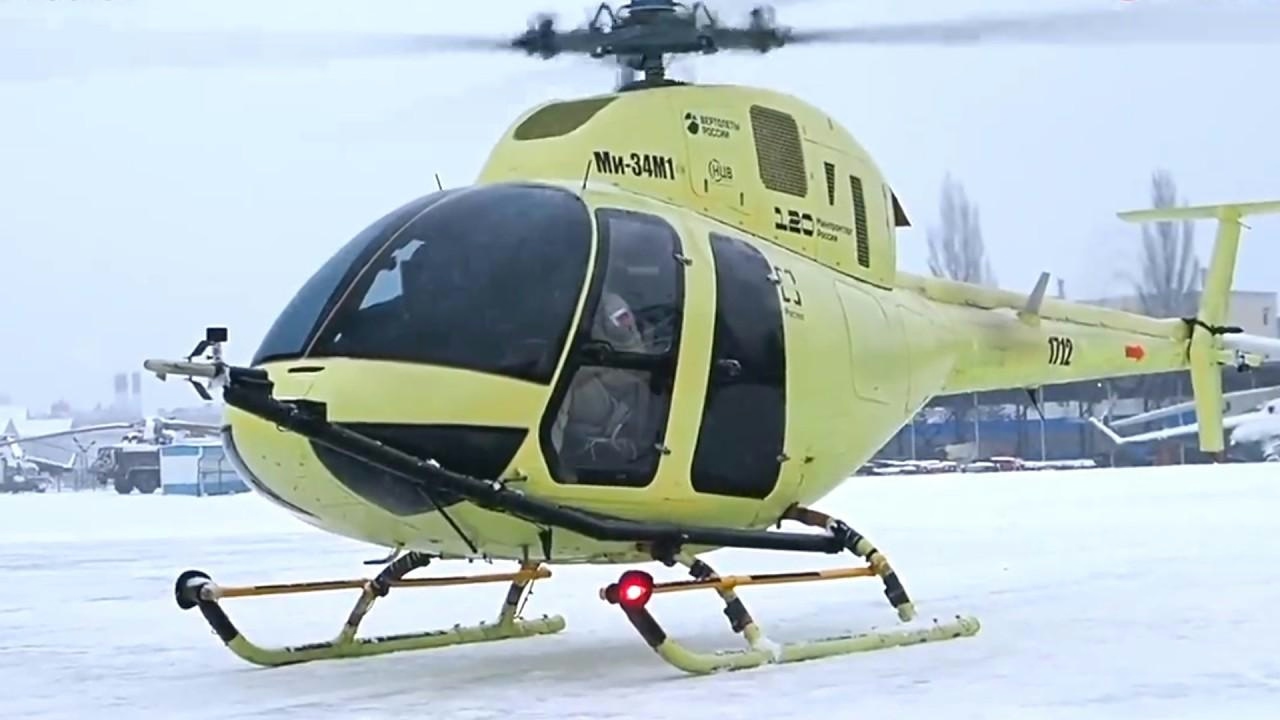
Russia Initiates Flight Testing of Upgraded Mi-34M1 Helicopter Featuring New Engine
Russia has commenced flight tests of the modernized Mi-34M1 light multipurpose helicopter, as evidenced by recently released footage from a test airfield. The Mi-34M1 represents an updated iteration of the original Mi-34, which first took to the skies in 1986. Initially developed as a Soviet counterpart to Western light helicopters such as the Robinson R44, the Mi-34 saw limited production, with only around 30 units manufactured.
Engine Upgrade and Technical Specifications
The most notable enhancement in the Mi-34M1 is the integration of the domestically designed VK-650V turboshaft engine. This powerplant, engineered for helicopters with a maximum takeoff weight of up to four tons, delivers 650 horsepower during takeoff. Its performance metrics are comparable to those of the Ukrainian AI-450V engine, which currently powers several modern light helicopters and unmanned aerial vehicles. By adopting the VK-650V, Russia aims to reduce its dependence on Western and Ukrainian engine suppliers for this class of aircraft.
Despite this significant upgrade, the Mi-34 airframe remains largely unchanged and is widely regarded as technically outdated. The design imposes inherent limitations on internal space, operational range, and payload capacity. Consequently, the Mi-34M1 is expected to serve primarily in roles such as pilot training, communications, and patrol missions, rather than competing as a versatile multi-role helicopter. The reliance on a design dating back to the 1980s underscores the persistent challenges Russia faces in developing and deploying modern light rotary-wing aircraft.
Challenges and Market Context
The introduction of the VK-650V engine presents its own set of hurdles. Ensuring the engine’s reliability and consistent performance across diverse operational environments will be critical, and the certification process may encounter delays. While the upgraded engine could attract interest from military customers seeking advanced helicopter technology, ongoing geopolitical tensions are likely to constrain international sales prospects.
In the global market, Western manufacturers are anticipated to continue advancing helicopter and engine technologies. Companies such as Pratt & Whitney are developing high-performance engines, exemplified by the F119 used in the F-22 fighter jet, while the United States Air Force pursues autonomous fighter programs. These developments highlight the competitive environment Russia confronts as it endeavors to modernize its rotary-wing fleet.
Ultimately, the Mi-34M1 appears to function more as a test platform for the VK-650V engine than as a serious contender in the global light helicopter market. The project reflects Russia’s broader efforts to achieve technological self-sufficiency amid the complex challenges of introducing new-generation aircraft in a highly competitive international landscape.

Etihad Airways Suspends Airbus A380 Flights on Key Route

Aditya Birla Group Seeks Approval for Aircraft Leasing in GIFT City

Qatar Airways Highlights Innovation and Connectivity at Arabian Travel Market 2026

Hong Kong's Five-Year Plan Includes Andrew Fan's Aircraft Parts Processing Hub Proposal

ACIA Aero Leasing Delivers ATR72-600 to Air Nostrum

RTX Appoints Jill Albertelli as Head of Pratt & Whitney

TAT Technologies Joins Beyond Aero Hydrogen Aircraft Program

AURAK Study Highlights Barriers to Air Taxi Adoption in Emerging Economies

Xiamen Air Selects Altitude for 787 Maintenance at Heathrow

Etihad and Swissport Extend Global Partnership
