
Orquesta conocimientos de IA para convertirlos en acción

Tendencias
Categories
Russia Uncertain About PD-8 Engine Longevity on Superjets
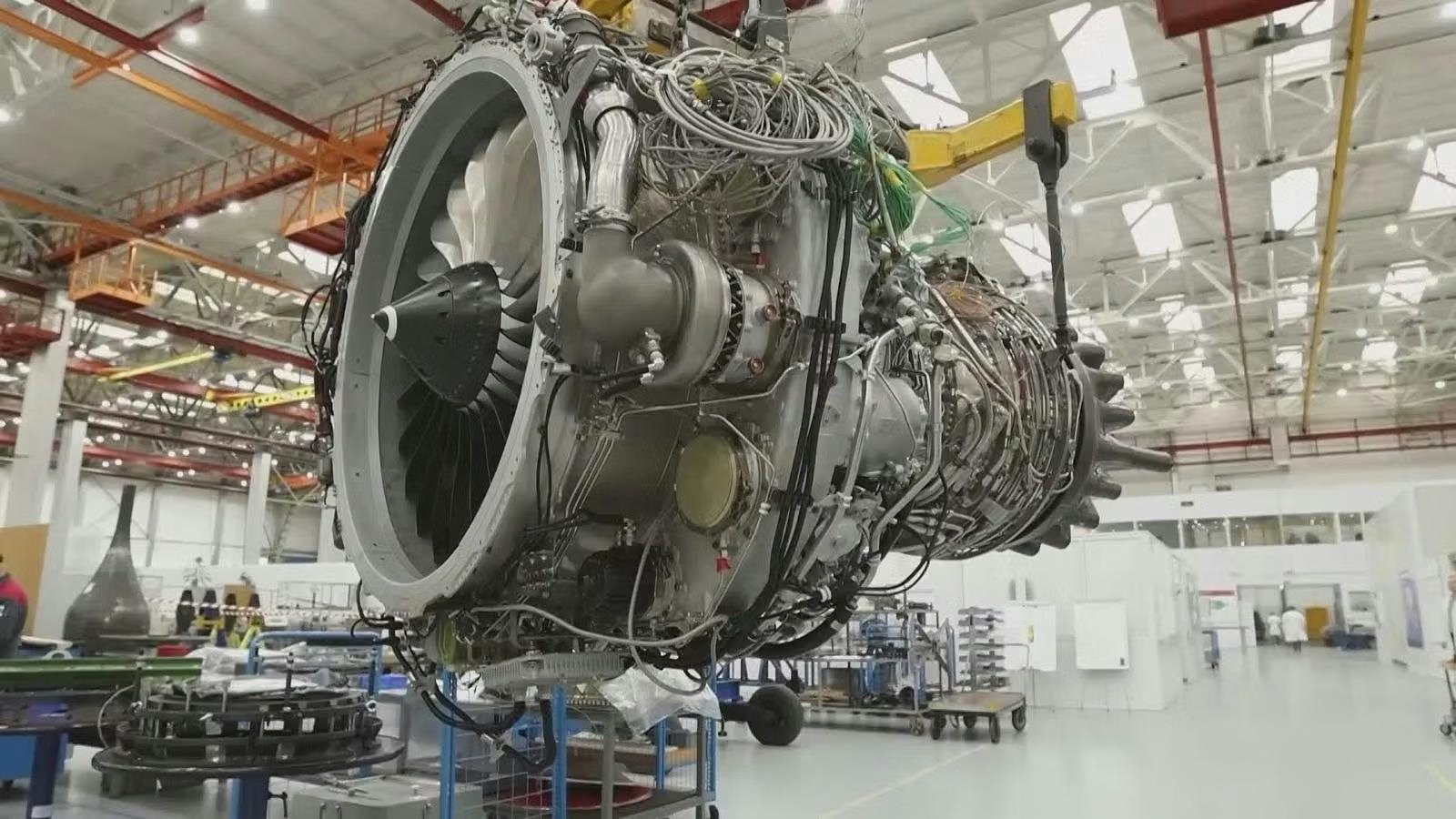
Russia Faces Challenges in Establishing PD-8 Engine Longevity for Superjets
Russia’s domestically developed PD-8 engine, designed to power the Superjet, confronts a critical obstacle: the absence of extensive long-term operational data. While bench testing provides valuable insights, it cannot substitute for the comprehensive real-world statistics necessary to fully assess the engine’s durability and reliability. This shortfall raises concerns about the PD-8’s certification timeline and its ability to compete effectively in both domestic and international aviation markets, particularly as Russia pursues import substitution strategies.
Data Deficiency and Its Implications
Andrey Patrakov, founder of the flight safety service RunAvia and a former Airbus auditor, highlights the advantage Western engine manufacturers hold due to decades of accumulated operational data. He points out that hundreds of thousands of Western engines operate globally, generating vast datasets that enable manufacturers to identify structural vulnerabilities and incrementally extend engine service life through continuous improvements. In stark contrast, Russian engines are produced and operated in far smaller quantities, making it impossible to amass comparable data within a short timeframe.
This data gap is especially problematic as Russia expedites the introduction of new engines like the PD-8, which must not only secure certification but also prove reliable across a range of climatic conditions, flight profiles, and operational intensities. By the end of April 2026, PD-8 prototypes had logged over 6,100 hours of total operating time, a figure that exceeds that of comparable foreign engines at similar development stages. In May, the PD-8’s documentation was submitted to Rosaviatsiya, Russia’s aviation authority, marking a crucial step toward obtaining a type certificate.
Market and Certification Challenges Ahead
Despite these milestones, the lack of long-term operational data may delay certification, potentially disrupting production schedules and undermining confidence among investors and potential customers. Industry analysts suggest that skepticism regarding the PD-8’s service life could influence airline purchasing decisions, thereby affecting the Superjet’s market prospects. Competitors may exploit this uncertainty by promoting alternative engines with established reliability records, seeking to capture market share while Russia continues to validate its new powerplant.
As the PD-8 advances through the certification process, its real-world performance will be closely scrutinized. The engine’s success or failure will not only reflect on Russian engineering capabilities but also serve as a barometer of the country’s broader efforts to reduce dependence on foreign technology and assert itself in the global aviation industry.

Etihad Airways Suspends Airbus A380 Flights on Key Route

Aditya Birla Group Seeks Approval for Aircraft Leasing in GIFT City

Qatar Airways Highlights Innovation and Connectivity at Arabian Travel Market 2026

Hong Kong's Five-Year Plan Includes Andrew Fan's Aircraft Parts Processing Hub Proposal

ACIA Aero Leasing Delivers ATR72-600 to Air Nostrum

RTX Appoints Jill Albertelli as Head of Pratt & Whitney

TAT Technologies Joins Beyond Aero Hydrogen Aircraft Program

AURAK Study Highlights Barriers to Air Taxi Adoption in Emerging Economies

Xiamen Air Selects Altitude for 787 Maintenance at Heathrow

Etihad and Swissport Extend Global Partnership
