
Orquesta conocimientos de IA para convertirlos en acción

Tendencias
Categories
Safran Acquires Collins Aerospace Flight Control Unit
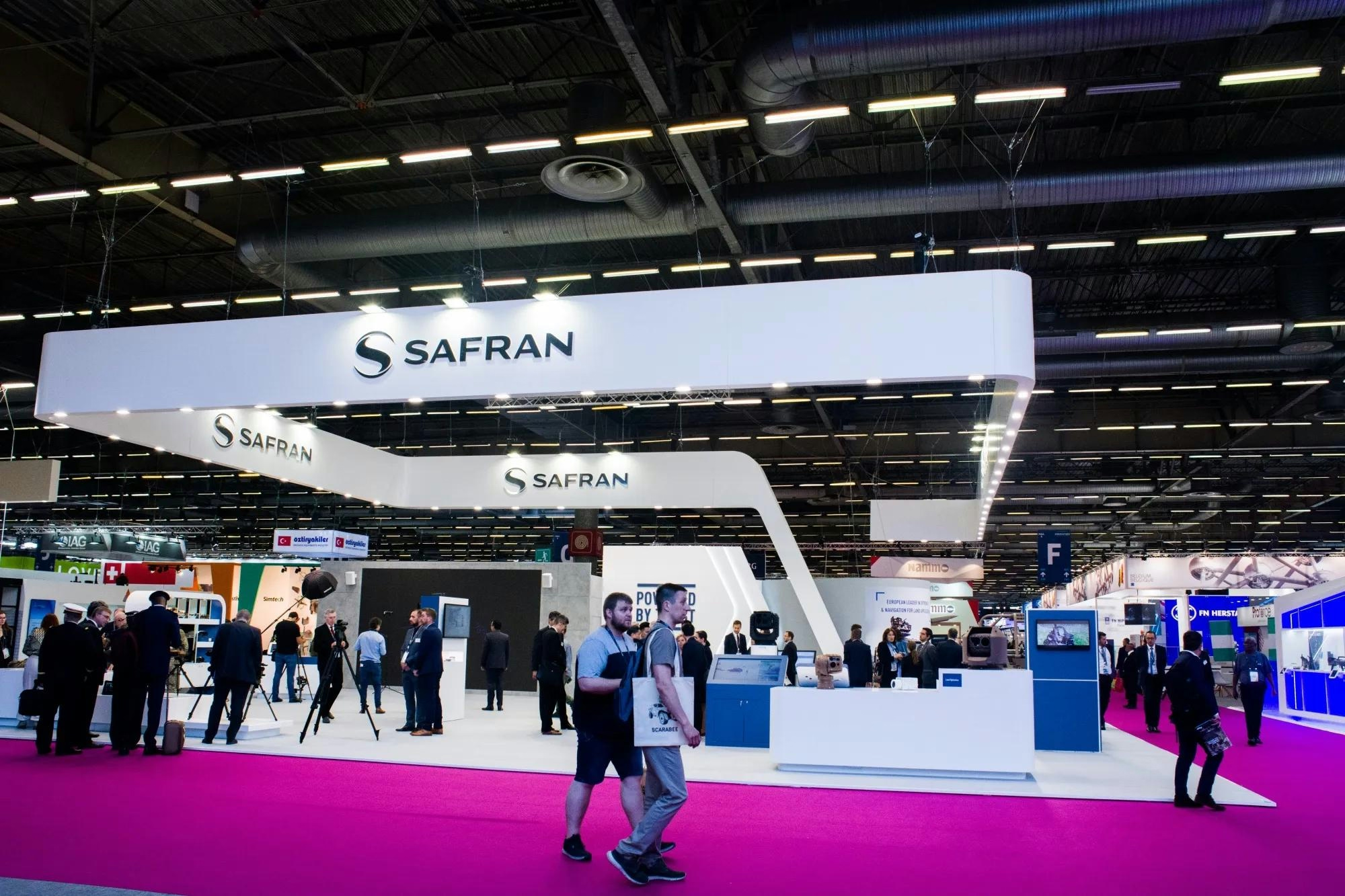
Safran Finalizes Acquisition of Collins Aerospace Flight Control Unit
Safran has completed the acquisition of Collins Aerospace’s flight control and actuation business, a strategic move that significantly enhances its standing as a global leader in advanced aerospace systems. The transaction includes approximately 4,000 employees distributed across eight primary sites in the United Kingdom, France, and Italy, with additional operations in Poland, the United States, and India. This expansion positions Safran to meet the evolving demands of next-generation aviation platforms.
Strengthening Capabilities and Market Position
The acquired unit’s flight control and actuation systems are integrated into 180 aircraft platforms spanning commercial, military, and helicopter sectors. In 2024, the business generated an estimated $1.55 billion in revenue and achieved an EBITDA of approximately $130 million. Safran plans to consolidate these operations into its Electronics & Defense division by August 1, 2025.
Safran’s CEO, Olivier Andriès, described the acquisition as a “unique opportunity” to deepen the company’s presence in a highly technical and profitable segment. He underscored the strong alignment between Collins Aerospace’s assets and Safran’s existing product portfolio, emphasizing the potential for technological innovation and growth in recurring aftermarket sales. The integration of Collins’ advanced hydraulic and mechanical expertise with Safran’s electro-mechanical systems and electronics capabilities is expected to place the company at the forefront of innovation, particularly as the aviation industry intensifies its focus on decarbonization and electrification.
Integration Challenges and Industry Implications
Despite the strategic advantages, Safran faces several challenges in integrating the new business. Effective management of cultural differences, smooth technology transfer, and the preservation of robust customer relationships will be essential to fully realize the acquisition’s value. Market reactions have been positive, reflecting investor confidence, but the company must navigate these complexities carefully.
Industry analysts suggest that this acquisition may trigger heightened competition among major aerospace players, including Rolls-Royce and Honeywell, who may seek to strengthen their own market positions in response to Safran’s expanded capabilities.
Beyond fixed-wing aircraft, the acquisition enhances Safran’s offerings in helicopter and nacelle actuation, sectors where the company already holds a strong global presence. In the defense arena, the deal broadens Safran’s portfolio of actuation and control solutions for military aircraft and missiles, reinforcing its sovereignty-related activities and supporting long-term growth prospects.
As the aviation industry continues to evolve, Safran’s expanded expertise in both hydraulic and electro-mechanical flight control systems positions it to play a pivotal role in shaping the future of aircraft design and operation.

Etihad Airways Suspends Airbus A380 Flights on Key Route

Aditya Birla Group Seeks Approval for Aircraft Leasing in GIFT City

Qatar Airways Highlights Innovation and Connectivity at Arabian Travel Market 2026

Hong Kong's Five-Year Plan Includes Andrew Fan's Aircraft Parts Processing Hub Proposal

ACIA Aero Leasing Delivers ATR72-600 to Air Nostrum

RTX Appoints Jill Albertelli as Head of Pratt & Whitney

TAT Technologies Joins Beyond Aero Hydrogen Aircraft Program

AURAK Study Highlights Barriers to Air Taxi Adoption in Emerging Economies

Xiamen Air Selects Altitude for 787 Maintenance at Heathrow

Etihad and Swissport Extend Global Partnership
