Imagen

Orquesta conocimientos de IA para convertirlos en acción

¡Únete hoy a la lista de espera de AeroGenie!

Tendencias

Categories

Setna Acquires Majority Stake in J&C Aero
July 2, 2026By ePlane AI
Setna Acquires Majority Stake in J&C Aero
0
0
Setna iO
J&C Aero
Cabin Interior Engineering

Setna Acquires Majority Stake in J&C Aero

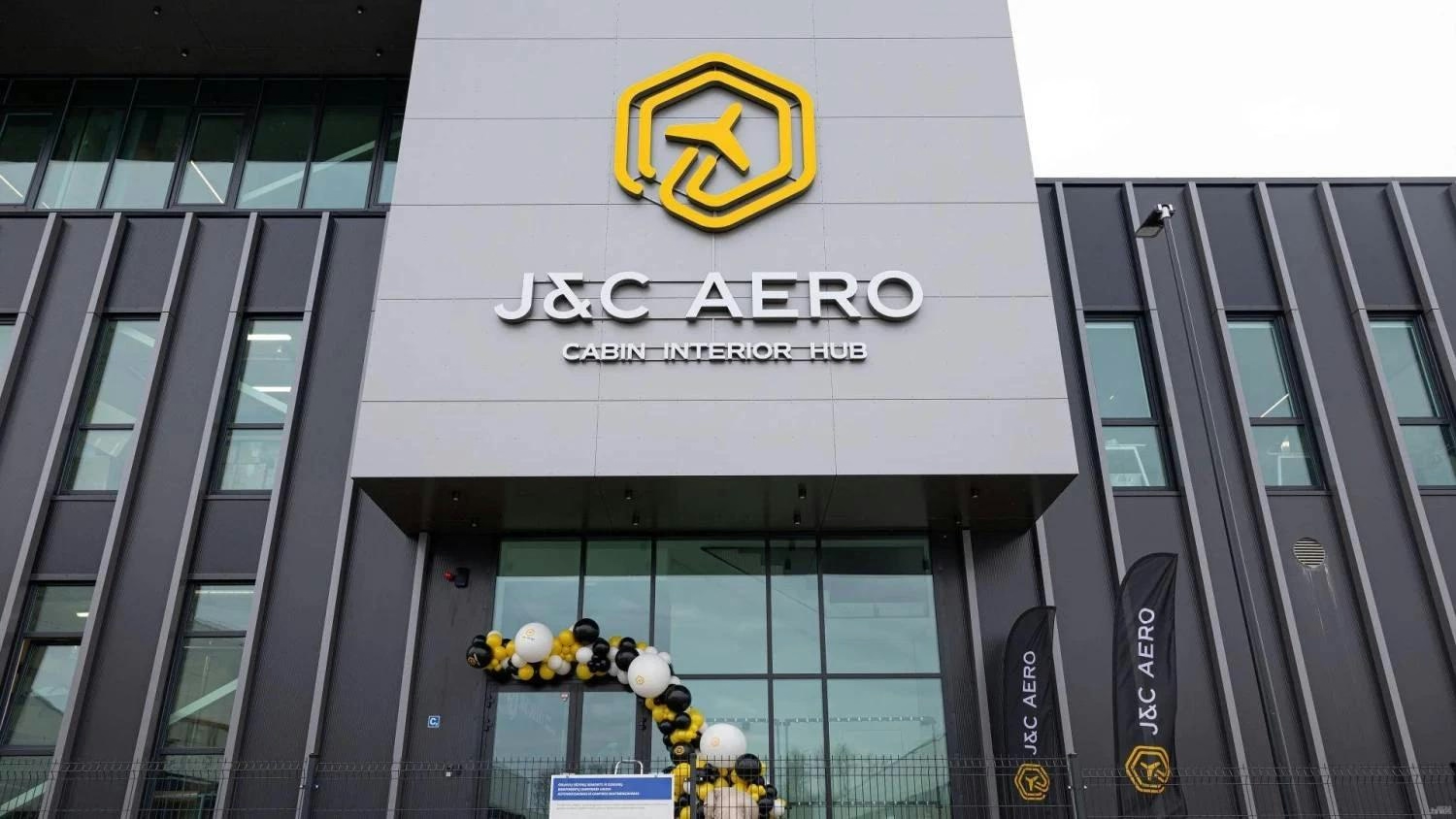
Setna iO, LLC, a Chicago-based global supplier of aftermarket aircraft parts, has completed the acquisition of a majority stake in J&C Aero, a Vilnius, Lithuania-based specialist in cabin interior engineering. Initially announced in February, the transaction aims to strengthen Setna’s global maintenance, repair, and overhaul (MRO) network by incorporating J&C Aero’s certified capabilities in cabin interior design, manufacturing, maintenance, and continuing airworthiness.

Expanding Capabilities in Cabin Interior Services

J&C Aero enhances Setna’s portfolio with a comprehensive range of services, including certified design and modification under EASA Part 21J, proprietary OEM and aftermarket cabin interior manufacturing under EASA Part 21G, and cabin interior MRO services under EASA Part 145. Additionally, J&C Aero manages engineering and regulatory compliance through its EASA Part CAMO continuing airworthiness organization, providing a full lifecycle approach to cabin interior solutions.

David Chaimovitz, Founder and Chief Executive Officer of Setna, emphasized the strategic value of the partnership, stating, “We are proud to partner with a founder-led company that shares our passion for the aviation industry. J&C brings a rare combination of engineering expertise, production capability, and certification know-how in cabin interiors. As Setna continues to grow, these are exactly the MRO and proprietary engineering capabilities we want to add to our platform. Together, we can offer customers a broader, more integrated aftermarket solution across the aircraft lifecycle.”

Strategic and Market Implications

The acquisition positions Setna to deliver more integrated solutions and expand its presence in the aftermarket aviation sector. However, the companies face challenges including navigating complex regulatory approval processes, integrating operations across different continents, and managing potential resistance from J&C Aero’s existing stakeholders.

Market response to the acquisition has been predominantly positive, reflecting ongoing consolidation trends within the business aviation sector. Industry analysts suggest that such moves often stimulate investor interest, driven by anticipated synergies and expanded service offerings. Competitors may respond with strategic initiatives such as accelerated innovation or competitive pricing to maintain market share amid increasing consolidation.

Recent industry data highlights robust demand in the business jet market, supported by bonus depreciation incentives that contribute to optimistic market sentiment. Within this context, Setna’s acquisition of J&C Aero is viewed as a calculated effort to leverage favorable market conditions and reinforce its position in the evolving aviation aftermarket.

The integration of J&C Aero’s engineering and certification expertise is expected to enhance Setna’s ability to serve a global customer base, providing a more comprehensive suite of aftermarket solutions throughout the aircraft lifecycle.

More news
Avolon to Acquire 11 A321neos Originally Ordered by Frontier Airlines

Avolon to Acquire 11 A321neos Originally Ordered by Frontier Airlines

Avolon to Acquire 11 A321neos Originally Ordered by Frontier Airlines Aircraft lessor Avolon is poised to acquire 11 Airbus A321neo aircraft initially ordered by Frontier Airlines, following approval from its parent company, Bohai Leasing. The decision, announced after a board meeting on June 30, 2026, aligns with Bohai Leasing’s broader strategy to bolster its aircraft reserves and enhance its competitive position in the global leasing market. Details of the Acquisition According to a financial statement filed with the Shenzhen Stock Exchange, the acquisition received unanimous support from all nine directors on Bohai Leasing’s board. The agreement between Bohai Leasing and Frontier Airlines was formalized on June 30, 2026. The 11 A321neos involved in the transaction are valued at approximately $1.425 billion, based on Airbus’s 2018 catalogue prices, although the final transaction value may differ. Deliveries are scheduled to occur progressively between November 2026 and June 2027. Frontier Airlines currently awaits delivery of 142 Airbus A321neos, following a substantial order placed in July 2021 for an additional 91 aircraft. The transfer of these 11 aircraft to Avolon reflects ongoing adjustments within the aircraft leasing market, as airlines and lessors respond to evolving demand patterns and competitive pressures. Market Context and Industry Implications Avolon’s acquisition takes place amid a dynamic leasing environment characterized by fluctuating market demand, prompting airlines to reassess their fleet strategies. For instance, Wizz Air recently chose to retain its A321XLRs rather than transferring them, illustrating the challenges lessors face in securing aircraft amid strong demand. Meanwhile, competitors are pursuing their own approaches; Starlux Airlines has expanded its fleet by leasing additional A321neos from BOC Aviation, signaling assertive efforts to secure narrow-body capacity. These developments highlight the competitive dynamics within the narrow-body aircraft market, where lessors like Avolon aim to capitalize on robust demand while airlines weigh the advantages of retaining versus transferring aircraft orders. Bohai Leasing emphasized that the transaction will enable the company to meet its business development objectives, provide diversified fleet solutions to airline customers, and further strengthen its market share in the global aircraft leasing industry. As the aircraft leasing sector continues to evolve, Avolon’s acquisition of the 11 A321neos originally destined for Frontier Airlines underscores both the opportunities and challenges confronting lessors and airlines in a rapidly changing market.
CDB Aviation Completes Sale and Leaseback of Lufthansa B787

CDB Aviation Completes Sale and Leaseback of Lufthansa B787

CDB Aviation Completes Sale and Leaseback of Lufthansa Boeing 787s CDB Aviation, the Irish leasing subsidiary of China Development Bank Financial Leasing, has finalized a sale-and-leaseback agreement with Lufthansa involving two Boeing 787-9 aircraft. These aircraft are slated for delivery to Lufthansa in late 2025 and early 2026, where they will be integrated into the airline’s long-haul fleet. The planes will feature Lufthansa’s new Allegris cabin, which offers enhanced business, premium economy, and economy class configurations. Expanding Partnership Amid Market Challenges This transaction represents CDB Aviation’s inaugural direct leasing arrangement with Lufthansa, building on prior collaborations with the airline group’s engine leasing division as well as previous aircraft sales to Austrian Airlines and Eurowings. The lessor highlighted that the deal aligns with its strategic objective to expand its portfolio of modern, fuel-efficient aircraft operated by leading global carriers. The agreement comes at a time of significant challenges within the European aviation sector. Airlines are contending with rising operating costs, persistent geopolitical uncertainties, and mounting sustainability demands. These factors are expected to intensify scrutiny over the financial ramifications of the deal for both CDB Aviation and Lufthansa, as industry stakeholders evaluate the long-term sustainability and profitability of such transactions. Strategic Shifts and Industry Implications Lufthansa’s decision to pursue this sale-and-leaseback coincides with its announced strategy to reduce its European network and place greater emphasis on widebody operations. This shift may prompt competitors to reassess their own fleet strategies in response to evolving market conditions. The move underscores the broader industry trend toward prioritizing fuel-efficient, next-generation aircraft amid a complex and rapidly changing environment. CDB Aviation’s partnership with Lufthansa thus reflects the continuing demand for advanced aircraft technology, while also highlighting the intricate considerations faced by lessors and airlines navigating the current aviation landscape.
Embraer Acquires Full Ownership of EZ Air Interior

Embraer Acquires Full Ownership of EZ Air Interior

Embraer Acquires Full Ownership of EZ Air Interior Embraer has completed the acquisition of the remaining 50% stake in EZ Air Interior, its joint venture with Safran Cabin, along with selected cabin interior assets located in Brazil. This transaction grants Embraer full control over the Mexico-based operation, which has exclusively supported the company’s aircraft programs since its establishment in 2012. EZ Air Interior is responsible for manufacturing critical components such as overhead luggage bins, galleys, lavatories, and floor panels for Embraer’s E-Jets family. The agreement also encompasses the integration of part of Safran Cabin’s Jacareí facility in Brazil, which is dedicated to Embraer programs. Safran will maintain its non-Embraer engineering services activities within the country. Embraer has indicated that this acquisition aligns with its long-term strategy to enhance industrial capabilities and generate additional value for the business. The deal was finalized following regulatory approvals and the satisfaction of customary closing conditions. Industry Context and Future Outlook This acquisition occurs amid significant uncertainty in the global aerospace sector. Embraer now faces potential challenges related to supply chain disruptions, particularly as geopolitical tensions—such as the ongoing conflict in Iran—continue to affect jet fuel prices and logistics. Market analysts are closely monitoring Embraer’s capacity to uphold production schedules and profitability, especially given the company’s substantial $14.5 billion order backlog. Competitors may respond by intensifying efforts to secure their own supply chains and strengthen manufacturing capabilities, aiming to capitalize on any vulnerabilities Embraer might experience. Despite these pressures, Embraer’s CEO has expressed confidence in the company’s ability to navigate supply chain challenges and fulfill its commitments. As Embraer integrates EZ Air Interior and expands its in-house manufacturing footprint, industry observers and investors will be watching closely. The full impact of the acquisition, in conjunction with ongoing market volatility, remains to be seen.
Louis Philippe Mallette Appointed CEO of AJW Technique

Louis Philippe Mallette Appointed CEO of AJW Technique

Louis Philippe Mallette Appointed CEO of AJW Technique AJW Group, a prominent independent provider of aircraft component support and maintenance, repair, and overhaul (MRO) services, has announced the appointment of Louis Philippe Mallette as Chief Executive Officer of AJW Technique. Based at the company’s Montreal MRO facility, Mallette will be responsible for guiding the strategic and operational direction of AJW Technique. In his new role, he will collaborate closely with Clyde Buntrock, CEO of AJW Aviation, as part of AJW Group’s integrated global leadership team, and will report directly to Christopher Whiteside, Chairman of AJW Group. Leadership Amid Industry Challenges Mallette’s appointment arrives at a critical juncture for the aviation MRO sector, which is currently undergoing significant transformation and facing intensified competition. His leadership is anticipated to be instrumental in navigating these evolving industry dynamics, managing market expectations, and responding to competitive pressures from other firms. The decision to entrust Mallette with this role reflects AJW Group’s confidence in his strategic vision and capacity to drive sustainable growth. Christopher Whiteside emphasized the significance of this leadership change, stating, “Louis Philippe’s appointment marks an important step for AJW Technique. His strategic vision positions us well for continued growth and excellence in the global aviation MRO sector.” Context and Industry Implications This leadership transition aligns with a broader pattern of executive changes across various industries, including recent CEO appointments such as Marwan Jreige at Takween and Michel Denis at Daher. As Mallette assumes his responsibilities, industry observers will closely monitor the impact of his leadership on AJW Technique’s performance and strategic direction. Competitors are also expected to adjust their strategies in response to the evolving competitive landscape. Mallette’s tenure will likely be defined by his ability to address the complexities of the aviation MRO market, promote innovation, and uphold AJW Technique’s reputation for quality and reliability. The industry will be attentive to both his strategic initiatives and the market’s response as he leads the company forward.
JetZero Unveils Blended-Wing Aircraft to Rival Airbus and Boeing

JetZero Unveils Blended-Wing Aircraft to Rival Airbus and Boeing

JetZero Unveils Blended-Wing Aircraft to Rival Airbus and Boeing A New Contender in Commercial Aviation In a significant development aimed at challenging the dominance of Airbus and Boeing in the commercial aviation sector, California-based startup JetZero is constructing a full-scale demonstrator of a blended-wing aircraft. This innovative design targets the highly competitive 200-plus-seat market segment, which has long been served by established manufacturers. The test aircraft, currently being assembled in a sprawling hangar in the Mojave Desert, is slated for its maiden flight by the end of next year. This milestone represents a critical phase in JetZero’s ambition to introduce the world’s first blended-wing commercial jet, characterized by a seamless integration of fuselage and wings into a single aerodynamic lifting surface. JetZero asserts that its manta ray-inspired design could reduce fuel consumption by as much as 50%, a claim that has already garnered early investment and interest from major carriers such as United Airlines and Alaska Airlines. The demonstrator is partially funded by the U.S. Air Force and is being developed in partnership with Scaled Composites, a subsidiary of Northrop Grumman. It will be powered by Pratt & Whitney engines similar to those used on the Boeing 757. Should the initial test flights prove successful, JetZero plans to secure additional funding and commence commercial production by 2030 at its new manufacturing facility in Greensboro, North Carolina. Beyond commercial applications, the design also holds promise for military uses, including transport and aerial refueling missions. Drawing on Decades of Research and Innovation JetZero CEO Tom O’Leary emphasized the unprecedented nature of the project, stating that building the first full-size blended-wing demonstrator is a feat never before accomplished. The concept leverages over 30 years of NASA research and builds upon earlier, unrealized efforts by Boeing. “We’re taking existing technology and decades of research to make this a reality,” O’Leary explained. While specific technical details remain confidential, JetZero’s objective is to demonstrate that the blended-wing configuration can generate lift with significantly less drag, thereby reducing the thrust and fuel required during cruise. The demonstrator will feature a pressurized cockpit only, with fuel tanks occupying the space that would typically accommodate passengers. Challenges Ahead and Industry Reactions JetZero’s Z4 aircraft is designed to fill the “middle of the market” niche, historically served by Boeing’s 757 and 767 models, accommodating between 200 and 270 passengers on medium- to long-haul routes. The aircraft’s wide, flat cabin design could enable innovative seating arrangements, larger windows, and more adaptable interiors, including reconfigurable galleys and lavatories. The engines, mounted above the rear fuselage, are intended to reduce ground noise and enhance efficiency. Despite these promising features, JetZero faces considerable challenges. Regulatory approval for the novel blended-wing design is expected to be a lengthy process, with certification posing a significant obstacle. Industry analysts caution that airlines may remain skeptical about the aircraft’s efficiency and safety until it has been proven in operational service. Richard Aboulafia, managing director at AeroDynamic Advisory, remarked, “It’s premature, but it’s not irrational. We can’t rule it out.” At the same time, established competitors are unlikely to remain passive. Boeing is reportedly considering increasing production of its 737 model to match Airbus’s output, while American Airlines is pursuing a widebody order to compete with Delta and United. These strategic moves could indirectly influence JetZero’s market entry and positioning. JetZero’s ambitious initiative stands at the crossroads of innovation and risk, with the potential to transform commercial aviation if it can successfully navigate the technical, regulatory, and market challenges ahead.
Saab Confirms Gripen Fighter Jet Order for Ukraine

Saab Confirms Gripen Fighter Jet Order for Ukraine

Saab Confirms Gripen Fighter Jet Order for Ukraine Saab has formalized a contract with the Swedish Defence Materiel Administration (FMV) to supply Ukraine with 16 Gripen E fighter aircraft. Valued at approximately SEK 24.6 billion (around $2.54 billion), the order is scheduled to be officially recorded in the third quarter of 2026. Deliveries of the newly built Gripen E jets are planned to commence in 2029 and continue through 2030. Strengthening Ukraine’s Air Capabilities This agreement builds on Sweden’s earlier commitment to donate up to 16 older-generation Gripen C/D jets to Ukraine, with the transfer expected in early 2027. Together, the donation and the new acquisition are poised to substantially enhance Ukraine’s air combat capabilities amid ongoing security challenges. The contract encompasses not only the aircraft but also spare parts, associated equipment, and support services to ensure sustained operational readiness. The Gripen E is engineered to counter advanced threats in complex operational environments. Its capability to operate from short runways, temporary airstrips, and even roads facilitates dispersed operations and high availability—critical attributes for Ukraine’s defense strategy. Advanced Design and Operational Efficiency Featuring a software-based architecture, the Gripen E allows for continuous upgrades to meet evolving operational demands. The aircraft is recognized for its low maintenance requirements and rapid turnaround times, providing a cost-effective and efficient solution for both operation and upkeep. With the integration of both the donated Gripen C/D jets and the newly ordered Gripen E fighters, Ukraine is expected to achieve a significant enhancement in its air combat readiness, strengthening its capacity to address current and future threats.
Riyadh Air’s Boeing 787-9 Dreamliners Unable to Use Starlink Wi-Fi

Riyadh Air’s Boeing 787-9 Dreamliners Unable to Use Starlink Wi-Fi

Riyadh Air’s Boeing 787-9 Dreamliners Unable to Use Starlink Wi-Fi Saudi Arabia’s newest carrier, Riyadh Air, commenced its inaugural scheduled service on June 10, 2026, operating a Boeing 787-9 Dreamliner between Riyadh Airport (RUH) and London Heathrow (LHR). This launch represents a key milestone in the Kingdom’s Vision 2030 initiative, with the airline targeting expansion to 100 global destinations by the decade’s end. Despite the excitement surrounding its state-of-the-art cabins and premium service offerings, a notable aspect has drawn attention within the aviation community: Riyadh Air’s flagship Dreamliners do not utilize SpaceX’s Starlink Wi-Fi system. Instead, the airline has opted for Viasat’s satellite connectivity platform, a more conventional technology at a time when many international carriers are adopting Starlink’s low-Earth-orbit (LEO) satellite network. This choice is particularly striking given Riyadh Air’s branding as a digitally native airline prioritizing advanced technology and enhanced passenger experience. The absence of Starlink connectivity is not due to a lack of interest but rather the technical challenges associated with installing and certifying LEO antennas on composite-fuselage aircraft such as the Boeing 787. The aviation sector continues to confront these complexities, which have hindered the widespread integration of Starlink on certain aircraft models. Mixed Reactions to Connectivity Choice Riyadh Air’s inaugural commercial flight, RX401, highlighted the airline’s ambitious product offering. The Boeing 787-9 business class cabin features 28 seats arranged in a spacious 1-2-1 layout, with privacy walls extending 52 inches and 22-inch 4K Panasonic OLED entertainment screens—among the largest installed in commercial aviation. Early passenger feedback praised the cabin’s design and comfort, with some describing it as one of the most visually impressive business-class environments currently available. However, the in-flight internet experience quickly became a subject of discussion. Passengers on the maiden flight reported Wi-Fi speeds averaging around 2.7 Mbps and latency near 750 milliseconds, according to a review by Head for Points. While these figures align with typical performance for geostationary satellite systems, they fall short of the high-speed, low-latency connectivity associated with Starlink-equipped aircraft. This disparity is particularly significant for modern online activities such as streaming, video conferencing, and cloud-based applications, where low latency is essential. For tech-savvy travelers and frequent flyers who increasingly expect seamless, ground-like internet access, the absence of Starlink may represent a considerable disadvantage. Competitive Implications Riyadh Air’s inability to offer Starlink Wi-Fi could impact its competitive positioning in a market where reliable, high-speed in-flight connectivity is increasingly valued by passengers. Travelers who prioritize superior internet service may prefer airlines equipped with Starlink, while competitors already utilizing the technology are unlikely to feel immediate pressure. Meanwhile, other carriers contemplating Starlink adoption may closely observe Riyadh Air’s experience. Although Riyadh Air’s launch has established new benchmarks in cabin design and passenger comfort, its connectivity limitations underscore the ongoing technical and strategic challenges airlines face in meeting evolving digital expectations.
Is SAS Planning to Acquire 40 A330neos?

Is SAS Planning to Acquire 40 A330neos?

SAS’s Ambitious Widebody Aircraft Order SAS Scandinavian Airlines has announced a landmark order for widebody aircraft, placing a firm commitment with Airbus for 18 A330neo jets as part of a broader plan to acquire up to 40 Airbus widebodies. Valued at over $10 billion, this represents the largest aircraft purchase in the airline’s history and underscores SAS’s confidence in its future growth prospects. Central to the airline’s strategy is an emphasis on Copenhagen Airport, where SAS aims to support an additional 25,000 jobs and contribute $3.8 billion to Denmark’s GDP by 2030. The scale of this order has prompted debate within the industry regarding the commercial viability of such a significant capacity increase, especially given SAS’s current market position and financial standing. Observers are closely monitoring whether the airline’s ambitious expansion will strengthen its role as a key player in Northern Europe or present challenges amid evolving market conditions. Industry Context and Contrasting Strategies SAS’s move aligns with a broader industry trend toward acquiring modern, fuel-efficient widebody aircraft. Other carriers are making similar investments; for instance, China Eastern recently placed an order for 25 Airbus A330neos, reflecting a global shift toward next-generation fleet modernization aimed at enhancing operational efficiency and meeting stricter environmental standards. In contrast, Air New Zealand is pursuing a different path. The airline has unveiled an updated turnaround plan focused on operational improvements and financial discipline to restore performance and ensure long-term viability. This approach highlights the varied strategies carriers are adopting to navigate a competitive and rapidly evolving aviation market. These developments were recently analyzed in an episode of the Airline Weekly Lounge podcast, where industry experts provided insight into the strategic and financial rationale behind the moves by SAS and Air New Zealand. Their discussion offered a critical perspective on fleet strategy and recovery efforts, illustrating the divergent approaches these airlines are taking in response to shifting market dynamics. As SAS advances its ambitious fleet renewal and Air New Zealand implements its disciplined turnaround, the global aviation industry will be watching closely to assess which strategies prove most effective in an increasingly competitive environment.
CFM’s Open Fan Engine Benefits from Dowty’s Propeller Expertise

CFM’s Open Fan Engine Benefits from Dowty’s Propeller Expertise

CFM’s Open Fan Engine Benefits from Dowty’s Propeller Expertise Gloucestershire-based propeller specialist Dowty is poised to play a crucial role in the next phase of CFM International’s Revolutionary Innovation for Sustainable Engines (RISE) programme. Drawing on nearly a century of experience in blade design, pitch control, and composite propeller technology, Dowty—owned by GE Aerospace—will contribute to the development of the RISE Open Fan architecture. This next-generation propulsion concept aims to reduce fuel consumption by more than 20% compared to current commercial engines. CFM International, a joint venture equally owned by GE Aerospace and Safran Aircraft Engines, launched the RISE programme in 2021 to pioneer advanced technologies for future narrowbody aircraft. The initiative includes the Open Fan propulsor, a compact engine core, hybrid-electric systems, and compatibility with alternative fuels, all designed to enhance efficiency and sustainability in aviation. For Dowty, this collaboration represents a significant evolution from its traditional propeller roots. The company’s extensive expertise in variable-pitch, all-composite blades is now being applied to an engine design that diverges markedly from today’s ducted turbofans. Arjan Hegeman, vice president for future of flight engineering at GE Aerospace, emphasized the importance of this development, stating, “Open Fan is the next step in the evolution of aviation propulsion to deliver durability and efficiency performance improvements. The Open Fan architecture combines the best of our turbofan and turboprop experience, building on proven technology for highly reliable future products.” GE Aerospace has invested approximately £12 million in Dowty, facilitating new machinery, expanded testing capabilities, and increased staffing at its Gloucester facility. The Significance of Dowty’s Expertise for the Open Fan Dowty’s involvement is integral to the fundamental design of the Open Fan engine. Traditional turbofans have improved efficiency by increasing bypass ratios, employing larger fans to move more air around the engine core. However, as fan diameters grow, the nacelle surrounding the fan also enlarges, increasing drag and limiting further efficiency gains. The Open Fan concept addresses this by eliminating the nacelle altogether, featuring large, exposed fan blades, a static second stage, and a compact gas turbine core. This design seeks to merge the propulsive efficiency of turboprops with the speed and performance expected of modern single-aisle jets. Dowty’s expertise spans both commercial and military applications, including propellers for the De Havilland Canada Dash 8-400 and the Lockheed Martin C-130J. The company brings deep knowledge in composite blade design, blade retention, pitch actuation, electronic propeller control, and long-term maintenance support. At a recent media briefing, Dowty technical director Jonathan Chesney highlighted that the company’s contribution to the Open Fan project builds on over 40 years of experience with all-composite blades and an even longer heritage in variable-pitch mechanisms. Chesney noted, “We know what is required to make a durable and maintainable product,” citing that some Saab 340 propeller blades remain in service after more than 50,000 flight hours. Engineering Challenges and Industry Outlook Integrating Dowty’s turboprop technology with CFM’s advanced turbofan architecture presents considerable engineering challenges, particularly in ensuring system maintainability and validating the performance of the open-fan demonstrator. The aviation industry is observing these developments closely, with some traditional turbofan manufacturers expressing skepticism about the feasibility of open-fan technology. In response, competitors may pursue their own open-fan concepts or enhance existing turbofan designs to counter CFM’s innovation. As the RISE programme progresses, Dowty’s expertise is expected to be instrumental in overcoming these challenges and influencing the future trajectory of sustainable aviation propulsion.
Airbus and Brave1 Collaborate to Enhance Ukrainian Defense Innovation

Airbus and Brave1 Collaborate to Enhance Ukrainian Defense Innovation

Airbus and Brave1 Collaborate to Enhance Ukrainian Defense Innovation A Landmark Partnership in Defense Technology Airbus Defence and Space has formalized a significant Memorandum of Understanding (MoU) with Brave1, Ukraine’s government-led defense technology coordinator. This agreement represents Brave1’s inaugural industrial strategic partnership with a Western company. Serving as a central innovation platform, Brave1 integrates the efforts of Ukraine’s ministries, military, and private technology sector to accelerate the development and deployment of advanced battlefield technologies. The partnership will see Airbus and Brave1 establish joint task forces dedicated to a broad spectrum of technological initiatives. These range from early-stage scientific research to the modernization of active military equipment. Airbus Defence and Space’s technologies will be incorporated into Brave1’s “Test in Ukraine” framework, facilitating rigorous live frontline co-testing and joint evaluation. Operational performance data collected during these tests will be systematically fed back into the development cycle, ensuring that emerging solutions effectively address Ukraine’s immediate security requirements. Challenges and Strategic Implications This collaboration unfolds amid considerable challenges. Both Airbus and Brave1 face the imperative to scale production rapidly to satisfy the increasing demand for sophisticated defense technologies. Equally important is the seamless integration of new innovations into Ukraine’s existing defense infrastructure. The partnership must also navigate a complex web of international regulations and export controls, which will be critical to its ongoing progress. Industry analysts suggest that this alliance may stimulate heightened interest from other defense companies, either seeking collaboration with Brave1 or aiming to compete within Ukraine’s rapidly evolving defense sector. In response, rival firms, particularly those based in Russia, might accelerate their own technological advancements. Concurrently, lobbying efforts concerning international policies on drone and defense technology exports are expected to intensify. Commitment to European Defense Collaboration As part of the agreement, Airbus will play a prominent role at the forthcoming “Defence Tech Valley” summit in Lviv, scheduled for September 16-17, 2026. Recognized as one of Europe’s largest defense technology gatherings, the event highlights Airbus’s dedication to supporting Ukraine as a vital European partner. This strategic collaboration is designed to expedite the delivery of cutting-edge defense solutions to the Ukrainian frontlines, while carefully managing the complexities of international defense innovation and competition.
line









