Imagen

Orquesta conocimientos de IA para convertirlos en acción

¡Únete hoy a la lista de espera de AeroGenie!

Tendencias

Categories

SIA Engineering and Safran to Expand LEAP Engine Maintenance Partnership
November 25, 2025By ePlane AI
SIA Engineering and Safran to Expand LEAP Engine Maintenance Partnership
0
0
SIA Engineering
Safran Aircraft Engines
LEAP Engine Maintenance

SIA Engineering and Safran to Expand LEAP Engine Maintenance Partnership

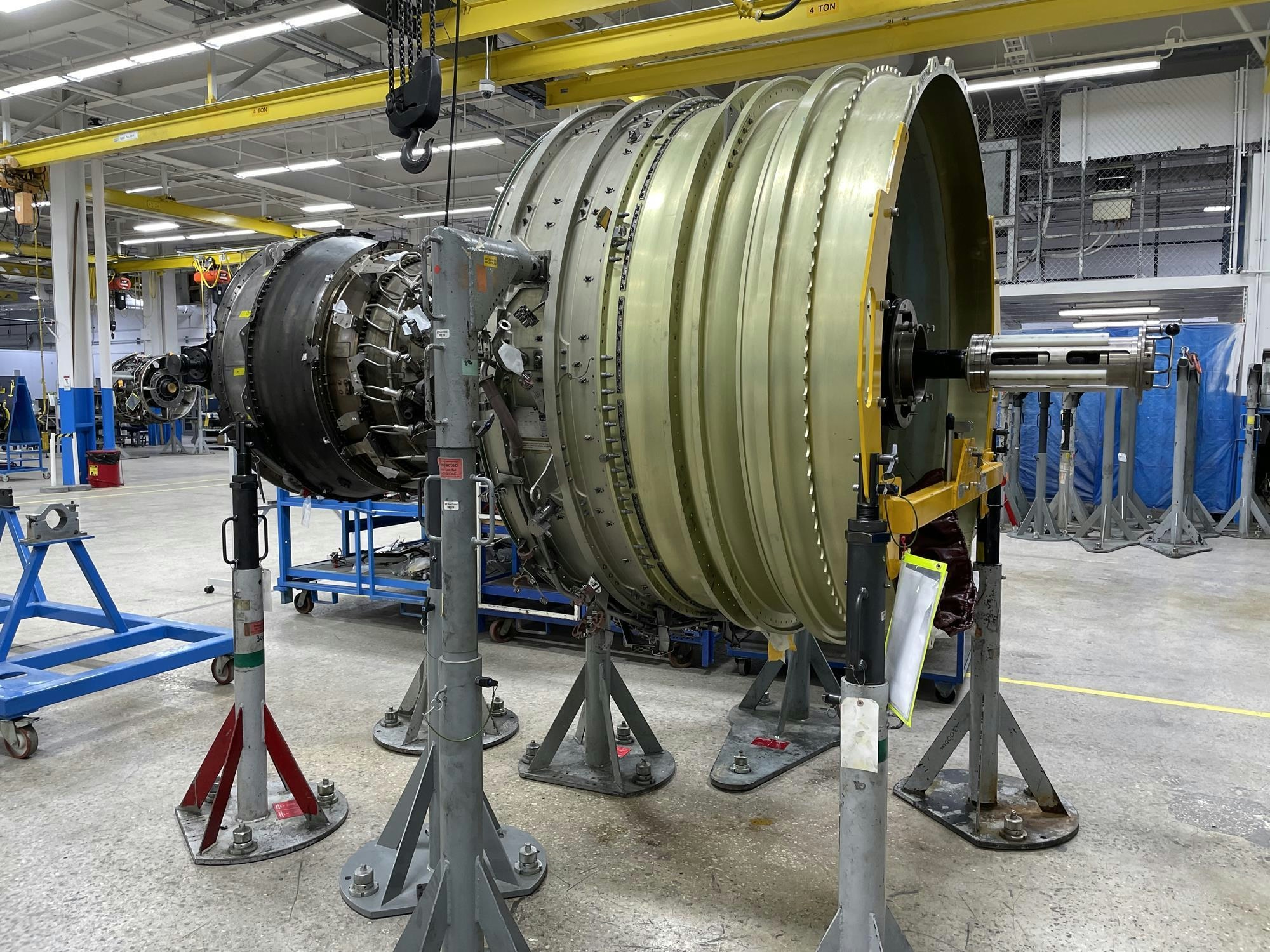
SIA Engineering Company Limited (SIAEC) and Safran Aircraft Engines have formalized their intent to deepen collaboration in the maintenance of CFM LEAP engines in Singapore. This strategic move aims to enhance both the capacity and technical capabilities of the LEAP engine maintenance network, potentially through the establishment of a joint venture, in response to growing global demand for LEAP engine support services.

Strengthening a Strategic Alliance

Building upon an existing partnership, the expanded collaboration will capitalize on SIAEC’s advantageous geographic position in Singapore and its extensive expertise in aircraft maintenance, repair, and overhaul (MRO). Recognized as a prominent player in the aerospace sector, SIAEC serves a diverse international customer base with comprehensive MRO solutions. The partnership is expected to attract significant interest from major aircraft operators, including Airbus, who depend on the LEAP engine family for its performance and efficiency.

Industry Context and Challenges

The aviation industry’s increasing need for reliable and cost-effective engine maintenance solutions underscores the timing of this expansion. However, scaling operations will require both companies to navigate heightened operational complexities while ensuring consistent quality standards across maintenance processes. The competitive environment is also intensifying, with rivals such as GE Aviation likely to bolster their own maintenance services in response to Safran’s expanded capabilities.

Recent developments within the industry further highlight the dynamic landscape. CFM International, the joint venture between GE and Safran, is progressing with open-fan engine designs, and Safran is engaged in negotiations with Airbus regarding LEAP-1A production targets. These factors may influence the strategic direction and scope of the SIAEC-Safran partnership moving forward.

Market Outlook

Investor sentiment towards SIA Engineering remains optimistic. The company holds a market capitalization of S$4.05 billion and experiences an average daily trading volume exceeding 1.2 million shares. Analysts currently maintain a “Buy” rating on SIAEC stock, with a target price of S$3.92, reflecting confidence in the company’s growth prospects amid the expanded collaboration.

As SIA Engineering and Safran advance their partnership, their joint efforts are positioned to significantly influence the future of LEAP engine maintenance across the Asia-Pacific region and beyond.

More news
FLYTO Employs Digital Twins to Evaluate New Aircraft

FLYTO Employs Digital Twins to Evaluate New Aircraft

FLYTO Employs Digital Twins to Evaluate New Aircraft Advancing Aircraft Testing Through Simulation South Korean startup FLYTO is addressing one of aviation’s most costly challenges: identifying aircraft issues during flight. Specializing in simulation tools for drones, electric vertical takeoff and landing vehicles (eVTOLs), and other emerging aircraft, FLYTO aims to enable engineers to detect and resolve problems within virtual environments before undertaking expensive and risky real-world flight tests. At the core of FLYTO’s technology is its VeriAero product, a high-precision flight-data acquisition unit that captures critical parameters such as speed, attitude, altitude, control inputs, engine status, and aircraft response. This data is integrated into a sophisticated flight-physics model and a three-dimensional digital environment capable of replicating terrains, urban landscapes, airports, and vertiports. The focus is not on creating visually striking virtual aircraft but on developing robust models that can accurately simulate specific aircraft behaviors under conditions that are costly, unsafe, or difficult to reproduce in reality. This approach allows developers to conduct repeated simulations of variables including weather fluctuations, low-altitude urban operations, route deviations, vertiport approaches, control delays, and emergency scenarios well in advance of any physical flight campaign. Such capabilities are increasingly critical as advanced air mobility introduces electrically powered, highly automated aircraft that must coexist with traditional aviation, navigate new vertiport infrastructures, and operate safely within complex urban environments and variable weather conditions. Challenges and Industry Implications Despite its promise, integrating digital twins into aircraft evaluation presents significant challenges. FLYTO must ensure the accuracy and reliability of simulation data while managing the substantial costs associated with developing and maintaining sophisticated digital twin models. Additionally, the company faces the task of incorporating advanced artificial intelligence technologies into existing production systems. The growing reliance on digital twins is also driving demand for skilled professionals capable of managing and interpreting complex simulation data. Market responses to these developments are mixed. While some traditional manufacturers remain cautious about adopting new simulation technologies, competitors are likely to accelerate their own digital twin initiatives to maintain a competitive edge. Regulatory agencies such as the Federal Aviation Administration (FAA) are still formulating frameworks for advanced air mobility and collaborating with industry stakeholders to simulate how eVTOLs might share airspace and facilities with conventional aircraft. It is important to emphasize that digital twins do not replace real-world testing or serve as a means of aircraft certification. Although simulation may be incorporated into the FAA’s certification process as part of compliance demonstration, it remains necessary to conduct engineering analyses, safety assessments, inspections, ground testing, and extensive flight testing. FLYTO’s objective is to complement and expedite these processes by providing better models, broader scenario coverage, and cost reductions. Company Background and Future Prospects FLYTO’s credibility is grounded in its experience delivering aviation training simulators within South Korea, including supplying simulators to educational institutions and developing a Boeing 737NG maintenance simulator. Recently, the company secured Pre-A funding led by The Wells Investment and MYSC. This investment will support enhancements to aircraft physics models, expansion of operational scenarios, and commercialization of its validation platform tailored for aviation and urban air mobility sectors. Although the funding amount was not disclosed, this milestone highlights FLYTO’s ambition to evolve from hardware and data-collection tools toward a comprehensive software-driven platform serving the broader aviation industry.
Rolls-Royce Engine Repair Cuts Annual Airline Costs by $450,000 Per Aircraft

Rolls-Royce Engine Repair Cuts Annual Airline Costs by $450,000 Per Aircraft

Rolls-Royce Engine Overhaul Cuts Annual Airline Costs by $450,000 Per Aircraft A Turnaround in Engine Reliability and Operational Efficiency Rolls-Royce has achieved a remarkable transformation with its Trent engine family, historically associated with reliability challenges in widebody aviation. Once a source of frequent unscheduled maintenance, grounded aircraft, and costly operational disruptions, the Trent engines now boast double their previous operational lifespans between overhauls. This significant improvement has converted what was once a multi-billion-dollar liability into a dependable asset for global airlines, resulting in annual fuel cost savings of approximately $450,000 per aircraft. This turnaround is the result of a comprehensive £1 billion ($1.3 billion) durability program spearheaded by Rolls-Royce’s Civil Aerospace President, Rob Watson. The initiative focused on enhancing the resilience of high-stress turbine components within the Trent 1000 and Trent XWB engine lines. As of July 2026, Rolls-Royce confirmed a 100% increase in time-on-wing, effectively doubling the operational hours between scheduled maintenance. This advancement has stabilized long-haul flight operations that were previously disrupted by premature component wear, fundamentally reshaping the economics of widebody aircraft management. Engineering Innovations and Operational Impact Central to this success is the Trent 1000 XE Durability Enhancement Package, which addresses the root causes of early engine degradation. Rather than applying temporary fixes or minor coating adjustments, Rolls-Royce engineers undertook fundamental mechanical redesigns and thermal upgrades to the high-pressure turbine’s thermodynamic environment. These changes enable the engines to endure extreme operating conditions without compromising thrust or fuel efficiency. For airlines operating aircraft such as the Boeing 787 Dreamliner and Airbus A350, the extended time-on-wing is critical. Unscheduled engine removals not only incur substantial repair expenses but also lead to immediate flight cancellations, the need for substitute engine leases, and widespread network disruptions. By significantly increasing engine endurance, Rolls-Royce has alleviated a major source of operational friction, safeguarding airline revenues and facilitating further improvements in aerodynamic and fuel efficiency. Challenges Ahead and Market Implications Despite these substantial cost savings and operational benefits, Rolls-Royce faces ongoing challenges in maintaining its competitive advantage. Ensuring that durability improvements remain effective across diverse and evolving operating environments will be essential. While many carriers have welcomed the reduced costs, some may still encounter operational disruptions if the enhancements are not consistently realized. Furthermore, competitors are expected to respond with their own cost-reduction initiatives and maintenance service improvements, intensifying competition within the engine market. Rolls-Royce’s efforts to expand its maintenance, repair, and overhaul (MRO) network and strengthen supply chains will also be tested as it seeks to scale these improvements globally. Meeting increasing demand without compromising service quality or reliability will be critical to sustaining the company’s revitalized reputation. By transforming its most problematic engine variants into benchmarks of durability and efficiency, Rolls-Royce has restored confidence among international carriers and set a new standard for operational excellence. The durability of these gains will be closely watched as the company navigates evolving market pressures and competitive dynamics in the years ahead.
How Companies Are Preparing for the Future of eVTOL Aircraft

How Companies Are Preparing for the Future of eVTOL Aircraft

How Companies Are Preparing for the Future of eVTOL Aircraft Advancements in Infrastructure and Urban Integration Advanced air mobility (A.A.M.) marked a pivotal milestone in July with the unveiling of the world’s first purpose-built eVTOL vertiport in Dubai. Developed through a collaboration between Skyports Infrastructure and Dubai’s Roads and Transport Authority, the 33,400-square-foot facility includes a passenger terminal, flight operations center, two takeoff-and-landing pads, and Joby Aviation’s Global Electric Aviation Charging System. Designed to handle 170,000 passengers and 42,000 aircraft movements annually, the vertiport is poised to commence electric air taxi operations imminently. Dubai’s broader vision for A.A.M. encompasses the construction of three additional vertiports throughout the city, underscoring its commitment to large-scale infrastructure development. While Dubai pursues ambitious new builds, many industry leaders advocate for a more incremental approach, focusing on upgrading existing helicopter facilities with charging capabilities. Rob Wiesenthal, founder and CEO of Blade Air Mobility, identifies select heliports in dense urban centers such as Manhattan and Los Angeles, as well as resort destinations like the South of France, as prime candidates for early adoption. These locations, where road congestion and challenging terrain make short air hops particularly advantageous, are expected to attract affluent travelers willing to pay a premium for time savings. The initial wave of eVTOL passengers is anticipated to be predominantly high-end customers. However, the long-term vision extends to purpose-built vertiports featuring private security, baggage handling, lounges, and even rooftop facilities integrated into luxury developments. An early example is the Park Elm Residences at Century Plaza in Los Angeles, which is converting an existing heliport into a Joby vertiport complete with a dedicated Blade lounge. Jordana Yechiel, director of residential design at Reuben Brothers, emphasizes that residents seek more than just housing—they desire a comprehensive lifestyle experience. Challenges and Competitive Dynamics in the eVTOL Market The race to establish eVTOL infrastructure is gaining momentum globally. Florida has already constructed two vertiports at its SunTrax testing campus and is planning a statewide network. Meanwhile, the Federal Aviation Administration (FAA) and Department of Transportation have initiated construction of an A.A.M. research facility in Oklahoma City to explore the integration of electric air taxis into the national airspace system. Despite these advances, companies preparing for the eVTOL future confront significant challenges. Regulatory hurdles, particularly the certification of advanced flight-control software, can delay approvals by two to three years. The market remains highly fragmented, with no single company commanding more than a 15% share, intensifying competition. Firms such as Vertical Aerospace are responding by forging partnerships with established aerospace leaders and prioritizing the development of advanced, safe eVTOL technologies. A shortage of qualified software assessors has compelled regulators to depend on external consultants, further prolonging the approval process. Market strategies vary widely: some companies are integrating eVTOL ticketing into existing airline booking systems to facilitate short-distance travel, while others struggle with cost overruns, limited battery range, inadequate charging infrastructure, and stringent safety requirements. These challenges have already led some ventures toward bankruptcy. If the industry can surmount these obstacles, the next critical competition may shift from aircraft manufacturing to the strategic placement of landing facilities. For the foreseeable future, modern vertiports are likely to evolve from upgraded helipads with modest lounges, while Dubai’s expansive new terminal stands as a testament to the potential scale and promise of electric aircraft transport.
Macchi M.C.72: Record-Breaking Speed of the Fastest Seaplane

Macchi M.C.72: Record-Breaking Speed of the Fastest Seaplane

Macchi M.C.72: Record-Breaking Speed of the Fastest Seaplane On a grey October afternoon in 1934, the tranquil waters of Lake Garda were shattered by a sound unlike any before or since. At Desenzano, a scarlet seaplane rested low on the lake’s surface, its twin floats quivering in anticipation. When Warrant Officer Francesco Agello opened the throttle, the roar of the engine reverberated off the Alpine slopes as the Macchi M.C.72 surged forward, its speed blurring the water beneath. After completing four laps, Agello had reached an astonishing velocity of 709.209 km/h (440.68 mph), setting a record for piston-engine seaplanes that remains unbroken nearly ninety years later. This extraordinary achievement immortalized the M.C.72 as a legend in aviation history. Origins and Design: A Racer That Never Competed In the late 1920s, the Schneider Trophy had evolved into a fiercely contested symbol of national prestige in aviation. Italy, having secured victory in 1926 with Macchi’s M.39, found itself eclipsed by Britain’s dominance through the Supermarine racers in subsequent years. Determined to reclaim its standing, Italy commissioned Mario Castoldi—who would later gain renown for designing the Folgore fighters—to develop a new high-speed contender. The result was the M.C.72, a sleek and compact floatplane distinguished by its innovative design, including wings and floats enveloped in flush radiators to efficiently cool its powerful engine. Although the M.C.72 was completed in time for the 1931 Schneider Trophy race, it never took to the starting line. Nonetheless, every element of the aircraft was meticulously engineered for speed, embodying Italy’s ambition and technical expertise during a period marked by intense international competition. Aviation historian Luigino Caliaro encapsulated this spirit, noting, “To beat the Brits: that is one of the reasons why the Macchi-Castoldi M.C.72 was built. To win the Schneider Trophy. Fascist Italy felt it had to change that.” Engineering Marvel: The Fiat AS.6 Engine Central to the M.C.72’s extraordinary performance was the Fiat AS.6 engine, an audacious combination of two AS.5 V-12 engines coupled to create a 24-cylinder powerhouse. Delivering over 2,500 horsepower and later exceeding 3,000, this engine represented a remarkable feat of engineering. The immense torque generated by such power posed a significant challenge; conventional propellers would have destabilized the aircraft, risking a crash into the lake. Castoldi’s innovative solution was the implementation of contra-rotating propellers, which counteracted each other’s torque and maintained stability. Despite its brilliance, the AS.6 engine was notoriously volatile. While it performed flawlessly on the test bench, it proved perilous in flight, with its development tragically claiming the lives of two test pilots. The risks involved underscored the high stakes of pushing the boundaries of aviation technology during this era. Enduring Legacy and Contemporary Reflections The Macchi M.C.72’s speed record remains a pinnacle achievement in the history of piston-engine seaplanes, symbolizing both the triumphs and sacrifices inherent in advancing aeronautical innovation. Its story highlights the considerable investments and safety challenges associated with developing such cutting-edge machines. While the M.C.72 is celebrated by aviation enthusiasts as a masterpiece of design and engineering, it also prompts reflection on the practicality and environmental implications of pursuing extreme speeds in seaplane technology. In the modern context, the spirit of innovation exemplified by the M.C.72 continues to influence the aviation industry. Recent advancements, such as the hydrogen-powered JCB Hydromax setting a new land speed record, indicate a shift toward high-speed vehicles powered by alternative fuels. These developments may inspire new strategies and regulatory frameworks, echoing the relentless pursuit of speed and technological progress that defined the M.C.72’s era. Today, the Macchi M.C.72 is preserved at the Italian Air Force Museum in Vigna di Valle, standing as a testament to the golden age of aviation and the enduring quest for speed.
United CEO Scott Kirby Outlines Future Vision from JFK to Artificial Intelligence

United CEO Scott Kirby Outlines Future Vision from JFK to Artificial Intelligence

United CEO Scott Kirby Outlines Vision for Expansion and Innovation United Airlines CEO Scott Kirby has articulated a comprehensive strategy aimed at elevating the carrier into a leading global airline. Speaking at Newark Liberty International Airport, Kirby detailed plans to expand United’s presence at New York’s John F. Kennedy International Airport, integrate advanced technologies such as artificial intelligence, and modernize key airport infrastructure to support the airline’s growth. Expanding Presence at JFK and Global Ambitions Central to Kirby’s vision is United’s return to JFK, one of the nation’s most congested airports. The airline intends to reestablish operations there as early as next year through a partnership with JetBlue Airways, a former American Airlines affiliate. Kirby indicated that United is actively exploring opportunities to acquire takeoff and landing slots from carriers operating unprofitable routes, underscoring the strategic importance of JFK in the airline’s network. Beyond New York, Kirby aims to position United as a formidable global competitor, particularly against leading carriers in Asia and the Middle East. United currently leads U.S. airlines in international flights and is preparing to announce new international routes. Past expansions into destinations such as Ulaanbaatar, Mongolia, and Bilbao, Spain, have strengthened customer loyalty and boosted enrollment in United’s travel rewards programs. Despite recent unsuccessful merger attempts with Delta and American Airlines, Kirby remains committed to the concept of a national flag carrier, navigating industry challenges including rising operational costs and constrained airport infrastructure. Innovation and Infrastructure Modernization Kirby’s strategy also emphasizes innovation to enhance the passenger experience and operational efficiency. United is exploring the introduction of lie-flat premium seats on its Boeing 737 Max 10 aircraft, aiming to improve comfort on key routes. Furthermore, Kirby advocates for the adoption of artificial intelligence to optimize flight scheduling and elevate customer service standards. Infrastructure development is a critical component of United’s future plans. Kirby is actively involved in the $22.5 billion initiative to renovate Washington Dulles International Airport, a project launched under former President Trump’s administration. This modernization effort is intended to upgrade the airport to world-class standards and support United’s expanding operations. As United prepares to launch new international routes and premium cabin enhancements, Kirby’s vision reflects a determined pursuit of global growth, technological advancement, and competitive excellence in the airline industry.
European Union Backs Aviation Safety and Innovation Talks in Nepal

European Union Backs Aviation Safety and Innovation Talks in Nepal

European Union Supports Aviation Safety and Innovation Initiatives in Nepal A regional workshop on Next-Generation Flight Simulation Training Devices commenced on 24 February in Kathmandu, marking a pivotal moment in the European Union’s continued commitment to advancing aviation safety and innovation in Nepal. The two-day event, organized by the Civil Aviation Authority of Nepal (CAAN) and backed by the EU–South Asia Aviation Partnership Project, convened aviation regulators, technical experts, and industry stakeholders from Nepal and the broader South Asian region. Advancing Flight Simulation and Regulatory Oversight Funded by the European Union and executed by the European Union Aviation Safety Agency (EASA), the workshop concentrated on enhancing regulatory oversight and operational deployment of modern Flight Simulation Training Devices (FSTDs), including cutting-edge Extended Reality (XR) technologies. A notable feature of the event was the demonstration of a Virtual Reality-based H125 (AS350) simulator, developed collaboratively by Loft Dynamics and Airbus Helicopters. This simulator provided participants with immersive experiences replicating complex operational scenarios such as mountain flying, a critical consideration given Nepal’s challenging topography. At the opening ceremony, EU Ambassador to Nepal Véronique Lorenzo underscored the vital role of safe and reliable aviation in supporting Nepal’s connectivity, tourism, and economic development. She affirmed the European Union’s dedication to assisting Nepal in strengthening aviation oversight while fostering technological innovation. Ambassador Lorenzo emphasized that effective cooperation between regulators and industry is essential to ensure that emerging technologies contribute to enhanced safety and operational resilience. Nepal’s demanding geographical and operational environment necessitates rigorous pilot training and robust regulatory frameworks. Simulation technologies offer a secure and efficient means to improve pilot proficiency, mitigate operational risks, and promote more sustainable aviation practices. Broader Context and Future Engagements Despite these advancements, the EU’s approach to aviation safety and environmental regulation faces challenges on the global stage. The European Union’s unilateral expansion of its Emissions Trading System (ETS) for aviation has met with skepticism from other regions, particularly as it diverges from the internationally agreed Carbon Offsetting and Reduction Scheme for International Aviation (CORSIA) under the International Civil Aviation Organization (ICAO). This divergence has raised concerns within the market and highlighted contrasting regulatory philosophies regarding aviation emissions. Simultaneously, global competitors such as China are striving to establish their aerospace industries—most notably through COMAC—as alternatives to established manufacturers like Boeing and Airbus. However, COMAC remains heavily dependent on foreign components and lacks certification from major U.S. and European regulatory bodies, illustrating the complexities inherent in global aviation standards and market access. The Kathmandu workshop forms part of a comprehensive EU-supported aviation cooperation programme in Nepal, extending through 2026. Additional technical engagements are planned for June and later in the year, reflecting the EU’s ongoing partnership with Nepal to enhance aviation safety systems and regulatory capacity. The EU–South Asia Aviation Partnership Project, within the broader EU–Asia Aviation Partnership framework, seeks to promote regulatory convergence, strengthen safety oversight, and facilitate structured technical dialogue between authorities and industry. These initiatives align with the EU’s Global Gateway strategy, which aims to foster safe, sustainable, and resilient connectivity—key drivers of trade, tourism, and economic growth—while ensuring responsible integration of innovation. The workshop concluded with participants, including EU Ambassador Véronique Lorenzo and Nepal’s Honourable Minister Anil Kumar Sinha, gathering to highlight the collaborative spirit underpinning efforts to advance aviation safety and innovation across the region.
Airline Updates — August 23, 2026

Airline Updates — August 23, 2026

Airline Network Expansions and New Routes Korean Air is set to introduce a new seasonal non-stop service connecting Seoul Incheon and Melbourne, operating three times weekly from December 18, 2026, through March 14, 2027. The route, served by Boeing 787-9 aircraft on Wednesdays, Fridays, and Sundays, addresses rising travel demand between South Korea and Australia. This addition complements Korean Air’s existing year-round flights to Sydney and Brisbane, providing travelers with enhanced non-stop access to Australia’s key cultural and business hubs during the peak winter travel season. Flight KE409 will depart Seoul Incheon at 8:00 AM, arriving in Melbourne at 8:30 PM, while the return flight KE410 leaves Melbourne at 10:00 PM, reaching Seoul at 7:35 AM the following day. Melbourne, with a population exceeding 5.3 million, is internationally recognized for its vibrant arts scene, culinary offerings, sports culture, and educational institutions. The new service is expected to strengthen cultural, business, and leisure ties between the two nations. In Southeast Asia, Vietjet has launched direct flights between Ho Chi Minh City and Colombo, enhancing connectivity between Vietnam and Sri Lanka. The inaugural flight VJ1875 was welcomed at Bandaranaike International Airport on August 18 with a traditional water cannon salute, while passengers received flower garlands and Sri Lankan tea gifts. Operating three round-trip flights weekly on Tuesdays, Thursdays, and Saturdays, the service departs Ho Chi Minh City at 6:15 PM and arrives in Colombo at 9:50 PM local time. The return flight leaves Colombo at 11:00 PM, landing in Ho Chi Minh City at 5:55 AM the next day. This new route brings the commercial centers of South Asia and Southeast Asia closer, facilitating tourism and cultural exchange. For Sri Lankan travelers, Ho Chi Minh City serves as a dynamic gateway to Southeast Asia, with Vietjet’s extensive network providing onward connections across Vietnam and the broader Asia-Pacific region. Scoot, the low-cost carrier subsidiary of Singapore Airlines, will commence three weekly flights to Guiyang, China, starting October 26, 2026. Operated by Airbus A320neo aircraft, this new service expands Scoot’s presence in the Chinese market ahead of the year-end holiday season. Guiyang, the capital of Guizhou province, is noted for its rich ethnic diversity, scenic landscapes, and historical attractions such as Qingyan Ancient Town and the renowned Huangguoshu Waterfall. Industry Developments and Financial Updates The aviation sector continues to experience significant shifts amid evolving market conditions. Lufthansa Group has revised its financial outlook following a sharp decline in second-quarter profits, which was largely attributed to rising fuel costs and expenses related to labor strikes. Conversely, ITA Airways reported an operating profit for the second quarter before accounting for currency fluctuations, signaling resilience in its operations. Wizz Air is actively working to resolve issues related to aircraft groundings caused by GTF engine concerns, with a target to complete the process by the end of 2027. In the United Kingdom, London Heathrow Airport has secured approval to increase airline charges, a move intended to support funding for the construction of its third runway. Meanwhile, TAV Airports reported a 5% year-over-year revenue increase in the first half of 2026, reflecting sustained recovery and growth within the airport sector.
Aviation Minister Emphasizes Innovation and Accountability in Ministry

Aviation Minister Emphasizes Innovation and Accountability in Ministry

Aviation Minister Highlights Innovation and Accountability in Ministry Reform Newly appointed Civil Aviation and Tourism Minister M Rashiduzzaman Millat has called for innovative planning and enhanced coordination to rejuvenate the ministry’s operations. Speaking to officials and employees shortly after taking office on Sunday morning, Millat emphasized that exceptional performance would be duly recognized, while negligence and subpar results would be met with strict accountability measures. Vision for Modernization and Improved Coordination Millat outlined his ambition to assemble a dynamic team under new leadership, moving away from traditional bureaucratic methods. He identified bridging coordination gaps between the ministry and its affiliated agencies as a critical priority. To accelerate progress and foster fresh ideas, the minister announced plans to introduce necessary reforms aimed at encouraging innovation and streamlining workflows. In a move to strengthen oversight and engagement, Millat revealed his intention to spend one day each week working directly from either the Civil Aviation Authority of Bangladesh (CAAB) or Biman Bangladesh Airlines. This hands-on approach is designed to facilitate closer monitoring of agency activities and enable more rapid decision-making. Challenges and Industry Response Acknowledging the complexities involved in adopting new technologies, Millat cautioned that managing the transition while ensuring accountability would be a significant challenge. He stressed that innovation must be balanced with effective oversight to avoid pitfalls experienced in other sectors, citing recent supply chain disruptions at Honeywell Aerospace as a cautionary example. These challenges underscore the difficulties inherent in scaling innovation and may influence the ministry’s broader modernization objectives. The minister also anticipated skepticism from traditional industry stakeholders resistant to departing from established practices. He suggested that competitors might respond by embracing similar innovative strategies or forming alliances to share the risks and costs associated with new initiatives. Infrastructure Upgrades and Expansion Plans Millat provided updates on key infrastructure projects, reporting progress on upgrading Cox's Bazar Airport to meet international standards. He expressed optimism that international flight operations could commence there by October, a development expected to enhance tourism connectivity between Cox’s Bazar and both domestic and international destinations. Further, the minister announced that the soft opening of the third terminal at Hazrat Shahjalal International Airport is scheduled for December 16. Preparations include finalizing an agreement with a Japanese company by September. Plans are also underway to launch direct flights between Dhaka and New York next year, alongside the addition of ten leased aircraft to Biman Bangladesh Airlines’ fleet. Upon his arrival at the ministry around 9 a.m., Millat was warmly welcomed by officials and employees. He subsequently held discussions with ministry personnel and representatives from various agencies. Expressing gratitude to Prime Minister Tarique Rahman for his appointment, Millat described the leadership change as a routine process and reaffirmed the new administration’s commitment to collective and effective efforts in achieving its ambitious goals.
Why the World's Largest Commercial Aircraft Uses Reverse Thrust on Only Two Engines

Why the World's Largest Commercial Aircraft Uses Reverse Thrust on Only Two Engines

Why the World's Largest Commercial Aircraft Uses Reverse Thrust on Only Two Engines The Airbus A380, renowned as the world’s largest passenger aircraft, distinguishes itself not only through its immense size but also through distinctive engineering decisions. Although powered by four engines—either Rolls-Royce Trent 900s or Engine Alliance GP7200s—only the two inboard engines, designated as numbers 2 and 3, are equipped with thrust reversers. This design choice, which contrasts with other four-engine airliners such as the Boeing 747, reflects a deliberate and thorough analysis by Airbus engineers. Engineering and Operational Considerations The primary rationale for installing thrust reversers exclusively on the inboard engines lies in their positioning beneath the A380’s expansive 80-meter wingspan. The outboard engines are situated closer to the runway edges, where they face a higher likelihood of ingesting debris such as gravel or dirt from unpaved margins. This exposure significantly increases the risk of Foreign Object Damage (FOD) to the engines, wings, and fuselage, posing a critical safety concern for an aircraft of such scale and value. In addition to safety, the omission of thrust reversers on the outboard engines contributes to reducing the aircraft’s overall weight and structural complexity. Each thrust reverser adds substantial mass and entails additional maintenance demands. By limiting thrust reversers to the two inboard engines, Airbus enhances operational efficiency, alleviates structural loads on the wings, and simplifies maintenance procedures. The Role of Reverse Thrust in Aircraft Deceleration Contrary to common passenger perceptions that reverse thrust is the primary mechanism for decelerating an aircraft upon landing, modern airliners—including the A380—primarily depend on wheel brakes, aerodynamic spoilers, and sophisticated anti-skid systems. Reverse thrust serves a supplementary function, chiefly aimed at reducing brake wear and augmenting stopping performance under wet or slippery runway conditions. The A380 is certified to execute safe landings relying solely on its brakes and spoilers. The two inboard thrust reversers provide additional braking capacity when necessary, particularly in adverse weather or runway conditions, but are not indispensable for every landing scenario. Industry Context and Future Implications The strategy of employing thrust reversers on only two engines entails operational considerations. Relying on reverse thrust from just the inboard engines could theoretically result in uneven braking forces and increased wear on those specific engines, potentially influencing maintenance cycles and operational costs. Nevertheless, Airbus’s design ensures that braking performance remains comfortably within established safety margins. This approach stands in contrast to developments in other aircraft and propulsion systems. For instance, the Leap-1B engines powering the Boeing 737 MAX have undergone rigorous certification processes to enhance durability and reliability, underscoring the industry’s emphasis on performance and maintenance optimization. Concurrently, competitors are investigating more balanced thrust distribution methods, including hybrid-electric propulsion in regional airliners, to improve efficiency and reliability. Market responses to such engineering decisions are closely monitored by regulators and airlines, especially as new entrants like China’s COMAC C919 pursue certification from major aviation authorities. The A380’s configuration exemplifies how established manufacturers navigate the balance between innovation, safety, and operational efficiency amid evolving industry standards. Conclusion Airbus’s choice to equip the A380 with thrust reversers on only two engines represents a meticulously engineered solution rather than a compromise. By accounting for factors such as runway geometry, engine placement, certification requirements, and maintenance considerations, Airbus has optimized the A380’s design for both safety and efficiency, setting a benchmark for future large aircraft development.
Pratt & Whitney Engine Achieves Airtight Seal Only at High Temperatures

Pratt & Whitney Engine Achieves Airtight Seal Only at High Temperatures

Pratt & Whitney Engine Achieves Airtight Seal Only at High Temperatures From Canceled Navy Project to Aviation Legend In a remarkable chapter of aviation history, the Pratt & Whitney J58 engine, renowned for powering the Mach 3 Lockheed SR-71 Blackbird, originated from a canceled US Navy flying boat program. Initially developed for the Martin P6M amphibious jet, the J58 was sidelined when the Navy chose the J75 engine due to developmental delays. Following the P6M’s cancellation, Pratt & Whitney sought to repurpose the J58 for several other aircraft, including the Convair B58 Hustler, Vought F-8 Crusader III, and North American Vigilante, but none selected the engine. The J58 eventually found a home in the Convair Kingfish project, which was also canceled, before becoming the powerhouse behind the Lockheed A-12 and subsequently the SR-71. The engine underwent extensive re-engineering to satisfy Navy specifications, driven by the extreme demands of sustained Mach 3.2 flight. This process involved redesigning the compressors, introducing new metal alloys, and implementing numerous modifications to endure the intense temperatures encountered at such speeds. These adaptations transformed the J58 into the formidable core of the fastest aircraft ever built. Innovative Hybrid Design and Operational Challenges The J58’s design is notably hybrid in nature. While classified as a turbojet, it is often described as a turbo-ramjet due to its unique bleed-bypass air routing and dependence on the afterburner for primary thrust during cruise. At Mach 3, the engine redirects recovered bleed air to bypass the compressor stages, channeling more air directly into the afterburner. This configuration enables the SR-71 to cruise in afterburner for thousands of miles, improving fuel efficiency as speed and temperature rise—a rare capability among jet engines. However, this reliance on elevated temperatures for optimal performance presents significant engineering challenges. The J58 achieves an airtight seal only at high temperatures, a characteristic that resonates in Pratt & Whitney’s contemporary engine designs. For example, the PW1500G engine, employed by airlines such as Swiss, AirBaltic, and Delta Air Lines, has encountered reliability and availability issues partly due to similar high-temperature sealing requirements. These difficulties have resulted in aircraft groundings and maintenance challenges, prompting close collaboration between airlines and Pratt & Whitney to enhance engine availability and spare parts support. Despite these operational disruptions, airlines continue to endorse Pratt & Whitney’s geared turbofan (GTF) technology, acknowledging its long-term efficiency advantages. Meanwhile, competitors are intensifying efforts on alternative engine technologies and improved maintenance strategies to address comparable reliability concerns. Complex Aerodynamics and Enduring Legacy The J58’s complex aerodynamics further underscore its engineering sophistication. At speeds exceeding Mach 3, the turbojet core ceases to contribute thrust and instead generates aerodynamic drag, effectively functioning as a gas generator. This delicate balance between innovation and operational complexity highlights Pratt & Whitney’s lasting impact on both historic and modern aviation propulsion systems.
line
SIA Engineering and Safran to Expand LEAP Engine Maintenance Partnership









