
Orquesta conocimientos de IA para convertirlos en acción

Tendencias
Categories
Spirit Airlines to Reject 87 Aircraft Leases
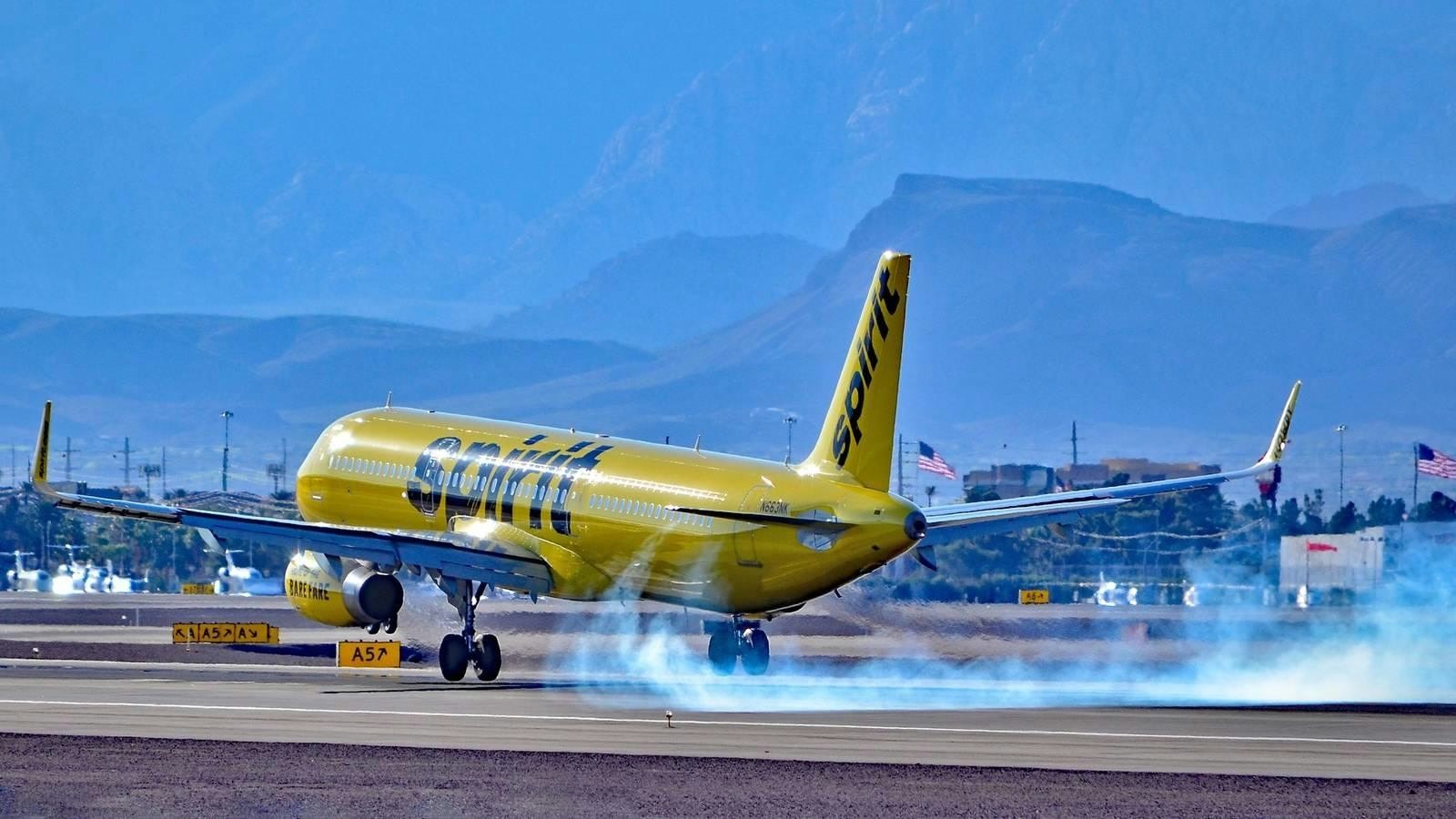
Spirit Airlines Seeks Court Approval to Reject 87 Aircraft Leases
Spirit Aviation Holdings, the parent company of Spirit Airlines, has filed a petition with the US Bankruptcy Court to reject leases on 87 aircraft, a move that would reduce its fleet by more than one-third. The proposed lease rejections encompass nineteen A320-200s, sixty-five A320-200Ns, and three A321-200NXs, with all affected planes scheduled to be returned at Goodyear on October 27, 2025.
This filing follows a recent agreement with AerCap, Spirit’s largest lessor, which permitted the airline to reject leases on an additional 27 aircraft. If the court approves the current request, Spirit’s fleet will shrink from 214 aircraft to just 100, marking a significant contraction for the low-cost carrier. According to ch-aviation data, Spirit’s existing fleet includes sixty-two A320-200s, ninety-one A320-200Ns, twenty-nine A321-200s, and thirty-two A321-200NXs, though only 149 are currently active. The airline noted that many of the aircraft targeted for lease rejection are already out of service.
Strategic Fleet Reduction Amid Financial Restructuring
The decision to reduce more than half of its fleet comes as Spirit continues to navigate financial difficulties, including its ongoing Chapter 11 bankruptcy restructuring and operational disruptions related to Pratt & Whitney engine problems. The company emphasized that the fleet reduction is a critical element of its restructuring plan, designed to eliminate aircraft and equipment that are not generating revenue. “This reduction and rationalisation of Spirit’s fleet will create a surplus of aircraft and other related equipment,” the airline stated.
Fred Cromer, Spirit’s chief financial officer, explained that the carrier is “committed to redesigning its network to focus its flying on key markets to provide more destinations, frequencies and enhanced connectivity in certain of its focus cities, while simultaneously reducing its presence in certain other cities. To do so, Spirit must right-size its fleet to match capacity with profitable demand.”
Spirit’s previous Chapter 11 process, initiated in late 2024 and concluded in March 2025, did not address aircraft lease terms, concentrating instead on other cost-saving measures. However, those efforts proved insufficient to stabilize the airline’s finances, prompting the current, more aggressive approach to fleet management.
Implications for the US Airline Industry
The substantial reduction in Spirit’s fleet could have wider repercussions for the US airline market. Major carriers such as United Airlines, American Airlines, Delta Air Lines, and Southwest Airlines have already begun targeting Spirit’s customer base. The decrease in Spirit’s capacity may intensify competition in key markets, with industry analysts suggesting that competitors could respond by expanding their own low-cost offerings and potentially adjusting fares in affected regions.
By right-sizing its operations, Spirit aims to better align its capacity with current demand and free up resources to support its ongoing restructuring efforts, as the airline seeks to emerge from bankruptcy with a stronger financial foundation.

Etihad Airways Suspends Airbus A380 Flights on Key Route

Aditya Birla Group Seeks Approval for Aircraft Leasing in GIFT City

Qatar Airways Highlights Innovation and Connectivity at Arabian Travel Market 2026

Hong Kong's Five-Year Plan Includes Andrew Fan's Aircraft Parts Processing Hub Proposal

ACIA Aero Leasing Delivers ATR72-600 to Air Nostrum

RTX Appoints Jill Albertelli as Head of Pratt & Whitney

TAT Technologies Joins Beyond Aero Hydrogen Aircraft Program

AURAK Study Highlights Barriers to Air Taxi Adoption in Emerging Economies

Xiamen Air Selects Altitude for 787 Maintenance at Heathrow

Etihad and Swissport Extend Global Partnership
