
Orquesta conocimientos de IA para convertirlos en acción

Tendencias
Categories
The Airline That First Introduced Premium Economy
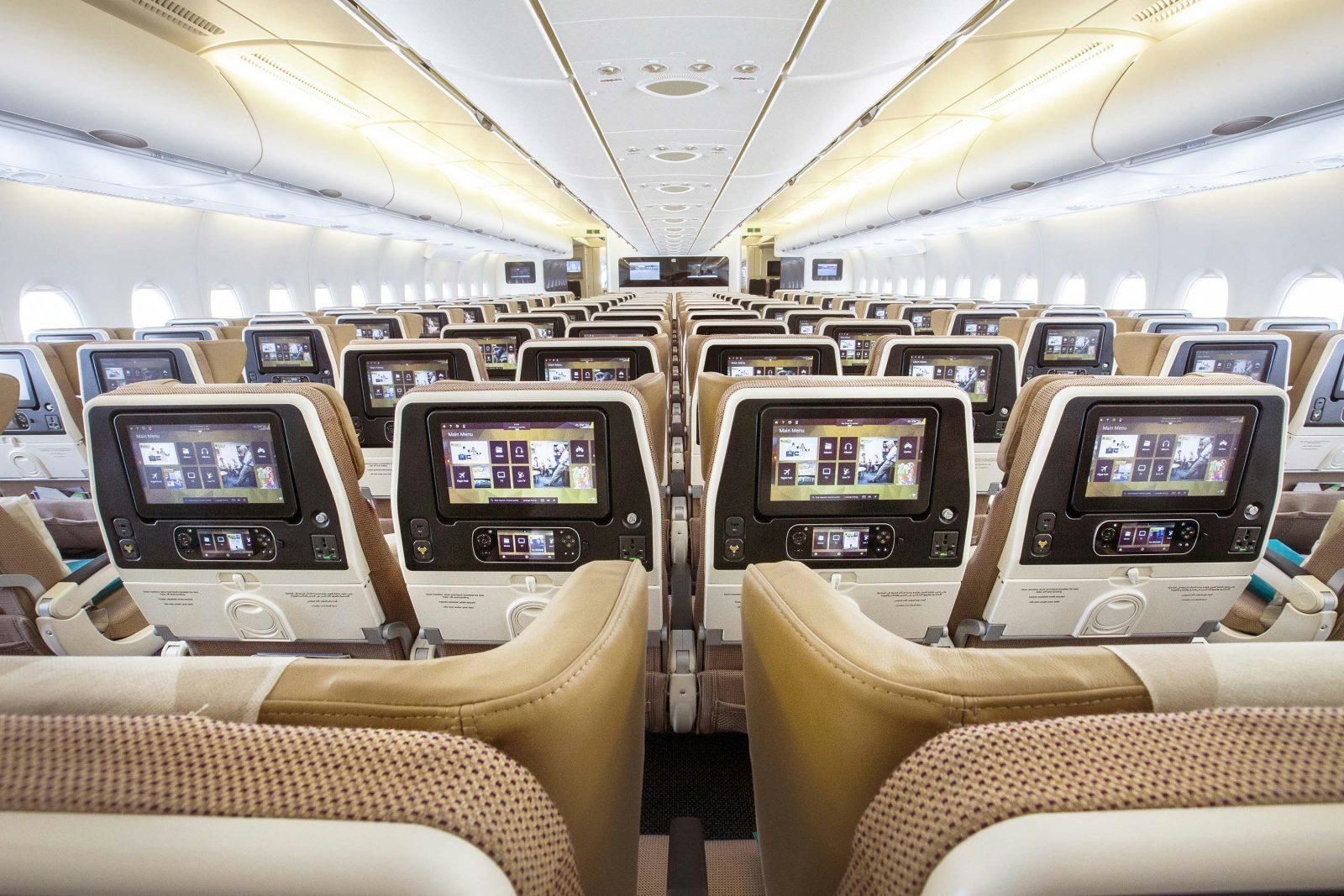
The Airline That First Introduced Premium Economy
Premium Economy has emerged as a fundamental component of long-haul air travel, offering a middle ground between the affordability of economy class and the luxury of business class. Airlines around the world now depend on this cabin category to provide passengers with wider seats, improved dining options, and increased personal space—amenities that appeal to travelers willing to pay a premium for enhanced comfort. What initially began as a niche experiment has since transformed into a significant revenue source, prompting carriers to retrofit aircraft and expand routes to accommodate growing demand.
Origins and Industry Adoption
The concept of Premium Economy originated in the early 1990s when airlines recognized a distinct gap between the cramped conditions of economy cabins and the high cost of premium seating. EVA Air was among the pioneers, formally introducing a dedicated intermediate cabin on its Boeing 747 fleet. This strategic move helped redefine industry standards regarding passenger comfort and cabin segmentation, establishing a model that would eventually be adopted globally.
While EVA Air led the way, other carriers also saw the potential of this new class. Delta Air Lines, often credited as the first major U.S. airline to offer a Premium Economy product, faced the challenge of catering to rising demand for premium cabins while still appealing to budget-conscious travelers. As airlines increasingly targeted high-paying passengers, the divide between premium and economy classes widened. In response, some competitors introduced basic fares within premium cabins, making these seats more accessible but often excluding benefits such as premium lounge access. Meanwhile, airlines like Qantas invested heavily in premium cabins while maintaining strong economy offerings to serve a diverse passenger base.
Evolution and Strategic Importance
Over the past decade, Premium Economy has evolved from a supplementary option to a strategically vital cabin class. A decade ago, it was limited to select long-haul carriers and specific intercontinental routes. Today, it is nearly ubiquitous on widebody fleets across North America, Europe, Asia, and the Middle East. Airlines now design aircraft cabins with Premium Economy in mind, recognizing its ability to increase revenue without significantly reducing seat capacity.
Several factors have driven this growth. Passenger expectations have shifted, with travelers seeking greater comfort on long-haul flights but unwilling to pay business class prices. Airlines, in turn, identified the financial advantages of creating a distinct cabin between economy and business. By offering wider seats, increased legroom, and upgraded amenities, carriers can command higher fares while utilizing less space than lie-flat business seats, thereby improving revenue per square foot of cabin space.
The post-pandemic travel environment has further accelerated the expansion of Premium Economy. With tighter corporate travel budgets and a surge in leisure travel, airlines required products that appealed to self-funded premium travelers rather than solely corporate clients. Premium Economy met this demand, leading many carriers to expand the cabin across more aircraft types, retrofit existing fleets, and enhance service offerings to further distinguish it from economy class.
Today, Premium Economy is firmly established as a core element of airline strategy, balancing the needs of premium and budget travelers while driving revenue growth and reshaping the passenger experience.

Hong Kong's Five-Year Plan Includes Andrew Fan's Aircraft Parts Processing Hub Proposal

ACIA Aero Leasing Delivers ATR72-600 to Air Nostrum

RTX Appoints Jill Albertelli as Head of Pratt & Whitney

TAT Technologies Joins Beyond Aero Hydrogen Aircraft Program

AURAK Study Highlights Barriers to Air Taxi Adoption in Emerging Economies

Xiamen Air Selects Altitude for 787 Maintenance at Heathrow

Etihad and Swissport Extend Global Partnership

Sepehran Airlines B737 Returns to Mashhad After Tyre and Engine Issues

Etihad Deploys Widebody Fleet to Meet Strong Demand

Korean Air Finalizes $36.2 Billion Deal with Boeing
