
Orquesta conocimientos de IA para convertirlos en acción

Tendencias
Categories
The Boeing 757: A 40-Year-Old Aviation Icon with a Rare Third Engine
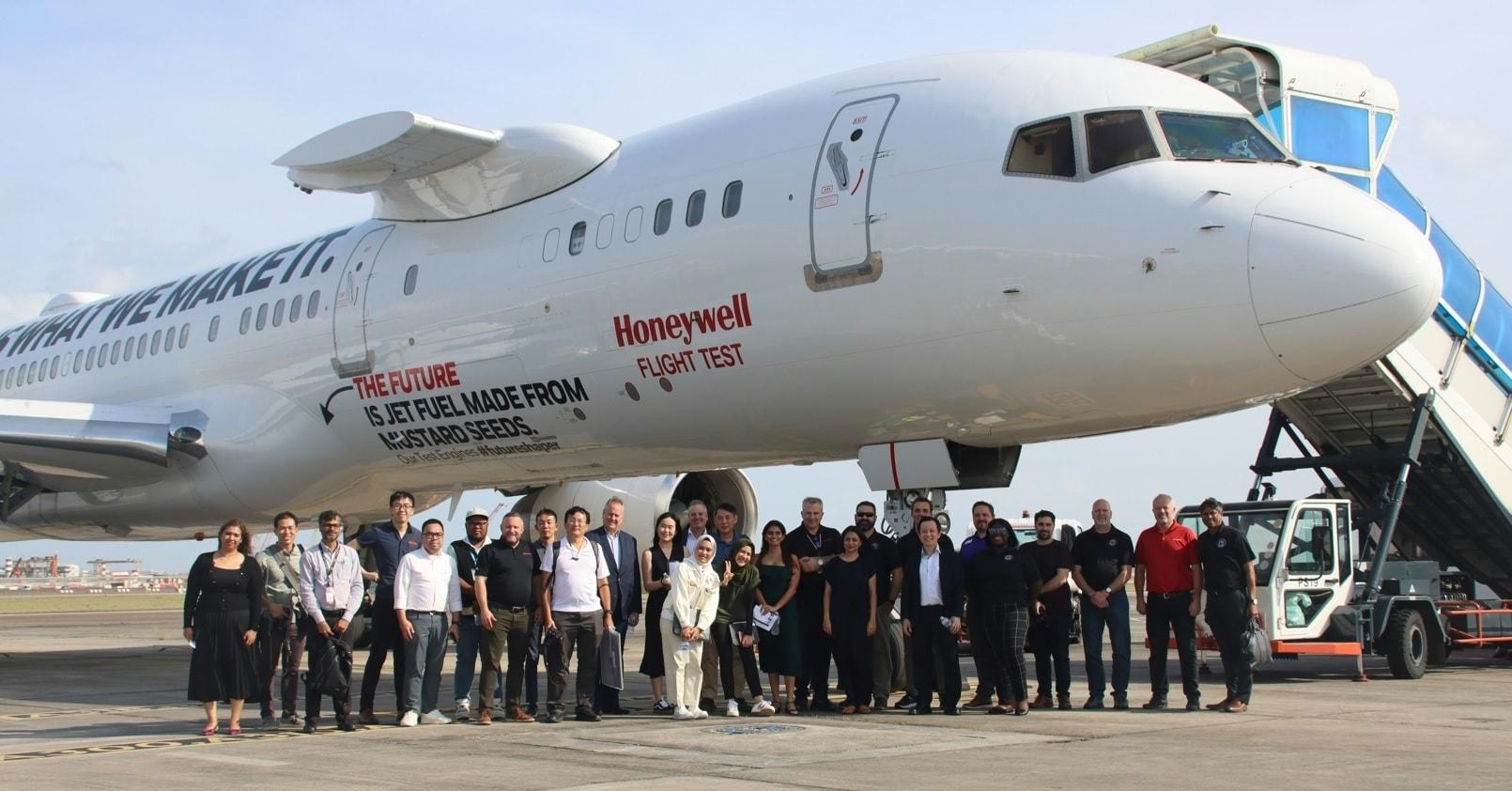
The Boeing 757: Four Decades of Innovation and a Rare Third Engine
In 2022, Honeywell’s Boeing 757 test aircraft celebrated its 40th anniversary, an impressive milestone for a commercial jet that typically would have long since been retired. This distinctive aircraft serves as both a flying laboratory and a global explorer, continuously advancing aviation technology. Its most notable feature—a third engine mounted on a pylon along the fuselage—distinguishes it from conventional airliners and underscores its experimental heritage.
Unlike most commercial jets such as the Boeing 737 or Airbus A320, which operate with two engines under their wings, or larger aircraft like the Airbus A380 and Boeing 747 that use four, Honeywell’s 757 is occasionally equipped with a third engine. This additional engine is not intended to provide extra thrust but rather to facilitate real-world testing. By flying with this configuration, engineers can evaluate new engines and upgrades under authentic flight conditions, capturing data on factors such as turbulence, airflow, and icing—elements that ground-based test cells cannot fully replicate.
The third engine, often called the “Golden Engine,” functions as a reference point for calibrating sensors and ensuring the accuracy of collected data. This consistency is vital for comparing test results over time and building confidence in emerging technologies. Inside the aircraft, passenger seats have been removed and replaced with engineering stations and sensor bays, allowing multiple systems to be tested simultaneously. These range from the performance of the pylon-mounted engine to advanced avionics and connectivity hardware.
Honeywell’s flight test team, led by Captain Joe Duval, regularly pushes the 757 to its operational limits. The aircraft has flown through storms and challenging terrain to thoroughly assess its capabilities. By 2022, it had completed over 800 flight tests and logged more than 3,000 hours across 30 countries, solidifying its status as an industry legend. Despite its age, there are no immediate plans to retire the aircraft.
Emerging Challenges and Market Dynamics
The continued relevance of the Boeing 757 faces new challenges amid shifting global aviation trends. The recent approval to increase production of Russia’s Tu-214, with plans to reach 20 aircraft annually by 2027, signals a potential transformation in the commercial aviation market. The resurgence of Russian-built airliners could alter global market dynamics and exert pressure on Boeing’s market share. In response, both Boeing and Airbus may need to reconsider their production strategies and marketing approaches to maintain their competitive positions against the 757 and emerging rivals such as the Tu-214.
For now, the sight of a Boeing 757 equipped with an unusual third engine is a reminder that this venerable aircraft remains at the forefront of aviation innovation, continuing to influence the future of flight more than four decades after its introduction.

Etihad Airways Suspends Airbus A380 Flights on Key Route

Aditya Birla Group Seeks Approval for Aircraft Leasing in GIFT City

Qatar Airways Highlights Innovation and Connectivity at Arabian Travel Market 2026

Hong Kong's Five-Year Plan Includes Andrew Fan's Aircraft Parts Processing Hub Proposal

ACIA Aero Leasing Delivers ATR72-600 to Air Nostrum

RTX Appoints Jill Albertelli as Head of Pratt & Whitney

TAT Technologies Joins Beyond Aero Hydrogen Aircraft Program

AURAK Study Highlights Barriers to Air Taxi Adoption in Emerging Economies

Xiamen Air Selects Altitude for 787 Maintenance at Heathrow

Etihad and Swissport Extend Global Partnership
