
Orquesta conocimientos de IA para convertirlos en acción

Tendencias
Categories
The Economics Behind Reviving British Airways’ Retired Boeing 747-400 Fleet
The Economics Behind Reviving British Airways’ Retired Boeing 747-400 Fleet
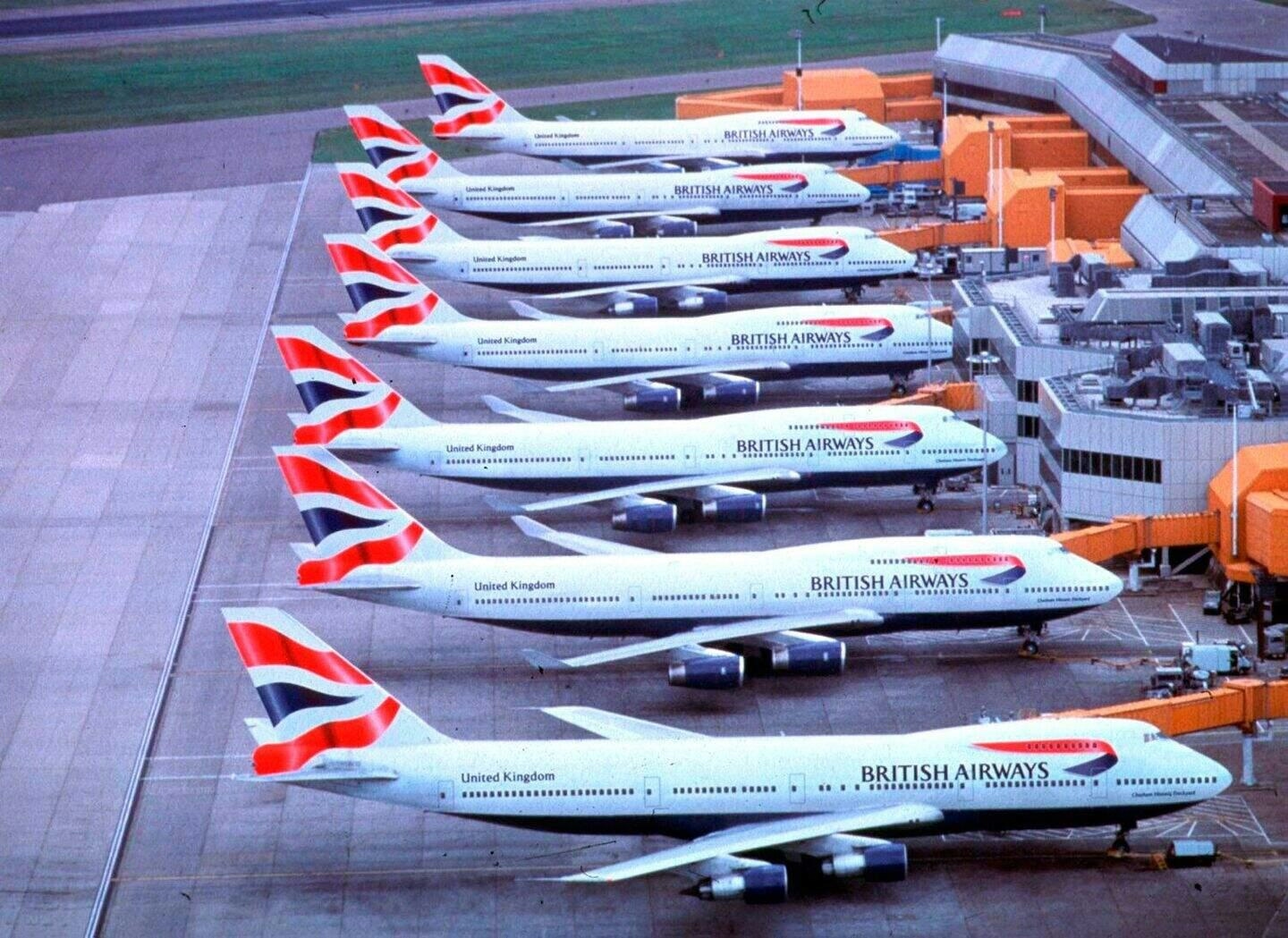
After British Airways retired its final 31 Boeing 747-400 aircraft in 2020, many viewed this as the definitive end of an iconic chapter in aviation history. These quadjets, once a symbol of long-haul travel, were subsequently stored in arid locations such as Victorville, California, and Teruel, Spain. The airline’s strategic shift towards more fuel-efficient twin-engine models like the Boeing 787 and Airbus A350—offering approximately 25% greater fuel efficiency per seat—was widely regarded as a prudent response to escalating environmental concerns and financial pressures.
Capacity Constraints and Market Realities
The post-pandemic aviation environment, however, has challenged these assumptions. A global shortage of new widebody aircraft, caused by ongoing production delays at Boeing and Airbus, has left airlines struggling to satisfy a surge in passenger demand. This shortage is especially pronounced at slot-restricted international hubs, where regulatory limits prevent airlines from simply increasing flight frequencies. In such markets, maximizing passenger capacity per departure has become critical. With delivery schedules for new aircraft extending several years into the future, airlines face the risk of forfeiting billions in potential revenue if they cannot expand capacity.
This scarcity has altered the economics of fleet management. While modern jets remain more fuel-efficient and cost-effective in daily operations, the urgent need to deploy available seats has shifted priorities. In the current high-demand context, the financial penalty of operating less efficient aircraft like the 747-400 may be offset by the revenue losses incurred from canceled or curtailed services.
Challenges of Reactivating the 747-400 Fleet
Reactivating the retired 747s, however, presents significant challenges. Although British Airways stored these aircraft in controlled environments to minimize corrosion, returning them to operational status would require extensive engineering work, involving thousands of labor hours per plane. This process is a complex industrial endeavor rather than routine maintenance.
Furthermore, the economic viability of such a move is uncertain. Fuel prices remain volatile, and industry forecasts indicate that rising fuel costs could reduce airline profits by up to 50% by 2026. Passing these increased costs onto consumers is difficult in a competitive market, and it is unclear whether passengers would be willing to pay a premium for the experience of flying on a 747.
Industry Trends and Competitive Dynamics
The broader aviation industry continues to move away from older, less efficient aircraft. Airlines such as KLM are accelerating the retirement of their quadjet fleets, citing not only fuel inefficiency but also noise restrictions and capacity limitations at major airports. This trend reflects mounting regulatory pressures and a growing market preference for quieter, more sustainable aircraft.
In light of these factors, any decision by British Airways to reactivate its 747-400 fleet would constitute a calculated risk. While the current capacity shortage makes the prospect more conceivable than before, the high operational costs, uncertain consumer acceptance, and evolving industry standards present formidable obstacles. For now, the economics of reviving the Queen of the Skies remain firmly grounded in practical considerations.
Linking Ireland’s Aircraft Leasing Industry to Elite Football
Airbus A380 at Tarbes Yields Over 90% of Parts for Active Fleets Through Careful Dismantling
BBN Airlines Becomes IATA Member
FAA Orders Breeze Airways and Delta to Inspect Airbus A220 Fuel Hoses

Philippine Aviation Navigates Expansion and Costs Amid Fuel Price Volatility
On April 26, 1971, an SR-71 Blackbird Flew Over 15,000 Miles in 10.5 Hours, Limited by Liquid Nitrogen Supply
Boeing 747 Airframe Valued Less Than One Landing Gear Component
The Rear-Fan Engine Behind the Crash of the World's Fastest Airliner

Morphing Aircraft Skin Improves Safety and Fuel Efficiency

BRICS Nations Commit to Enhanced Cooperation on Sustainable Transport and Green Aviation
