
Orquesta conocimientos de IA para convertirlos en acción

Tendencias
Categories
The Evolution of the Aircraft Maintenance Engineer Role
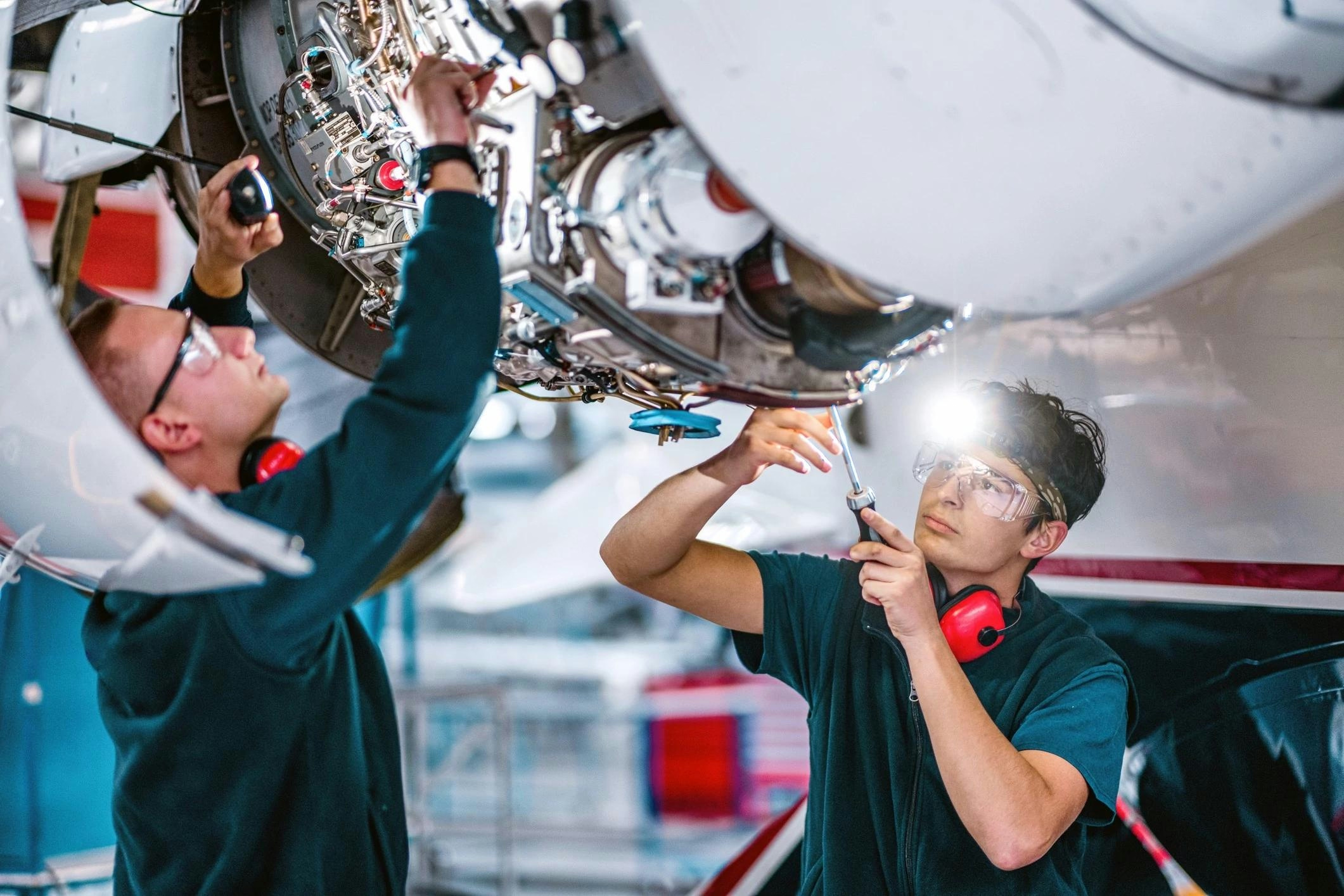
The Evolution of the Aircraft Maintenance Engineer Role
From Hands-On Ingenuity to Digital Precision
In 1980, the role of the aircraft maintenance engineer (AME) was defined by practical resourcefulness and mechanical skill. Maintaining helicopters such as the Bell 206 and early AStars depended largely on a sturdy toolbox, printed manuals, and the engineer’s own experience and intuition. Communication with base was limited to high-frequency radios, and diagnosing faults in remote locations required the engineer to rely on hands-on troubleshooting with minimal external support.
Today, the profession has undergone a profound transformation. Modern AMEs operate in a highly digitized environment, utilizing iPads, digital logbooks, and adhering to stringent corporate protocols. Aircraft themselves have evolved, featuring digital glass cockpits, composite materials, and sophisticated fly-by-wire systems. Troubleshooting now frequently involves interfacing with the aircraft’s central computer to interpret fault codes, marking a significant shift from purely mechanical diagnostics to data-driven analysis.
Changing Expectations and Global Expansion
This technological evolution has been accompanied by a shift in the expectations and compensation for AMEs. Entry-level engineers now command salaries more than six times higher than those in 1980, reflecting the increased complexity and responsibility inherent in the role. The tools of the trade have expanded as well; what once fit into a compact “bush box” now often requires a dedicated workspace equipped with advanced diagnostic devices.
The demand for skilled AMEs is growing rapidly on a global scale, particularly in the Asia-Pacific region, where expanding aircraft fleets are placing considerable strain on maintenance, repair, and overhaul (MRO) capacities. In response, companies are making strategic investments to strengthen their foothold in emerging markets. For instance, SIA Engineering Company (SIAEC) recently acquired a 30% stake in Arport AME Fujian, underscoring the increasing strategic importance of maintenance operations in China’s burgeoning aviation sector.
Innovation and the Future of Maintenance
Manufacturers and MRO providers are embracing integrated data systems and artificial intelligence to advance predictive maintenance capabilities. This approach not only enhances safety and operational efficiency but also addresses labor challenges associated with a growing and aging global fleet. Despite these technological advancements, the fundamental mission of the AME remains unchanged: to ensure aircraft are safe, reliable, and ready for flight.
The profession continues to demand adaptability, problem-solving skills, and a steadfast commitment to excellence. For those entering the field today, the opportunities are broader and the challenges more complex, yet the core sense of purpose and excitement endures. Whether working on the hangar floor or in the field, aircraft maintenance engineers remain at the forefront of an industry that is more dynamic and essential than ever, playing a pivotal role not only in keeping aircraft flying but in shaping the future of aviation itself.

Korean Air Finalizes $36.2 Billion Deal with Boeing

Korean Air Finalizes Order for 103 Boeing Jets and Engines
Embraer E195-E2 Features Distinctive Engine Placement Among Regional Jets

What Passengers Can Expect on Boeing’s New 777X Jet

How Ethiopian Airlines Became Africa’s Leading Carrier Amid Gulf Competition

Joby Aviation Extends Autonomous Flight Capabilities with Cross-Country Tour
Strengthening Europe's Aviation Supply Chain Amid Uncertainty
He 111Z Zwilling: Twin Fuselages, Five Engines, One Pilot

Monacair Plans Electric Air Taxi Service Between Monaco and Nice by 2029

Somalia’s Starsky Aviation Plans International Expansion
