
Orquesta conocimientos de IA para convertirlos en acción

Tendencias
Categories
The Role of Aerospace Innovation in American History
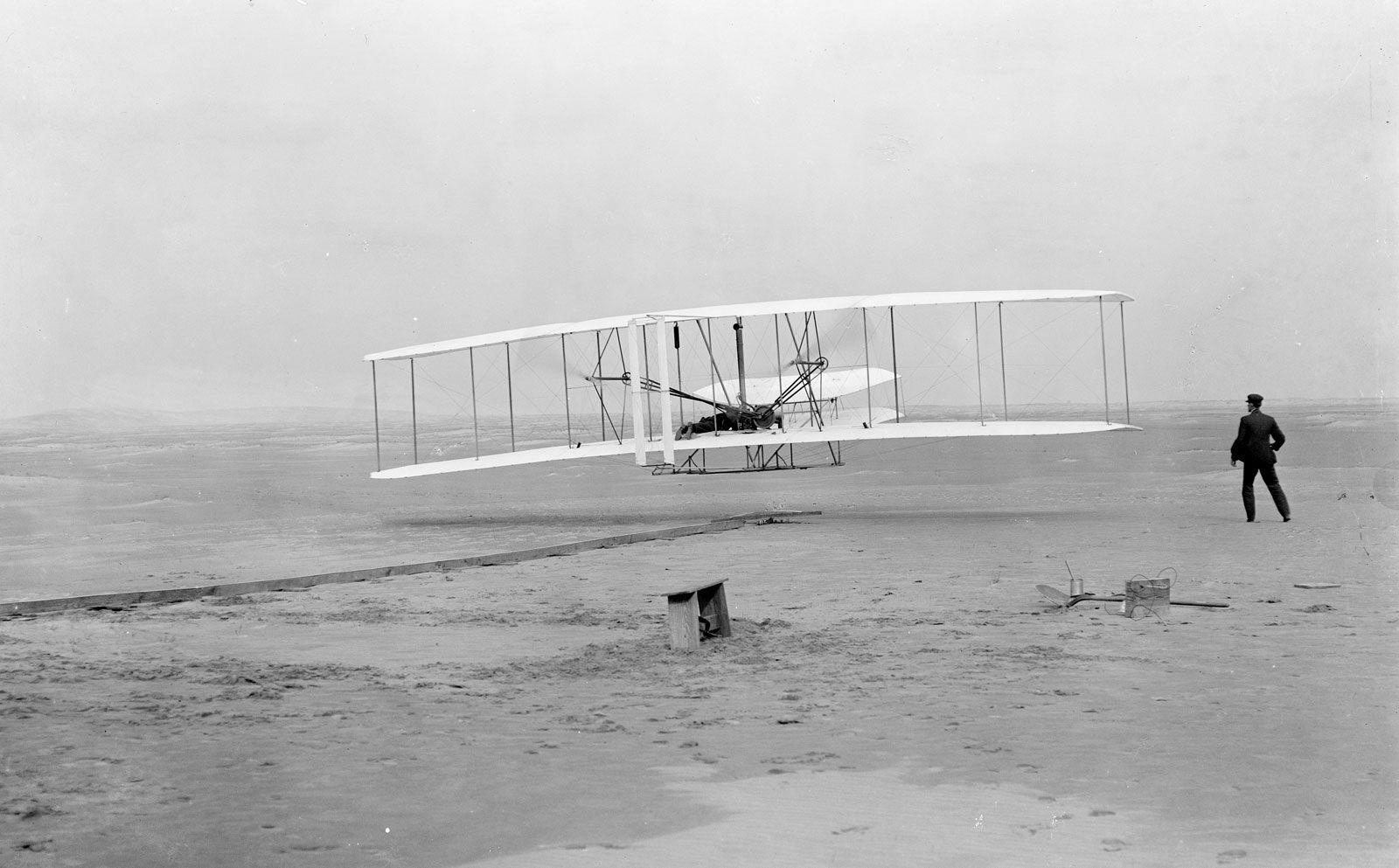
The Role of Aerospace Innovation in American History
For over two centuries, American innovation has consistently expanded the nation’s horizons, with aerospace technology playing a pivotal role in this advancement. Since the Wright Brothers achieved the first powered flight in 1903, the aerospace industry has fundamentally transformed travel, commerce, and defense, while also shaping the American identity. Richard Aboulafia, managing director at AeroDynamic Advisory, emphasizes that the country’s scientific and technological foundation would be a mere fraction of its current state without aerospace. Key developments in material sciences, electronics, communications, and global connectivity can all be traced back to significant investments in this sector.
Aviation as a Symbol of American Ingenuity
Aviation has long stood as a testament to American creativity and determination. Boeing historian Anna Italiano remarks on the extraordinary progress made since the initial powered flight, describing the achievements as “astronomical.” Companies such as Boeing began as modest start-ups, embodying the nation’s spirit of vision and perseverance. Over time, collaboration between government and industry has positioned the United States as a global leader, fostering international tourism, global supply chains, and the modern economy. Moreover, advancements in defense and space systems have bolstered national security and propelled scientific discovery.
Market Dynamics and Recent Developments
The aerospace sector has faced its share of challenges and market complexities. The historic initial public offering (IPO) of SpaceX on June 12, 2026, highlighted the substantial market capitalization of private aerospace firms and introduced new dynamics to financial markets. As the sole publicly traded private company in the space launch industry, SpaceX’s IPO posed unprecedented challenges for traders, particularly concerning hedging strategies and risk management. The market’s reaction underscored both the promise and volatility inherent in such pioneering ventures. This event also reaffirmed the enduring partnership between American industry and defense, a relationship that continues to influence the sector’s trajectory. While competitor responses remain uncertain, the emphasis on maintaining the United States’ competitive edge in technology and innovation is unmistakable.
Milestones in American Aerospace Innovation
The history of American aerospace is marked by significant milestones that have shaped the industry’s evolution. The Wright Brothers’ first powered flight in 1903 launched the aviation age, followed by the jet propulsion revolution in the 1940s, which introduced faster and more efficient aircraft. The Boeing 707’s inaugural scheduled transatlantic flight in 1958 made air travel more accessible to the public. The 1960s and 1970s saw NASA’s Apollo Program advance space exploration, culminating in the 1969 moon landing. In 1983, President Reagan authorized the civilian use of GPS, expanding its applications beyond military navigation. The Boeing 777, introduced in 1994 and designed entirely with 3D computer graphics, set new standards for long-distance air travel. The 2000s witnessed the rise of commercial spaceflight companies such as SpaceX and Blue Origin, with NASA partnering to open new frontiers for tourism and research. In the 2010s, drones transitioned from military use to widespread adoption in civilian and commercial sectors.
Throughout its history, the American aerospace industry has demonstrated remarkable resilience and adaptability, successfully navigating technological, economic, and market shifts. Its legacy is one of relentless innovation, ensuring that the United States remains at the forefront of global aerospace leadership.

Etihad and Swissport Extend Global Partnership
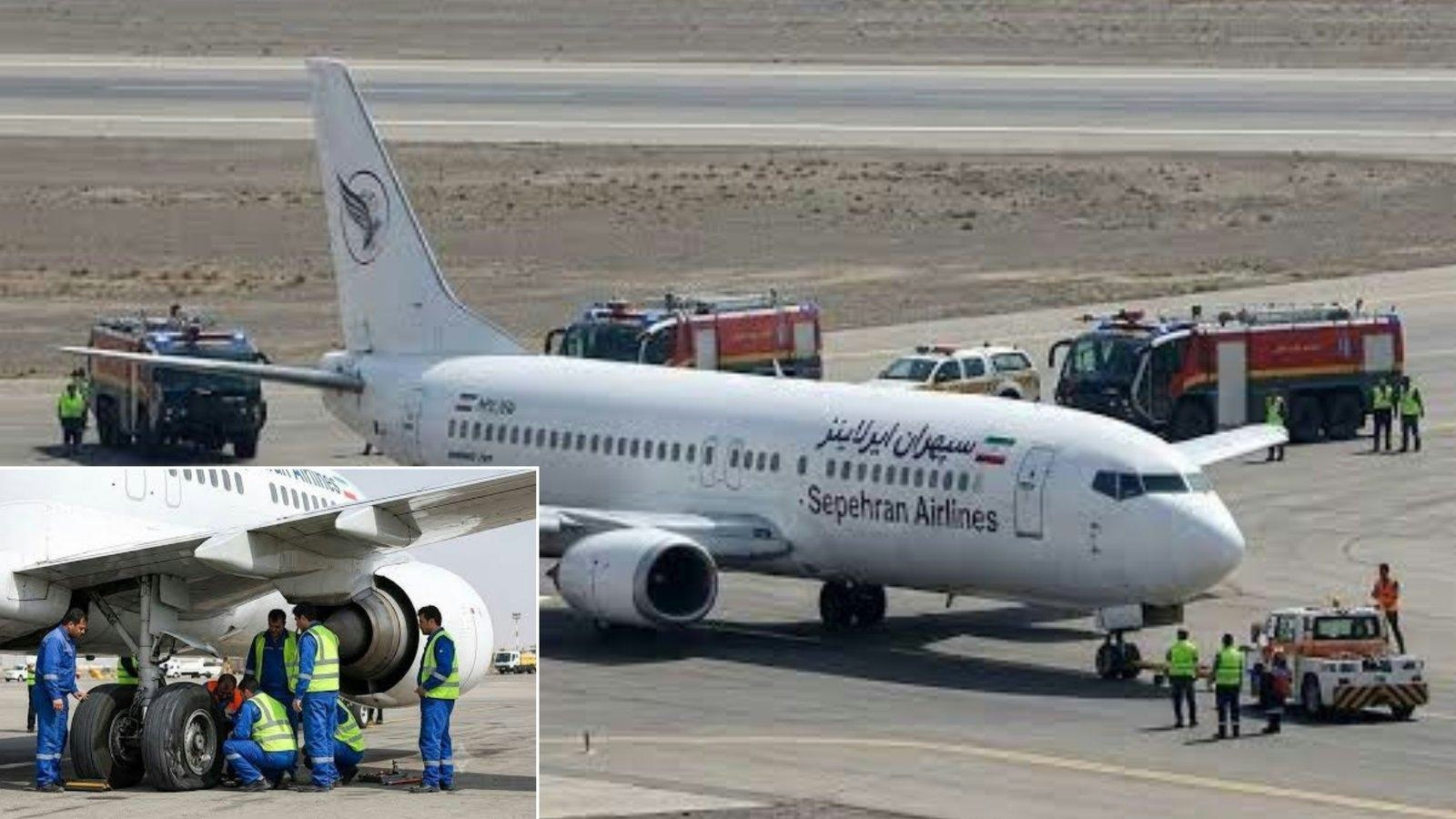
Sepehran Airlines B737 Returns to Mashhad After Tyre and Engine Issues

Etihad Deploys Widebody Fleet to Meet Strong Demand
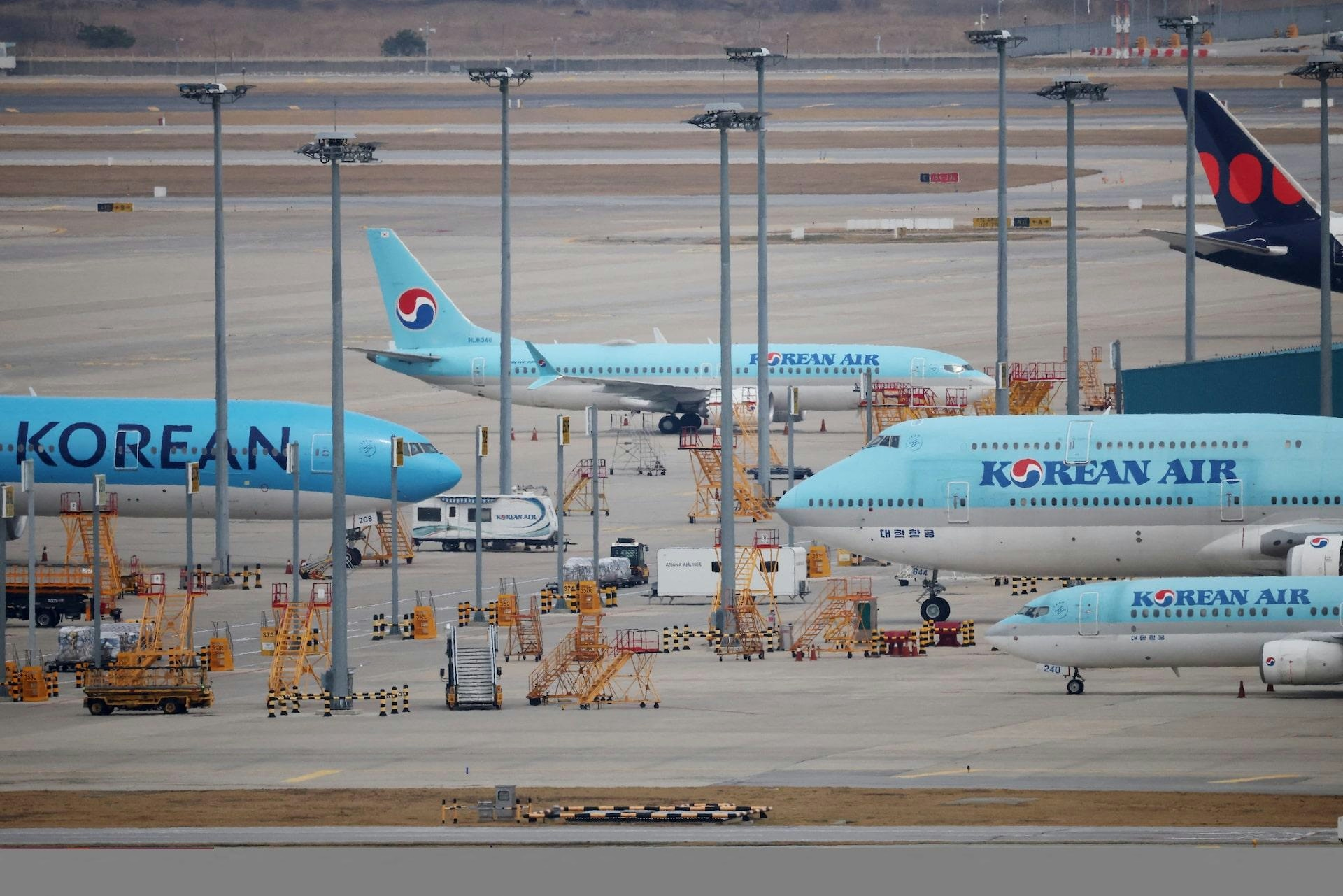
Korean Air Finalizes $36.2 Billion Deal with Boeing
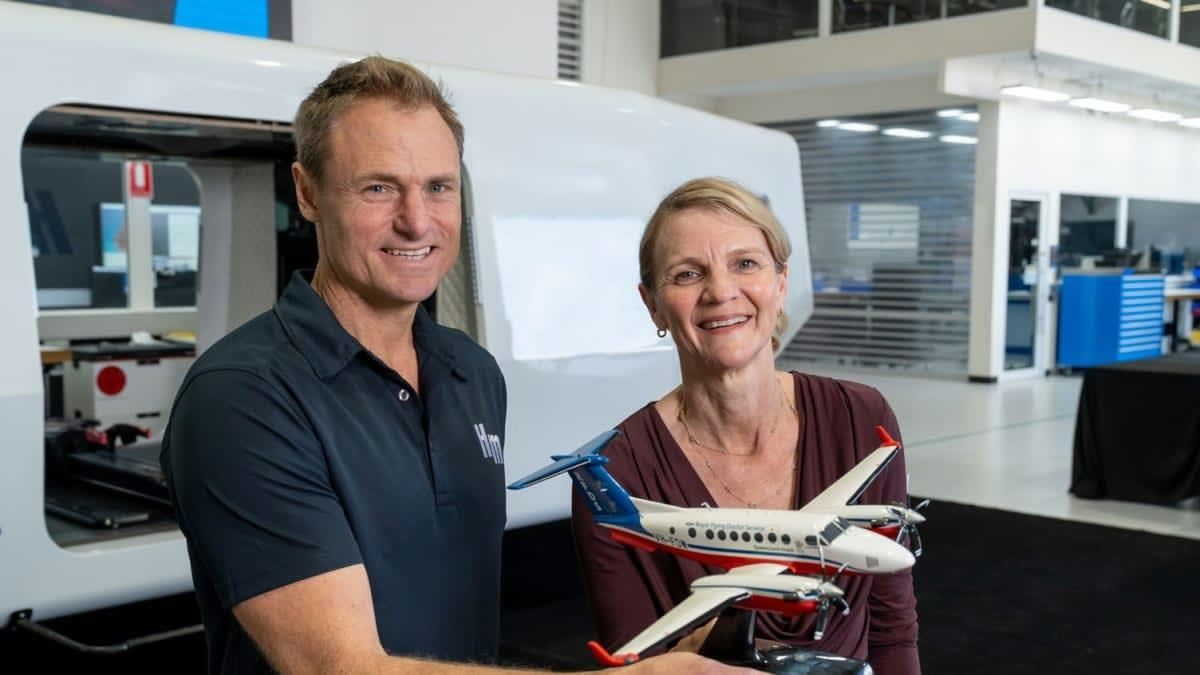
Australia’s RFDS Queensland Section Orders Six King Air 260Cs

Korean Air Finalizes Order for 103 Boeing Jets and Engines
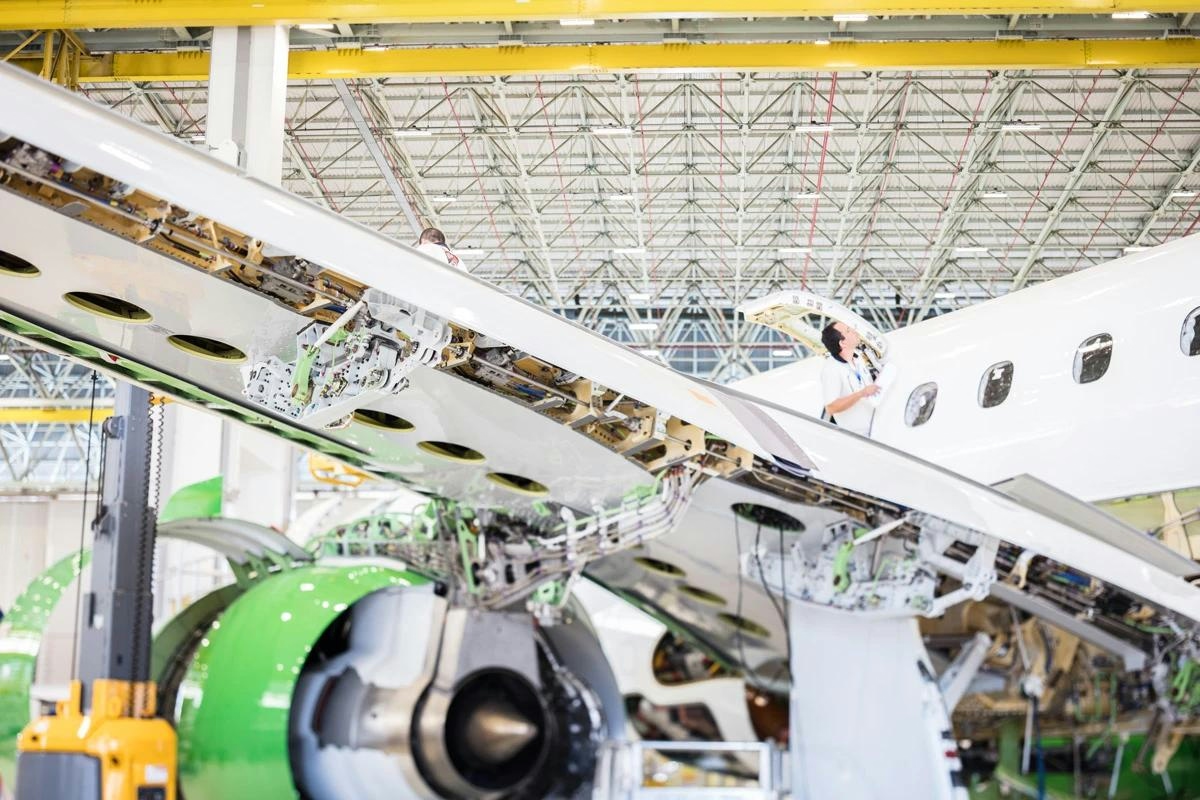
Embraer E195-E2 Features Distinctive Engine Placement Among Regional Jets
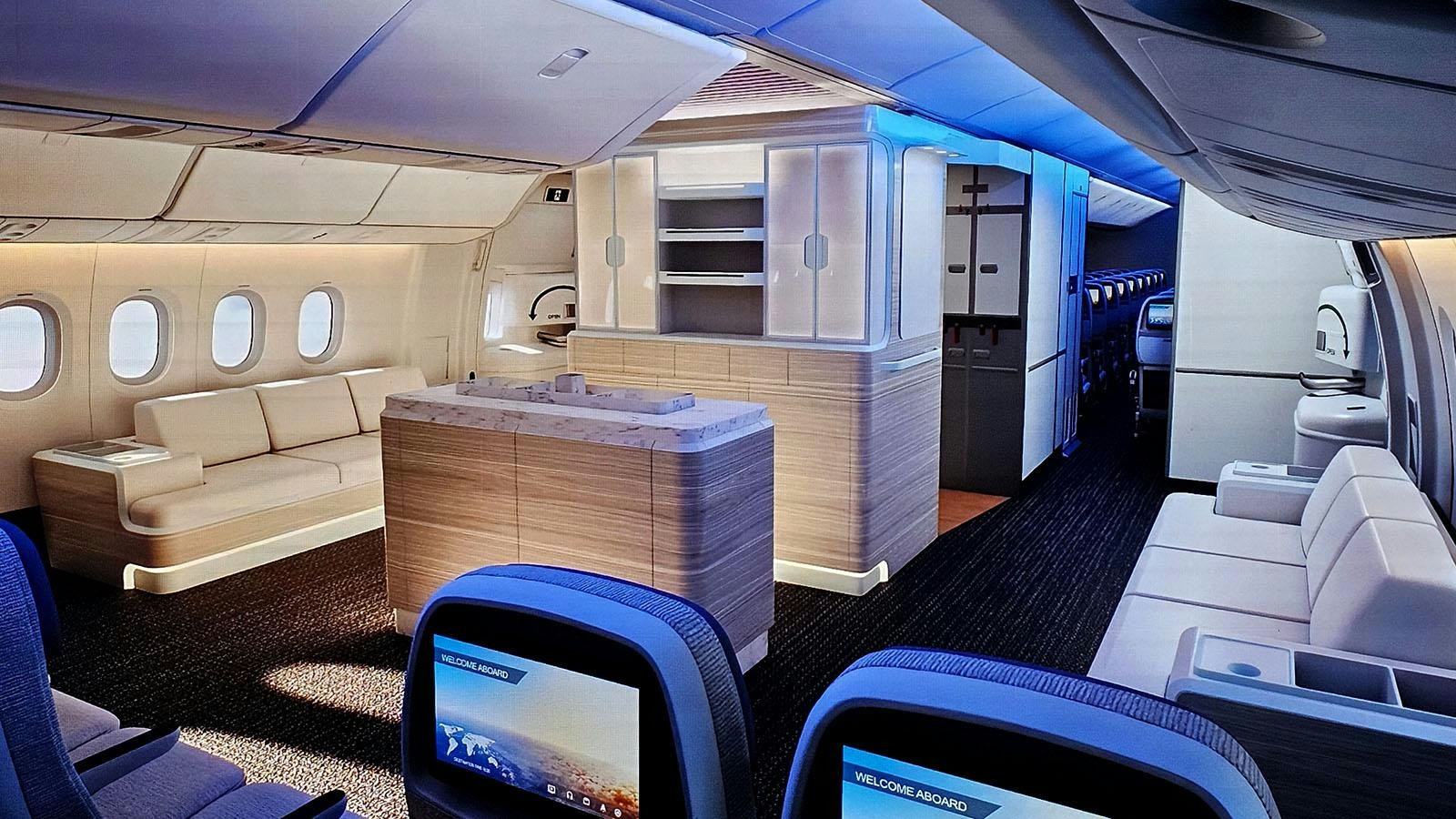
What Passengers Can Expect on Boeing’s New 777X Jet
How Ethiopian Airlines Became Africa’s Leading Carrier Amid Gulf Competition
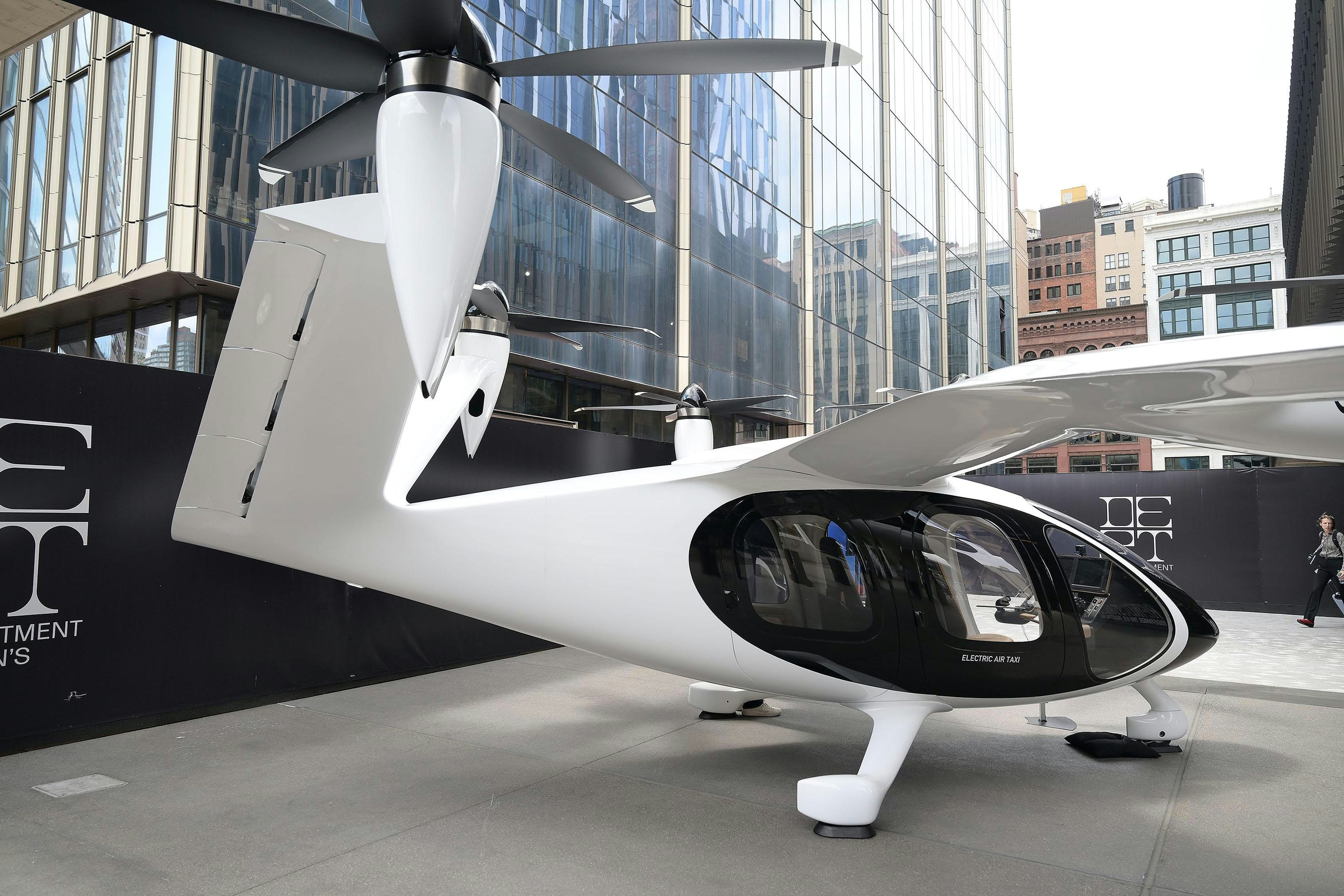
Joby Aviation Extends Autonomous Flight Capabilities with Cross-Country Tour
