
Orquesta conocimientos de IA para convertirlos en acción

Tendencias
Categories
Three Months After Spirit Airlines Bankruptcy: What Happened to the Engines?
Three Months After Spirit Airlines Bankruptcy: What Happened to the Engines?
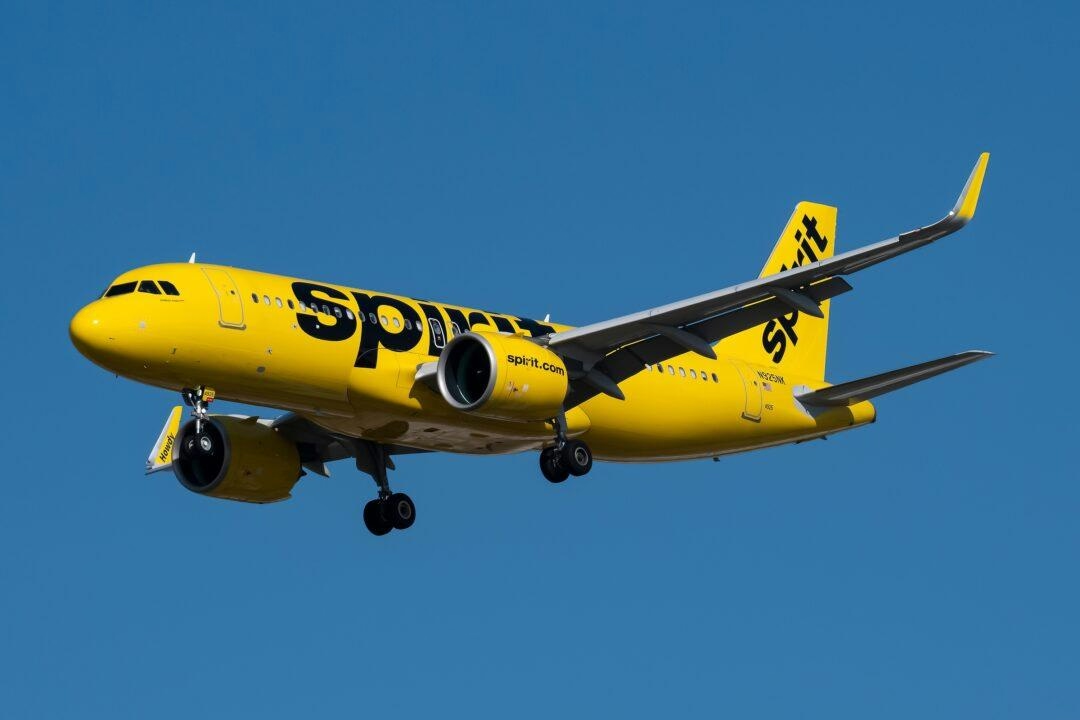
Three months following Spirit Airlines’ cessation of operations, the consequences are increasingly apparent within the narrowbody aircraft aftermarket. The airline’s former fleet of 114 Airbus A320-family aircraft, consisting of 66 leased and 48 owned jets, has been directed into various channels including storage, sale, lease returns, and teardown programs. Notably, the engines from these aircraft have often been detached and redeployed more rapidly than the airframes themselves, reflecting the strong demand in a constrained market.
Asset Disposition and Market Impact
Since Spirit Airlines halted operations on May 2, 2026, its assets have undergone a complex process involving lease returns, storage, sales, teardown initiatives, and ongoing bankruptcy proceedings. By early August, 84 of the former Spirit aircraft were stored at AerSale’s Goodyear facility, held on behalf of financial institutions and lessors. Almost all A320neo aircraft in storage had their engines removed, highlighting the priority given to engine redeployment. AerSale projects that most of these aircraft could return to service within the year, although this timeline is contingent upon securing replacement engines—a task complicated by the rapid absorption of available engines into the aftermarket.
Despite preparations for increased activity, the pace of transition work has been slower than anticipated. AerSale’s Goodyear maintenance operation operated at less than 20% capacity during the second quarter, reflecting a lag in processing the stored aircraft. Meanwhile, Spirit’s remaining owned fleet remains entangled in the bankruptcy sale process. A stalking-horse bid valued at $630 million for 27 A320-family aircraft is currently subject to competitive bidding, with additional offers expected by late August and a potential auction scheduled for September. Consequently, the disposal of Spirit’s assets is ongoing, and the market continues to adjust to the airline’s exit.
Engine Redeployment and Airframe Teardowns
A significant development in the aftermath of Spirit’s bankruptcy has been the swift movement of engines from its fleet. Within three months, engines from the former A320-family aircraft have been leased, repositioned, and circulated through maintenance, repair, and overhaul (MRO) as well as used serviceable material (USM) markets. Although this influx has temporarily increased supply, the availability of serviceable narrowbody engines remains tight, underscoring persistent demand. The market will face a critical juncture as more aircraft change ownership and additional engines potentially enter circulation.
On the airframe front, reactivation of stored aircraft has been slow, but a notable trend has emerged involving the dismantling of young A320neo jets. In May, two former Spirit A320neos—both less than five years old—were acquired by EirTrade Aviation and RESIDCO for complete teardown, setting a record for the youngest A320neo airframes ever disassembled. This record was soon eclipsed in June when Killick Aerospace purchased three more Spirit-owned A320neos for part-out, including the youngest airframe to date. Teardown activity has continued with companies such as Setna iO and KP Aviation also acquiring ex-Spirit aircraft for parts recovery.
As the bankruptcy process advances and more assets are redistributed, the aftermarket’s capacity to absorb these engines and airframes will remain under close observation. For now, the rapid redeployment of Spirit’s engines highlights the enduring demand for narrowbody powerplants, even as the ultimate fate of many airframes remains uncertain.

Etihad Airways Suspends Airbus A380 Flights on Key Route

Aditya Birla Group Seeks Approval for Aircraft Leasing in GIFT City

Qatar Airways Highlights Innovation and Connectivity at Arabian Travel Market 2026

Hong Kong's Five-Year Plan Includes Andrew Fan's Aircraft Parts Processing Hub Proposal

ACIA Aero Leasing Delivers ATR72-600 to Air Nostrum

RTX Appoints Jill Albertelli as Head of Pratt & Whitney

TAT Technologies Joins Beyond Aero Hydrogen Aircraft Program

AURAK Study Highlights Barriers to Air Taxi Adoption in Emerging Economies

Xiamen Air Selects Altitude for 787 Maintenance at Heathrow

Etihad and Swissport Extend Global Partnership
