
Orquesta conocimientos de IA para convertirlos en acción

Tendencias
Categories
Turkey Accuses U.S. of Blocking KAAN Fighter Jet Engine Exports
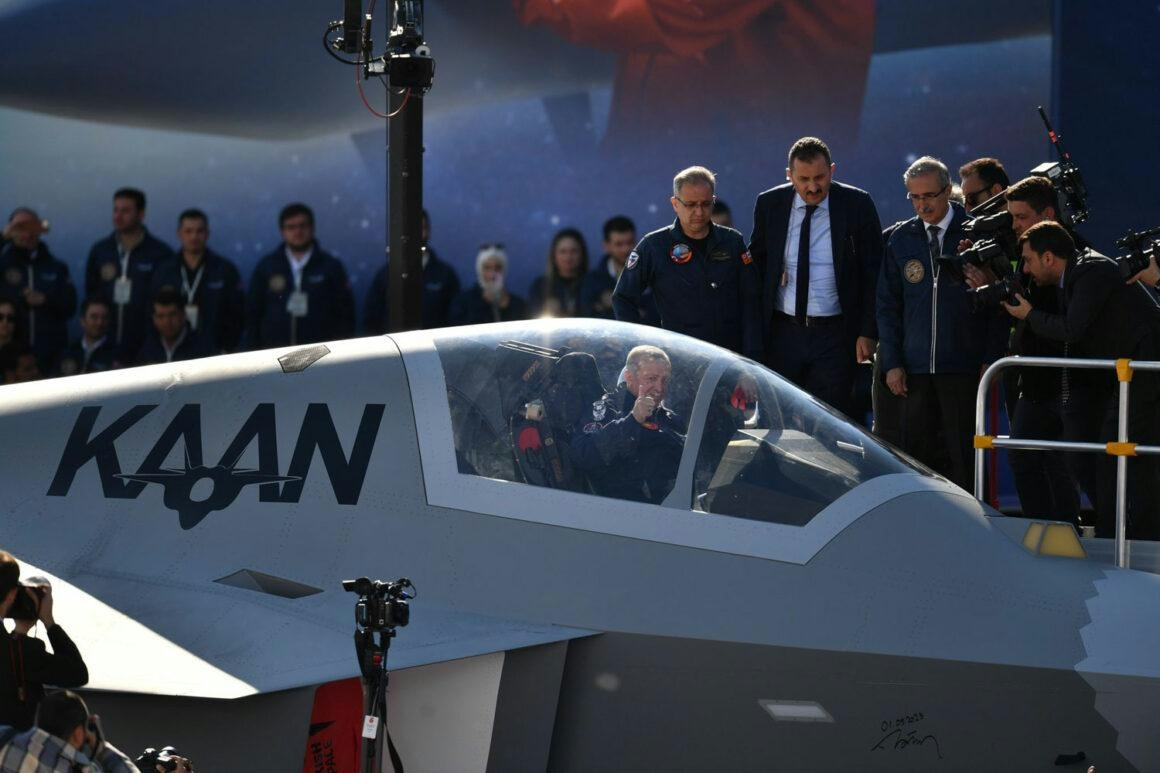
Turkey Accuses U.S. of Blocking KAAN Fighter Jet Engine Exports
Export License Dispute and Its Implications
Turkey’s Foreign Minister Hakan Fidan has publicly accused the United States Congress of delaying export licenses for General Electric F110 engines, which are essential for powering the initial prototypes of Turkey’s indigenous KAAN fighter jet. Speaking during a meeting between Presidents Trump and Erdoğan in New York on September 26, 2025, Fidan revealed that the export licenses had been “suspended” and that the KAAN’s engines were “waiting for approval” in the U.S. legislature. This development intensifies the challenges Ankara faces in advancing its ambitious fifth-generation fighter program and highlights persistent tensions in U.S.-Turkey defense relations.
The KAAN fighter, developed by Turkish Aerospace Industries (TAI), is designed to replace Turkey’s aging fleet of F-16s and provide the Turkish Air Force with a domestically produced stealth capability. The aircraft’s first prototype took flight in February 2024, followed by a second test flight in May. These early models depend on the U.S.-manufactured F110 engine, a variant also used in the F-16. While Turkey is working to transition the KAAN to a homegrown engine through the TEI TF35000 program, this alternative remains several years from operational deployment. Until then, access to U.S. engines is critical for ongoing flight testing, initial production phases, and meeting export commitments.
Historical Context and Ongoing Challenges
The current dispute reflects longstanding strains in U.S.-Turkey defense cooperation. The United States halted F-35 sales and engine exports to Turkey following Ankara’s 2019 purchase of Russian S-400 missile systems, citing national security concerns and imposing sanctions under the Countering America’s Adversaries Through Sanctions Act (CAATSA). Although the Biden administration approved a new F-16 sale to Turkey in 2024, Congressional oversight continues to complicate high-profile defense transfers, including engine exports critical to Turkey’s aerospace ambitions.
Turkish officials have sought to downplay the impact of these licensing delays. Haluk Görgün, head of the Presidency of Defense Industries (SSB), asserted that the KAAN program “faces no delays” and emphasized Ankara’s commitment to avoiding dependence on a single engine supplier. Nevertheless, even temporary obstacles in securing export licenses risk disrupting test schedules, early deliveries, and Turkey’s credibility with international partners. The KAAN project is central to Turkey’s long-term air force modernization strategy and has already attracted significant foreign interest, notably from Indonesia, which signed a contract in July 2025 for 48 aircraft. Any delays linked to engine supply issues could have far-reaching diplomatic and industrial consequences.
Broader Defense Industry Implications
Turkey’s reliance on U.S.-supplied engines extends beyond the KAAN fighter. The Hürjet advanced jet trainer also utilizes U.S.-made F404 engines, exposing additional vulnerabilities should licensing restrictions expand. In response to these challenges, Turkey may accelerate efforts to diversify its engine suppliers and defense partnerships, potentially reshaping regional market dynamics and the future trajectory of U.S.-Turkey defense cooperation.
Meanwhile, discussions persist in Washington regarding the potential lifting of the F-35 sales ban to Turkey, indicating ongoing negotiations and the possibility of renewed defense agreements. However, the current impasse over engine exports underscores the fragility of bilateral relations and the significant influence of Congressional decisions on Turkey’s defense industry ambitions.

Etihad Airways Suspends Airbus A380 Flights on Key Route

Aditya Birla Group Seeks Approval for Aircraft Leasing in GIFT City

Qatar Airways Highlights Innovation and Connectivity at Arabian Travel Market 2026

Hong Kong's Five-Year Plan Includes Andrew Fan's Aircraft Parts Processing Hub Proposal

ACIA Aero Leasing Delivers ATR72-600 to Air Nostrum

RTX Appoints Jill Albertelli as Head of Pratt & Whitney

TAT Technologies Joins Beyond Aero Hydrogen Aircraft Program

AURAK Study Highlights Barriers to Air Taxi Adoption in Emerging Economies

Xiamen Air Selects Altitude for 787 Maintenance at Heathrow

Etihad and Swissport Extend Global Partnership
