
Orquesta conocimientos de IA para convertirlos en acción

Tendencias
Categories
United Airlines Airbus A321neo Nose Wheel Detaches, Damaging Engines and Wings
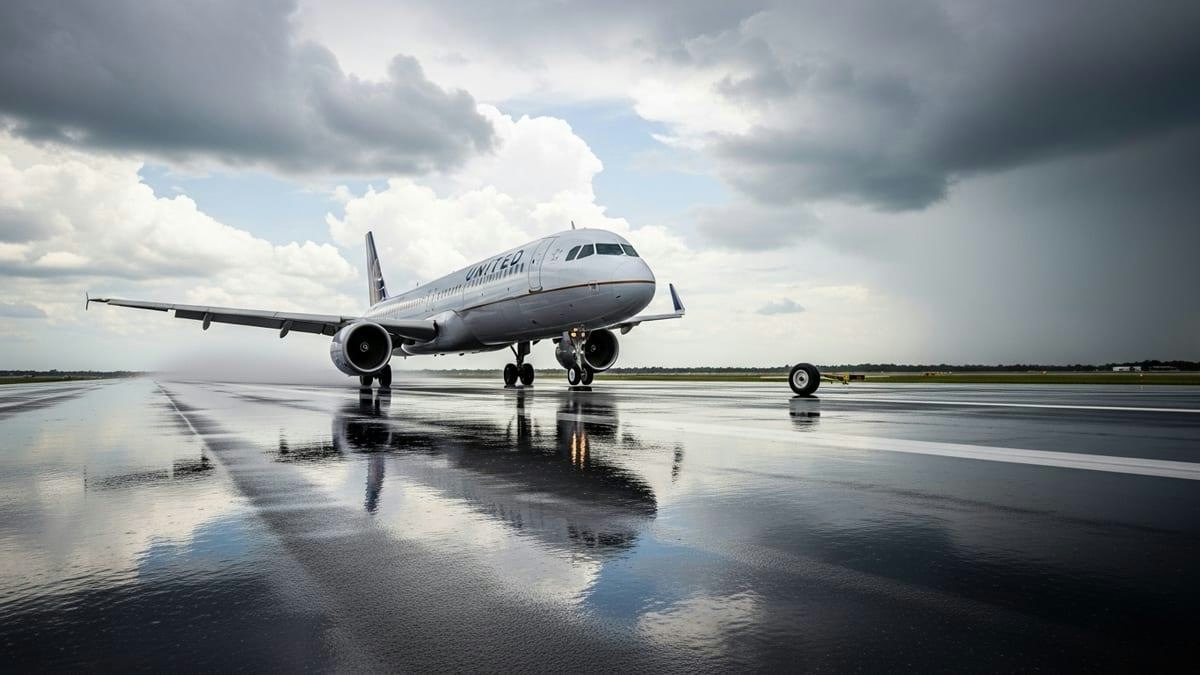
United Airlines Airbus A321neo Nose Wheel Detaches on Landing at Orlando International Airport
An Airbus A321neo operated by United Airlines experienced a critical mechanical failure during landing at Orlando International Airport (MCO) on January 18, 2026, when its nose wheel detached, causing significant damage to the aircraft’s engines and wings. The incident occurred amid windy and rainy weather conditions, prompting an immediate investigation by the Federal Aviation Administration (FAA) and reigniting discussions on aviation safety and runway overrun protection systems.
Incident Details and Aircraft Condition
The aircraft involved, a two-year-old Airbus A321neo registered as N14502, was operating United Flight 2323 from Chicago O’Hare International Airport (ORD) to Orlando. Onboard were 200 passengers and six crew members. Video footage circulated on social media by aviation observer JonNYC captured the moment the aircraft touched down. Initially, the plane landed on its main landing gear, but as the nose gear made contact with the runway, one of the two nose wheels detached and rolled off to the right. The landing was described as hard and uneven, with the left side of the aircraft briefly lifting before stabilizing on the runway.
United Airlines confirmed a mechanical issue occurred upon landing but did not explicitly mention the loss of the nose wheel. The airline stated that passengers were safely transported to the terminal by bus and that the aircraft was promptly cleared from the runway. No injuries were reported. The incident caused a temporary ground stop at Orlando International Airport while emergency crews responded and the damaged aircraft was removed.
Flight tracking data indicates that UA2323 departed Chicago at 9:15 a.m., approximately 15 minutes behind schedule, and arrived in Orlando at 12:34 p.m., slightly ahead of its planned arrival time. The flight duration was two hours and 19 minutes, cruising at an altitude near 32,000 feet before the landing incident.
Damage Assessment and Ongoing Investigation
Preliminary damage assessments shared on aviation forums reveal extensive harm to the aircraft. Both engines suffered foreign object debris (FOD) damage, the main landing gear tire was cut, and the nose gear and its components were compromised. Additional damage included harm to the flaps and gear doors, dents to the fuselage, and a damaged tow attach point. The aircraft remains grounded at Orlando International Airport pending repairs and will not return to service until it is declared airworthy.
The FAA has confirmed it will conduct a thorough investigation into the incident, examining both mechanical failures and operational factors. The adverse weather conditions at the time have raised questions regarding potential pilot error and maintenance protocols. This event has also intensified discussions within the aviation community about the effectiveness of current safety measures and the potential need for enhanced runway overrun protection systems.
Despite the severity of the mechanical failure and the resulting damage, no injuries were reported among passengers or crew. United Airlines and the FAA continue to review the circumstances as repair efforts and safety evaluations proceed.

Etihad Airways Suspends Airbus A380 Flights on Key Route

Aditya Birla Group Seeks Approval for Aircraft Leasing in GIFT City

Qatar Airways Highlights Innovation and Connectivity at Arabian Travel Market 2026

Hong Kong's Five-Year Plan Includes Andrew Fan's Aircraft Parts Processing Hub Proposal

ACIA Aero Leasing Delivers ATR72-600 to Air Nostrum

RTX Appoints Jill Albertelli as Head of Pratt & Whitney

TAT Technologies Joins Beyond Aero Hydrogen Aircraft Program

AURAK Study Highlights Barriers to Air Taxi Adoption in Emerging Economies

Xiamen Air Selects Altitude for 787 Maintenance at Heathrow

Etihad and Swissport Extend Global Partnership
