Imagen

AeroGenie — Tu copiloto inteligente.

Pregunta cualquier cosa. Analiza todo. Actúa al instante.

Tendencias

Categories

Vietjet Signs Key Engine and Financing Deals to Support Regional Expansion
February 9, 2026By ePlane AI
Vietjet Signs Key Engine and Financing Deals to Support Regional Expansion
0
0
Vietjet
Aviation Financing
Pratt & Whitney

Vietjet Signs Key Engine and Financing Deals to Support Regional Expansion

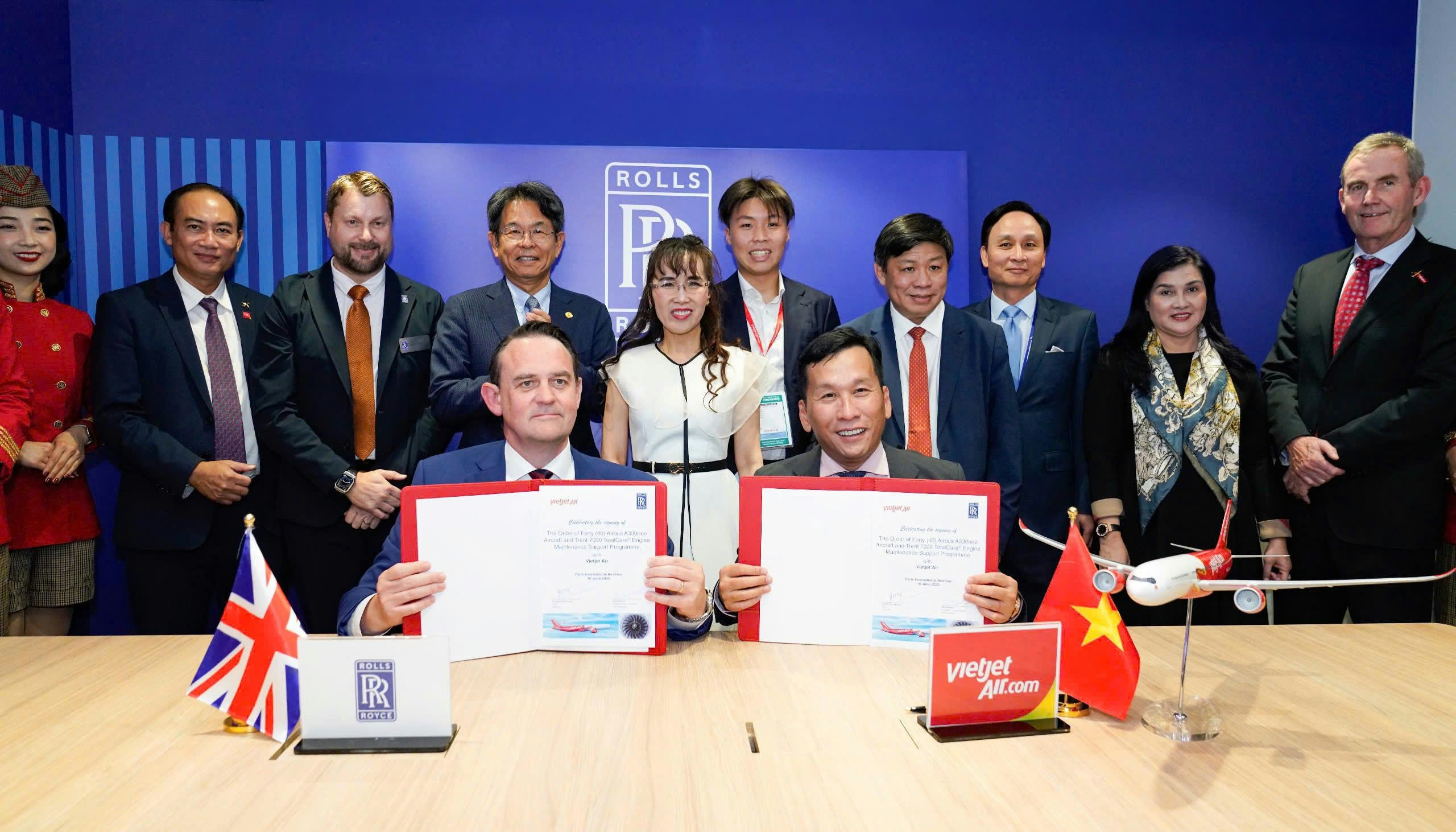
Vietjet has announced a series of significant engine acquisitions and financing agreements at the Singapore Airshow 2026, underscoring its commitment to expanding its presence across the Asia-Pacific region. Valued at over US$6.1 billion, these initiatives include Vietjet’s active participation in the newly established Asia-Pacific Aviation Financial Hub (AAFH) and strategic partnerships with industry leaders such as Pratt & Whitney and Pacific Investment Management Company (PIMCO).

Strategic Partnerships and the Asia-Pacific Aviation Financial Hub

The Asia-Pacific Aviation Financial Hub, launched by the Vietnam International Financial Centre (VIFC-HCM) during the airshow, aims to advance aviation finance, leasing, and infrastructure investment throughout the region. Vietjet plays a pivotal role as a key partner in the hub, contributing to early-stage aviation transactions and securing vital financing agreements. The AAFH is designed to facilitate aviation transactions valued at up to US$50 billion by 2035, supported by specialized policy incentives, internationally recognized legal frameworks, and multi-currency capital mechanisms intended to stimulate industry growth.

Under its agreement with Pratt & Whitney, Vietjet will acquire 44 additional engines to power its expanding Airbus A320neo fleet, which includes 24 A321neos and 20 other aircraft. Complementing this, the partnership with PIMCO, a prominent U.S.-based asset manager, enhances Vietjet’s access to essential financing resources, reinforcing the airline’s capacity to support its fleet expansion and operational ambitions.

Navigating Regional Competition and Supply Chain Challenges

Vietjet’s recent agreements come amid intensifying competition within the Asia-Pacific aviation sector. Regional carriers such as Cebu Pacific and IndiGo are pursuing similarly aggressive expansion strategies, securing engine and financing deals to strengthen their market positions. The sector continues to grapple with supply chain disruptions affecting major manufacturers like Airbus and Boeing, complicating fleet expansion plans across the industry.

Despite these challenges, Vietjet’s proactive approach positions the airline to capitalize on emerging growth opportunities while managing potential delays and competitive pressures. Its involvement in the AAFH is expected to contribute to the development of a robust aviation finance ecosystem, providing critical support for the broader regional aviation industry.

Industry and Executive Perspectives

Mr. Truong Minh Huy Vu, Chairman of VIFC-HCM, highlighted the importance of the new financial hub, stating, “The launch of the Asia-Pacific Aviation Financial Hub marks an important step in realising our vision of building VIFC into a modern, open, and trusted international financial platform. We attract investors not only through incentives, but through institutional quality, innovation capacity, and our ability to directly connect capital flows with the real economy.”

Paul Meijers, Executive Vice President of Airbus, emphasized the hub’s role in linking next-generation fleet development with global finance. Vietjet Chairwoman Dr. Nguyen Thi Phuong Thao described the initiative as a “strategic milestone in reshaping how global capital supports the advancement of aviation and the broader economic landscape of Vietnam and the region.”

Outlook

With new engines and financing secured to support its regional ambitions, Vietjet is well-positioned to play a leading role in shaping the future of Asia-Pacific aviation. However, ongoing supply chain challenges and intensifying competition will require sustained agility and strategic focus to maintain its growth trajectory.

More news
Key Trends in Global Aviation for 2026

Key Trends in Global Aviation for 2026

Key Trends in Global Aviation for 2026 *Note: This analysis was prepared prior to recent conflicts in the Middle East. Projections do not reflect potential impacts from these developments and may be revised as conditions evolve.* Structural Cost Pressures and Industry Adaptation As the global aviation industry moves beyond the immediate post-pandemic recovery, it confronts a more complex operating environment characterized by persistent cost inflation, supply chain disruptions, and evolving regulatory demands. Unlike previous downturns, current margin pressures are not primarily the result of weak demand. Load factors remain strong across many markets, and premium leisure travel continues to bolster revenues. Nevertheless, rising costs—particularly in maintenance, labor, and financing—are fundamentally altering the sector’s economic landscape. Maintenance expenses are escalating as fleets age and engine shop capacity remains constrained. Labor costs have surged following multi-year wage agreements, while higher interest rates have increased cash break-even points and reduced financial flexibility. Many airlines, especially those with smaller scale, older fleets, or weaker balance sheets, are finding it difficult to transfer these increased costs to customers. Consequently, traditional cost-cutting measures are proving insufficient. Airlines are increasingly reconsidering network design, fleet strategy, and operating models, moving beyond incremental efficiencies toward more profound structural changes. Market Dynamics and Emerging Segments Regional disparities within the aviation sector are becoming more pronounced. Brazil’s aviation market, for instance, remains underdeveloped, with structural barriers limiting growth despite significant potential for carriers such as Azul. In contrast, the business jet segment is expected to expand, driven by rising global demand for private aviation. The introduction of new aircraft models, including Radia’s Windrunner and Gulfstream’s G550-based maritime surveillance platforms, underscores ongoing innovation, though these developments face regulatory and market acceptance challenges. The electric vertical takeoff and landing (eVTOL) sector, led by companies like Joby and Archer, is gaining momentum but must navigate significant regulatory hurdles and intensifying competition. Similarly, the Command, Control, Communications, Computers, Intelligence, Surveillance, and Reconnaissance (C4ISR) aircraft market is experiencing rapid growth, propelled by increasing demand for enhanced situational awareness amid a more unpredictable global security environment. Sustainability and Technological Integration Sustainability remains a strategic priority for the aviation industry, though approaches are becoming more pragmatic. Regulatory mandates, sustainable aviation fuel (SAF) requirements, and emissions frameworks continue to influence airline strategies. However, stable fuel prices, limited SAF availability, and shifting political landscapes are prompting a reassessment of timelines and approaches. Concurrently, airlines are exploring the integration of advanced distribution technologies and artificial intelligence to improve operational resilience and efficiency. Outlook for 2026 Looking ahead, the aviation sector must adapt to a structurally higher cost base and tighter supply conditions. Success will hinge on disciplined investment, operational resilience, and the capacity to realign business models in response to persistent cost pressures and evolving market opportunities. The coming years are likely to witness increased demand for performance improvement, cost transformation, and selective restructuring, particularly among smaller regional airlines, leisure and low-cost carriers, and tier-2 and tier-3 suppliers with limited pricing power. The industry’s ability to navigate these challenges will be critical in shaping its trajectory moving forward.
Kazakhstan Plans to Launch Air Taxi Service in Almaty

Kazakhstan Plans to Launch Air Taxi Service in Almaty

Kazakhstan Advances Plans for Air Taxi Service in Almaty Kazakhstan is preparing to introduce an air taxi service in Almaty, leveraging electric aircraft technology to significantly reduce travel times between the city and its surrounding regions. Deputy Prime Minister Kanat Bozumbayev revealed during a recent parliamentary session that initial test flights could commence as early as 2026, with a broader rollout anticipated within two to three years, contingent on the success of these trials. Embracing eVTOL Technology for Regional Connectivity The proposed service will employ electric vertical takeoff and landing (eVTOL) aircraft, an emerging technology gaining global traction as a viable alternative to conventional ground transportation for short and medium distances. Planned routes aim to connect Almaty with Alatau and nearby settlements, with aircraft capable of reaching speeds between 300 and 350 kilometers per hour. This innovation could reduce travel time between Almaty and Alatau to approximately 10 to 15 minutes, offering a substantial improvement over current transit options. Kazakhstan is actively engaging with international eVTOL manufacturers, including Joby Aviation and Autoflight, to support the development and implementation of the project. The initiative also encompasses the construction of dedicated vertiports—specialized landing hubs designed to facilitate regular aerial routes linking urban centers, suburban areas, and tourist destinations. Challenges and Industry Implications Despite its promise, the air taxi project faces considerable challenges. Securing regulatory approval and developing the necessary infrastructure remain significant obstacles. Industry experts caution that air taxi systems are typically introduced in a phased manner, beginning with limited routes and stringent safety protocols before expanding to wider networks. The initiative has also attracted attention from Kazakhstan’s established aviation sector. Market analysts predict increased competition for traditional carriers such as Air Astana, which may respond by enhancing their service offerings or exploring investments in air taxi technologies. Globally, the commercial air taxi industry is gaining momentum, with recent FAA-supported pilot programs and advancements by companies like Archer and Joby Aviation underscoring the sector’s growing readiness. These international developments are likely to influence Kazakhstan’s strategic approach as it prepares to enter this emerging market. Authorities stress that the air taxi service is intended to complement existing transportation options rather than replace them. Officials envision the initiative as a new model for regional mobility, designed to provide faster and more flexible connections as infrastructure and technology continue to advance.
Jet Diverts After Engine Issue Following Kelowna Departure

Jet Diverts After Engine Issue Following Kelowna Departure

Jet Diverts After Engine Issue Following Kelowna Departure An Avro RJ 85 charter jet operated by Summit Air was compelled to divert after experiencing engine trouble shortly after departing Kelowna International Airport on Thursday morning. The incident triggered a coordinated emergency response and has raised questions regarding aviation safety protocols. Incident Details and Response The aircraft, carrying workforce passengers and en route to Terrace, British Columbia, took off from Kelowna at 11:14 a.m. Approximately fifteen minutes into the flight, the pilot reported a loss of power in one of the plane’s four engines, according to Kelowna International Airport director Sam Samaddar. Initially, the crew began turning back toward Kelowna, circling over Vernon for about 30 minutes to burn off excess fuel and reduce the aircraft’s weight in preparation for a potential emergency landing. After further assessment, the pilots decided to continue to Calgary rather than return to Kelowna. Samaddar explained, “In that process, they decided to, rather than returning back to Kelowna, they decided to carry on to Calgary.” The Avro RJ 85 is engineered to operate safely on three engines, and the aircraft ultimately landed without incident in Alberta. In accordance with standard emergency procedures, Kelowna International Airport activated its response protocols. Emergency crews were placed on standby, and the Kelowna Fire Department, RCMP, and BC Ambulance were alerted as a precaution. Samaddar noted the efficiency of the response, stating, “It’s part of our emergency procedures, and certainly, we got a lot of good support from our mutual aid partners. It’s good practice for everybody as well. So that all went well.” Broader Implications for Aviation Safety This incident occurs amid heightened scrutiny of aviation safety by regulators, industry stakeholders, and the public. Events of this nature often prompt regulatory reviews and operational assessments, which can lead to increased oversight, potential operational disruptions, and intensified attention from competitors. Market reactions may include fluctuations in airline stock prices and adjustments to insurance premiums. Additionally, competitors might leverage such incidents to emphasize their own safety records or to recalibrate their market strategies in response to evolving safety concerns. Summit Air has yet to issue a statement regarding the incident. Investigations and regulatory assessments are anticipated as the aviation industry continues to prioritize rigorous safety standards.
NASA Supports Student Proposals to Improve Aircraft Maintenance

NASA Supports Student Proposals to Improve Aircraft Maintenance

NASA Supports Student Proposals to Improve Aircraft Maintenance NASA has announced eight student teams as finalists in its 2026 Gateways to Blue Skies competition, an initiative aimed at addressing one of aviation’s most urgent challenges: aircraft maintenance, repair, and overhaul (MRO). The contest, titled “RepAir: Advancing Aircraft Maintenance,” focuses on practical solutions with the potential to transform maintenance operations within the next decade, deliberately prioritizing near-term applicability over distant-future technologies. Addressing Industry Challenges with Innovation The aviation industry currently faces a critical shortage of skilled technicians alongside increasing pressure to maintain aging and complex aircraft fleets. Against this backdrop, the competition’s timing is particularly strategic. The finalists have proposed a wide range of ideas, incorporating robotics, artificial intelligence, and augmented reality, with several concepts already progressing beyond theoretical frameworks into functional prototypes. Unlike many NASA initiatives that emphasize long-term technological breakthroughs, the Blue Skies challenge is designed to deliver immediate operational benefits. Its objective is to improve efficiency, safety, and cost-effectiveness in aircraft maintenance by 2035, directly responding to the pressing needs of the aviation sector. Steven Holz, associate project manager for NASA’s University Innovation Project, highlighted the educational and transformative potential of the competition, stating, “Through this competition, students will learn about aviation maintenance and be empowered to change its future.” Innovative Concepts from Student Teams South Dakota State University is notably prominent among the finalists, with three shortlisted proposals—WINGMAN, S.P.A.R.K., and S.P.I.D.E.R.—each addressing aircraft maintenance challenges from distinct angles. These projects share a common goal: to reduce the time, labor, and uncertainty involved in routine inspections and repairs. This variety reflects a broader industry trend that views maintenance as a complex network of interconnected tasks, increasingly amenable to technological assistance, automation, and enhancement. One particularly innovative proposal features a six-legged robotic platform designed for aircraft surface maintenance. Utilizing a hexapod configuration, the robot can traverse the aircraft’s exterior by attaching itself directly to the airframe, maintaining stability across curved surfaces. This approach contrasts with traditional methods that rely on scaffolding or partial disassembly, enabling tasks such as corrosion removal to be performed directly on the airframe. The system promises to reduce downtime, labor requirements, and operational disruptions significantly. Complementing the robotics approach, the WINGMAN concept introduces augmented reality safety glasses for maintenance technicians. These glasses deliver real-time information, allowing mechanics to access instructions, technical data, and procedural guidance without leaving their work area. By minimizing dependence on physical manuals or external devices, the system aims to streamline workflows and maintain technician focus during complex tasks. Challenges and Industry Implications Despite the promise of these technologies, integrating them into existing maintenance processes presents significant challenges. Ensuring scalability, regulatory compliance, and alignment with established industry standards will be essential for successful adoption. The market has already demonstrated growing interest in innovative maintenance solutions, creating opportunities for partnerships between industry players and student teams. In response, competitors within the aviation sector may accelerate their own research and development efforts, leveraging similar competitions to sustain a technological advantage. As the Blue Skies competition advances, attention remains firmly on practical, near-term innovations with the potential to reshape aircraft maintenance. These developments offer a glimpse into a future where aviation maintenance is more efficient, safer, and technologically sophisticated.
Timmons Appointed Head of Business Jet Parts Sales in US and Canada

Timmons Appointed Head of Business Jet Parts Sales in US and Canada

Timmons Appointed Head of Business Jet Parts Sales in US and Canada C&L Aerospace, a prominent supplier of aircraft parts and services catering to commercial, regional, and business jet operators, has announced the appointment of Dub Timmons as its new regional sales manager for business jet aircraft parts. His responsibilities will cover the Midwest, Northeastern United States, and Canada. Based in Illinois, Timmons brings a wealth of experience in parts and maintenance, having previously held key positions at West Star Aviation and Jet Air Inc. Strategic Appointment Amid Market Growth Timmons’ appointment arrives during a period of intensified activity and competition within the business jet market. Leading manufacturers such as Bombardier and Gulfstream are adapting to shifting trade dynamics while investing in infrastructure enhancements in strategic regions, including India. As the global business aviation sector continues to expand, companies are increasingly focused on broadening their market reach and influence. This competitive environment is likely to drive industry players to refine their sales approaches, leverage established networks, and prioritize technological innovation to sustain or grow their market share. Leadership Endorsement and Company Commitment Martin Cooper, senior vice president of sales at C&L Aerospace, expressed strong confidence in Timmons’ capabilities to navigate these challenges. He highlighted Timmons’ extensive industry knowledge, dedication to customer service, and proactive approach as key assets. Cooper emphasized that Timmons’ skill in building trusted relationships and maintaining close customer engagement makes him a valuable addition to the team as the company seeks to expand its regional support. C&L Aerospace affirmed that the appointment reflects its ongoing commitment to the business jet parts aftermarket. The company aims to reinforce its position in a rapidly evolving and increasingly competitive sector through strategic leadership and enhanced customer focus.
Global Aircraft Cabin Interior Market Projected to Reach $52.1 Billion by 2036

Global Aircraft Cabin Interior Market Projected to Reach $52.1 Billion by 2036

Global Aircraft Cabin Interior Market Projected to Reach $52.1 Billion by 2036 The global aircraft cabin interior market is set to experience steady growth, with its value expected to rise from $37.2 billion in 2026 to $52.1 billion by 2036. This projection, outlined in the latest analysis by Future Market Insights (FMI), corresponds to a compound annual growth rate (CAGR) of 3.4% over the forecast period. The market’s resilience is evident amid shifting industry dynamics and evolving passenger expectations. Drivers of Market Growth: Value-Centric Upgrades and Retrofit Cycles Airlines are increasingly prioritizing targeted retrofit programs over wholesale fleet replacements, focusing on enhancing passenger experience and maximizing yield. Investments are concentrated on advanced seating configurations, in-flight entertainment and connectivity (IFEC) systems, and optimized seating density, particularly on long-haul and high-yield routes. This strategic shift reflects a broader industry trend toward value-driven cabin enhancements. The acceleration of retrofit cycles for both widebody and narrowbody aircraft underscores airlines’ commitment to meeting rising passenger demands. Features such as premium economy cabins, business class suites, and lie-flat seating are gaining prominence, driving higher per-aircraft interior expenditures even as overall seat counts stabilize or decline. Additionally, regulatory compliance remains a critical factor, with stringent safety and flammability standards compelling airlines to upgrade aging cabin components. This regulatory environment ensures a steady demand for next-generation materials and systems, irrespective of broader economic conditions. Competitive Landscape: Balancing Standardization and Customization The aircraft cabin interior market is characterized by a growing tension between standardized products and highly customized solutions. Standardized components, such as commoditized floor panels for narrowbody fleets, compete alongside bespoke offerings tailored for widebody and VIP aircraft. This bifurcation intensifies competitive pressures as suppliers strive to balance cost efficiency with the need for differentiation. Airlines and maintenance, repair, and overhaul (MRO) providers are navigating these dynamics by carefully weighing cost considerations against brand-driven customization. In response, industry players are pursuing strategic acquisitions to bolster their engineering and production capabilities. A notable example is Setna iO’s acquisition of J&C Aero, which enhances the company’s capacity to serve both standardized and bespoke market segments effectively. Strategic Partnerships and Localization Efforts Long-term strategic partnerships between cabin interior suppliers and global airlines are increasingly shaping the industry landscape. These collaborations extend beyond traditional supply agreements to encompass manufacturing, assembly, and lifecycle support. A prominent illustration is the 2025 memorandum of understanding between Safran and Emirates, which will establish a dedicated seat manufacturing and assembly facility in Dubai. This initiative highlights the growing emphasis on localized production and integrated supply chains. Such partnerships are essential as suppliers contend with complex certification requirements, extended production lead times, and airline procurement strategies that prioritize reliability and lifecycle cost optimization. The trend toward localization and deeper collaboration is expected to continue influencing market dynamics in the coming years. Dominance of the Seats Segment Aircraft seating remains the largest product category within the cabin interior market, accounting for approximately 40% of total market value. Seats play a pivotal role in passenger comfort and airline revenue optimization, prompting manufacturers to invest heavily in lightweight materials, modular designs, and streamlined certification processes. Recent expansions in production capacity and technological innovation reflect the sector’s commitment to addressing evolving airline requirements and sustaining long-term market value. --- The trajectory of the global aircraft cabin interior market is shaped by a combination of regulatory imperatives, competitive innovation, and strategic adaptation, positioning it for sustained growth through 2036.
Safran Advances Hybridization Efforts Ahead of Silvercrest Summer Tests

Safran Advances Hybridization Efforts Ahead of Silvercrest Summer Tests

Safran Advances Hybridization Efforts Ahead of Silvercrest Summer Tests Progress in Hybrid-Electric Propulsion Development Safran Aircraft Engines is intensifying its hybridization program with plans to test a Silvercrest business jet engine equipped with 250kW electric motors on both the low- and high-pressure spools. These tests are scheduled for this summer in Istres, southern France, marking a significant step forward in the company’s efforts to enhance engine efficiency through hybrid-electric technology. At Clean Aviation’s annual forum in Brussels on March 18, Delphine Dijoud, deputy vice-president of engineering and research and technology at Safran Aircraft Engines, highlighted hybridization as a vital complement to open-fan architecture. She described it as a “complementary lever” capable of improving power extraction, facilitating power transfer between spools, and enabling real-time engine optimization. This approach aims to deliver tangible efficiency gains in future propulsion systems. Development Path and Technical Challenges The current phase of Safran’s hybridization program, supported internally and by France’s DGAC civil aviation authority, builds on a series of incremental trials. Initially, Safran integrated electric power into a small turbofan engine from a start-up, collaborating with its Electrical & Power division to refine engine regulation and control systems. This cautious approach allowed the company to address the complexities of hybrid-electric integration before advancing to larger engines. In 2023, Safran conducted 300 hours of testing on the Silvercrest engine, a 10,000lb-thrust business jet powerplant whose development was previously halted. These tests involved fitting an electric motor on the high-pressure spool, yielding valuable insights into engine operability, control law impacts, and the dynamic interaction between electric motors and gas turbines. Eric Dalbies, senior executive vice-president of research, technology, and innovation at Safran Group, emphasized the importance of understanding potential risks such as compressor stall caused by rapid power injection. The upcoming tests will extend this work by installing 250kW electric motors on both the low- and high-pressure spools. These motors are designed to meet the specifications of the RISE open-fan technology demonstrator, developed in partnership with GE Aerospace through CFM International. Dijoud confirmed that the integration will align closely with RISE’s power requirements and operational use cases. Despite the promising progress, Safran faces significant engineering challenges. Integrating electric motors into gas-turbine engines demands advanced systems capable of managing larger electrical components while ensuring compatibility with existing aircraft infrastructure. The safe and efficient incorporation of high-voltage electrical systems remains a critical hurdle. Industry Context and Future Prospects Market responses to Safran’s hybrid propulsion initiatives have been varied. While some traditional engine manufacturers remain cautious, there is growing interest among early adopters in the business jet sector. Competitors such as GE and Rolls-Royce are anticipated to accelerate their hybrid technology development efforts, potentially forging new strategic partnerships to enhance their competitive positions. Safran’s hybrid research also forms part of the Clean Aviation OFELIA project, which focuses on open-fan technology. The company is actively pursuing funding for a full-scale ground-test demonstrator through Clean Aviation’s fourth call for proposals, closing in May. The European Union has allocated €60 million to support up to three such demonstrators, reflecting the increasing momentum behind hybrid propulsion technologies within the aviation industry.
Breeze Secures Financing for A220 Aircraft

Breeze Secures Financing for A220 Aircraft

Breeze Airways Secures Financing to Acquire Airbus A220 Aircraft Breeze Airways has finalized a structured debt financing agreement with Novus Aviation Capital and PK AirFinance to facilitate the acquisition of three Airbus A220 aircraft. This transaction underscores the airline’s ongoing commitment to fleet modernization and network expansion. Under the terms of the agreement, PK AirFinance will provide senior debt financing, while Novus, through its Tamweel Aviation Finance platform—a junior debt fund specializing in Airbus aircraft—will supply mezzanine financing. This combined financial structure is designed to enable Breeze to take delivery of the three A220s in the fourth quarter of 2025. Strategic Importance of the A220 in Breeze’s Growth The Airbus A220, recognized for its operational efficiency and reduced environmental footprint, remains central to Breeze’s long-term growth strategy. Currently serving 86 cities across North America and the Caribbean, the airline continues to prioritize next-generation aircraft as it scales its operations. The financing arrangement not only reflects confidence in Breeze’s business model but also highlights the enduring asset value of the A220 within the aviation finance market. Trent Porter, Chief Financial Officer of Breeze Airways, emphasized the critical role of strategic financing partnerships in supporting the airline’s expansion. He noted that backing from institutions such as PK AirFinance and Novus is instrumental in delivering Breeze’s vision of providing convenient, premium travel experiences across its growing route network. Market Dynamics and Competitive Challenges Breeze faces a competitive environment as other carriers, including Air Canada and lessor Azorra, express interest in the stretched A220-500 variant. This rising demand for the A220 family is likely to intensify competition for both aircraft and market share. Market reactions to Breeze’s aggressive expansion are mixed; while some investors remain optimistic about the airline’s distinctive route strategy, others voice caution regarding the rapid pace of growth. Competitor responses are also evolving, with reports indicating that JetBlue may consider a sale to rivals, potentially reshaping market dynamics. Meanwhile, African carriers are gaining access to more attractive financing options, which could divert some investment attention away from North American operators like Breeze. From the lender’s perspective, the transaction signals sustained market confidence in both Breeze and the A220 platform. Eelco van de Stadt, President of PK AirFinance, highlighted that the deal underscores belief in Breeze’s operating model and the long-term value proposition of the A220. He further emphasized the importance of disciplined capital deployment and effective financial structuring in supporting airline growth amid a shifting competitive landscape. As Breeze prepares to integrate the new aircraft into its fleet, the airline remains focused on leveraging strategic partnerships and advanced aircraft technology to strengthen its position in an increasingly dynamic market.
Virgin Atlantic Appoints New Chief to Enhance AI Capabilities

Virgin Atlantic Appoints New Chief to Enhance AI Capabilities

Virgin Atlantic Appoints New Chief to Enhance AI Capabilities Virgin Atlantic has announced the appointment of Alex Alexander as its new Chief Digital and Information Officer (CDIO), a strategic move designed to accelerate the airline’s digital transformation and expand its artificial intelligence (AI) capabilities. Alexander, who brings two decades of experience spanning aviation, retail, and AI-driven digital platforms, is set to join the executive leadership team on April 13. Leadership and Strategic Vision Alexander’s extensive background includes senior roles at Emirates Group, Adevinta, Yoox Net-a-Porter, and WalmartLabs. Most recently, he was the founder and CEO of Xoots, an AI solutions provider focused on talent recruitment. In his new capacity at Virgin Atlantic, Alexander will oversee technology, digital development, data, AI, and transformation initiatives. His mandate is to drive innovation and shape the airline’s enterprise-wide technology strategy, positioning Virgin Atlantic at the forefront of digital advancement in the aviation sector. The airline’s commitment to technology and AI innovation comes amid a rapidly evolving industry landscape, where customer expectations and operational demands are shifting. Virgin Atlantic recently introduced a new app featuring Virgin Atlantic Concierge, an AI-powered travel planning assistant designed to provide a seamless and continuous customer experience. Industry Context and Competitive Pressures Despite the promise of AI integration, the broader market response to AI advancements remains mixed. Various sectors, including consumer staples and cybersecurity, have experienced fluctuating investor confidence, with some industries rebounding while others face challenges due to concerns over AI’s potential to disrupt traditional business models. For Virgin Atlantic, managing these uncertainties will be critical in reassuring stakeholders about the long-term value of its digital investments. The competitive environment further intensifies this challenge. Industry players such as FedEx and DHL have already implemented significant AI training and integration programs, highlighting a sector-wide shift toward advanced technology adoption. This dynamic places additional pressure on Virgin Atlantic to leverage AI not only to enhance customer experience but also to maintain operational excellence and explore new revenue opportunities. Virgin Atlantic’s chief executive, Corneel Koster, expressed strong confidence in Alexander’s appointment, stating, “We’re excited to welcome Alex as we step up efforts to deliver a seamless digital experience to our customers and our people. His deep expertise in digital transformation, advanced analytics, and AI adoption will further support Virgin Atlantic in harnessing cutting-edge technology to plan smarter, operate more efficiently, and serve our customers more personally, alongside our amazing people.” Alexander himself emphasized the opportunity ahead, saying, “Innovation is firmly in the DNA of Virgin Atlantic and I’m delighted to join such an iconic brand. We have a huge opportunity to accelerate our digital journey and to scale up industry-leading AI capabilities. I’m really looking forward to leading the team as we harness technology to enhance the customer experience, drive operational excellence, and power the airline’s next chapter.” Nick Diesel, who served as interim CDIO during the recruitment process, will return to his full-time role as managing director for Virgin Atlantic Cargo starting June 1.
EASA Issues Warning Following Theft of Expired Engine Parts

EASA Issues Warning Following Theft of Expired Engine Parts

EASA Issues Warning Following Theft of Expired Engine Parts Theft of Expired Aircraft Engine Components Raises Safety Concerns The European Union Aviation Safety Agency (EASA) has issued a formal warning after a substantial shipment of expired commercial aircraft engine parts was stolen during transit to a destruction facility. The agency expressed serious concerns that these non-airworthy components could be illicitly reintroduced into the aviation supply chain, posing significant safety risks. Spanish authorities reported that in January, twelve containers of engine parts, originally intended for mutilation to prevent reuse, were diverted following a sophisticated impersonation of the contracted destruction service. The stolen items include components from widely used engines such as the Pratt & Whitney PW1100G, CFM International CFM56, International Aero Engines V2500, and Rolls-Royce RB211. Among the nearly 630 stolen parts, critical items such as blades and disks were identified, with three containers containing life-limited or critical components, further amplifying the potential hazard. Industry Implications and Regulatory Response EASA has published the serial numbers of the stolen parts and categorically stated that these components are “unapproved” and “not eligible for installation” on any aircraft. The agency is urging aircraft operators and maintenance organizations to conduct thorough inspections of their fleets, verify part and serial numbers, and quarantine any suspect components while promptly notifying the appropriate authorities. This incident is expected to have far-reaching consequences for the aviation sector. Airlines and maintenance, repair, and overhaul (MRO) providers are likely to face heightened regulatory scrutiny and increased pressure to authenticate engine parts rigorously. The introduction of additional verification protocols may disrupt operations and contribute to rising insurance costs as the industry grapples with the elevated risk of counterfeit or unapproved parts infiltrating the market. In response, industry stakeholders are anticipated to strengthen security measures and enhance collaboration with regulatory bodies to combat fraud. Supply chain strategies may also evolve, with companies implementing tighter controls and improved traceability to mitigate the risks associated with counterfeit components. Law enforcement agencies continue to investigate the theft, but EASA cautions that, given the scale and sophistication of the operation, the stolen parts may already be circulating on the open market. The agency remains vigilant and calls on all participants in the aviation industry to maintain heightened awareness to safeguard aircraft safety and integrity.
line










