Imagen

Orquesta conocimientos de IA para convertirlos en acción

¡Únete hoy a la lista de espera de AeroGenie!

Tendencias

Categories

Weekly Recap: United Airlines Faces Data and AI Pricing Investigation; Updates on Starlink Wi-Fi
August 17, 2026By ePlane AI
Weekly Recap: United Airlines Faces Data and AI Pricing Investigation; Updates on Starlink Wi-Fi
0
0
United Airlines
AI Pricing Investigation
Starlink Wi-Fi

United Airlines Under Congressional Scrutiny for Data and AI Pricing Practices

Representative Frank Pallone has initiated a formal inquiry into United Airlines Holdings, Inc. (NASDAQ: UAL), requesting comprehensive details on the airline’s collection and utilization of customer data for fare pricing. The investigation specifically targets the types of data United gathers—including income levels, geographic location, and browsing history—and how these factors influence dynamic pricing models. Additionally, the probe seeks to understand the frequency with which artificial intelligence algorithms update fares, the relative importance assigned to various data inputs, and the degree of human oversight involved in the pricing process.

This congressional examination arrives amid growing concerns over privacy and transparency in the airline industry’s adoption of AI-driven pricing strategies. Analysts warn that the investigation could compel United to revise its data handling and pricing methodologies, potentially affecting its competitive positioning. The airline may also face reputational risks as public scrutiny intensifies around the ethical use of personal information. Market observers note that such regulatory attention often triggers short-term volatility in stock performance, as investors assess the implications of possible enforcement actions and operational adjustments.

Competitors in the sector might leverage this moment to highlight their own commitments to transparent pricing and responsible data management, seeking to attract customers wary of United’s ongoing probe.

Technological Advancements and Operational Resilience Amid Challenges

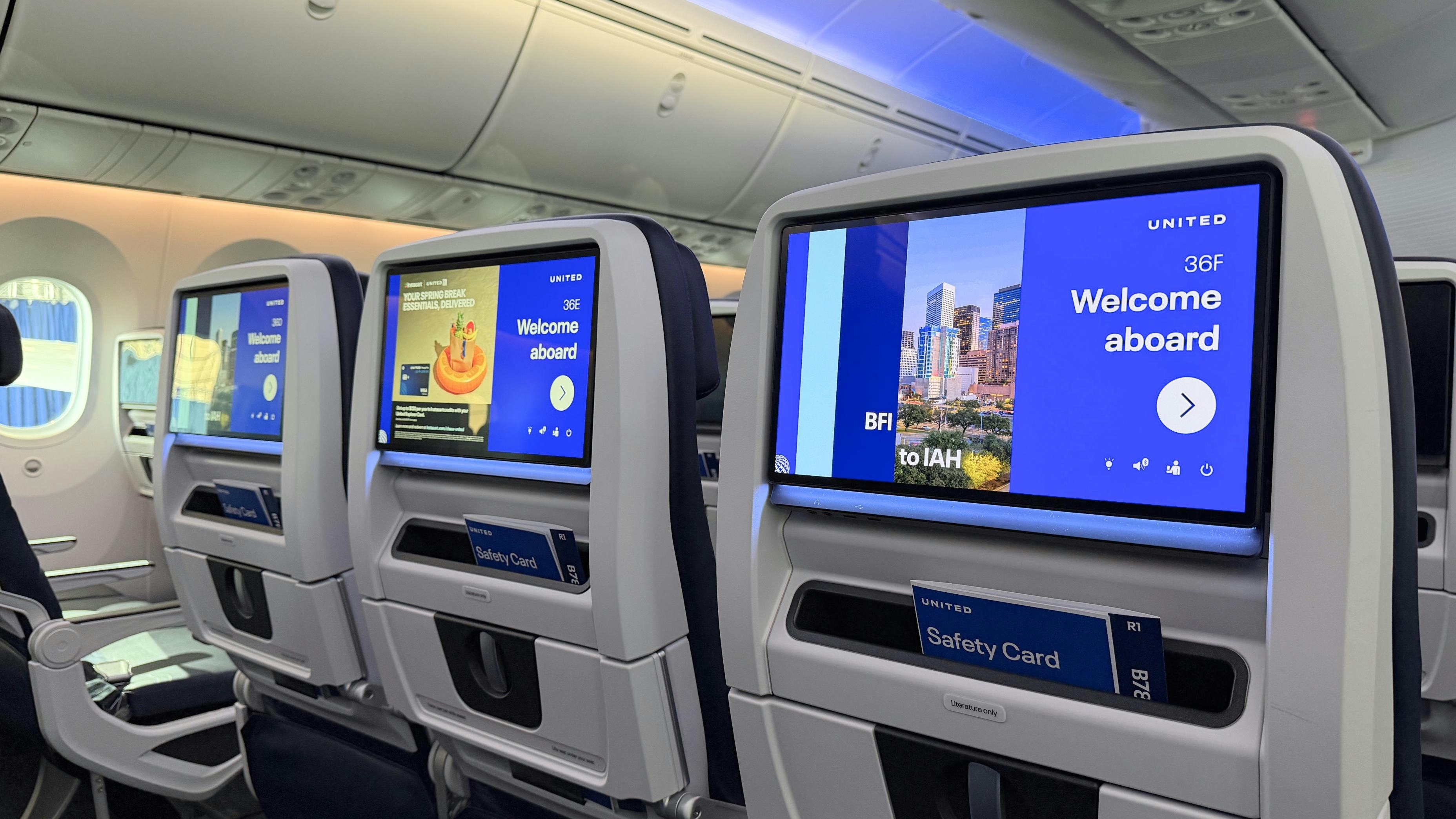
Parallel to the regulatory challenges, United Airlines is advancing its in-flight connectivity offerings by integrating Starlink Wi-Fi across its fleet. This initiative includes the recent introduction of complimentary DIRECTV Live TV streaming on flights equipped with Starlink, aiming to enhance the passenger experience and differentiate the airline in a competitive market.

Despite facing record rainfall in the Narita Airport region, United maintained its transpacific flight operations without disruption. The airline collaborated closely with its partner, All Nippon Airways (ANA), to coordinate fares and network planning, ensuring service continuity during adverse weather conditions. United has yet to issue a public statement regarding the congressional investigation or its operational response in Japan.

As United navigates the dual pressures of regulatory scrutiny and technological innovation, the outcomes of the ongoing investigation may have far-reaching consequences for its pricing strategies and the broader industry’s approach to data-driven fare management.

More news
Google Acquires Spirit Airlines Data to Enhance AI Capabilities

Google Acquires Spirit Airlines Data to Enhance AI Capabilities

Google Acquires Spirit Airlines Data to Enhance AI Capabilities Acquisition Details and Scope Google LLC has emerged as the winning bidder in a bankruptcy auction for a significant collection of deidentified business data, software code, and operational records from the now-defunct Spirit Aviation Holdings Inc. The acquisition, valued at $10 million and approved by the US Bankruptcy Court for the Southern District of New York, is aimed at bolstering Google’s artificial intelligence (AI) capabilities. The dataset encompasses an extensive range of Spirit Airlines’ enterprise information, including 100 million emails, 500 million Microsoft Teams chats and collaboration records, as well as detailed data on revenue, aircraft operations, employee productivity, audits, and fraud investigations. In addition to operational data, the purchase includes marketing campaign materials, human resources files, strategic planning documents, and project management records. Of particular note are pricing data from 7.2 billion competitor flights and 7.5 billion passenger transaction records dating back to 2008, alongside pricing curve analytics. Google will also acquire approximately 30 million lines of code, development metadata, software models, algorithms, and over 175,000 employee records spanning back to 1986. Privacy Measures and Legal Context Google has emphasized that the acquisition explicitly excludes personal data and privileged materials, such as Spirit’s 97.5 million passenger profiles and 50.2 million records from the Free Spirit loyalty program. According to court filings, all data will undergo rigorous deidentification by a third party to remove personally identifiable information before transfer to Google. In a statement, Google affirmed that the dataset will be used to improve its products and AI models while maintaining a strong commitment to data privacy. Spirit Airlines, headquartered in Florida, ceased operations on May 2 following its second Chapter 11 bankruptcy filing within two years. The airline cited rising fuel costs and unsuccessful financing efforts as key factors leading to its insolvency. At the time of bankruptcy, Spirit carried approximately $8.1 billion in debt and had laid off around 17,000 employees. Recently, the airline received court approval to sell its 22 takeoff and landing slots at New York’s LaGuardia Airport to JetBlue Airways Corp. for $58.5 million. Industry Implications and Regulatory Considerations Google’s winning bid surpassed a $7.5 million offer from AI talent recruiting firm Mercor.io Corp., which remains the backup buyer should the Google deal fail to close. The sale hearing is scheduled for August 19 before Judge Sean Lane. The acquisition has ignited debate within the industry and may attract regulatory scrutiny, particularly concerning data privacy and potential antitrust issues. Market analysts suggest that Google’s move could raise concerns among competitors about the company’s strategic intentions and may accelerate the airline sector’s increasing reliance on cloud-based services. In response, rival firms might pursue their own data partnerships or develop countermeasures in AI to preserve competitive positioning. Legal representation in the case includes Davis Polk & Wardwell LLP for Spirit, Cleary Gottlieb Steen & Hamilton LLP for Google, and Orrick, Herrington & Sutcliffe LLP for Mercor.io. The bankruptcy case is registered as Spirit Aviation Holdings, Bankr. S.D.N.Y., No. 25-11897.
Air Canada Selects 16 Airbus A350-1000s to Replace Aging 777-300ERs Amid Boeing 777X Delays

Air Canada Selects 16 Airbus A350-1000s to Replace Aging 777-300ERs Amid Boeing 777X Delays

Air Canada Selects Airbus A350-1000s to Replace Aging Boeing 777-300ERs Amid 777X Delays For nearly twenty years, Air Canada’s long-haul operations have been anchored by the Boeing 777-300ER, a workhorse on transatlantic and transpacific routes departing from Toronto and Vancouver. As this flagship widebody fleet nears retirement, the airline has announced a strategic shift by committing to 16 Airbus A350-1000 aircraft—comprising eight firm orders and purchase rights for an additional eight. This marks a significant departure from Air Canada’s longstanding reliance on Boeing’s twin-aisle jets. Addressing Fleet Aging and Boeing 777X Delays The decision comes amid persistent delays and cost overruns in Boeing’s 777X program, which has pushed initial deliveries to late 2026 or 2027, approximately six to seven years behind the original schedule. Air Canada’s current fleet includes 19 Boeing 777-300ERs averaging over 16 years in service, alongside six older 777-200LRs. Extending the operational life of these aging aluminum airframes would entail escalating maintenance costs and diminishing returns in fuel efficiency and reliability. Meanwhile, international competitors are increasingly adopting lighter, next-generation aircraft, intensifying the financial and operational pressures on carriers maintaining older fleets. Air Canada’s senior leadership, including Executive Vice President and Chief Commercial Officer Mark Galardo and Chief Financial Officer John Di Bert, emphasized delivery certainty and operational efficiency as key priorities in their fleet renewal strategy. The Airbus A350-1000, with its advanced composite materials and fuel-efficient design, offers a modern and reliable solution for the airline’s long-haul requirements. Deliveries are scheduled to commence in the second half of 2030, providing a clear timeline that Boeing has been unable to guarantee. Industry Implications and Market Response This move aligns with broader industry trends, as the Airbus A350-1000 has gained traction as a formidable competitor to the delayed 777X. Other major carriers, such as Korean Air, have also expressed interest in the A350-1000 as an alternative amid Boeing’s setbacks. The aircraft’s strong order book and steady production momentum underscore its growing prominence in long-range and ultra-long-range passenger and cargo operations. Nonetheless, Airbus faces its own challenges, including production ramp-up constraints that may impact delivery schedules as demand surges from airlines seeking fleet modernization. Market reactions to Air Canada’s order reflect a shifting competitive landscape. With the future of the 777X uncertain, the A350-1000 is increasingly regarded as a dependable and technologically advanced option, prompting other airlines to reconsider their fleet strategies. As more carriers pivot toward Airbus, the A350-1000’s role as a cornerstone of next-generation long-haul aviation appears poised to expand. By bypassing Boeing’s delayed program, Air Canada is not only addressing its immediate operational needs but also signaling a broader industry transition toward proven, next-generation aircraft. This decision highlights the critical importance of delivery certainty and technological innovation in an era marked by rapid change and intense competition within global aviation.
UPS Boeing 767 Lands Safely in Denver After Instrument Failure

UPS Boeing 767 Lands Safely in Denver After Instrument Failure

UPS Boeing 767 Lands Safely in Denver Following Instrument Failure A UPS Airlines Boeing 767-300 Freighter successfully landed at Denver International Airport after experiencing a complete failure of its primary flight instruments during approach. The incident, which occurred on the evening of August 15, 2026, underscores both the proficiency of the flight crew and raises important considerations for safety within the cargo aviation sector. Incident Overview and Flight Details The aircraft, registered as N312UP, was operating flight 5X5806 from Will Rogers International Airport in Oklahoma City to Denver. Departing at 8:19 PM, the flight arrived at 8:59 PM after following a longer-than-usual routing. As the aircraft neared Denver, all primary display systems—including the Primary Flight Display, Navigation Display, and Engine Indicating and Crew Alerting System—ceased functioning. The pilots were compelled to rely exclusively on standby instruments to guide the aircraft safely to the ground. Despite the loss of critical avionics, the crew managed a controlled landing on runway 35L without incident. Aircraft Status and Operational Context Following the event, the Boeing 767 remains grounded in Denver pending thorough inspection, reflecting the gravity of the instrument failure. Prior to the incident, the aircraft had completed three flights that day, consistent with UPS’s typical operational tempo. Although the 767-300 Freighter is among the older aircraft in UPS’s cargo fleet, it remains one of the newer models within the carrier’s overall inventory, which continues to receive ongoing deliveries. Industry Implications and Safety Considerations This episode highlights the vital importance of human factors, pilot training, and safety protocols in the demanding environment of cargo aviation, where operations run continuously around the clock. The crew’s ability to manage a high-pressure situation without primary flight displays demonstrates the effectiveness of rigorous training, adherence to crew rest policies, and the necessity of robust cross-checking procedures. The incident is likely to prompt increased scrutiny from regulatory authorities and industry stakeholders regarding airline safety standards. It may accelerate efforts to enhance fatigue management and training programs aimed at mitigating risks associated with instrument failures. Competitors within the cargo sector may also respond by emphasizing their safety records and investing in new technologies or operational procedures to improve reliability. Within the broader aviation community, this event is expected to stimulate discussions on strengthening safety culture and operational resilience, potentially leading to industry-wide reforms. Investigation Status UPS Airlines has yet to issue an official statement concerning the incident. The aircraft remains out of service as investigations and inspections continue. Further updates will be provided as additional information becomes available.
SkyMatch Group Expands into eVTOL Air Taxis and Vertical Mobility

SkyMatch Group Expands into eVTOL Air Taxis and Vertical Mobility

SkyMatch Group Expands into eVTOL Air Taxis and Vertical Mobility SkyMatch Group is poised to redefine private aviation by extending its established concierge model beyond helicopters to encompass electric vertical takeoff and landing (eVTOL) air taxis and advanced air mobility services. The company’s vision centers on providing travelers with a seamless, single point of access to a variety of vertical flight options. Currently focused on helicopter services, SkyMatch Group plans to integrate eVTOL air taxis as commercial operations become viable. Strategic Integration of eVTOL Technology This expansion reflects the broader transformation underway in private aviation, driven by emerging aircraft technologies, innovative operational frameworks, and the development of vertiport infrastructure. SkyMatch Group is actively preparing for the integration of eVTOL air taxis by conducting comprehensive market evaluations, planning routes, tracking certification progress, and identifying suitable operators and vertiport partners. The company is also ensuring that its platform is equipped to meet the evolving demands of future passengers. Despite the promising outlook, significant challenges remain. Regulatory approval processes, high development costs, and the establishment of adequate infrastructure continue to pose obstacles. SkyMatch Group has emphasized its commitment to safety and compliance, stating that it will only offer eVTOL services once aircraft are fully certified, operators are licensed, and local aviation regulations and infrastructure are firmly in place. At present, the company does not provide flights on uncertified eVTOL aircraft. Complementary Roles of Helicopters and eVTOL Air Taxis SkyMatch Group envisions eVTOL aircraft as a complement to helicopters rather than a replacement. Helicopters will maintain their role in longer-range missions, servicing remote locations, yacht transfers, executive travel, and airport connections, particularly in areas lacking dedicated eVTOL infrastructure. Conversely, electric air taxis are expected to unlock new opportunities for shorter urban and regional journeys, such as airport-to-city transfers and connections between key business or leisure hubs. The company’s long-term approach prioritizes the journey itself over any specific aircraft type, offering a unified concierge service that simplifies access to a complex and fragmented market. Private helicopter charters are typically localized, with operators serving distinct regions and fleets. The emerging eVTOL sector is anticipated to exhibit similar complexity, with varying aircraft, operators, vertiports, and regulatory environments across cities. SkyMatch Group’s model aims to streamline this landscape, providing travelers and businesses with a single access point to diverse vertical aviation options. Expanding Market Applications and Industry Response SkyMatch Group’s future network is designed to serve both private individuals and corporate clients arranging transportation for executives, employees, and customers. Potential applications include airport-to-city and airport-to-resort transfers, executive and corporate travel, luxury hotel and yacht connections, transportation for major sporting and international events, VIP services, and time-sensitive regional travel. Luxury hotels, concierge firms, yacht managers, travel advisors, and destination management companies stand to benefit from access to both helicopter and eVTOL services through a single relationship with SkyMatch Group. Corporate travel departments may also gain a valuable new option for executive and delegation transport in markets where commercial eVTOL operations are authorized. Industry reaction to SkyMatch Group’s expansion has been largely positive, with forecasts projecting exponential growth in the Advanced Air Mobility (AAM) sector—from billions to tens of billions of dollars over the coming decade. Competitors are responding with increased investments in research and development, alongside strategic partnerships aimed at advancing technology and infrastructure. As SkyMatch Group continues to expand its international helicopter charter network, it is positioning itself at the forefront of next-generation private aviation, prepared to deliver seamless vertical mobility solutions as soon as market conditions and regulatory frameworks permit.
Faster Diagnostics Essential for Aircraft Heavy Maintenance

Faster Diagnostics Essential for Aircraft Heavy Maintenance

Faster Diagnostics Essential for Aircraft Heavy Maintenance For airlines, every additional day an aircraft remains grounded during heavy maintenance significantly disrupts operations, schedules, and revenue streams. As maintenance workloads become increasingly complex and turnaround time (TAT) pressures intensify across the aviation sector, maintenance, repair, and overhaul (MRO) providers face escalating demands to complete inspections and repairs more rapidly—without compromising safety or quality standards. The Cost and Complexity of Aircraft Grounding Aviation consultancy IBA estimates that aircraft grounding costs can reach as high as $150,000 per day, depending on the aircraft type and the scale of operational disruption. While planned C and D checks are already among the most costly maintenance events in an aircraft’s lifecycle, unforeseen issues such as unexpected findings, delayed inspections, material shortages, or additional repair requirements can quickly extend downtime and inflate expenses. Juozas Lapeika, chief base maintenance officer at FL Technics, underscores that reducing maintenance downtime depends largely on how swiftly MRO providers can diagnose problems, make informed technical decisions, and complete repairs without unnecessary interruptions. He explains, “Today, airlines are not only looking for maintenance quality—they are looking for predictability and speed. Every unnecessary delay during heavy maintenance creates operational pressure for the customer. That is why investment in inspection and diagnostic capabilities has become a critical part of maintaining predictable turnaround times.” Innovations in Inspection and Diagnostic Techniques Fuel system inspections and repairs represent one of the most time-sensitive aspects of base maintenance. Fuel leaks discovered late in the process—often during final maintenance testing after refueling—can cause significant delays. Addressing such leaks requires draining, ventilating, and drying the tanks before repeating repairs and tests, potentially extending turnaround times by several days. To mitigate this risk, some MRO providers are implementing helium-based fuel leak detection methods earlier in the maintenance cycle, prior to refueling and final testing. This approach allows technicians to identify potential leak points sooner, thereby avoiding repeated maintenance cycles. Lapeika notes, “The biggest advantage is avoiding repeated maintenance cycles. In the past, leaks discovered only after refueling could extend maintenance timelines by several additional days. Earlier detection helps avoid that disruption and, in certain maintenance scenarios, can reduce turnaround time by four to five days.” Structural inspections also play a critical role early in the maintenance process. Radiographic testing is often necessary to detect hidden defects or internal damage. When such capabilities are not available in-house, additional time is lost coordinating equipment, transportation, or external support. Lapeika highlights that “non-routine findings are one of the biggest variables affecting heavy maintenance timelines. The faster you can inspect, assess, and make repair decisions, the better control you maintain over turnaround time.” Challenges and Technological Advances Despite the clear benefits of faster diagnostics, challenges remain. The 2026 Global Fleet & MRO Market Forecast by Oliver Wyman Vector points to ongoing supply chain disruptions, unexpected maintenance demands, and slower aircraft retirements caused by manufacturer production delays. These factors complicate efforts to reduce turnaround times. In response, airlines are scrutinizing repair station costs more closely, while MRO competitors are investing heavily in advanced diagnostic technologies to enhance predictability and minimize operational disruptions. Artificial intelligence is also transforming the maintenance landscape. AI-powered predictive maintenance is shifting the industry from reactive to proactive strategies, providing a competitive advantage by enabling earlier detection of issues and more efficient allocation of resources. As airlines and MRO providers confront these evolving challenges, investment in faster, more accurate diagnostic capabilities remains vital to sustaining operational efficiency and controlling costs during heavy maintenance.
M1 Awarded $10 Billion U.S. Army Flight Training Contract

M1 Awarded $10 Billion U.S. Army Flight Training Contract

M1 Awarded $10 Billion U.S. Army Flight Training Contract M1 Support Services (M1) has secured a significant single-award indefinite-delivery, indefinite-quantity (IDIQ) contract valued at up to $10 billion to provide Initial Entry Rotary Wing (IERW) training for the U.S. Army under the Flight School Next (FSN) program. This 26-year agreement represents a pivotal element in the Army’s efforts to modernize rotary-wing pilot training, with the dual objectives of enhancing pilot proficiency and reducing long-term operational costs. Modernizing Army Flight Training Under the terms of the contract, M1 will deliver a contractor-owned, contractor-operated (COCO) turnkey solution through its Flight School First platform. This innovative system incorporates an AI-enabled adaptive learning environment, advanced simulation technologies, immersive virtual training, and proficiency-based instruction, all centered around the use of Robinson R66 helicopters. To support this comprehensive approach, M1 has formed a consortium of partners that includes Robinson Helicopter Company, Quantum Helicopters, General Dynamics Information Technology, and the University of North Dakota Aerospace Foundation. This collaboration draws on a wide range of expertise spanning flight training, simulation, aircraft manufacturing, civil aviation, and academic research. Challenges and Industry Impact Despite the contract’s promise, M1 faces considerable challenges in integrating advanced AI-driven adaptive learning technologies and ensuring the operational reliability of the Robinson R66 helicopters. The complexity of combining cutting-edge simulation with real-world flight training environments will test both technological capabilities and operational processes. Success will depend on M1’s ability to seamlessly merge these elements while maintaining rigorous training standards. The award has also generated notable market interest, with investors responding positively to the scale and duration of the contract. For industry competitors, the decision marks a setback, particularly for Bell, a key rival in military flight training. Bell is expected to respond by enhancing its product offerings and pursuing future contracts with increased vigor. Observers anticipate that this development will spur intensified innovation, more competitive pricing, and accelerated advancement of training technologies across the sector. The Army’s selection of M1 highlights a broader strategic shift toward harnessing private sector innovation and technology to modernize military training programs. The long-term success of the Flight School Next initiative will hinge on M1’s capacity to fulfill its commitments and adapt to evolving training demands and technological progress.
Alfor Secures £50 Million for Teesside Conversion Hub

Alfor Secures £50 Million for Teesside Conversion Hub

Alfor Secures £50 Million Investment for Teesside Conversion Hub Alfor Aviation has announced a £50 million investment to establish a dedicated aircraft conversion campus at Teesside International Airport. This initiative follows a 50-year agreement signed at the Farnborough International Airshow, under which Alfor will develop a passenger-to-freighter (P2F) conversion facility. The new site will include state-of-the-art hangars, engineering workshops, and warehousing, marking a significant expansion of the company’s operational capabilities. Development Plans and Economic Impact The project is expected to generate 250 permanent, highly skilled jobs and aims to begin operations by the end of 2027. Once fully operational, the facility will have the capacity to convert up to 24 passenger aircraft into freighters annually. This expansion is designed to meet the growing global demand driven by e-commerce, express freight, and integrated logistics networks. Alfor’s senior leadership, including executives Mahmut Metin Eren, Hazal Avci, Yildirim Beyazit Kilincarslan, and Omer Mafa, recently visited the site to assess progress and engage with airport management on the next stages of development. As part of the investment, Alfor plans to relocate its global headquarters to Teesside, reinforcing its long-term commitment to the region. Phil Forster, Managing Director of Teesside International Airport, described the agreement as a significant endorsement of the airport’s growth strategy. He emphasized that Alfor’s advanced conversion technology would enhance Teesside’s position within the air freight sector. The new campus will complement existing aviation services at the airport, which currently include maintenance, repair and overhaul (MRO), and aircraft painting. Notable operators at the airport and its business park include Willis Aviation, Airbourne Colours, and Draken, while the airport maintains a cargo agreement with FedEx. Challenges and Industry Implications Despite the promising outlook, Alfor faces several challenges as it advances the project. Securing a skilled workforce is critical due to the specialized nature of aircraft conversion. Additionally, the company must navigate complex regulatory frameworks and ensure the seamless integration of the new hub within existing supply chain logistics. These factors will be essential to the long-term success of the facility. Industry analysts suggest that Alfor’s investment could stimulate increased interest from other aircraft conversion companies and investors, as demand for P2F conversions continues to rise. Competitors may respond by upgrading their own facilities or forming strategic partnerships to maintain competitiveness in the evolving air cargo market. Alfor has stated that the Teesside centre will be central to expanding its global footprint and addressing the surging need for efficient aircraft conversions, positioning both the company and the region at the forefront of the industry’s transformation.
The Future of Air Travel

The Future of Air Travel

The Future of Air Travel Emerging Technologies and Industry Initiatives For decades, popular culture has envisioned a future where sleek hovercraft and flying cars traverse city skylines, yet such visions have remained largely unrealized. Today, however, the aviation sector stands on the brink of a significant transformation with the advent of Advanced Air Mobility (AAM) vehicles. These include electric and hybrid-electric air taxis designed to revolutionize urban and regional transportation. Leading companies such as Archer Aviation are pioneering this shift with aircraft like the Midnight eVTOL (electric vertical take-off and landing), capable of carrying four passengers and a pilot over distances ranging from 20 to 50 miles. While these vehicles do not fully mirror the flying cars of science fiction, they represent a substantial advancement in mobility. In March 2026, the U.S. federal government initiated a three-year program to facilitate real-world testing of eVTOLs across more than 26 states. The Department of Transportation aims to assess how these aircraft can be integrated into urban air taxi networks, with the ultimate objectives of securing Federal Aviation Administration (FAA) certification and developing the necessary infrastructure to support widespread AAM operations. Market Potential and Challenges The appeal of air taxis extends beyond mere convenience. Engineered to produce minimal noise pollution, these aircraft are well-suited for operation in densely populated urban areas with stringent noise regulations. They are also positioned as a premium travel option for VIPs and business travelers seeking to reduce travel time on regional routes, complementing existing modes such as private jets, helicopters, and luxury ground transportation. Despite the promise, the path to commercial viability remains fraught with challenges. The eVTOL market is intensely competitive, with companies investing heavily in research and development to bring their products to market. For instance, PLANA is developing hybrid-electric VTOL aircraft capable of longer ranges—up to 350 miles—addressing what its Executive Chairman Philippe Bouissou describes as “the missing middle”: trips under 500 miles that are inefficient for both road and traditional air travel. PLANA’s six-passenger aircraft aims to connect cities such as San Jose and Reno or New York and Boston, filling gaps where current transportation options are limited. Broader Industry and Geopolitical Factors Beyond technological and regulatory hurdles, the broader air travel industry contends with complex economic and geopolitical challenges. The depreciation of the Indian rupee, ongoing supply chain disruptions, and airspace closures—such as those over Pakistan—have complicated airline operations. Recent conflicts in the Middle East have contributed to rising airfares and passenger yields; however, as capacity is restored and competition intensifies, these gains may prove temporary. Airlines like Singapore Airlines are closely monitoring key trade routes and adjusting capacity to respond to fluctuating cargo demand amid this volatile environment. As advanced air mobility approaches operational reality, the aviation industry must navigate not only the technical and regulatory complexities of new aircraft but also the shifting economic and geopolitical landscape. The future of air travel holds significant promise, contingent upon overcoming challenges both in the air and on the ground.
Government Considers AI to Accelerate Aviation Cargo Clearance

Government Considers AI to Accelerate Aviation Cargo Clearance

Government Considers AI to Accelerate Aviation Cargo Clearance Modernizing Cargo Handling through Advanced Technologies Bangladesh is actively pursuing the integration of artificial intelligence and advanced technologies to expedite cargo clearance at its airports, aiming to modernize the aviation sector and address longstanding inefficiencies in goods movement. Civil Aviation and Tourism Minister Afroza Khanom underscored the government’s determination to assume a leadership role in technological adoption rather than merely following global trends. Speaking at an inter-ministerial meeting focused on cargo-handling challenges, Khanom emphasized the ambition to position Bangladesh at the forefront of innovation in this domain. The meeting, chaired by Commerce Minister Khandakar Abdul Muktadir at the Commerce Ministry, outlined comprehensive plans to enhance cargo-handling capacity through the construction of both temporary and permanent warehouses. Discussions identified seven potential sites for temporary storage and four for permanent facilities, intended to alleviate immediate operational pressures at airports. In parallel, the government is exploring the deployment of an AI-based system designed to accelerate the identification and processing of imported goods. Additional initiatives include the development of cold-storage facilities to facilitate the efficient handling of pharmaceutical imports and exports, alongside the establishment of clearer guidelines for ground-handling operations and improved notification systems for importers. Institutional Roles and Strategic Priorities Minister Khanom also highlighted ongoing efforts to transform Biman Bangladesh Airlines into a safer and more efficient carrier by addressing persistent technical and infrastructure challenges. She called for streamlined administrative procedures and emphasized the need for swift, transparent decision-making to support these reforms. Commerce Minister Muktadir clarified the delineation of responsibilities between customs and other agencies, noting that while customs oversees the verification of goods legality, documentation, and duty collection, infrastructure development remains outside its remit. “Warehouse construction and infrastructure management are not among the core responsibilities of customs,” he stated, affirming that customs operations will function within the infrastructure provided by other authorities. Muktadir stressed the critical importance of efficient cargo management to Bangladesh’s trade and export objectives, particularly in expanding commerce with the European Union, and pledged the full support of the Commerce Ministry in these endeavors. Challenges and Global Context The government’s push to modernize cargo clearance aligns with broader efforts to strengthen logistics infrastructure, reduce delays, and lower operational costs that have historically hindered airport cargo throughput. For exporters, especially those handling time-sensitive products such as pharmaceuticals, faster processing times are essential to maintaining competitiveness in international markets. Nonetheless, the adoption of AI and smart airport technologies presents significant challenges. High implementation costs, concerns over data security, and regulatory complexities may impede the rollout of these systems. Market responses are expected to include increased investment in smart airport infrastructure and autonomous flight technologies, while competitors may pursue strategic collaborations, acquisitions, and intensified research and development to secure regulatory approvals and enhance cybersecurity measures. Globally, similar initiatives have encountered public resistance; for instance, in the United States, opposition to the expansion of AI infrastructure has intensified, with resistance to data center development doubling between August 2025 and May 2026. The inter-ministerial meeting brought together key stakeholders, including Commerce Secretary Md Ataur Rahman, Civil Aviation and Tourism Secretary Fahmida Akhter, the managing director of Biman Bangladesh Airlines, the chairman of the Civil Aviation Authority of Bangladesh, and senior officials from the National Board of Revenue, Bangladesh Bank, and other relevant agencies.
André Fehlauer Named CEO of GOL

André Fehlauer Named CEO of GOL

André Fehlauer Appointed CEO of GOL Linhas Aéreas Gol Linhas Aéreas (GOL), a prominent Brazilian airline and member of the Abra Group, has announced a significant leadership transition with the appointment of André Fehlauer as Chief Executive Officer, effective September 2026. Fehlauer will succeed Celso Ferrer, who is set to step down on August 31, 2026, following a transformative tenure at the helm of the airline. Leadership Transition and Strategic Continuity Fehlauer returns to GOL with a wealth of industry experience, having previously served as CEO of Smiles in both Argentina and Brazil for eight years. His recent leadership of Livelo, one of Brazil’s leading loyalty programs, along with prior roles at Citi and Credicard, underscores his expertise in customer-focused business strategies. His appointment is widely regarded as a strategic move to maintain continuity in GOL’s vision, emphasizing a customer-centric approach as the airline embarks on a new phase of value creation and strengthens its collaboration with other Abra Group carriers. This leadership change occurs amid ongoing financial restructuring and a recalibration of GOL’s fleet strategy to meet shifting market demands. Fehlauer faces the challenge of sustaining the airline’s competitive position within Brazil’s dynamic aviation sector. Market response to his appointment has been largely positive, with investors interpreting the move as a sign of stability and consistent leadership. Industry analysts anticipate that GOL’s competitors will closely observe the airline’s forthcoming strategic initiatives, particularly as it aims to expand its international footprint and enhance its competitive advantage. Expanded Role for Albert Perez In conjunction with Fehlauer’s appointment, Albert Perez, currently Chief Operating Officer (COO), will take on an expanded role as president and COO. Perez joined GOL in early 2024, bringing over twenty years of aviation experience from senior positions at Avianca, JetSMART, and Vueling. Since his arrival, he has played a key role in elevating operational performance, redesigning core processes, and fostering a culture of continuous improvement. These efforts have propelled GOL to achieve industry-leading operational metrics, including top rankings for on-time performance both within Brazil and across Latin America. As president and COO, Perez will continue to oversee daily operations, with a focus on enhancing operational efficiency and customer experience as GOL expands its domestic and international network. With these leadership appointments, GOL aims to consolidate recent achievements and position itself for sustainable growth, addressing the challenges and opportunities that lie ahead in the competitive airline industry.
line









