
Orquesta conocimientos de IA para convertirlos en acción

Tendencias
Categories
What Leaders Can Learn About AI from Pilots
What Leaders Can Learn About AI from Pilots
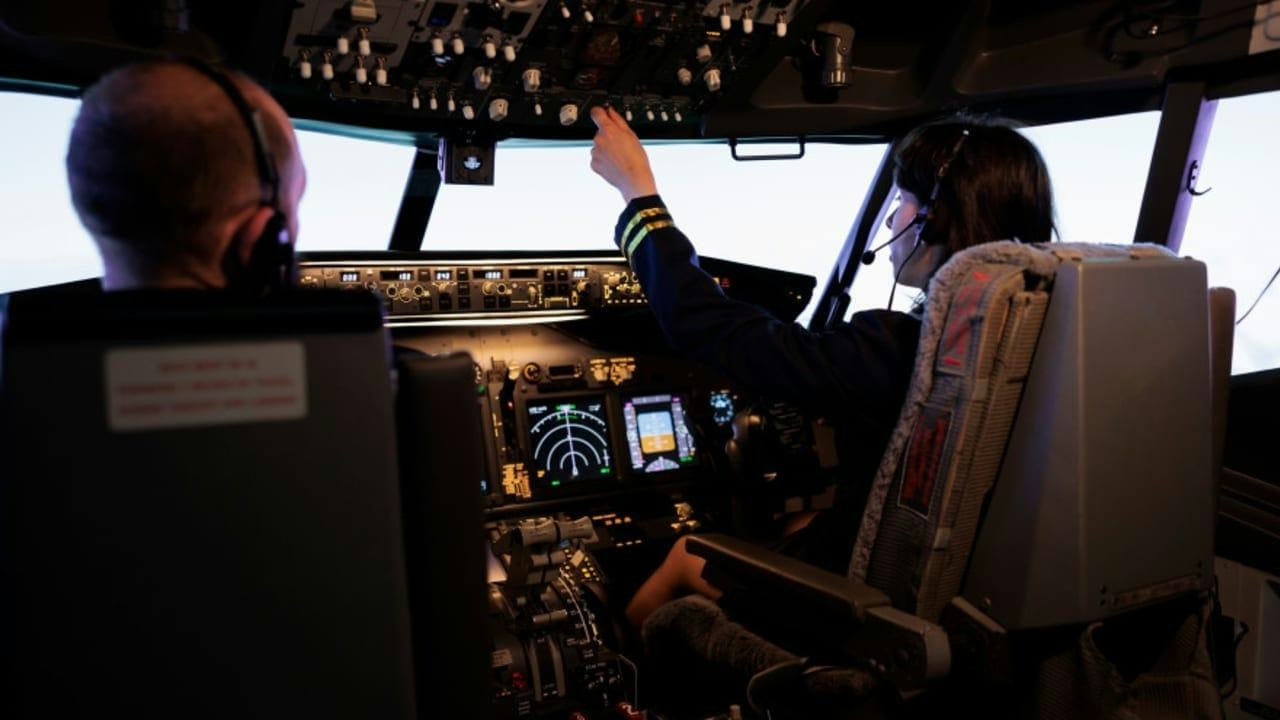
A recent experience during a flight underscored a vital lesson in risk management that extends beyond aviation and into the realm of artificial intelligence (AI). Faced with deteriorating weather conditions en route to a planned airport, the pilot considered diverting to a backup location. However, the backup airport was also affected by the same storm. Ultimately, a third option was chosen: landing safely at an alternate airport, waiting out the weather, and continuing the journey later. While it might have been possible to reach the original or backup airports, the uncertainty involved was not a sound basis for decision-making. This scenario exemplifies a fundamental principle of risk management: it is not about whether one can take a risk, but whether the risk is justified.
The Federal Aviation Administration’s (FAA) Aviation Instructor’s Handbook offers a straightforward framework for making such decisions in the cockpit. Although designed for pilots, this framework provides valuable guidance for leaders navigating the challenges of AI deployment.
Accept No Unnecessary Risk
In aviation, risk is inherent and unavoidable; the key is ensuring that any risk taken is justified by a commensurate benefit. For example, a novice pilot would not fly a new aircraft in low-visibility conditions on their first day, as the potential reward does not outweigh the danger. Similarly, leaders must evaluate AI initiatives not simply on whether they carry risk, but on what is gained relative to that risk.
Deploying untested AI models in sensitive areas such as medical records management, financial approvals, or safety-critical operations solely to accelerate processes constitutes an unnecessary risk without adequate return. If the primary motivation is merely to keep pace with competitors, this reflects fear rather than strategic judgment. Leaders must also be mindful of AI’s unique challenges, including data privacy concerns, potential biases in AI outputs, and the dangers of over-reliance on automation. Market skepticism about AI’s effectiveness and ethical implications is common, while competitors may respond by adopting similar technologies or enhancing oversight to ensure compliance and quality.
Make Risk Decisions at the Right Level
In single-pilot flights, the individual accepting the risk is also the one responsible for managing it. This principle often breaks down in organizational AI governance. Decisions about deploying customer-facing AI models or granting AI systems access to production environments are frequently made by those under immediate pressure—such as product leaders or engineers—rather than by managers accountable for the broader consequences.
Effective leadership requires clarity about who holds the authority to approve or reject AI deployments and whether that person has comprehensive visibility into the risks involved. If no one in the workflow has the power or insight to make informed decisions, risk management is occurring at an inappropriate level.
Maintain Human Oversight
Despite AI’s growing capabilities, it remains fallible. Tasks that require nuance, judgment, or regulatory compliance demand ongoing human supervision to detect errors and uphold quality standards. Overdependence on automation risks overlooking mistakes and triggering unintended outcomes.
By embracing the disciplined approach pilots use to balance potential benefits against real dangers, assigning responsibility to those best equipped to manage risks, and ensuring vigilant human oversight, leaders can better navigate the complexities of AI deployment with confidence and prudence.

Etihad Airways Suspends Airbus A380 Flights on Key Route

Aditya Birla Group Seeks Approval for Aircraft Leasing in GIFT City

Qatar Airways Highlights Innovation and Connectivity at Arabian Travel Market 2026

Hong Kong's Five-Year Plan Includes Andrew Fan's Aircraft Parts Processing Hub Proposal

ACIA Aero Leasing Delivers ATR72-600 to Air Nostrum

RTX Appoints Jill Albertelli as Head of Pratt & Whitney

TAT Technologies Joins Beyond Aero Hydrogen Aircraft Program

AURAK Study Highlights Barriers to Air Taxi Adoption in Emerging Economies

Xiamen Air Selects Altitude for 787 Maintenance at Heathrow

Etihad and Swissport Extend Global Partnership
