
Orquesta conocimientos de IA para convertirlos en acción

Tendencias
Categories
Why Airlines Rely on Boeing to Update 787 Software
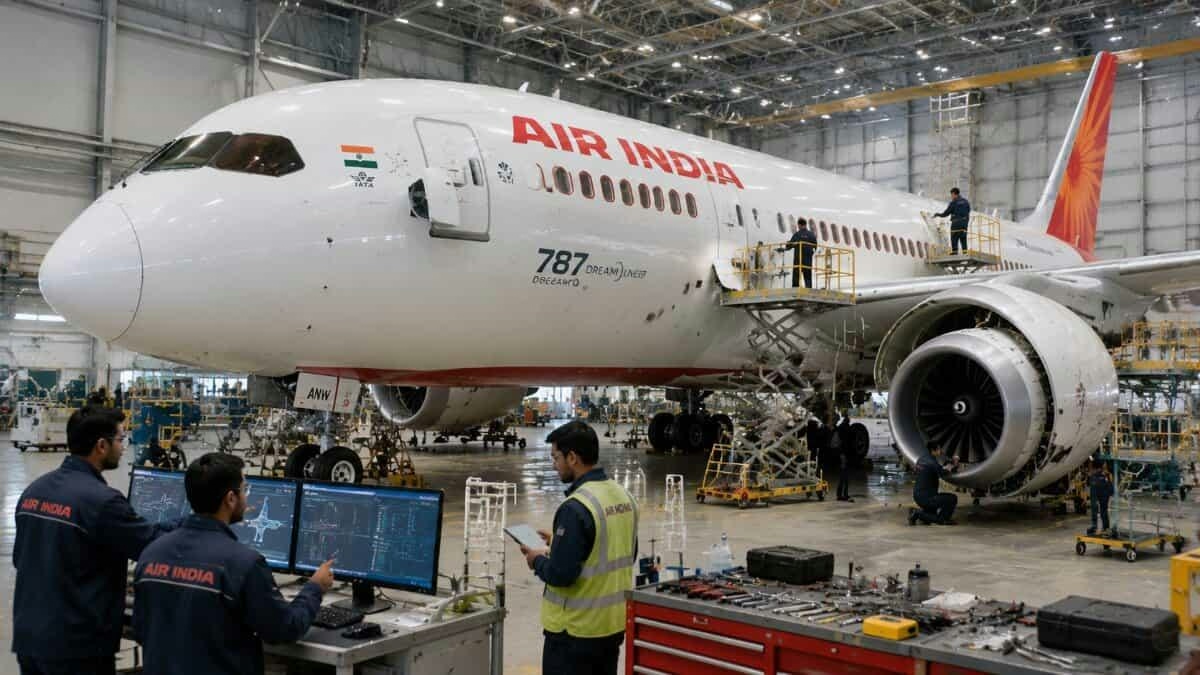
Why Airlines Rely on Boeing to Update 787 Software
The Boeing 787 Dreamliner represents a significant departure from traditional commercial aircraft in terms of its software architecture. Unlike earlier models such as the 767 or 777, which utilize numerous independent avionics computers, the 787 consolidates most critical functions onto a unified computing platform known as the Common Core System (CCS). This system oversees approximately 300 Loadable Software Airplane Parts distributed across 1,400 to 1,500 locations throughout the aircraft.
This integrated design means that the software is not a separate product but an essential component of the aircraft’s Federal Aviation Administration (FAA) type certificate. Consequently, airlines are unable to independently develop or install software fixes. Any modification to the core system’s code must be executed by Boeing’s engineering team and receive FAA approval before deployment on operational aircraft.
Distinctive Software Architecture of the 787
In older aircraft models, each major system—such as the flight management system, autopilot, or weather radar—operates on dedicated hardware units. These modular components function independently, allowing one system to fail without affecting others. Each unit is developed, certified, and maintained as a standalone entity with its own embedded software.
The 787’s CCS replaces this modular approach with a smaller number of shared computing modules. Multiple aircraft functions run as software applications on common hardware, sharing processing resources, data buses, and sometimes input/output pathways. While this integration enhances the aircraft’s capabilities and efficiency, it also introduces interdependencies. Updating one application can impact others, rendering software changes considerably more complex.
Dependence on Boeing for Software Updates
Because the 787’s software is certified as part of the aircraft’s type design, airlines cannot modify or update it independently. Any software issue—whether a bug or a necessary update—must be addressed by Boeing and approved by regulatory authorities. This process ensures safety and consistency but restricts airlines’ ability to respond swiftly to software-related challenges.
This dependence on Boeing’s technological expertise and support has intensified in recent years. At industry events such as the Farnborough Airshow, Boeing has underscored its efforts to restore trust following safety concerns and production delays. Despite ongoing challenges, including delayed deliveries of models like the 777X—which has frustrated customers such as Emirates—airlines continue to place substantial orders for the 787 Dreamliner. Carriers like Philippine Airlines and leasing companies such as AerCap have demonstrated confidence in Boeing’s future capabilities through significant purchase commitments.
Boeing’s current strategy emphasizes stability over rapid optimization, focusing on resolving supply chain volatility and maintaining robust supplier relationships. For airlines, this approach means continued reliance on Boeing not only for hardware but also for critical software updates that ensure the 787 fleet remains safe and operational.
The 787’s advanced, integrated software architecture offers operational advantages but also closely binds airlines to Boeing for ongoing support and updates. As the aviation industry navigates technological advancements and supply chain challenges, this partnership remains central to the Dreamliner’s sustained success.

Etihad and Swissport Extend Global Partnership

Sepehran Airlines B737 Returns to Mashhad After Tyre and Engine Issues

Etihad Deploys Widebody Fleet to Meet Strong Demand

Korean Air Finalizes $36.2 Billion Deal with Boeing

Australia’s RFDS Queensland Section Orders Six King Air 260Cs

Korean Air Finalizes Order for 103 Boeing Jets and Engines

Embraer E195-E2 Features Distinctive Engine Placement Among Regional Jets

What Passengers Can Expect on Boeing’s New 777X Jet

How Ethiopian Airlines Became Africa’s Leading Carrier Amid Gulf Competition

Joby Aviation Extends Autonomous Flight Capabilities with Cross-Country Tour
