
Orquesta conocimientos de IA para convertirlos en acción

Tendencias
Categories
Why the McDonnell Douglas MD-80 Outlasted Its Successor
Why the McDonnell Douglas MD-80 Outlasted Its Successor
Development and Commercial Trajectories
McDonnell Douglas introduced the MD-90 as a modern successor to the MD-80, outfitting it with quieter, more fuel-efficient high-bypass turbofan engines that significantly outperformed the older, noisier JT8D-200 engines used on the MD-80. Despite these technical advancements, the MD-90’s commercial success fell short of expectations. Although the MD-90 entered service in 1995, it was retired by June 2020—just nine months before the MD-80, which remained in operation until September 2019. Notably, both aircraft types were retired by the same airline, which operated the world’s largest MD-90 fleet.
The stark contrast in production numbers highlights the underlying reasons for this outcome. McDonnell Douglas manufactured 1,191 MD-80s compared to only 116 MD-90s, a tenfold difference that underscores the MD-80’s enduring appeal. Intended to replace the MD-80, the MD-90 never achieved the scale necessary for widespread adoption. This disparity can be traced to a critical decision regarding engine configuration, which ultimately constrained the MD-90’s commercial viability.
Design, Economics, and Industry Preferences
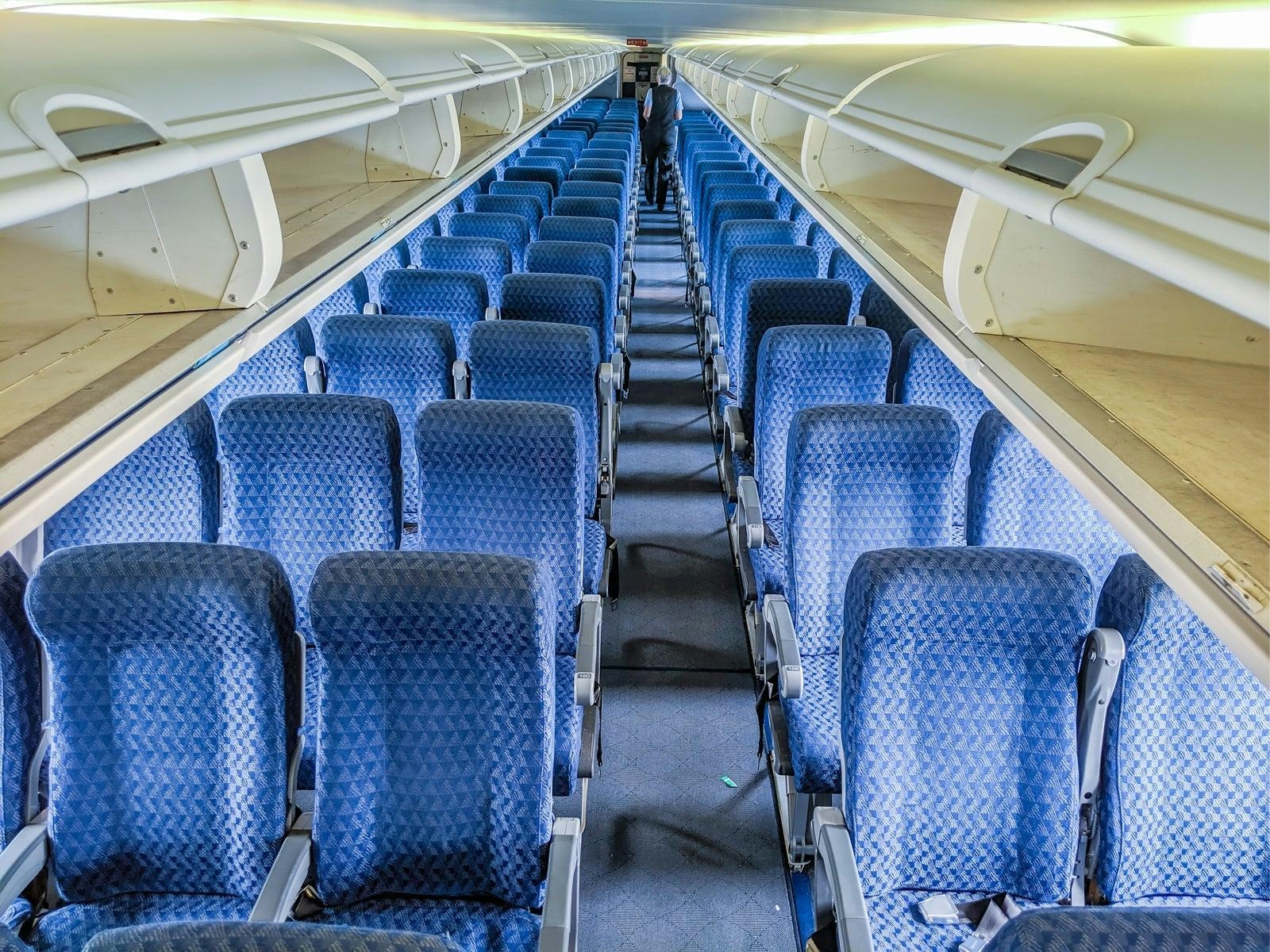
The MD-80’s success was anchored in its robust design, operational reliability, and favorable economics. First flown in 1979 and entering commercial service in 1980, the MD-80 quickly became a staple for airlines such as American Airlines, which at its peak operated 362 of the type—approximately one-third of all MD-80s produced. The aircraft’s two-pilot cockpit configuration reduced crew costs, while its widespread adoption fostered a vast maintenance and parts network. This extensive support infrastructure steadily lowered operating expenses, making the MD-80 an attractive option for carriers worldwide.
In contrast, the MD-90, despite its superior specifications on paper, failed to reach the critical fleet size required to sustain a competitive maintenance, repair, and overhaul (MRO) ecosystem. Although its IAE V2500-D5 engines were shared with the popular Airbus A320 family, the MD-90’s unique engine variant and installation limited parts commonality and support. With only 116 units produced before production ceased in 2000, the MD-90 could not generate the economies of scale that made the MD-80 so cost-effective to operate.
The MD-80’s longevity also reflected broader industry trends. Airlines often favored its proven track record and operational efficiency, preferring established technology over newer, less-proven alternatives. Even as the industry shifted toward more fuel-efficient models—illustrated by United Airlines’ recent retirement of 80 older aircraft in favor of Boeing 737 Max 10s—the MD-80 remained a preferred choice for many carriers well into the 21st century. This market preference for reliability and established performance influenced competitors to enhance their own models to meet or exceed the MD-80’s standards.
Ultimately, the MD-80 outlasted its successor not due to technological superiority, but because its scale, support network, and operational reliability rendered it commercially unbeatable for decades. The MD-90’s inability to achieve a comparable fleet size and support infrastructure sealed its fate, securing the MD-80’s place as one of commercial aviation’s most enduring workhorses.

Hong Kong's Five-Year Plan Includes Andrew Fan's Aircraft Parts Processing Hub Proposal

ACIA Aero Leasing Delivers ATR72-600 to Air Nostrum

RTX Appoints Jill Albertelli as Head of Pratt & Whitney

TAT Technologies Joins Beyond Aero Hydrogen Aircraft Program

AURAK Study Highlights Barriers to Air Taxi Adoption in Emerging Economies

Xiamen Air Selects Altitude for 787 Maintenance at Heathrow

Etihad and Swissport Extend Global Partnership

Sepehran Airlines B737 Returns to Mashhad After Tyre and Engine Issues

Etihad Deploys Widebody Fleet to Meet Strong Demand

Korean Air Finalizes $36.2 Billion Deal with Boeing
