
Orquesta conocimientos de IA para convertirlos en acción

Tendencias
Categories
Will Airbus and Boeing Receive More Orders?
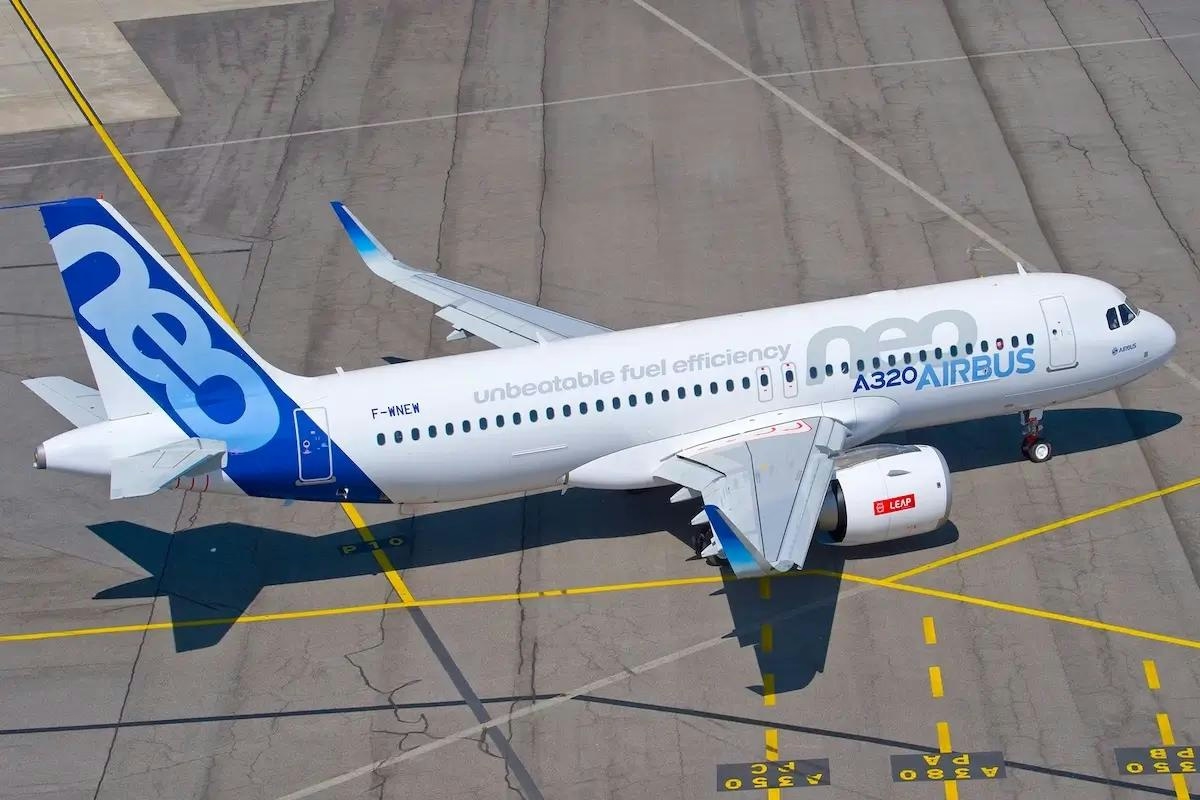
Will Airbus and Boeing Receive More Orders?
Emerging Opportunities in Southeast Asia
The launch of Sun PhuQuoc Airways, a new Vietnamese airline focused on resort travel, is generating renewed interest in aircraft orders for Airbus and Boeing. Positioned as Vietnam’s first resort-centric carrier, Sun PhuQuoc Airways aims to connect Phu Quoc Island with major cities domestically and internationally, with the broader goal of establishing the island as a regional tourism and economic hub.
Airbus is expected to be central to the airline’s initial operations. The carrier will commence service with a fleet of three Airbus A321 aircraft, including two A321-211s and a nearly new A321neo. Sun PhuQuoc Airways plans an aggressive expansion, targeting a fleet size of 25 aircraft by the end of 2026 and 35 by 2027 to meet growing regional demand. Early routes will link Phu Quoc with key Vietnamese cities such as Ho Chi Minh City, Da Nang, and Hanoi.
Industry Outlook and Strategic Implications
Looking forward, both Airbus and Boeing anticipate significant opportunities in the region. Nguyen Manh Quan, CEO of Sun PhuQuoc Airways, has indicated ambitions to acquire up to 100 aircraft within five years. Supported by Sun Group, the airline aims to commence commercial operations in November, with a target of transporting 20 million passengers annually by 2030 and generating revenues of $2 billion.
This surge in demand coincides with a period of intense competition and transformation within the global aviation industry. Airlines worldwide are rebuilding and expanding their fleets following the COVID-19 pandemic, seeking new aircraft to accommodate rising passenger volumes and evolving market requirements. However, ongoing supply chain disruptions continue to cause production delays, with analysts warning that these challenges could cost airlines more than $11 billion in 2025. Consequently, carriers are revising their fleet strategies and placing orders earlier to secure production slots.
Market Dynamics Between Airbus and Boeing
Airbus has recently surpassed Boeing in a significant milestone: the A320 family has become the most-delivered commercial jet in history, overtaking Boeing’s 737. This development reflects airlines’ increasing preference for cost-effective and fuel-efficient aircraft amid rising operational costs and growing traffic demands. Boeing, meanwhile, continues to grapple with production challenges and regulatory scrutiny from the Federal Aviation Administration, complicating its efforts to compete for new orders.
In response, Boeing has undertaken strategic measures to streamline its operations, including the acquisition of Spirit AeroSystems and subsequent divestitures, aiming to address competition concerns and strengthen its market position relative to Airbus.
As Sun PhuQuoc Airways and other carriers in the region pursue fleet expansion, the coming years are poised to be a critical period for both Airbus and Boeing. The intensifying competition to secure orders and delivery slots highlights the pivotal role of aircraft manufacturers in shaping the future trajectory of global aviation.

Etihad Airways Suspends Airbus A380 Flights on Key Route

Aditya Birla Group Seeks Approval for Aircraft Leasing in GIFT City

Qatar Airways Highlights Innovation and Connectivity at Arabian Travel Market 2026

Hong Kong's Five-Year Plan Includes Andrew Fan's Aircraft Parts Processing Hub Proposal

ACIA Aero Leasing Delivers ATR72-600 to Air Nostrum

RTX Appoints Jill Albertelli as Head of Pratt & Whitney

TAT Technologies Joins Beyond Aero Hydrogen Aircraft Program

AURAK Study Highlights Barriers to Air Taxi Adoption in Emerging Economies

Xiamen Air Selects Altitude for 787 Maintenance at Heathrow

Etihad and Swissport Extend Global Partnership
