
Orchestrer les insights d’IA pour les transformer en actions

Tendances
Categories
737 MAX Engine Shuts Down Mid-Flight After Cockpit Sun Visor Detaches
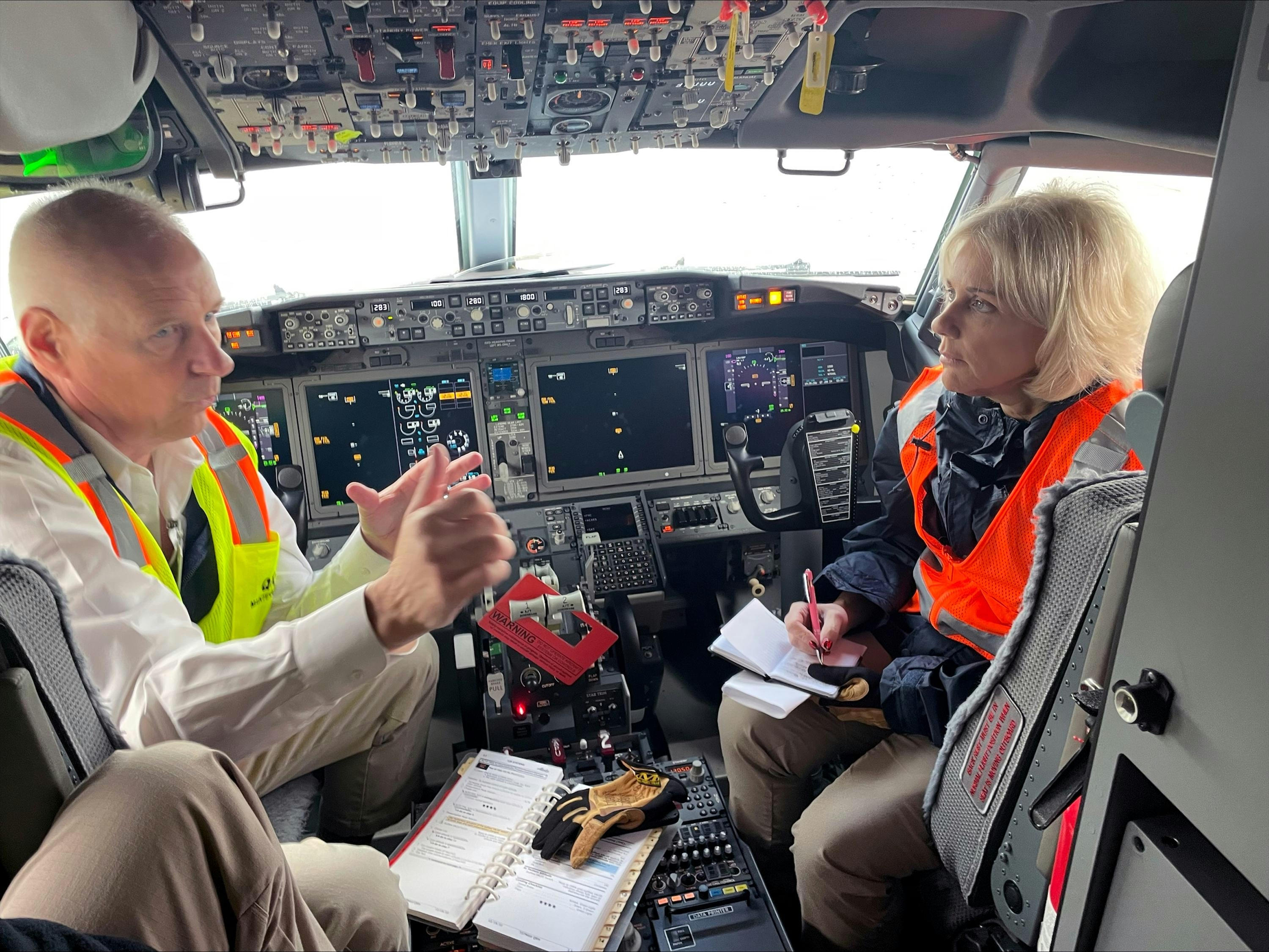
737 MAX Engine Shutdown Triggered by Detached Cockpit Sun Visor
A Ryanair-branded Boeing 737-8 MAX encountered an unusual in-flight emergency on December 8, 2025, when a cockpit sun visor detached during climb-out from Krakow, Poland, resulting in the shutdown of one of its engines. The aircraft, registered 9H-VUE and operated by Malta Air under a wet-lease agreement, was conducting flight FR-3505 to Milan Bergamo at the time of the incident.
Incident Overview and Flight Response
The flight departed Krakow at approximately 06:25 local time and was ascending through 8,000 feet when the crew halted their climb and maintained level flight. According to reports from the Aviation Herald, the detached sun visor struck an engine start lever, causing the shutdown of a CFM LEAP-1B engine. In response, the flight crew issued a “PAN PAN” call, indicating an urgent but non-life-threatening situation, and began troubleshooting while holding their heading.
After stabilizing at 10,000 feet, the crew successfully restarted the affected engine, canceled the PAN PAN alert, and proceeded to Milan Bergamo. The aircraft landed safely about 90 minutes later without further incident, and no injuries were reported among passengers or crew. The aircraft remained grounded in Milan for approximately 50 hours before returning to service.
Investigation and Industry Context
The Maltese Bureau of Air Accident Investigation (BAAI) has classified the event as an incident and initiated a formal investigation. No official report has yet been released, and the precise circumstances remain under review. Aviation experts have expressed skepticism regarding the likelihood of a sun visor—typically mounted high and forward near the windshield—dislodging and actuating an engine start lever, which is located low on the center pedestal and generally requires deliberate manipulation. Investigators are expected to analyze cockpit voice and flight data recorders, maintenance records, and hardware configurations to determine the sequence of events.
This incident occurs amid ongoing scrutiny of Boeing and the 737 MAX series. The U.S. Federal Aviation Administration (FAA) is currently reviewing Boeing’s cockpit alerting system for the forthcoming MAX 10 model, focusing on potential safety enhancements. The event has drawn renewed attention from aviation regulators worldwide and may prompt legal or operational repercussions should systemic issues be identified.
The aviation industry is also contending with broader challenges, including the need to retrofit thousands of passenger aircraft to mitigate pilot disorientation risks during solar storms—a vulnerability that could further disrupt flight operations. Wet-lease arrangements, such as the one involved in this case, are common during peak travel periods, with the marketing carrier selling tickets while another airline operates the flight under its own certificate. The aircraft’s Maltese registration (“9H”) and the use of CFM LEAP-1B engines are standard for the 737 MAX fleet. In-flight engine shutdowns remain rare, with certification standards requiring aircraft to safely continue flight and land on a single engine.
The ongoing investigation will seek to establish whether the detached sun visor was the direct cause, a contributing factor, or incidental to the engine shutdown, and whether any maintenance or procedural shortcomings played a role. Ryanair has not issued a statement regarding the incident.

Etihad Airways Suspends Airbus A380 Flights on Key Route

Aditya Birla Group Seeks Approval for Aircraft Leasing in GIFT City

Qatar Airways Highlights Innovation and Connectivity at Arabian Travel Market 2026

Hong Kong's Five-Year Plan Includes Andrew Fan's Aircraft Parts Processing Hub Proposal

ACIA Aero Leasing Delivers ATR72-600 to Air Nostrum

RTX Appoints Jill Albertelli as Head of Pratt & Whitney

TAT Technologies Joins Beyond Aero Hydrogen Aircraft Program

AURAK Study Highlights Barriers to Air Taxi Adoption in Emerging Economies

Xiamen Air Selects Altitude for 787 Maintenance at Heathrow

Etihad and Swissport Extend Global Partnership
