
Orchestrer les insights d’IA pour les transformer en actions

Tendances
Categories
Air Travel Expands as Tampa Bay Seeks Solutions to Traffic Congestion
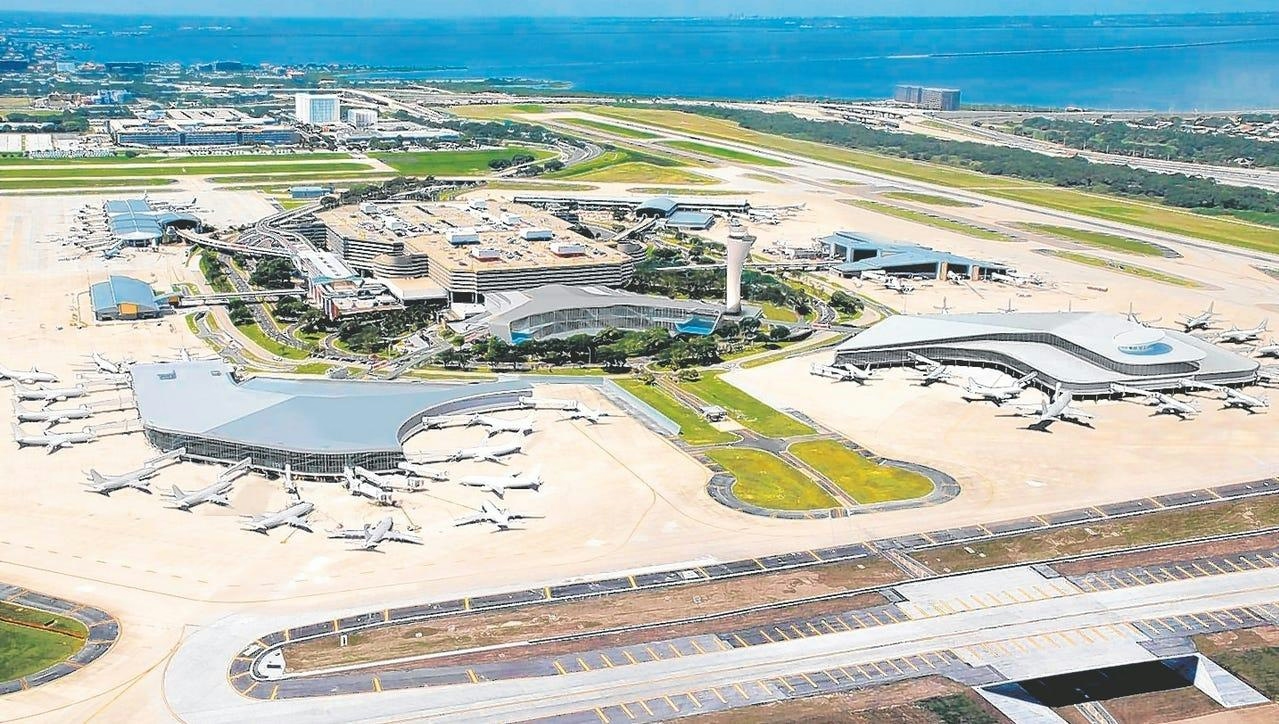
Air Travel Expands as Tampa Bay Seeks Solutions to Traffic Congestion
Rising Challenges in Florida’s Cost of Living and Traffic
Florida’s appeal has long been anchored in its sunny climate, scenic beaches, and absence of state income tax, attracting residents and visitors alike. However, escalating housing costs and worsening traffic congestion have prompted growing concerns about the state’s affordability and quality of life. Recent surveys reveal that nearly half of Floridians have contemplated relocating, driven by the increasing cost of living and daily frustrations caused by gridlock on major highways such as Interstate 4.
Tampa Bay’s Innovative Approach: Air Travel Solutions
In response to these mounting challenges, Tampa Bay is turning to the skies for relief. The region is actively exploring innovative air travel options, including the deployment of air taxis—battery-powered vertical takeoff and landing aircraft designed to transport commuters above congested roadways. Cities like St. Petersburg are already preparing infrastructure to accommodate these new modes of transport, aiming to revolutionize the daily commute by replacing hours of traffic with minutes in the air.
This initiative coincides with a period of transformation within the aviation industry. The recent resurgence in corporate travel has contributed to stabilizing U.S. airlines’ financial performance, particularly in terms of yields and load factors. Nevertheless, the market remains highly sensitive to evolving consumer preferences and competitive pressures. The introduction of air taxis and other novel air travel services is expected to intensify competition among carriers, prompting adjustments in capacity planning and operational strategies.
Challenges Amid Federal Disruptions and Market Uncertainty
Despite the promise of expanded air travel, Tampa Bay’s ambitions face significant obstacles. The ongoing federal government shutdown has disrupted air traffic control operations nationwide, resulting in widespread flight cancellations and delays. These disruptions not only inconvenience travelers but also inject uncertainty into the broader aviation market, complicating efforts to launch new services such as air taxis.
The concept of leveraging air travel to circumvent Tampa Bay’s traffic woes is not without precedent. In 1914, aviation pioneer Tony Jannus inaugurated the world’s first commercial airline service, flying passengers across Tampa Bay from St. Petersburg to Tampa. Although the route was short-lived, it demonstrated early on that innovation could overcome skepticism and logistical challenges.
Today, Tampa Bay’s policymakers and innovators are once again placing their hopes in the skies to address the region’s transportation difficulties. As air taxis and expanded airline services develop, the area must contend with technical, regulatory, and market uncertainties, as well as the complexities introduced by federal oversight.
Whether these efforts will ultimately enhance accessibility to Florida’s famed paradise or introduce new layers of complexity to daily commutes remains uncertain. For the moment, Tampa Bay stands at the forefront of reimagining regional mobility, both on the ground and in the air.

Etihad Airways Suspends Airbus A380 Flights on Key Route

Aditya Birla Group Seeks Approval for Aircraft Leasing in GIFT City

Qatar Airways Highlights Innovation and Connectivity at Arabian Travel Market 2026

Hong Kong's Five-Year Plan Includes Andrew Fan's Aircraft Parts Processing Hub Proposal

ACIA Aero Leasing Delivers ATR72-600 to Air Nostrum

RTX Appoints Jill Albertelli as Head of Pratt & Whitney

TAT Technologies Joins Beyond Aero Hydrogen Aircraft Program

AURAK Study Highlights Barriers to Air Taxi Adoption in Emerging Economies

Xiamen Air Selects Altitude for 787 Maintenance at Heathrow

Etihad and Swissport Extend Global Partnership
