
Orchestrer les insights d’IA pour les transformer en actions

Tendances
Categories
Airbus Aims for Record Commercial Aircraft Deliveries in 2024
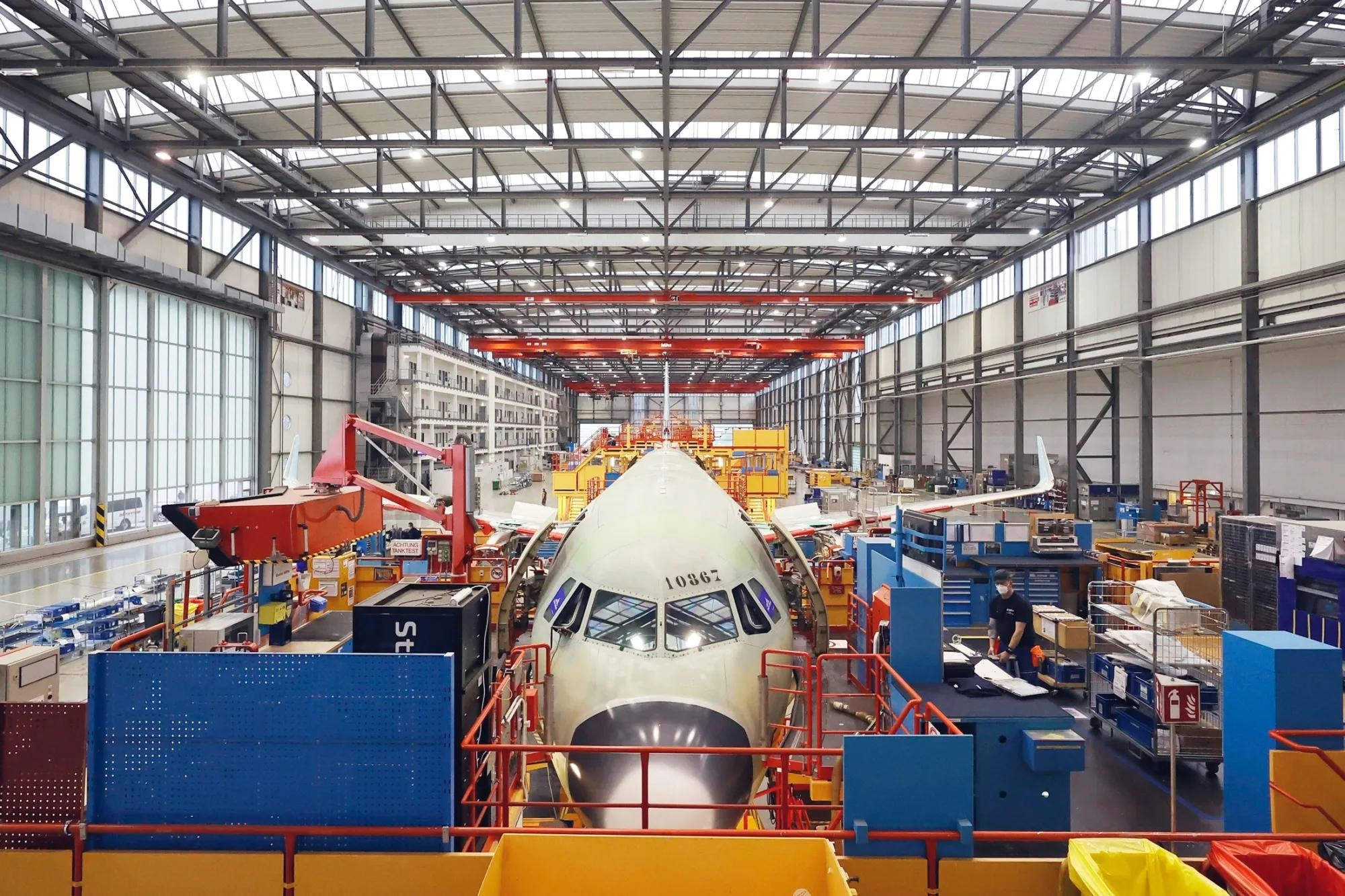
Airbus Aims for Record Commercial Aircraft Deliveries in 2024
Ambitious Targets Amid Strong Demand
Airbus is poised to achieve a record number of commercial aircraft deliveries in 2024, buoyed by robust demand across all segments of its business. Chief Executive Guillaume Faury has described 2025 as a pivotal year for the company, underscoring strong order activity and solid financial results in the latest annual report. In 2025, Airbus secured 1,000 gross orders for commercial aircraft, with net orders—after cancellations—totaling 889 planes. The company delivered 793 aircraft during the year, while profits rose by 23 percent to 5.2 billion euros (approximately $6.1 billion). Looking forward, Airbus aims to deliver around 870 commercial aircraft in 2026, reflecting its confidence in sustained market growth.
Challenges in Supply Chain and Market Competition
Despite these optimistic projections, Airbus faces significant challenges in meeting its delivery targets for 2024. One of the primary obstacles is securing firm commitments from key engine suppliers, notably Pratt & Whitney. Delays in engine deliveries have already forced Airbus to temper its ramp-up forecast for the A320neo family, a cornerstone of its growth strategy. These supply chain issues coincide with airlines worldwide seeking more fuel-efficient aircraft to expand their fleets amid rising passenger demand.
The competitive landscape in the commercial aircraft sector is intensifying. Boeing, Airbus’s principal American rival, is striving to restore production to pre-pandemic levels and is expected to increase efforts to reclaim market share in the narrowbody segment. Meanwhile, Embraer is concentrating on boosting sales of its E2 jets rather than launching new aircraft programs, aiming to consolidate its market position.
Industry Dynamics and Regulatory Developments
Broader industry dynamics are also evolving. Recent legislative initiatives in the US Senate aim to increase transparency in the Federal Aviation Administration’s certification processes for electric air taxis and advanced air mobility aircraft. Although these measures do not directly affect traditional commercial aircraft, they may influence regulatory standards and market expectations across the aviation sector.
Despite these headwinds, Airbus remains confident in its growth trajectory, supported by sustained demand and a strong order backlog. The company’s performance in 2025 and its ambitious delivery targets for 2024 and beyond will be closely monitored as the global aviation industry continues its recovery and transformation.

Etihad Airways Suspends Airbus A380 Flights on Key Route

Aditya Birla Group Seeks Approval for Aircraft Leasing in GIFT City

Qatar Airways Highlights Innovation and Connectivity at Arabian Travel Market 2026

Hong Kong's Five-Year Plan Includes Andrew Fan's Aircraft Parts Processing Hub Proposal

ACIA Aero Leasing Delivers ATR72-600 to Air Nostrum

RTX Appoints Jill Albertelli as Head of Pratt & Whitney

TAT Technologies Joins Beyond Aero Hydrogen Aircraft Program

AURAK Study Highlights Barriers to Air Taxi Adoption in Emerging Economies

Xiamen Air Selects Altitude for 787 Maintenance at Heathrow

Etihad and Swissport Extend Global Partnership
