
Orchestrer les insights d’IA pour les transformer en actions

Tendances
Categories
Airbus Faces Supply Chain Challenges Amid Defense Sector Growth
Airbus Faces Supply Chain Challenges Amid Defense Sector Growth
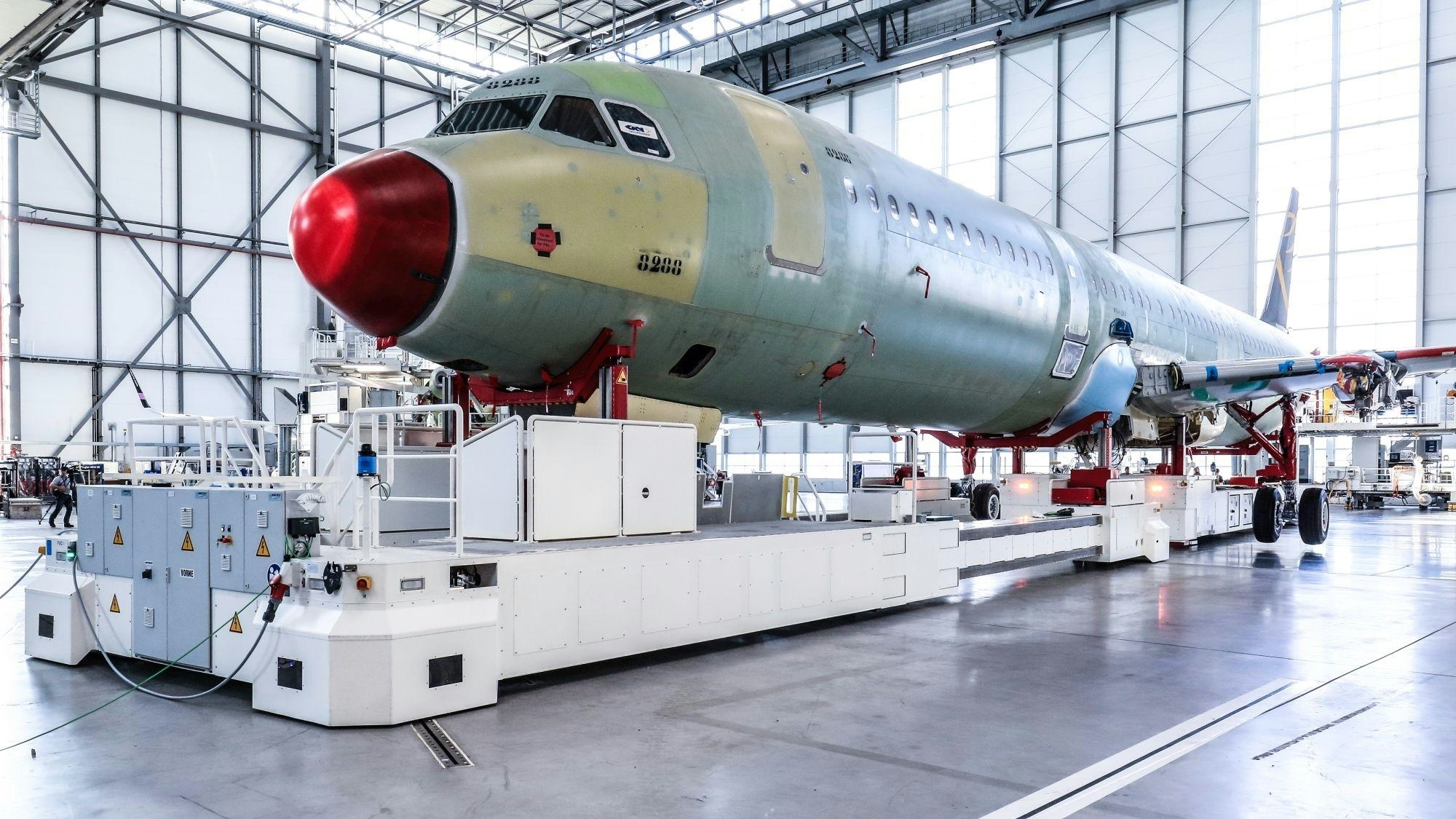
Airbus SE, the European aerospace giant, is navigating a complex post-pandemic recovery characterized by strong commercial aviation demand alongside persistent supply chain difficulties. As global air travel rebounds and defense budgets expand amid escalating geopolitical tensions, Airbus’s growing presence in the U.S. market and its expanding defense portfolio have attracted heightened interest from North American investors.
Business Model and Operational Dynamics
Airbus’s operations are organized into three primary divisions: Commercial Aircraft, Helicopters, and Defence and Space. The Commercial Aircraft segment, anchored by the widely popular A320 family and the A350 wide-body jets, accounts for the majority of the company’s revenue. This division benefits from a record order backlog exceeding 8,000 aircraft, providing long-term visibility but also placing significant pressure on production ramp-ups to drive earnings growth.
The company’s business model depends heavily on long-term contracts and a global network of suppliers, with key partners located across the United States, Europe, and Asia. While this diversified supply chain mitigates some risks, it also exposes Airbus to ongoing disruptions—a challenge mirrored across the UK manufacturing sector, where concerns over supply chain resilience are mounting amid energy cost volatility, labor market pressures, and fluctuating material prices.
In recent years, Airbus has accelerated its digital transformation efforts, incorporating AI-driven manufacturing processes and predictive maintenance to enhance operational efficiency and offset the substantial fixed costs associated with research and development. Although these initiatives provide a degree of stability through the company’s extensive backlog, Airbus remains vulnerable to economic downturns and supply chain volatility.
Market Position and Competitive Environment
Airbus holds a dominant position within the commercial aviation duopoly alongside Boeing, commanding over half of the narrow-body market with its A320neo family. Its competitive advantage is bolstered by the use of advanced composite materials and efficient engine partnerships with firms such as CFM International and Pratt & Whitney. In the wide-body segment, the A350 competes directly with Boeing’s 777X, while in the defense arena, Airbus contends with major players like Lockheed Martin and BAE Systems through products including the A400M military transport and ArianeGroup’s space systems.
The helicopter division maintains leadership in civil and parapublic markets, recently establishing a European supply chain for the H175M model to reduce dependence on Chinese aerostructure suppliers. Airbus is also proposing a Canadian final assembly line to address evolving defense procurement requirements. These strategic moves align with broader industry trends toward supply chain localization aimed at mitigating geopolitical risks.
Industry Drivers and Persistent Challenges
The aerospace sector is supported by forecasts predicting a doubling of global air traffic by 2040, prompting airlines to place record orders for fuel-efficient aircraft. In January 2026, commercial aircraft orders surged by 71%, reflecting renewed market confidence and contributing to Airbus’s unprecedented backlog. Nevertheless, supply chain constraints, regulatory complexities, and tariff uncertainties continue to pose challenges, even as some pressures begin to ease.
Despite generally optimistic outlooks—two-thirds of UK manufacturers report positive sentiment—the reliance on self-financing models is increasingly unsustainable. For Airbus, ongoing risks such as supply chain delays, inflationary pressures, labor shortages, and geopolitical instability threaten program delivery and customer satisfaction.
As Airbus strives to balance robust demand with operational headwinds, its capacity to adapt supply chains and sustain production momentum will be pivotal in maintaining its leadership across both commercial and defense aerospace sectors.

Etihad Airways Suspends Airbus A380 Flights on Key Route

Aditya Birla Group Seeks Approval for Aircraft Leasing in GIFT City

Qatar Airways Highlights Innovation and Connectivity at Arabian Travel Market 2026

Hong Kong's Five-Year Plan Includes Andrew Fan's Aircraft Parts Processing Hub Proposal

ACIA Aero Leasing Delivers ATR72-600 to Air Nostrum

RTX Appoints Jill Albertelli as Head of Pratt & Whitney

TAT Technologies Joins Beyond Aero Hydrogen Aircraft Program

AURAK Study Highlights Barriers to Air Taxi Adoption in Emerging Economies

Xiamen Air Selects Altitude for 787 Maintenance at Heathrow

Etihad and Swissport Extend Global Partnership
