
Orchestrer les insights d’IA pour les transformer en actions

Tendances
Categories
American Airlines to Equip Over 500 Narrowbody Aircraft with Starlink
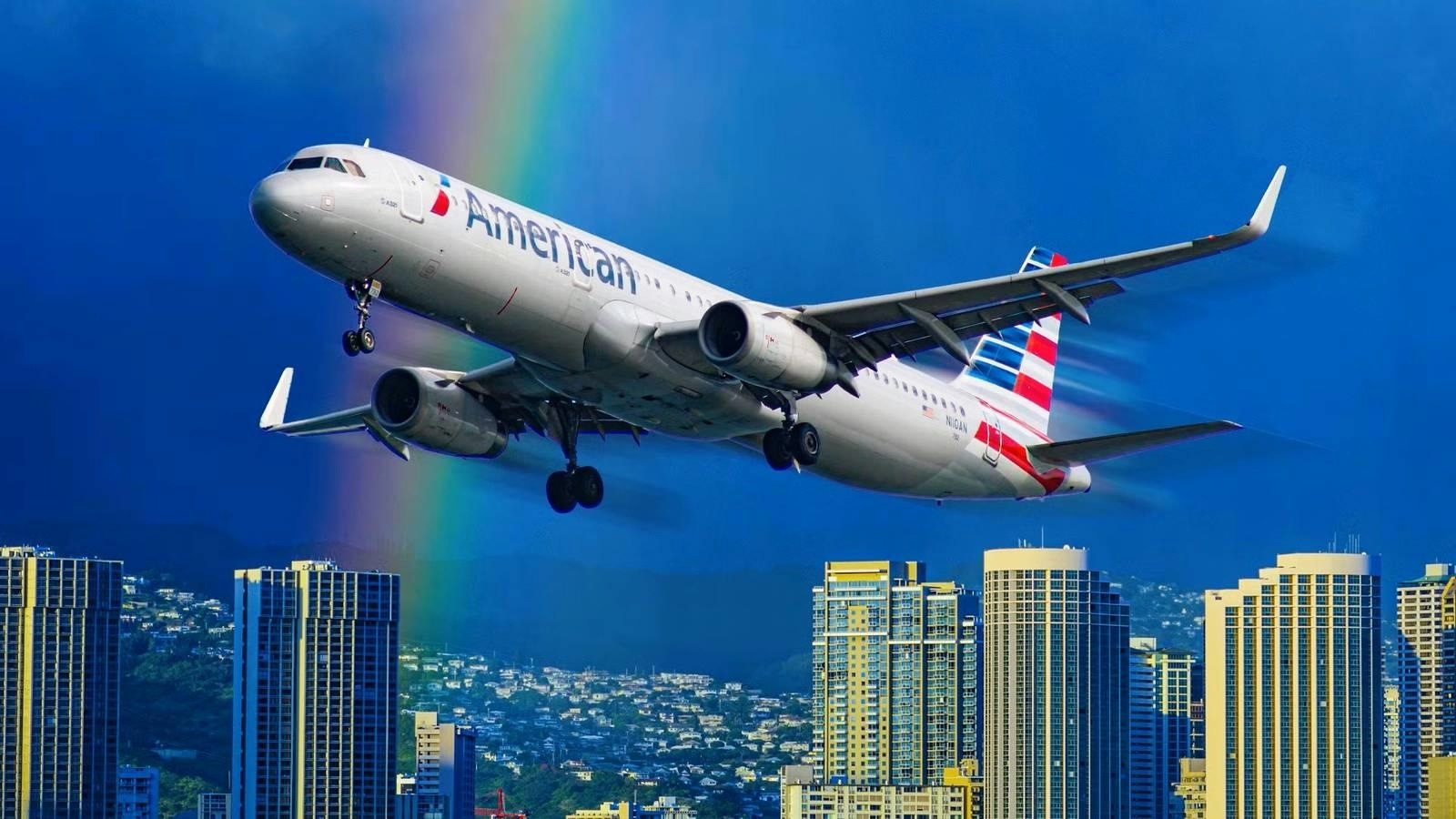
American Airlines to Equip Over 500 Narrowbody Aircraft with Starlink
American Airlines has announced a major enhancement to its inflight connectivity by planning to install Starlink satellite internet on more than 500 narrowbody aircraft. This initiative forms part of the airline’s broader modernization strategy aimed at improving the passenger experience, particularly on domestic and short-haul international routes where demand for reliable, high-speed internet continues to rise.
Embracing Low Earth Orbit Satellite Technology
The decision to adopt Starlink reflects a growing industry trend toward low Earth orbit (LEO) satellite systems, which offer faster, more reliable, and higher-capacity internet connections compared to traditional geostationary satellites. Developed by SpaceX, Starlink has already been selected by several prominent carriers worldwide, including Lufthansa Group, airBaltic, United Airlines, Qatar Airways, Hawaiian Airlines, Alaska Airlines, British Airways, Emirates, Air France, and WestJet. For instance, Lufthansa Group plans to equip approximately 850 aircraft with Starlink, with initial flights expected in the latter half of 2026. AirBaltic became the first European airline to provide free Starlink internet to passengers on its Airbus A220-300 fleet in early 2025.
Unlike geostationary satellites positioned roughly 36,000 kilometers above Earth, which suffer from higher latency and limited bandwidth, Starlink’s constellation operates in much lower orbits. This proximity shortens signal paths, reduces latency, and increases bandwidth availability per aircraft. Consequently, inflight Wi-Fi is approaching the quality and responsiveness of ground-based internet, enabling passengers to stream content, engage in cloud-based work, and participate in video conferences with greater ease.
Advancements in Inflight Connectivity Performance
Comparisons of inflight internet performance underscore the rapid technological progress in this sector. Earlier satellite systems, such as those provided by Panasonic, offered average speeds up to 12 Mbps with peak rates near 20 Mbps. Panasonic’s latest LEO terminal, developed in partnership with Intellian, targets speeds up to 195 Mbps and latency below 100 milliseconds. Starlink, however, advertises speeds reaching 1 Gbps per antenna for aircraft, with Qatar Airways reporting speeds up to 500 Mbps on its fleet. Independent testing cited by The Verge found median download speeds of 152 Mbps on Starlink-equipped flights, significantly outperforming the 62 Mbps median speeds recorded on SES satellite systems.
Starlink’s hardware also presents operational advantages. Traditional satellite antennas, typically housed beneath large aerodynamic radomes, add considerable weight and drag, with some installations weighing approximately 182 kilograms. In contrast, Starlink’s business aviation kit weighs less than 27 kilograms, offering potential reductions in fuel consumption and operational costs.
Implementation Challenges and Market Impact
Despite the clear benefits, American Airlines faces logistical and technical challenges in integrating Starlink technology across its extensive fleet. The airline must manage installation costs and address any technical issues that arise during deployment. Nevertheless, market response has been positive, with customers expressing satisfaction over improved inflight connectivity. Competitors such as United, Southwest, and Alaska Airlines have already adopted Starlink, positioning American Airlines among the leaders in advanced inflight Wi-Fi services.
Through this upgrade, American Airlines aims to establish a new benchmark for inflight internet, responding to the growing passenger demand for high-speed, reliable connectivity in the skies.

Etihad Airways Suspends Airbus A380 Flights on Key Route

Aditya Birla Group Seeks Approval for Aircraft Leasing in GIFT City

Qatar Airways Highlights Innovation and Connectivity at Arabian Travel Market 2026

Hong Kong's Five-Year Plan Includes Andrew Fan's Aircraft Parts Processing Hub Proposal

ACIA Aero Leasing Delivers ATR72-600 to Air Nostrum

RTX Appoints Jill Albertelli as Head of Pratt & Whitney

TAT Technologies Joins Beyond Aero Hydrogen Aircraft Program

AURAK Study Highlights Barriers to Air Taxi Adoption in Emerging Economies

Xiamen Air Selects Altitude for 787 Maintenance at Heathrow

Etihad and Swissport Extend Global Partnership
