Image

Orchestrer les insights d’IA pour les transformer en actions

Inscrivez-vous dès aujourd’hui sur la liste d’attente d’AeroGenie !

Tendances

Categories

Archer Secures Lilium eVTOL Patents Over Joby
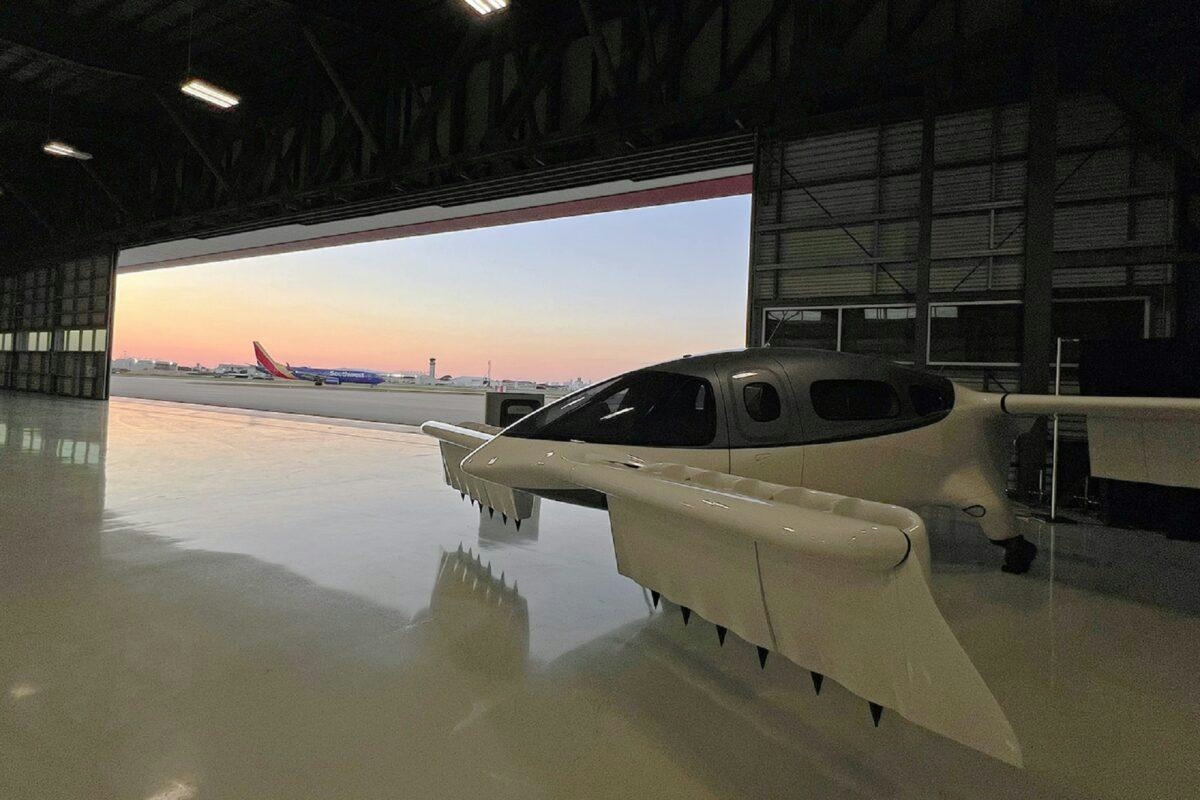
October 15, 2025By ePlane AI
Archer Secures Lilium eVTOL Patents Over Joby
0
0
Archer Aviation
Lilium Patents
eVTOL Technology

Archer Secures Lilium eVTOL Patents, Outpacing Joby Aviation

Archer Aviation has significantly bolstered its standing in the electric vertical takeoff and landing (eVTOL) industry by acquiring approximately 300 patents from the German developer Lilium for nearly $21 million. The California-based company announced the acquisition on Wednesday, having prevailed over rival Joby Aviation in a competitive bidding process. This strategic move grants Archer access to a substantial portfolio of advanced air mobility (AAM) technologies, including high-voltage systems, battery management, and innovative aircraft design. These assets are expected to intensify competition with Joby as both companies seek to dominate the emerging eVTOL market.

Lilium’s Legacy and Archer’s Expansion

Lilium, once recognized for its seven-passenger eVTOL jet featuring 30 ducted electric fans embedded in its wings, ceased operations in February after failing to secure essential funding. In contrast, Archer has raised over $1.3 billion in the past year and is rapidly expanding beyond its initial focus on passenger air taxi services. The company intends to leverage the newly acquired intellectual property to enter cargo and defense sectors, building on its strategic partnership with Anduril Industries for military applications.

The patents obtained from Lilium encompass a broad range of technologies, including ducted fan propulsion, electric propeller and engine systems, battery management, and flight controls. Archer highlighted that Lilium invested more than $1.5 billion in developing these innovations. The ducted fan technology, in particular, is seen as a potential catalyst for new developments in both light sport and regional air mobility sectors, with the capacity to influence future aircraft designs.

Market Developments and Industry Dynamics

Archer is currently conducting crewed flight testing of its Midnight air taxi and is developing an autonomous, hybrid-electric model aimed at civil and military logistics. The company’s aggressive market entry was underscored by recent public demonstration flights at the California International Air Show, signaling its readiness to compete on a global scale.

Joby Aviation responded with its own public flight demonstration at the same event and announced plans to launch passenger flights in Dubai next year. However, it remains uncertain whether Joby will require Federal Aviation Administration (FAA) certification for these international operations. The rivalry between Archer and Joby is expected to intensify as both companies vie for leadership in the nascent eVTOL market, where potential revenue streams include military contracts and ride-sharing services.

Industry consolidation is accelerating amid revised timelines for commercial eVTOL service launches. While some developers initially promised passenger flights as early as 2024, consulting firm SMG now projects that Archer, Joby, and Beta Technologies will not commence commercial operations until at least 2027. The sector has witnessed several high-profile exits: Lilium’s former battery plant was recently acquired by Germany’s Vaeridion, which plans to develop a nine-passenger electric aircraft, and Dutch firm Advanced Air Mobility Group is negotiating to purchase Lilium’s test facilities near Munich. Other notable departures include Volocopter, which sold its assets to the Chinese parent company of Diamond Aircraft, and U.S.-based Overair, which has also encountered significant challenges.

As Archer integrates Lilium’s pioneering technologies, the company appears well-positioned to influence the next phase of eVTOL innovation and competition. CEO Adam Goldstein remarked, “Lilium’s pioneering work advanced the frontier of eVTOL design and technology, and we’re excited to bring their cutting-edge technologies into the fold at Archer as we advance our product roadmap.”
More news
ICAO Chief Warns Aviation Must Accelerate Climate Action or Risk Losing Public Trust

ICAO Chief Warns Aviation Must Accelerate Climate Action or Risk Losing Public Trust

ICAO Chief Urges Aviation to Accelerate Climate Action Amid Growing Challenges As the global aviation sector prepares for the upcoming ICAO Aviation Climate Week, the International Civil Aviation Organization’s Secretary General, Juan Carlos Salazar, has issued a stark warning about the urgent need for accelerated climate action. Emphasizing the sector’s pivotal role in the global economy, Salazar underscored that the future of aviation hinges on its ability to achieve net-zero carbon emissions by 2050. He cautioned that failure to meet this target at the pace demanded by the climate crisis could result in a significant loss of public trust and political support. The Imperative for Decarbonization For decades, civil aviation has been a key driver of globalization and economic development. However, Salazar stressed that the industry must now demonstrate its capacity to adapt to a world increasingly constrained by climate imperatives. “The question is no longer whether aviation can decarbonize—it can,” he stated. “The real test is whether the global community is ready to make the tough choices, and to do so quickly enough.” While recent years have seen incremental improvements through enhanced efficiency, early adoption of sustainable aviation fuels (SAF), and operational optimizations, these measures alone are insufficient. The transformation required is systemic, global, and urgent. This urgency has been highlighted by recent disruptions, particularly in Europe, where geopolitical tensions in the Middle East have exposed the sector’s heavy dependence on fossil fuels. The resulting fuel supply challenges and soaring costs have sparked debates on how to manage immediate jet fuel shortages without undermining climate objectives. Some industry stakeholders have advocated for easing regulatory frameworks such as the European Union’s Emissions Trading System (ETS) and the RefuelEU initiative, seeking temporary relief amid the crisis. Conversely, environmental organizations argue that the current fuel challenges should reinforce, rather than weaken, commitments to stronger climate legislation. Bridging Ambition and Implementation Salazar warned that fragmented or uneven efforts to decarbonize risk not only missing critical climate targets but also eroding the public confidence essential for aviation’s long-term sustainability. ICAO’s Long-Term Global Aspirational Goal of net-zero carbon emissions by 2050 provides a unified direction, yet Salazar emphasized that “ambition without implementation will not deliver results.” He called for the coming decade to be defined by accelerated execution rather than new declarations. Achieving net-zero emissions will require unprecedented levels of investment and international cooperation. Encouragingly, there has been a notable increase in financing and innovation, ranging from advanced propulsion technologies and digitalized operations to large-scale investments in cleaner energy sources. Sustainable aviation fuels are projected to play a decisive role, potentially accounting for over half of the sector’s emissions reductions by mid-century. However, this transition demands substantial investment in production capacity, infrastructure, and supply chains, particularly in emerging and developing economies. To help close the gap between ambition and action, ICAO is expanding initiatives such as the Finvest Hub, which connects decarbonization projects with institutional and private capital, especially in regions with limited access to climate finance. Complementary programs like ACT-SAF and ACT-LTAG are assisting states in developing the necessary policy frameworks and technical expertise to support the energy transition. As the economic risks posed by climate change become increasingly apparent, Salazar concluded that proactive climate risk management is not only an environmental necessity but also a financial imperative. The aviation sector, he asserted, must act decisively or risk being left behind in a rapidly evolving global landscape.
Korean Air to Fully Integrate Asiana Airlines by December

Korean Air to Fully Integrate Asiana Airlines by December

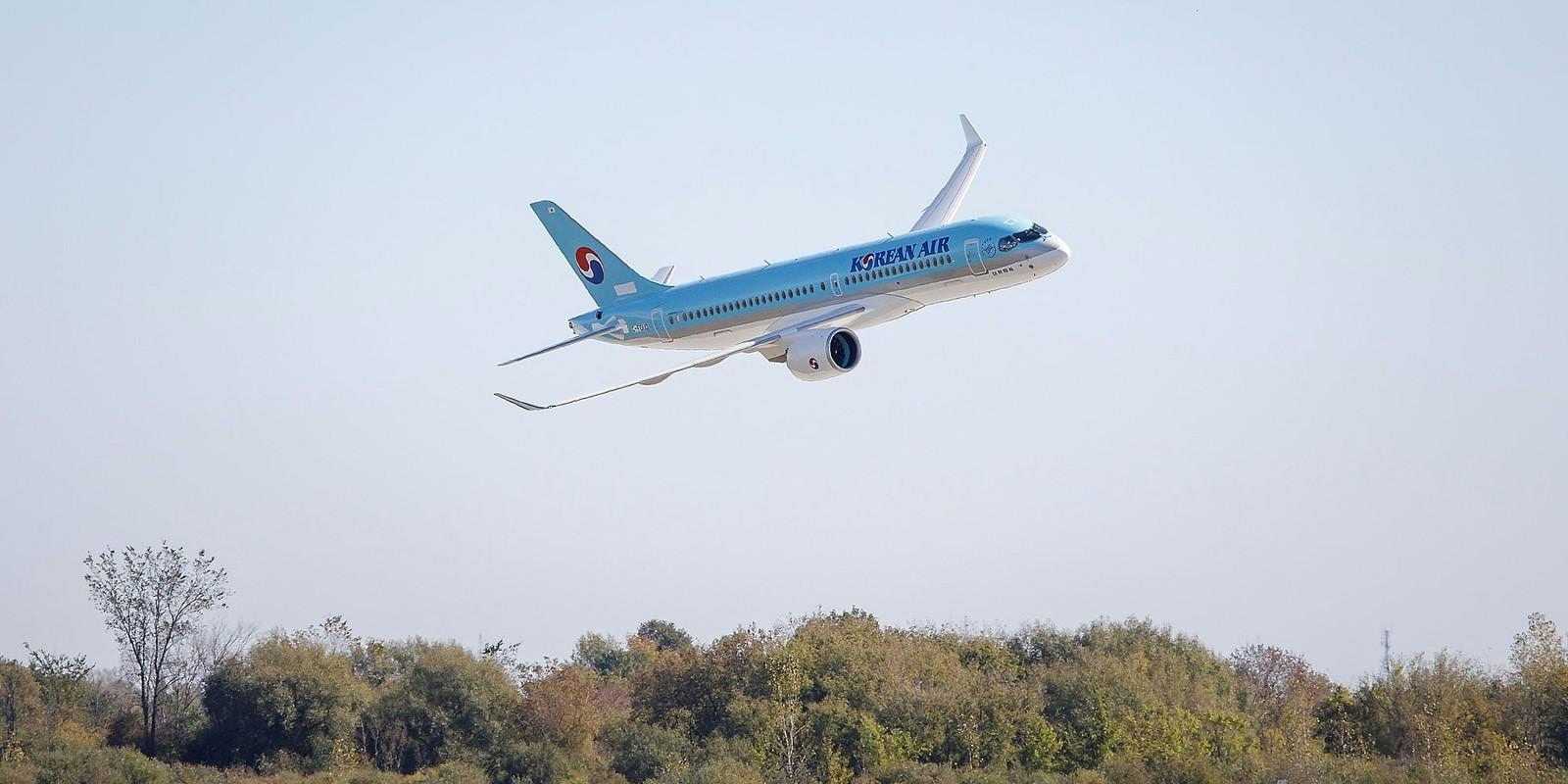
Korean Air to Fully Integrate Asiana Airlines by December 2026 After nearly six years of negotiations, regulatory scrutiny, and industry speculation, Korean Air is set to complete the full integration of Asiana Airlines by December 2026. This milestone marks the conclusion of one of the most protracted airline mergers in recent history, signaling a significant transformation in South Korea’s aviation sector. Finalization of the Merger Agreement The boards of both Korean Air and Asiana Airlines have approved the definitive merger agreement, with legal formalities scheduled for May 14, 2026. The consolidation process began with a share subscription agreement in November 2020 and advanced with Korean Air’s acquisition of a 63.9% stake in Asiana in December 2024. The merger aims to stabilize the domestic aviation market, which has faced considerable challenges due to pandemic-related disruptions. Upon completion, Korean Air will assume all of Asiana’s assets, liabilities, rights, obligations, and personnel, effectively becoming an integrated flag carrier by December 17, 2026. The combined airline will maintain a significant presence at Incheon International Airport while preserving Gimpo Airport as a convenient city hub, thereby enhancing its operational footprint. Regulatory and Operational Challenges Despite the clear trajectory toward integration, Korean Air must still obtain final approval from the Korean Ministry of Land, Infrastructure and Transport (MOLIT). This will be followed by amendments to its Operations Specifications (OpSpecs) to unify Asiana’s aircraft and safety systems under Korean Air’s Air Operator Certificate. Additionally, international regulatory filings will be necessary to harmonize safety management and operational protocols across the expanded network. The process of aligning operational systems and managing cultural integration between the two airlines is expected to be complex. Korean Air is investing in service enhancements, including lounge renovations, catering improvements, and terminal relocations, to elevate the passenger experience. The airline is also standardizing flight crew training and upgrading its Operations and Customer Centre, Cabin Crew Training Centre, and Aviation Health and Medical Centre to support the enlarged workforce. To accommodate the expanded fleet, Korean Air plans to establish a new engine maintenance plant and expand its Engine Test Cell facilities near Incheon. Market Implications and Industry Response The merger has attracted close attention from investors and industry analysts, who are monitoring the realization of financial synergies and operational efficiencies. Competitors are likely to respond with strategic adjustments, such as route realignments and service enhancements, to counterbalance the competitive advantages of the newly integrated carrier. The consolidation will also unify the frequent flyer programs of both airlines, offering customers a single, streamlined loyalty scheme. A Prolonged Path to Integration The integration process has been marked by delays, primarily due to regulatory hurdles and the necessity of multiple government approvals. While mergers of this scale typically conclude within a few years, the Korean Air-Asiana deal has extended to nearly six years, testing the patience of stakeholders and passengers alike. With the final steps now approaching, Korean Air is positioned to complete the merger by mid-December 2026, contingent on the absence of further regulatory obstacles. This development is poised to reshape South Korea’s aviation landscape and establish the combined entity as a formidable competitor in the global airline industry.
Malta Restarts Air Taxi Service to Gozo

Malta Restarts Air Taxi Service to Gozo

Malta Revives Air Taxi Service Connecting Malta and Gozo Malta has announced plans to reinstate an air taxi service linking Malta International Airport with the island of Gozo, aiming to enhance connectivity between the country’s two principal islands. Currently, the only direct connection is via ferry, a mode of transport that has long contributed to Gozo’s sense of “double insularity” and relative isolation from the mainland. Prime Minister Robert Abela introduced the initiative as part of a comprehensive package of over 100 commitments focused on Gozo, ahead of the general election scheduled for May 30. Infrastructure and Implementation Challenges Details regarding the timeline, financial outlay, and infrastructure requirements for the air taxi service remain undisclosed. The government is expected to utilize Gozo’s existing small paved airstrip, which presently serves primarily as a heliport for air ambulance operations. Previous attempts to establish such a service—including a 2016 proposal and a 2021 plan to extend the heliport’s runway—failed to come to fruition. The renewed effort reflects a continued governmental focus on improving transport links to Gozo, though significant logistical and regulatory hurdles persist. Industry Context and Regulatory Environment The initiative emerges amid a complex and rapidly evolving global urban air mobility sector. Regulatory challenges, market competition, and public acceptance continue to shape the viability of air taxi services worldwide. Leading international players such as Joby Aviation and Volocopter are actively developing electric vertical takeoff and landing (eVTOL) aircraft, which represent the technological foundation for such services. Joby Aviation’s partnership with Delta Air Lines is currently under investigation by the U.S. Trade Commission over alleged patent infringements, casting uncertainty over its near-term operations. Furthermore, Joby’s eVTOL aircraft, recently demonstrated in New York, has yet to receive Federal Aviation Administration (FAA) certification and requires substantial infrastructure development before commercial deployment can proceed. Volocopter’s recent launch of the VoloXPro eVTOL, aimed at the general aviation market, further intensifies competition within the sector. These developments highlight the operational and regulatory complexities Malta will need to address in order to successfully implement its air taxi service. Local Safety Considerations On the domestic front, safety concerns have been underscored by a recent go-around incident involving Malta Air, emphasizing the necessity for stringent safety protocols as new aviation services are introduced. The government’s ability to manage these risks, alongside the broader challenges of infrastructure and regulation, will be critical to the project’s success. As Malta advances its air taxi plans, it must carefully navigate both international industry dynamics and local operational realities. The initiative’s outcome will depend on a combination of political commitment, investment, and adaptability within a swiftly changing aviation landscape.
Understanding Changes in Aviation Insurance

Understanding Changes in Aviation Insurance

Understanding Changes in Aviation Insurance Aviation insurance, while often overlooked outside the industry, represents a dynamic and continually evolving sector. Driven by shifting market conditions, updated underwriting standards, and the integration of emerging technologies, professionals in this field face ongoing challenges in securing coverage for a diverse array of aviation-related risks. Unlike some other insurance segments, aviation insurance brokerage remains both resilient and profitable, offering a landscape rich with opportunities and complexities. Current Market Dynamics and Emerging Challenges The aviation insurance market is presently navigating a particularly intricate phase. Characterized by a soft yet fragile market environment, it is simultaneously experiencing the introduction of new technologies that enhance underwriting efficiency and an influx of capacity from new market entrants. These positive developments, however, are counterbalanced by rising claims frequency, escalating legal settlement costs, and a growing spectrum of emerging risks. Several factors are reshaping the risk landscape within aviation insurance. The cost of aircraft and engine repairs has increased significantly, influenced by ongoing supply chain disruptions and the growing complexity of aviation technology. Additionally, the phenomenon of social inflation—marked by higher settlement awards and so-called “nuclear verdicts”—is driving claims costs upward. Beyond these traditional concerns, new threats such as cybersecurity vulnerabilities, geophysical events, and severe weather patterns are adding further layers of risk for aircraft owners and operators. In response to these evolving challenges, insurers are revising their underwriting approaches. This often results in higher premiums and more stringent policy terms. Some insurers are innovating by developing specialized products tailored to address these novel risks, while others are collaborating to produce clearer and more comprehensive policy wordings. Recent industry data indicates a concerted effort to review and update policies, aiming to reduce ambiguity and better align coverage with the current risk environment. Distribution Channels in Aviation Insurance The distribution of aviation insurance to consumers occurs through several distinct channels. Direct-to-consumer sales remain rare, with only one U.S. insurer currently operating a true direct model that bypasses intermediaries. While this approach can reduce costs by eliminating broker commissions, it also restricts consumer choice; policyholders whose needs evolve beyond the insurer’s appetite may find themselves compelled to seek coverage elsewhere. The majority of domestic aviation insurers distribute their products through agents and brokers. It is important to distinguish between these roles: agents represent the insurer’s interests, whereas brokers owe a fiduciary duty to the client. In practice, nearly all non-captive professionals in aviation insurance function as brokers, which ultimately benefits consumers by prioritizing their needs and preferences. Another significant distribution mechanism involves Managing General Agents (MGAs). These specialized entities are contracted by insurers to manage underwriting, policy issuance, and occasionally claims handling. MGAs are particularly valuable when insurers enter niche markets where they lack in-house expertise. By combining seasoned underwriting knowledge with modern technological tools, MGAs facilitate the delivery of innovative insurance products tailored to complex aviation risks. Future Outlook As the aviation industry continues to advance, its insurance sector will inevitably adapt in tandem. Aircraft owners and operators are advised to remain vigilant regarding market trends, policy developments, and emerging risks. A thorough understanding of how insurers are evolving—through updated policy language, the introduction of new products, and shifting distribution models—will be essential to securing appropriate coverage in an environment marked by rapid change.
LOT Starts Retiring Embraer E175 Jets Ahead of Airbus A220 Deliveries

LOT Starts Retiring Embraer E175 Jets Ahead of Airbus A220 Deliveries

LOT Begins Retirement of Embraer E175 Jets in Preparation for Airbus A220 Introduction LOT Polish Airlines has initiated the phased retirement of its Embraer E175 aircraft as part of a broader strategy to modernize its regional fleet with the upcoming introduction of Airbus A220 jets. This development represents a notable shift for the Polish flag carrier, which has historically depended on Embraer’s E-Jet family for its regional operations. To date, two Embraer E175s have been withdrawn from service, with an additional two expected to be retired later this year. This restructuring aligns with LOT’s plans to receive its first Airbus A220 deliveries in 2027. Currently, the airline’s regional fleet includes four Embraer E170s, 13 E175s, eight E190s, 15 E195s, and three E195-E2s. LOT’s longstanding relationship with Embraer dates back to 2004 when it became the launch operator of the Embraer 170, underscoring the significance of this transition. Fleet Changes and Future Prospects Although LOT has not publicly disclosed the specific registrations of the retired aircraft, aviation data sources have identified one of the withdrawn jets as SP-LIA, which last operated a flight between Warsaw and Bydgoszcz on April 28. This aircraft had reportedly been inactive since November 2025. Another E175, registered SP-LIB, is believed to have left the fleet following its final flight on March 23 and has since been acquired by Executive Jet Support, likely for use as a source of spare parts. Additional E175s, SP-LIC and SP-LID, both leased from Beautech Power Systems, are anticipated to be retired later this year. The fleet renewal is closely tied to LOT’s recent order for 20 Airbus A220-100 and 20 A220-300 aircraft, announced at the 2025 Paris Air Show. Deliveries are scheduled to commence in 2027, beginning with the larger A220-300 variant. The agreement also includes options that could expand LOT’s A220 fleet to as many as 84 aircraft. The decision to select the A220 followed an extensive evaluation process that considered Embraer’s E2 family, a choice that surprised some industry observers given LOT’s historical affiliation with Embraer. Challenges and Industry Implications The transition to Airbus A220 jets is not without its challenges. Despite Embraer reporting record revenues and increasing deliveries, ongoing supply chain pressures may influence the timing of aircraft retirements and replacements. Concurrently, Airbus faces certification delays related to secondary cockpit barriers required by the Federal Aviation Administration (FAA), which could affect the delivery schedule of the A220s and, by extension, LOT’s fleet renewal timeline. These developments have attracted close attention from competitors, as supply chain constraints and certification issues prompt airlines to consider alternative fuel-efficient aircraft options. LOT’s strategic shift highlights the evolving dynamics of the regional aircraft market, where operational efficiency, regulatory compliance, and supply chain resilience are becoming increasingly pivotal in fleet planning decisions.
GATES USA SPAH Receives Approval from Panama Authorities

GATES USA SPAH Receives Approval from Panama Authorities

GATES USA SPAH Secures Panamanian Certification to Enhance Engine Maintenance Services GA Telesis Engine Services (GATES USA SPAH), a joint venture between GA Telesis and Air Transport Services Group, Inc., has obtained quality certification from Panamanian aviation authorities for its engine maintenance operations based in Wilmington, Ohio. This approval authorizes the company to perform maintenance on Panamanian-registered aircraft, thereby expanding its operational reach across the Americas. The certification covers support for both single-aisle and wide-body aircraft, reinforcing GATES USA SPAH’s position as a key provider in the region. Strategic Location and Service Capabilities Operating from its Wilmington facility, GATES USA SPAH offers rapid turnaround engine maintenance services to a growing global clientele. The strategic location facilitates expedited service delivery, catering to both domestic and international carriers that require compliant and efficient engine maintenance solutions. This capability is particularly valuable for airlines operating through major hubs, enabling them to minimize aircraft downtime. Jason Reed, President of GATES USA SPAH, highlighted the importance of the certification, stating, “This highly sought-after certification strengthens our ability to support regional and global airlines operating through CVG and international hubs. Our customers specifically requested CF6 and CFM56 engine maintenance support under this new approval, and we are now able to deliver both scheduled and unscheduled maintenance services for Panamanian-registered aircraft.” Industry Context and Market Challenges The certification arrives amid a challenging environment for the aviation maintenance sector. Recent financial reports, including revenue shortfalls disclosed by Gates Industrial Corporation in its first quarter 2026 earnings, have intensified scrutiny of industry performance. Competitor strategies are also being influenced by broader market dynamics, such as geopolitical tensions and economic uncertainties, as reflected in Omnicell’s financial results for the same period. Furthermore, market perceptions of GATES USA SPAH’s expansion may be affected by external factors unrelated to its core business. Notably, the Gates Foundation has recently faced scrutiny over its associations with Jeffrey Epstein, a development that, while separate from the engine services operations, could influence stakeholder confidence and market reactions. Despite these complexities, GATES USA SPAH’s Panamanian certification represents a significant advancement in its service capabilities, underscoring its commitment to supporting airlines throughout the Americas with reliable and compliant engine maintenance solutions.
Cyprus aviation firm secures planning licence for first-of-its-kind engine test facility in Aradippou

Cyprus aviation firm secures planning licence for first-of-its-kind engine test facility in Aradippou

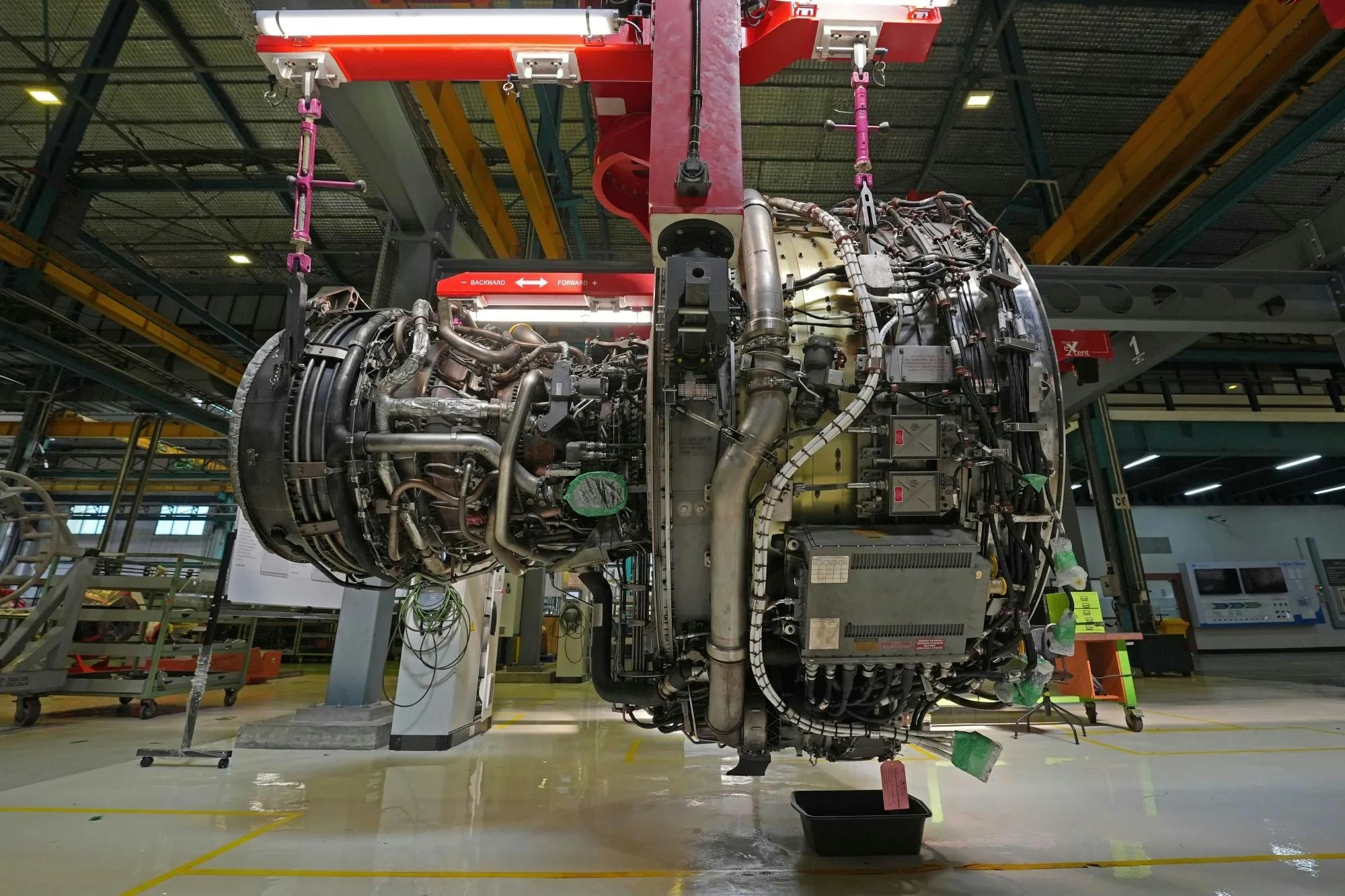
Cyprus Aviation Firm Secures Planning Licence for Pioneering Engine Test Facility in Aradippou United Aerospace Maintenance Company (UAMCO) has obtained approval from the Urban Planning Authority to build a dedicated aircraft engine test cell facility within the Aradippou Industrial Area, marking a significant step in its expansion efforts in Cyprus. This new installation will incorporate advanced technology from the global aerospace manufacturer Safran and is poised to become the first facility of its kind across Europe, the Middle East, Africa, and Asia. Notably, it will feature an innovative design that replaces conventional overhead cranes with an automated “Spider” manoeuvrability system, enhancing operational efficiency and safety. Facility Capabilities and Strategic Importance The planned facility is designed to test approximately 250 aircraft engines annually, providing comprehensive testing, evaluation, and certification services under controlled conditions following maintenance and repair activities. This development forms a crucial part of UAMCO’s broader strategy to expand its Maintenance, Repair, and Overhaul (MRO) operations within Cyprus, reinforcing the company’s commitment to advancing aerospace capabilities in the region. The architectural and engineering responsibilities for the project have been entrusted to DMA Architects-Engineers, a Larnaca-based firm with over 40 years of experience in the sector. Construction will be undertaken by GECO Constructions, a company founded in 2005 by Giorgos Savva and Konstantinos Savva, bringing local expertise to the project’s execution. Challenges and Market Context While securing the planning licence represents a major milestone, UAMCO faces several challenges as it progresses. Ensuring regulatory compliance, securing adequate funding, and competing with established players in the aviation technology sector will be critical factors influencing the project’s success. The broader market is witnessing a surge in investment in advanced aviation technologies, exemplified by recent funding rounds for companies such as Reliable Robotics and initiatives in sustainable aviation fuel development in Egypt. These trends underscore a rapidly evolving industry landscape that may impact UAMCO’s operational strategies and open opportunities for new partnerships or investor engagement. Industry analysts suggest that UAMCO’s innovative approach could prompt competitors to reconsider their market strategies or enter the engine testing domain directly. As the aviation sector increasingly prioritizes technological innovation and sustainability, the establishment of this facility in Aradippou positions Cyprus as an emerging hub for aerospace innovation across the region.
FAA Completes Initial Phase of NOTAM Overhaul

FAA Completes Initial Phase of NOTAM Overhaul

FAA Completes Initial Phase of NOTAM Overhaul The Federal Aviation Administration (FAA) has announced the successful completion of the first phase in its extensive modernization of the “Notices to Airmen” (NOTAM) system, a critical network that provides real-time safety and operational alerts to pilots and air traffic controllers across the United States. This achievement represents a major step forward in updating an outdated infrastructure that has faced criticism for its reliability and susceptibility to failure. Modernization Efforts and Milestones The overhaul, accelerated under the current administration, seeks to prevent incidents similar to the nationwide ground stop in January 2023, which was triggered by a failure in the legacy NOTAM system and resulted in a temporary halt of flights across the country. U.S. Transportation Secretary Sean P. Duffy characterized the previous NOTAM platform as a “40-year-old aviation alert system” that was nearing collapse when the administration took office. Although the Department of Transportation initially projected a full transition by late 2027, the FAA advanced the timeline by migrating the system to a cloud-based environment in April 2026 and completing the first phase well ahead of schedule. FAA Administrator Bryan Bedford highlighted the benefits of the upgraded system, stating that it will improve both safety and operational reliability throughout the National Airspace System. He emphasized the agency’s commitment to developing a more resilient and efficient aviation infrastructure capable of supporting the demands of the world’s busiest airspace. Importance and Challenges of the NOTAM System The NOTAM system plays a central role in aviation operations by disseminating time-sensitive information such as runway closures, navigational outages, temporary flight restrictions, and other hazards that could affect flight safety. Transitioning to a modern, cloud-based platform is expected to enhance communication capabilities and bolster the overall resilience of U.S. aviation networks. Nonetheless, the transition presents significant challenges. Moving from a decades-old system to a new digital platform involves considerable complexity, including the need to ensure that all users—from pilots to air traffic controllers—receive adequate training on the updated system. Maintaining safety and operational continuity throughout the transition remains a paramount concern for the FAA. Industry Response and Future Outlook Reactions within the aviation industry have been mixed. While some stakeholders initially expressed skepticism regarding the reliability of the new system, there is increasing optimism about its potential to enhance safety and efficiency. Industry competitors and organizations have responded in diverse ways; some endorse the initiative for its anticipated safety improvements, while others raise concerns about the costs and possible disruptions associated with the transition. The FAA confirmed that work on subsequent phases of the modernization program is ongoing, forming part of a broader strategy to strengthen the long-term reliability and resilience of the nation’s aviation infrastructure.
Two Senators Urge FAA to Examine Effects of Reduced Flight Attendant Staffing

Two Senators Urge FAA to Examine Effects of Reduced Flight Attendant Staffing

Senators Call on FAA to Review Impact of Reduced Flight Attendant Staffing Two Democratic senators have formally urged the Federal Aviation Administration (FAA) to address concerns regarding the agency’s recent approvals allowing airlines to reduce flight attendant staffing on certain long-haul widebody flights. Senators Tammy Duckworth of Illinois and Tammy Baldwin of Wisconsin highlighted potential safety risks stemming from current FAA regulations, which may result in fewer flight attendants than emergency exit doors during evacuations, potentially compromising passenger safety. In a letter obtained by CBS News, the senators emphasized the critical role of flight attendants in emergency situations, stating that without a certified attendant stationed at every dual-aisle floor-level exit, passengers could be left vulnerable at a moment when decisive and skilled guidance is essential. They further warned that reduced staffing could exacerbate risks if a flight attendant becomes incapacitated during an emergency, leaving exits unattended. FAA Regulations and Industry Practices Under Scrutiny The FAA mandates one flight attendant per 50 passengers, a standard that has enabled major carriers such as American Airlines, Delta Air Lines, and United Airlines to secure approval for reduced staffing on select aircraft. Duckworth and Baldwin argue that this policy undermines the intent of evacuation certification and creates a hazardous safety gap. They pointed out that a single flight attendant might be responsible for managing two emergency exits located as far as 19 feet apart, overseeing the evacuation of potentially hundreds of passengers. Last year, the FAA certified American Airlines’ new 787-9P seating configuration with a minimum of seven flight attendants, despite the aircraft having eight exit doors. American Airlines noted that it typically staffs eight to ten flight attendants on these flights depending on distance, but the lower minimum provides flexibility in cases of crew unavailability due to illness or other factors. The FAA defended its position by explaining that flight attendant requirements are based on seating capacity and that American Airlines successfully completed evacuation demonstrations with seven attendants on the 787-9P, which has fewer seats than other 787 variants. While airlines must pass FAA evacuation demonstrations for each seating configuration to establish minimum staffing levels, they retain the discretion to schedule additional crew members beyond the minimum. However, Sara Nelson, president of the Association of Flight Attendants, cautioned that assigning one attendant to cover two exits can lead to confusion and heightened risk during evacuations. She referenced past incidents where unattended exits contributed to injuries and increased exposure to smoke. Broader Legislative and Industry Context The issue of flight attendant staffing has drawn wider attention from lawmakers, with Senators Mike Lee and Elizabeth Warren also calling on the FAA to investigate the broader implications of reduced crew numbers. Concurrently, the FAA has taken operational measures to address challenges at Chicago O’Hare International Airport, including cutting flights this summer to alleviate delays and cancellations amid intensified competition between United and American Airlines for gate access. In a related labor development, United Airlines recently ratified a new contract that will increase flight attendant pay to over $100 per hour and provide a $740 million lump sum payout. However, the agreement does not include the profit-sharing provisions found in American Airlines’ contract, underscoring ongoing differences in labor negotiations as airlines adapt to evolving staffing requirements and operational pressures.
Projected Hourly Pay for U.S. Major Airline Captains in 2026

Projected Hourly Pay for U.S. Major Airline Captains in 2026

Projected Hourly Pay for U.S. Major Airline Captains in 2026 U.S. commercial airline pilots continue to rank among the highest-paid professionals globally, with the Bureau of Labor Statistics reporting an average salary near $200,000 in 2024. However, this average conceals substantial disparities between entry-level first officers and veteran captains, particularly within the nation’s largest carriers. Captains at major U.S. airlines—widely regarded as the apex of the profession—command some of the industry’s most lucrative compensation packages. Defining Major Airlines and Pay Structures The classification of a “major airline” in the United States is complex. The Department of Transportation currently recognizes 17 major carriers following the recent collapse of Spirit Airlines. Industry focus often centers on the “Big Three” carriers—United, Delta, and American—or the “Big Four” when Southwest Airlines is included. Alaska Airlines, especially after acquiring Hawaiian Airlines, is increasingly considered a fifth major player in this group. Delta Air Lines, the world’s most valuable publicly traded airline with a market capitalization approaching $48 billion, operates a mainline fleet of approximately 1,000 aircraft, including a significant number of widebody jets. Delta’s pay scale, similar to other major carriers, is structured around experience and aircraft type, with the highest salaries awarded to captains flying widebody aircraft. Industry sources project that a first-year first officer at Delta in 2026 will earn around $117,735. Captains with six years of experience are expected to make approximately $334,178, while senior captains with 12 years of tenure could see earnings near $349,540. These figures align with recent estimates, though actual compensation may be 10 to 30 percent higher when factoring in bonuses and allowances. United Airlines, which operates the world’s largest mainline fleet of about 1,107 aircraft and holds the second-largest widebody fleet globally, remains a top destination for experienced captains. United’s compensation packages are similarly competitive, reflecting the airline’s scale and operational complexity. Industry Challenges and Future Outlook Looking toward 2026, several factors are anticipated to influence pilot compensation and airline strategies. Rising jet fuel costs are exerting pressure on airline profitability, potentially leading to fare increases and operational adjustments. Concurrently, the industry is moving toward a more professionalized workforce. Major carriers such as Delta are reducing part-time employment, a shift that may increase fixed labor costs and reduce operational flexibility during economic downturns. The competitive landscape is also undergoing significant change. United Airlines is reportedly exploring a potential mega-merger with American Airlines, a move that would face intense antitrust scrutiny and present substantial operational integration challenges. Such consolidation could further impact pilot pay scales and employment conditions across the industry. While captains at major U.S. airlines are projected to maintain some of the highest salaries in aviation by 2026, their compensation will be shaped by broader economic pressures, evolving labor practices, and potential industry consolidation. As airlines adapt to rising costs and a changing workforce, pilot pay and career trajectories will continue to reflect the dynamic nature of the sector.
line