
Orchestrer les insights d’IA pour les transformer en actions

Tendances
Categories
Boeing to Modify and Upgrade About 30 Early 777X Jets Before Delivery
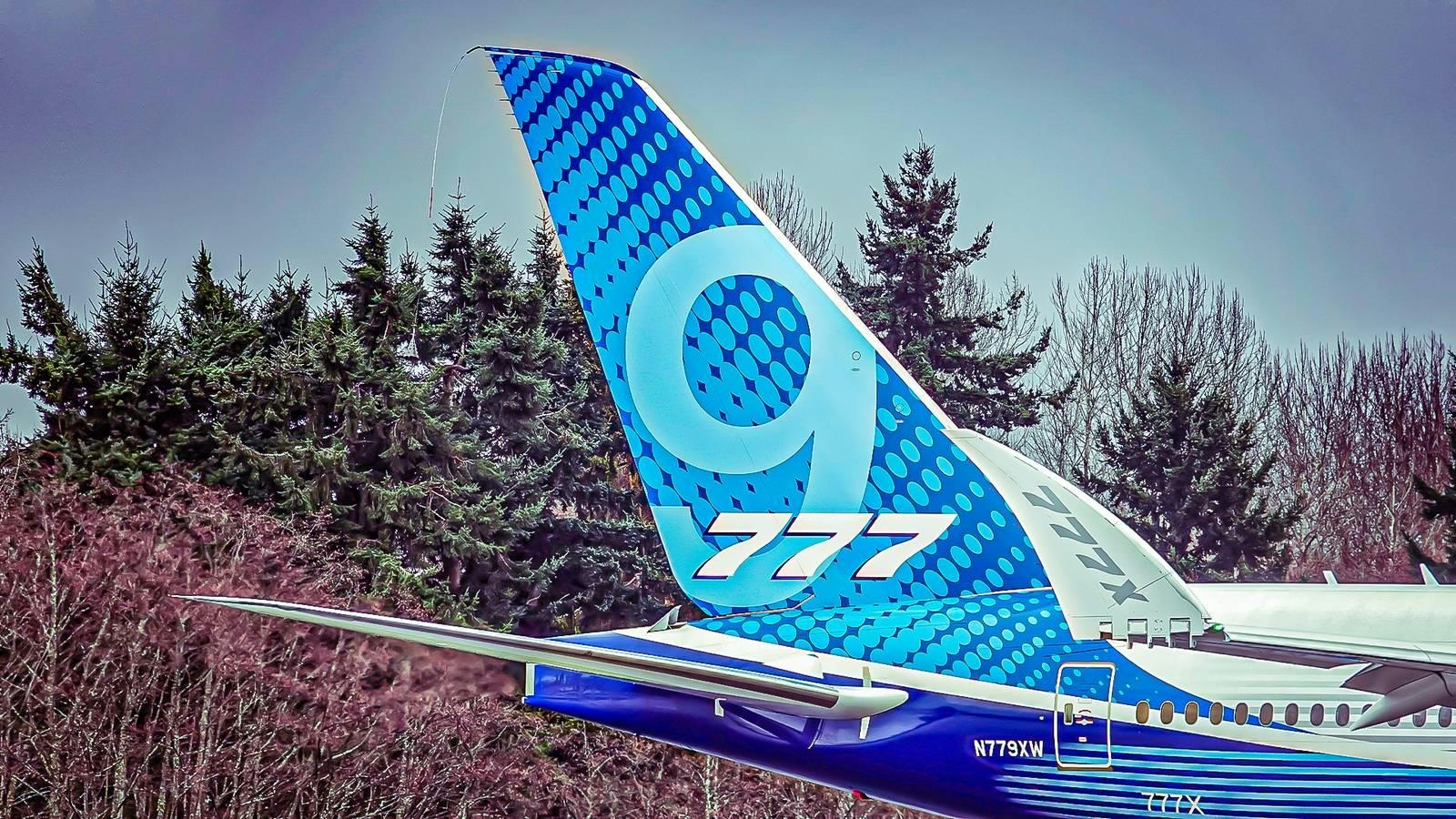
Boeing to Modify and Upgrade About 30 Early 777X Jets Before Delivery
Extensive Retrofit Effort Amid Certification Progress
Boeing has announced plans to modify approximately 30 of the earliest-built 777X aircraft to ensure they meet delivery standards as the program advances toward certification. The company revealed this significant upgrade initiative during its first-quarter briefing, underscoring the technical complexities and financial challenges involved in bringing these early production jets up to the latest specifications.
The 777X program, which has experienced multiple delays, is currently progressing through critical certification phases. Boeing maintains its expectation of initial deliveries in 2025, although the process of retrofitting early airframes will extend over several years. Chief Executive Kelly Ortberg described the incorporation of design changes as a “pretty massive activity,” explaining that early production was essential to “get all the learning” but now necessitates substantial rework.
The extent of modifications varies across the fleet, with older aircraft requiring more comprehensive structural changes, while newer units need only minor adjustments. “We go back in and we incorporate all those changes before we make the delivery,” Ortberg said. To manage this complex task, Boeing has established a dedicated team focused on standardizing the configuration of all affected jets prior to delivery. “Each airplane has a different work scope,” he added, highlighting the intricacy of the undertaking.
Financial and Market Implications
This large-scale retrofit introduces additional costs that may affect Boeing’s revenue and profit outlook, raising concerns among investors about the financial impact. While some analysts express apprehension over potential delays and escalating expenses, others view the steady progress toward certification as a positive development. Boeing’s ability to efficiently execute these modifications will be closely scrutinized, particularly as airlines increasingly prioritize fuel-efficient, twin-engine aircraft such as the 777X.
Competitors are also observing the situation, with some carriers potentially exploring alternative aircraft options should the modification process disrupt delivery schedules. The broader industry trend toward economical, next-generation jets intensifies the pressure on Boeing to adhere to its revised timeline and fulfill performance commitments.
Certification Milestones and Technical Challenges
The certification of the 777-9 variant has advanced to the Type Inspection Authorization (TIA) phase 4a, which focuses on testing in natural icing conditions. Ortberg emphasized the importance of completing this phase while suitable weather persists in Alaska. The subsequent stage, TIA 4b, encompassing a more extensive set of tests, is anticipated shortly, representing another key milestone in the flight test program.
Meanwhile, GE Aerospace continues to address an issue with the GE9X engine. Ortberg noted that although periodic inspections are required, this has not disrupted flight testing. “We’re having to do periodic inspection, but we’re able to incorporate that and keep the airplanes flying,” he said.
As Boeing moves forward, its primary focus for the remainder of the year will be completing these upgrades and advancing the 777X toward certification and delivery, navigating both technical challenges and evolving market demands.

Etihad Airways Suspends Airbus A380 Flights on Key Route

Aditya Birla Group Seeks Approval for Aircraft Leasing in GIFT City

Qatar Airways Highlights Innovation and Connectivity at Arabian Travel Market 2026

Hong Kong's Five-Year Plan Includes Andrew Fan's Aircraft Parts Processing Hub Proposal

ACIA Aero Leasing Delivers ATR72-600 to Air Nostrum

RTX Appoints Jill Albertelli as Head of Pratt & Whitney

TAT Technologies Joins Beyond Aero Hydrogen Aircraft Program

AURAK Study Highlights Barriers to Air Taxi Adoption in Emerging Economies

Xiamen Air Selects Altitude for 787 Maintenance at Heathrow

Etihad and Swissport Extend Global Partnership
