
Orchestrer les insights d’IA pour les transformer en actions

Tendances
Categories
British Airways Reduces Business Class Seats in Boeing 747 Replacement
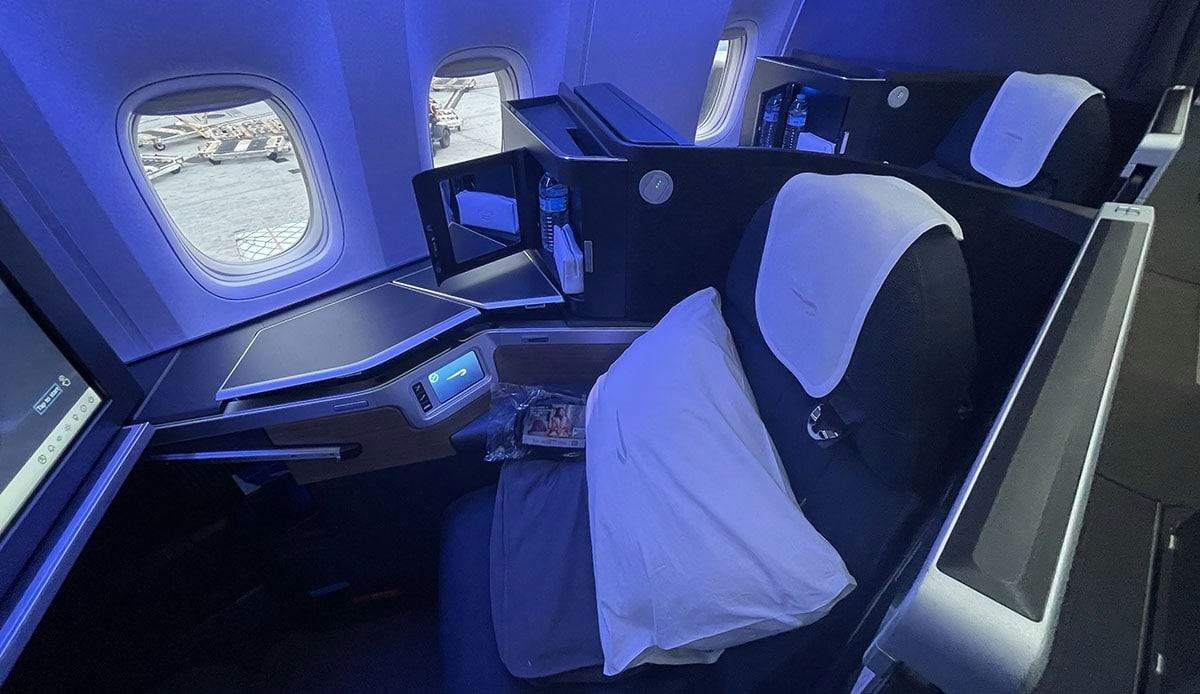
British Airways Reduces Business Class Seats in Boeing 747 Replacement
Transition from the Boeing 747 to the Airbus A350-1000
British Airways’ decision to retire its iconic Boeing 747 fleet in favor of smaller, more fuel-efficient twin-engine aircraft has led to a notable reduction in business class seating capacity. The Boeing 747-400, a long-standing fixture in the airline’s fleet, accommodated 86 business class seats. Its replacement, the Airbus A350-1000, configured in a three-class layout with a total of 331 seats, offers only 56 business class seats. This decrease reflects the A350-1000’s overall lower passenger capacity compared to the 747-400.
Maintaining the previous number of business class seats on the A350-1000 would necessitate significant reductions in economy and premium economy cabins, a trade-off that British Airways has deemed impractical given the need to balance demand across all travel classes. The shift to the A350-1000 aligns with broader industry trends favoring more efficient aircraft amid rising operational costs and evolving market dynamics.
Impact of the COVID-19 Pandemic and Fleet Disposition
The COVID-19 pandemic accelerated British Airways’ retirement of its 31 Boeing 747-400s, a process that might otherwise have spanned several years. The airline announced in July that all remaining 747s had completed their final commercial flights, citing the pandemic’s devastating impact on the aviation sector. This rapid fleet transition was facilitated by the sharp decline in travel demand during the crisis.
Following retirement, the 747s have been dispersed across various locations in Europe. Some aircraft have been preserved for display, including two at Dunsfold, England, and one retaining the historic BOAC livery, honoring British Airways’ heritage. Others have been scrapped or stored at sites in England, Spain, and Wales, with some aircraft facing damage such as fire incidents during dismantling.
Legacy of the Boeing 747 and Business Class Innovation
The Boeing 747 holds a distinguished place in British Airways’ history, particularly as the platform for the airline’s pioneering introduction of the world’s first lie-flat business class seat. In collaboration with London-based design firm Tangerine, British Airways developed the innovative yin-yang seat layout, which maximized cabin space by alternating forward and rear-facing seats. This product launched in March 2000 on the London–New York route, offering an unprecedented 96 business class seats—significantly more than the current A350-1000 configuration.
Industry Context and Passenger Implications
British Airways’ reduction in business class capacity occurs amid rising operating costs and increasing geopolitical uncertainties that are prompting consolidation within European aviation. This strategic adjustment may lead to dissatisfaction among passengers, particularly families and frequent business travelers who prioritize comfort and space. At the same time, competitors may capitalize on this opportunity to enhance their premium offerings, potentially widening the gap between airlines with strong business class products and those with more limited services—a trend already visible among U.S. carriers.
As British Airways navigates these challenges and adapts to a transforming aviation landscape, the legacy of the 747 and its groundbreaking business class service continues to serve as a benchmark for premium travel.

Hong Kong's Five-Year Plan Includes Andrew Fan's Aircraft Parts Processing Hub Proposal

ACIA Aero Leasing Delivers ATR72-600 to Air Nostrum

RTX Appoints Jill Albertelli as Head of Pratt & Whitney

TAT Technologies Joins Beyond Aero Hydrogen Aircraft Program

AURAK Study Highlights Barriers to Air Taxi Adoption in Emerging Economies

Xiamen Air Selects Altitude for 787 Maintenance at Heathrow

Etihad and Swissport Extend Global Partnership

Sepehran Airlines B737 Returns to Mashhad After Tyre and Engine Issues

Etihad Deploys Widebody Fleet to Meet Strong Demand

Korean Air Finalizes $36.2 Billion Deal with Boeing
