
Orchestrer les insights d’IA pour les transformer en actions

Tendances
Categories
Delta Marks Earth Month with Innovation Initiatives
Delta Marks Earth Month with Innovation Initiatives
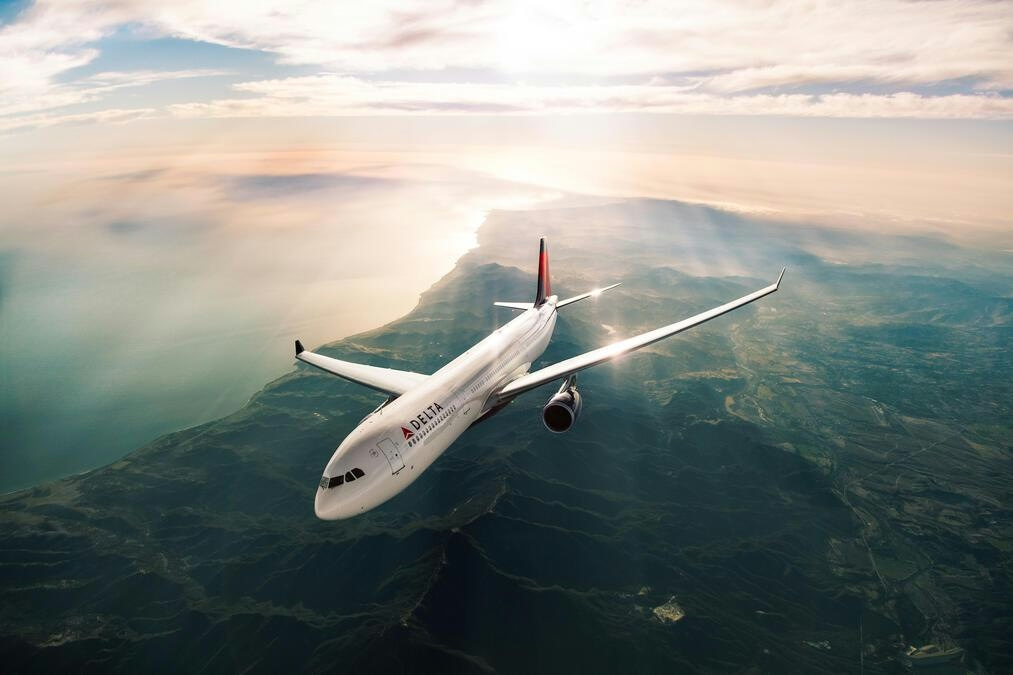
Delta Air Lines is concluding Earth Month by showcasing a range of technological advancements aimed at reducing its carbon footprint and reshaping the travel experience. While Earth Month serves as a platform to highlight environmental progress, Delta stresses that its dedication to sustainability is continuous, focusing on the aircraft it operates, the manner in which it flies, and the fuels it employs.
Advancements in Fleet Efficiency: VCT Finlets Installation
In a significant move to enhance fuel efficiency, Delta has completed the installation of Vortex Control Technologies (VCT) finlets across its entire fleet of Boeing 737-800 and 737-900ER aircraft, encompassing 240 planes. This initiative is intended to lower fuel consumption and carbon emissions while improving operational efficiency—an imperative amid persistent fuel supply challenges. The decision followed comprehensive in-service evaluations, including flight testing and computational fluid dynamics analyses. By investing in proven technologies such as VCT finlets, Delta demonstrates its commitment to achieving tangible environmental and operational gains without compromising safety, reliability, or customer experience.
Digital Twin Technology Enhances Operations at Atlanta Hub
Delta has introduced an innovative digital twin of its Atlanta hub, developed in collaboration with the Aerospace Systems Design Laboratory at Georgia Tech. This virtual model replicates a full day of airport operations under various conditions, allowing teams to optimize decision-making and evaluate the impact of operational choices on fuel consumption before aircraft depart the gate.
The technology offers substantial benefits, including significant fuel savings given that dual-engine taxiing consumes approximately three gallons of fuel per minute. With nearly 1,000 daily flights at Atlanta, even modest efficiency improvements can lead to considerable reductions in fuel use. Additionally, the digital twin enhances operational resilience by enabling teams to simulate recovery strategies during irregular operations, thereby improving reliability amid disruptions. These advancements not only support Delta’s sustainability objectives but also improve the customer experience by reducing taxi times and facilitating smoother recovery during adverse weather events. Building on the success in Atlanta, Delta plans to extend this technology to its operations at JFK Airport, one of the world’s most complex ramp environments.
Air Taxi Ambitions Amid Industry Challenges
Delta’s collaboration with Joby Aviation, initiated in 2023 through its Sustainable Skies Lab, seeks to transform airport access by introducing electric air taxis. However, this initiative faces uncertainty due to an ongoing U.S. Trade Commission investigation that threatens to disrupt the partnership and potentially hinder Delta’s air taxi ambitions.
These challenges arise as the airline industry’s commitment to achieving net-zero emissions by 2050 encounters growing scrutiny. Delta has recently withdrawn a key climate target and moderated another, signaling a retreat from some of its more ambitious environmental goals. This shift underscores the complex dynamics between innovation, regulatory pressures, and market forces as Delta navigates its evolving sustainability strategy.
Looking Ahead
Despite these obstacles, Delta continues to invest in technologies and operational enhancements that deliver both environmental benefits and improved customer experiences. The airline’s approach reflects the broader challenges and opportunities confronting the aviation sector as it strives to balance innovation, regulatory compliance, and shifting climate commitments.

Etihad Airways Suspends Airbus A380 Flights on Key Route

Aditya Birla Group Seeks Approval for Aircraft Leasing in GIFT City

Qatar Airways Highlights Innovation and Connectivity at Arabian Travel Market 2026

Hong Kong's Five-Year Plan Includes Andrew Fan's Aircraft Parts Processing Hub Proposal

ACIA Aero Leasing Delivers ATR72-600 to Air Nostrum

RTX Appoints Jill Albertelli as Head of Pratt & Whitney

TAT Technologies Joins Beyond Aero Hydrogen Aircraft Program

AURAK Study Highlights Barriers to Air Taxi Adoption in Emerging Economies

Xiamen Air Selects Altitude for 787 Maintenance at Heathrow

Etihad and Swissport Extend Global Partnership
