Image

Orchestrer les insights d’IA pour les transformer en actions

Inscrivez-vous dès aujourd’hui sur la liste d’attente d’AeroGenie !

Tendances

Categories

EFW Secures New A330 Freighter Conversion Contract in China
February 12, 2026By ePlane AI
EFW Secures New A330 Freighter Conversion Contract in China
0
0
EFW
A330 Freighter Conversion
China Aviation Market

EFW Secures New A330 Freighter Conversion Contract in China

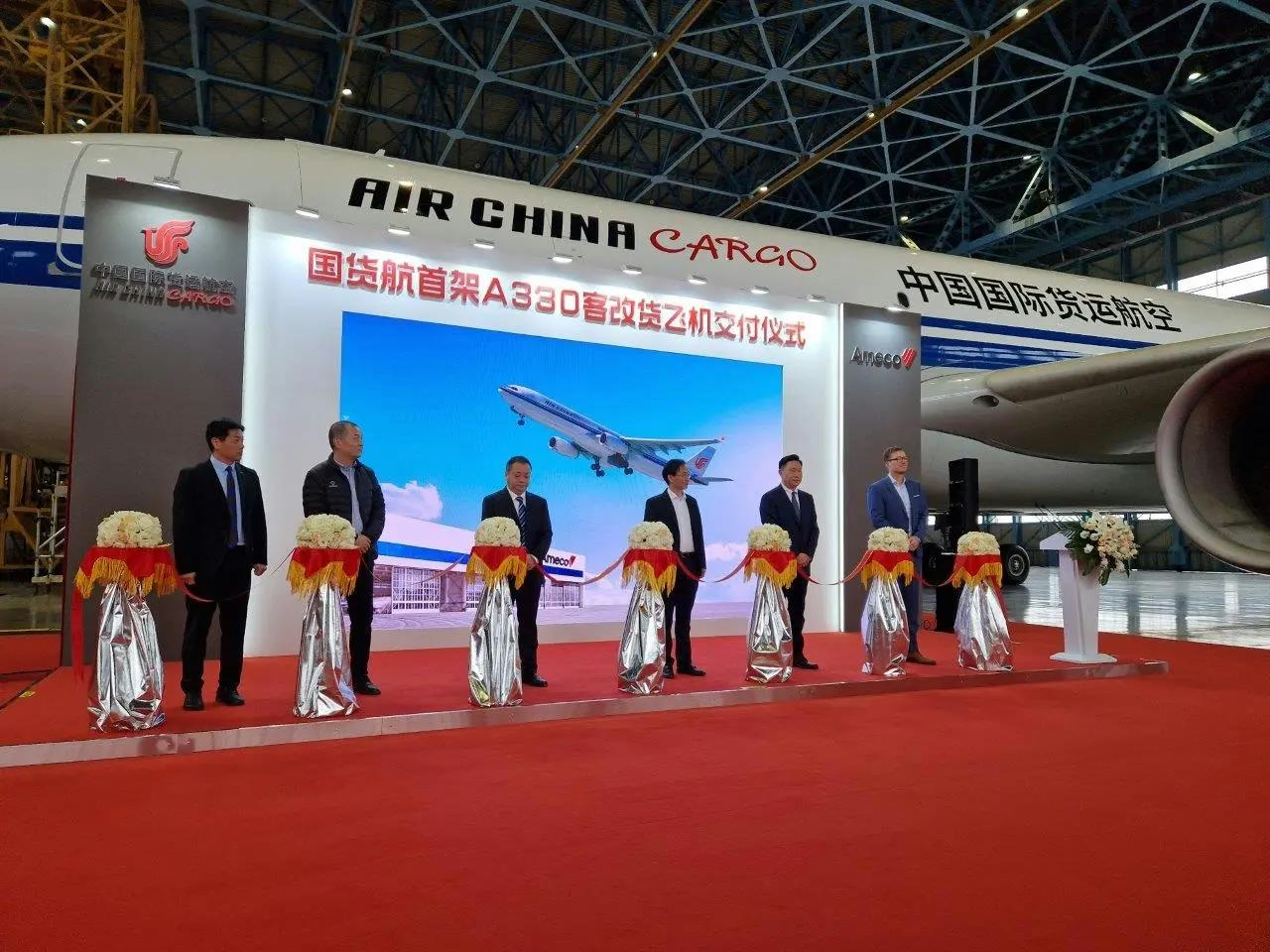
Elbe Flugzeugwerke (EFW), the joint venture between ST Engineering and Airbus, has entered into a new contract with Hengqin Winglet Aircraft Technology to convert Airbus A330 passenger aircraft into freighters. This agreement marks Hengqin Winglet’s inaugural involvement in EFW’s Airbus A330 passenger-to-freighter (P2F) programme, signaling an expansion of EFW’s footprint within China’s rapidly growing aviation market.

Details of the Conversion Agreement

Under the terms of the contract, EFW will conduct the A330P2F conversions at a partner facility located in China, with work slated to commence in mid-2026. The technical planning and certification processes will be overseen from EFW’s headquarters in Dresden, Germany. James Huang, Chief Executive Officer of Hengqin Winglet, emphasized the strategic nature of the collaboration, highlighting the company’s expertise in leasing, trading, and technical aircraft management as key factors in their decision to convert their A330 aircraft into advanced freighters.

The deal arrives amid robust growth in China’s aviation sector, driven primarily by surging demand in express logistics and cross-border e-commerce. This dynamic is prompting fleet expansions among operators and lessors, positioning China as a critical market for freighter conversions. Jordi Boto, CEO of EFW, expressed enthusiasm about welcoming Hengqin Winglet to the EFW family, underscoring the A330P2F as a leading solution for the medium-sized air freighter segment and anticipating collaborative efforts to expand Hengqin Winglet’s converted fleet.

Challenges and Market Implications

Despite the promising outlook, EFW faces notable challenges in executing this contract. The company must contend with competition from other aircraft conversion specialists eager to capitalize on the region’s burgeoning demand. Additionally, managing the conversion process at a partner site in China introduces logistical complexities, including ensuring adherence to local aviation regulations and maintaining consistent quality standards across international operations.

Industry analysts suggest that this contract may stimulate further demand for freighter conversions as China’s aviation market continues to expand. Competitors are likely to respond by enhancing their conversion capabilities or pursuing similar agreements within the region. While concerns persist regarding potential overcapacity in China’s widebody market, Airbus maintains a positive long-term outlook on demand, a perspective that indirectly supports EFW’s strategic positioning and the sustained interest in aircraft conversions.

With this latest contract, EFW reinforces its presence in China, aligning itself to address the evolving requirements of the global air cargo industry.

More news
LOT Starts Retiring Embraer E175 Jets Ahead of Airbus A220 Deliveries

LOT Starts Retiring Embraer E175 Jets Ahead of Airbus A220 Deliveries

LOT Begins Retirement of Embraer E175 Jets in Preparation for Airbus A220 Introduction LOT Polish Airlines has initiated the phased retirement of its Embraer E175 aircraft as part of a broader strategy to modernize its regional fleet with the upcoming introduction of Airbus A220 jets. This development represents a notable shift for the Polish flag carrier, which has historically depended on Embraer’s E-Jet family for its regional operations. To date, two Embraer E175s have been withdrawn from service, with an additional two expected to be retired later this year. This restructuring aligns with LOT’s plans to receive its first Airbus A220 deliveries in 2027. Currently, the airline’s regional fleet includes four Embraer E170s, 13 E175s, eight E190s, 15 E195s, and three E195-E2s. LOT’s longstanding relationship with Embraer dates back to 2004 when it became the launch operator of the Embraer 170, underscoring the significance of this transition. Fleet Changes and Future Prospects Although LOT has not publicly disclosed the specific registrations of the retired aircraft, aviation data sources have identified one of the withdrawn jets as SP-LIA, which last operated a flight between Warsaw and Bydgoszcz on April 28. This aircraft had reportedly been inactive since November 2025. Another E175, registered SP-LIB, is believed to have left the fleet following its final flight on March 23 and has since been acquired by Executive Jet Support, likely for use as a source of spare parts. Additional E175s, SP-LIC and SP-LID, both leased from Beautech Power Systems, are anticipated to be retired later this year. The fleet renewal is closely tied to LOT’s recent order for 20 Airbus A220-100 and 20 A220-300 aircraft, announced at the 2025 Paris Air Show. Deliveries are scheduled to commence in 2027, beginning with the larger A220-300 variant. The agreement also includes options that could expand LOT’s A220 fleet to as many as 84 aircraft. The decision to select the A220 followed an extensive evaluation process that considered Embraer’s E2 family, a choice that surprised some industry observers given LOT’s historical affiliation with Embraer. Challenges and Industry Implications The transition to Airbus A220 jets is not without its challenges. Despite Embraer reporting record revenues and increasing deliveries, ongoing supply chain pressures may influence the timing of aircraft retirements and replacements. Concurrently, Airbus faces certification delays related to secondary cockpit barriers required by the Federal Aviation Administration (FAA), which could affect the delivery schedule of the A220s and, by extension, LOT’s fleet renewal timeline. These developments have attracted close attention from competitors, as supply chain constraints and certification issues prompt airlines to consider alternative fuel-efficient aircraft options. LOT’s strategic shift highlights the evolving dynamics of the regional aircraft market, where operational efficiency, regulatory compliance, and supply chain resilience are becoming increasingly pivotal in fleet planning decisions.
GATES USA SPAH Receives Approval from Panama Authorities

GATES USA SPAH Receives Approval from Panama Authorities

GATES USA SPAH Secures Panamanian Certification to Enhance Engine Maintenance Services GA Telesis Engine Services (GATES USA SPAH), a joint venture between GA Telesis and Air Transport Services Group, Inc., has obtained quality certification from Panamanian aviation authorities for its engine maintenance operations based in Wilmington, Ohio. This approval authorizes the company to perform maintenance on Panamanian-registered aircraft, thereby expanding its operational reach across the Americas. The certification covers support for both single-aisle and wide-body aircraft, reinforcing GATES USA SPAH’s position as a key provider in the region. Strategic Location and Service Capabilities Operating from its Wilmington facility, GATES USA SPAH offers rapid turnaround engine maintenance services to a growing global clientele. The strategic location facilitates expedited service delivery, catering to both domestic and international carriers that require compliant and efficient engine maintenance solutions. This capability is particularly valuable for airlines operating through major hubs, enabling them to minimize aircraft downtime. Jason Reed, President of GATES USA SPAH, highlighted the importance of the certification, stating, “This highly sought-after certification strengthens our ability to support regional and global airlines operating through CVG and international hubs. Our customers specifically requested CF6 and CFM56 engine maintenance support under this new approval, and we are now able to deliver both scheduled and unscheduled maintenance services for Panamanian-registered aircraft.” Industry Context and Market Challenges The certification arrives amid a challenging environment for the aviation maintenance sector. Recent financial reports, including revenue shortfalls disclosed by Gates Industrial Corporation in its first quarter 2026 earnings, have intensified scrutiny of industry performance. Competitor strategies are also being influenced by broader market dynamics, such as geopolitical tensions and economic uncertainties, as reflected in Omnicell’s financial results for the same period. Furthermore, market perceptions of GATES USA SPAH’s expansion may be affected by external factors unrelated to its core business. Notably, the Gates Foundation has recently faced scrutiny over its associations with Jeffrey Epstein, a development that, while separate from the engine services operations, could influence stakeholder confidence and market reactions. Despite these complexities, GATES USA SPAH’s Panamanian certification represents a significant advancement in its service capabilities, underscoring its commitment to supporting airlines throughout the Americas with reliable and compliant engine maintenance solutions.
FAA Completes Initial Phase of NOTAM Overhaul

FAA Completes Initial Phase of NOTAM Overhaul

FAA Completes Initial Phase of NOTAM Overhaul The Federal Aviation Administration (FAA) has announced the successful completion of the first phase in its extensive modernization of the “Notices to Airmen” (NOTAM) system, a critical network that provides real-time safety and operational alerts to pilots and air traffic controllers across the United States. This achievement represents a major step forward in updating an outdated infrastructure that has faced criticism for its reliability and susceptibility to failure. Modernization Efforts and Milestones The overhaul, accelerated under the current administration, seeks to prevent incidents similar to the nationwide ground stop in January 2023, which was triggered by a failure in the legacy NOTAM system and resulted in a temporary halt of flights across the country. U.S. Transportation Secretary Sean P. Duffy characterized the previous NOTAM platform as a “40-year-old aviation alert system” that was nearing collapse when the administration took office. Although the Department of Transportation initially projected a full transition by late 2027, the FAA advanced the timeline by migrating the system to a cloud-based environment in April 2026 and completing the first phase well ahead of schedule. FAA Administrator Bryan Bedford highlighted the benefits of the upgraded system, stating that it will improve both safety and operational reliability throughout the National Airspace System. He emphasized the agency’s commitment to developing a more resilient and efficient aviation infrastructure capable of supporting the demands of the world’s busiest airspace. Importance and Challenges of the NOTAM System The NOTAM system plays a central role in aviation operations by disseminating time-sensitive information such as runway closures, navigational outages, temporary flight restrictions, and other hazards that could affect flight safety. Transitioning to a modern, cloud-based platform is expected to enhance communication capabilities and bolster the overall resilience of U.S. aviation networks. Nonetheless, the transition presents significant challenges. Moving from a decades-old system to a new digital platform involves considerable complexity, including the need to ensure that all users—from pilots to air traffic controllers—receive adequate training on the updated system. Maintaining safety and operational continuity throughout the transition remains a paramount concern for the FAA. Industry Response and Future Outlook Reactions within the aviation industry have been mixed. While some stakeholders initially expressed skepticism regarding the reliability of the new system, there is increasing optimism about its potential to enhance safety and efficiency. Industry competitors and organizations have responded in diverse ways; some endorse the initiative for its anticipated safety improvements, while others raise concerns about the costs and possible disruptions associated with the transition. The FAA confirmed that work on subsequent phases of the modernization program is ongoing, forming part of a broader strategy to strengthen the long-term reliability and resilience of the nation’s aviation infrastructure.
Two Senators Urge FAA to Examine Effects of Reduced Flight Attendant Staffing

Two Senators Urge FAA to Examine Effects of Reduced Flight Attendant Staffing

Senators Call on FAA to Review Impact of Reduced Flight Attendant Staffing Two Democratic senators have formally urged the Federal Aviation Administration (FAA) to address concerns regarding the agency’s recent approvals allowing airlines to reduce flight attendant staffing on certain long-haul widebody flights. Senators Tammy Duckworth of Illinois and Tammy Baldwin of Wisconsin highlighted potential safety risks stemming from current FAA regulations, which may result in fewer flight attendants than emergency exit doors during evacuations, potentially compromising passenger safety. In a letter obtained by CBS News, the senators emphasized the critical role of flight attendants in emergency situations, stating that without a certified attendant stationed at every dual-aisle floor-level exit, passengers could be left vulnerable at a moment when decisive and skilled guidance is essential. They further warned that reduced staffing could exacerbate risks if a flight attendant becomes incapacitated during an emergency, leaving exits unattended. FAA Regulations and Industry Practices Under Scrutiny The FAA mandates one flight attendant per 50 passengers, a standard that has enabled major carriers such as American Airlines, Delta Air Lines, and United Airlines to secure approval for reduced staffing on select aircraft. Duckworth and Baldwin argue that this policy undermines the intent of evacuation certification and creates a hazardous safety gap. They pointed out that a single flight attendant might be responsible for managing two emergency exits located as far as 19 feet apart, overseeing the evacuation of potentially hundreds of passengers. Last year, the FAA certified American Airlines’ new 787-9P seating configuration with a minimum of seven flight attendants, despite the aircraft having eight exit doors. American Airlines noted that it typically staffs eight to ten flight attendants on these flights depending on distance, but the lower minimum provides flexibility in cases of crew unavailability due to illness or other factors. The FAA defended its position by explaining that flight attendant requirements are based on seating capacity and that American Airlines successfully completed evacuation demonstrations with seven attendants on the 787-9P, which has fewer seats than other 787 variants. While airlines must pass FAA evacuation demonstrations for each seating configuration to establish minimum staffing levels, they retain the discretion to schedule additional crew members beyond the minimum. However, Sara Nelson, president of the Association of Flight Attendants, cautioned that assigning one attendant to cover two exits can lead to confusion and heightened risk during evacuations. She referenced past incidents where unattended exits contributed to injuries and increased exposure to smoke. Broader Legislative and Industry Context The issue of flight attendant staffing has drawn wider attention from lawmakers, with Senators Mike Lee and Elizabeth Warren also calling on the FAA to investigate the broader implications of reduced crew numbers. Concurrently, the FAA has taken operational measures to address challenges at Chicago O’Hare International Airport, including cutting flights this summer to alleviate delays and cancellations amid intensified competition between United and American Airlines for gate access. In a related labor development, United Airlines recently ratified a new contract that will increase flight attendant pay to over $100 per hour and provide a $740 million lump sum payout. However, the agreement does not include the profit-sharing provisions found in American Airlines’ contract, underscoring ongoing differences in labor negotiations as airlines adapt to evolving staffing requirements and operational pressures.
Projected Hourly Pay for U.S. Major Airline Captains in 2026

Projected Hourly Pay for U.S. Major Airline Captains in 2026

Projected Hourly Pay for U.S. Major Airline Captains in 2026 U.S. commercial airline pilots continue to rank among the highest-paid professionals globally, with the Bureau of Labor Statistics reporting an average salary near $200,000 in 2024. However, this average conceals substantial disparities between entry-level first officers and veteran captains, particularly within the nation’s largest carriers. Captains at major U.S. airlines—widely regarded as the apex of the profession—command some of the industry’s most lucrative compensation packages. Defining Major Airlines and Pay Structures The classification of a “major airline” in the United States is complex. The Department of Transportation currently recognizes 17 major carriers following the recent collapse of Spirit Airlines. Industry focus often centers on the “Big Three” carriers—United, Delta, and American—or the “Big Four” when Southwest Airlines is included. Alaska Airlines, especially after acquiring Hawaiian Airlines, is increasingly considered a fifth major player in this group. Delta Air Lines, the world’s most valuable publicly traded airline with a market capitalization approaching $48 billion, operates a mainline fleet of approximately 1,000 aircraft, including a significant number of widebody jets. Delta’s pay scale, similar to other major carriers, is structured around experience and aircraft type, with the highest salaries awarded to captains flying widebody aircraft. Industry sources project that a first-year first officer at Delta in 2026 will earn around $117,735. Captains with six years of experience are expected to make approximately $334,178, while senior captains with 12 years of tenure could see earnings near $349,540. These figures align with recent estimates, though actual compensation may be 10 to 30 percent higher when factoring in bonuses and allowances. United Airlines, which operates the world’s largest mainline fleet of about 1,107 aircraft and holds the second-largest widebody fleet globally, remains a top destination for experienced captains. United’s compensation packages are similarly competitive, reflecting the airline’s scale and operational complexity. Industry Challenges and Future Outlook Looking toward 2026, several factors are anticipated to influence pilot compensation and airline strategies. Rising jet fuel costs are exerting pressure on airline profitability, potentially leading to fare increases and operational adjustments. Concurrently, the industry is moving toward a more professionalized workforce. Major carriers such as Delta are reducing part-time employment, a shift that may increase fixed labor costs and reduce operational flexibility during economic downturns. The competitive landscape is also undergoing significant change. United Airlines is reportedly exploring a potential mega-merger with American Airlines, a move that would face intense antitrust scrutiny and present substantial operational integration challenges. Such consolidation could further impact pilot pay scales and employment conditions across the industry. While captains at major U.S. airlines are projected to maintain some of the highest salaries in aviation by 2026, their compensation will be shaped by broader economic pressures, evolving labor practices, and potential industry consolidation. As airlines adapt to rising costs and a changing workforce, pilot pay and career trajectories will continue to reflect the dynamic nature of the sector.
Projected Salaries for Boeing 777 Pilots in 2026

Projected Salaries for Boeing 777 Pilots in 2026

Projected Salaries for Boeing 777 Pilots in 2026 Few aircraft in commercial aviation carry the prestige and operational significance of the Boeing 777. As a vital component of long-haul international travel, the 777 is typically piloted by some of the most seasoned aviators in the industry. In 2026, pilot salaries in the United States are anticipated to reach unprecedented levels, with Boeing 777 pilots positioned at the upper end of the pay scale, particularly at major carriers such as American Airlines, Delta Air Lines, and United Airlines. Pilot Compensation Structure and Current Trends Recent collective bargaining agreements at these leading airlines have resulted in substantial increases in hourly pay rates, enhanced benefits, improved retirement contributions, and strengthened job security for pilots. However, pilot compensation in the U.S. differs from many other professions in that it is not based on a fixed annual salary. Instead, earnings are calculated from hourly rates negotiated between airlines and pilot unions, with pay scales that increase in accordance with seniority and experience. Most major airlines guarantee pilots between 70 and 85 flight hours per month, with 75 hours serving as a common benchmark. This equates to approximately 900 flight hours annually, though federal regulations cap pilots at 1,000 flight hours per year, effectively limiting total earnings. A pilot’s annual pay is estimated by multiplying their hourly rate by the number of hours flown. It is important to note that pilots are compensated only for the time from pushback to arrival at the destination gate; pre-flight preparations, boarding, and post-flight duties are generally unpaid, though hourly rates are structured to account for these responsibilities. Salary Ranges and Experience Levels In 2025, typical U.S. pilot salaries vary significantly depending on position and experience. First officers at regional airlines earn between $55,000 and $80,000 annually with 1,500 to 2,500 flight hours and 12 to 24 months of experience. Regional captains earn between $85,000 and $120,000 with 2,500 to 3,500 hours and two to four years of service. First officers at major airlines typically make between $120,000 and $160,000 with 3,500 to 4,500 hours and four to six years of experience. Airline captains, particularly those operating long-haul flights, can earn upwards of $200,000 to $239,000 or more, with over 5,000 flight hours and six or more years of experience. The transition from first officer to captain marks a significant increase in earnings, often ranging from 50% to 200% more, depending on the airline and aircraft type. This disparity is even more pronounced for pilots flying widebody aircraft such as the Boeing 777. Outlook for 2026 and Industry Influences Looking ahead to 2026, several factors are expected to influence the salary trajectory for Boeing 777 pilots. Boeing’s ongoing initiatives to expand its workforce and increase production capacity may intensify competition for pilot positions, potentially affecting salary negotiations. The company’s robust market position and growth prospects, as indicated by its GF Score™ of 75, could support sustained high compensation levels while simultaneously attracting a larger pool of candidates to the profession. At the same time, competition from manufacturers like Airbus, which is developing new freighter models, may impact pilot demand and influence industry-wide pay scales. Additionally, Boeing’s elevated price-to-earnings (P/E) ratio of 111.41x reflects investor caution regarding the company’s stock valuation. This financial backdrop could indirectly shape how aggressively airlines and manufacturers approach pilot compensation strategies in the coming years. While Boeing 777 pilots are expected to remain among the highest earners in commercial aviation in 2026, their salaries will continue to be shaped by evolving industry dynamics, workforce expansion efforts, and broader market forces.
India Emerges as a Leading Aviation MRO Hub

India Emerges as a Leading Aviation MRO Hub

India Emerges as a Leading Aviation MRO Hub India is rapidly positioning itself as a prominent global player in the aviation Maintenance, Repair, and Overhaul (MRO) sector. The number of MRO facilities in the country is expected to rise significantly, from 96 in 2014 to an anticipated 166 by 2025. This growth is underpinned by a series of strategic government reforms aimed at enhancing India’s competitiveness as an international maintenance destination. Strategic Reforms Driving Growth A landmark development occurred on July 12, 2024, when the Indian government implemented a uniform 5% Integrated Goods and Services Tax (IGST) on imported aircraft parts, tools, and testing equipment. This reform addressed the previously burdensome "inverted duty structure," which had placed domestic MRO firms at a disadvantage by inflating costs. The new tax regime has effectively leveled the playing field, enabling Indian MRO providers to compete more effectively with established global hubs. In addition to tax reforms, the Ministry of Civil Aviation has introduced several structural changes to support the sector. Notably, in September 2021, new MRO guidelines abolished royalties on land allotments at Airports Authority of India (AAI) airports and enhanced transparency in the allocation process. These measures have reduced operational expenses and attracted fresh investment into the industry. Further impetus was provided by the Union Budget 2024-25, which extended the export period for repair-bound goods from six months to one year and lengthened the re-import period for warranty repairs from three to five years. These extensions offer greater operational flexibility for MRO facilities servicing international aircraft. Additionally, amendments to the Visa Manual now facilitate Business Visas and Temporary Landing Permits for foreign pilots and crew involved in MRO activities, streamlining operations and reducing turnaround times. Building a Self-Sustaining Aviation Ecosystem The government’s vision extends beyond maintenance services to fostering a comprehensive aviation ecosystem. By encouraging Original Equipment Manufacturers (OEMs) to establish operations in India, authorities aim to create a self-sustaining environment encompassing both manufacturing and maintenance. This approach is particularly significant as Indian airlines place record-breaking aircraft orders, necessitating domestic maintenance capabilities to reduce foreign exchange outflows and generate high-skill technical employment. India’s strategic geographic location, situated between Europe and Southeast Asia, further enhances its appeal as a maintenance hub for the broader continent. The projected expansion to 166 MRO facilities reflects strong investor confidence and marks a critical milestone in India’s emergence as a global aviation powerhouse. Navigating Emerging Challenges Despite these positive developments, India’s ascent as an MRO hub faces several challenges. Geopolitical tensions, such as the ongoing US-Iran conflict, threaten to disrupt supply chains and contribute to volatile fuel prices. These factors could affect airline capacity and, consequently, maintenance demand, compelling airlines to adjust their MRO schedules in response to rising operational costs. Meanwhile, established MRO hubs in the Americas and other regions are expected to defend their market share through strategic investments and operational efficiencies. Outlook In spite of these headwinds, India’s combination of comprehensive policy reforms, advantageous geographic positioning, and a rapidly expanding domestic aviation market positions it as a preferred destination for aircraft maintenance in Asia. With sustained government support and industry adaptation, India is well placed to consolidate its status as a leading global MRO hub.
U.S. Air Force Awards Ansys $82 Million Contract for Simulation Software

U.S. Air Force Awards Ansys $82 Million Contract for Simulation Software

U.S. Air Force Awards Ansys $82 Million Contract for Simulation Software Contract Details and Scope Ansys Government Initiatives has been awarded an $82.1 million sole-source contract to provide advanced modeling and simulation software to Edwards Air Force Base, the U.S. Air Force’s primary flight test center. The five-year, firm-fixed-price indefinite delivery contract, announced on May 11, 2026, will extend through May 10, 2031. Funding for the contract is drawn from fiscal year 2026 research, development, test, and evaluation accounts. Initial funding of $166,308 was obligated at the time of award, with the remaining funds to be allocated through individual delivery orders over the contract’s duration. Under the terms of the agreement, Ansys will supply software licenses, comprehensive maintenance, and ancillary engineering services. The Air Force Test Center Directorate of Contracting at Edwards Air Force Base issued the award without a competitive bidding process, underscoring the strategic importance and specialized nature of the software solutions provided. Ansys and Its Role in Aerospace Simulation Ansys Government Initiatives LLC, headquartered in Exton, Pennsylvania, is the defense-focused subsidiary of Ansys Inc., a leading provider of engineering simulation software based in Canonsburg, Pennsylvania. Ansys’s suite of simulation tools is widely regarded as the industry standard, encompassing structural analysis, fluid dynamics, electromagnetics, thermal management, and systems modeling. These tools are integral to nearly every major U.S. and allied aerospace and defense program, enabling engineers to simulate the performance of aircraft, missiles, spacecraft, and electronic systems under conditions that are often too costly, hazardous, or impractical to replicate through physical testing. Edwards Air Force Base, situated in California’s Mojave Desert, has served as the nation’s premier flight test facility since the jet age. It is historically significant for milestones such as Chuck Yeager’s breaking of the sound barrier in 1947 and currently supports testing for cutting-edge programs including the F-35 Joint Strike Fighter, the B-21 Raider stealth bomber, hypersonic weapons, and various classified projects. The simulation software deployed at Edwards is critical to the success of virtually every major U.S. military aircraft program, underpinning the tactical and strategic aviation capabilities of the American armed forces. The Growing Importance of Simulation in Aerospace Development The role of modeling and simulation in aerospace development has evolved from a supplementary tool to a foundational requirement, driven by the increasing cost and complexity of physical testing. Computational simulation of flight conditions offers a far less expensive and less risky alternative to real-world prototype testing. Programs such as Northrop Grumman’s B-21 Raider, described as the most digitally developed aircraft in history, exemplify this paradigm shift toward reliance on advanced simulation technologies. Ansys’s contract award is expected to have significant implications for the broader simulation software market, intensifying competition among providers. Industry rivals, including CAE—which is reportedly considering divesting its Flightscape software service—may reassess their strategic positions in response to Ansys’s strengthened foothold. The defense sector’s robust financial performance in the first quarter of 2026, driven by increased demand for advanced military technologies, is likely to further influence market dynamics and prompt additional competitive maneuvers as companies vie for similar high-profile contracts.
Australia, New Zealand, and U.S. Agree on C-130J Support Pact

Australia, New Zealand, and U.S. Agree on C-130J Support Pact

Australia, New Zealand, and U.S. Formalize C-130J Support Agreement The air forces of Australia, New Zealand, and the United States have entered into a formal agreement to enhance cooperation in sustaining the Lockheed Martin C-130J tactical transport aircraft, a key platform operated by all three nations. The pact is designed to improve interoperability, cross-servicing, and logistics support, according to the U.S. Air Force (USAF). Expanding Trilateral Collaboration This new agreement builds upon a 2019 arrangement between the USAF and the Royal Australian Air Force (RAAF), which facilitated cross-maintenance for both the Boeing C-17 and the C-130J. The earlier pact yielded tangible results, including USAF personnel repairing a RAAF C-17 in Alaska and Australian teams servicing U.S. aircraft on home soil. The current trilateral framework broadens the scope of collaboration to include the Royal New Zealand Air Force (RNZAF), which recently joined the C-130J community with the delivery of five aircraft in late 2024. The USAF remains the largest global operator of the C-130J, with 304 aircraft in service, according to aviation analytics firm Cirium. The RAAF currently operates 12 C-130Js but plans to modernize its fleet by acquiring 20 new aircraft. Meanwhile, New Zealand’s recent induction into the C-130J fleet marks a significant expansion of its tactical airlift capabilities. Air Marshal Stephen Chappell, chief of the RAAF, highlighted the operational advantages of the agreement, stating, “We continue to work seamlessly with our closest allies and partners, and signing this [letter of understanding] further enhances our operational effectiveness and contributes to collective deterrence through readiness and integration across our platforms. This agreement boosts our C-130J cross-servicing interoperability and logistics support for all three of our nations.” Challenges and Market Implications While the pact promises to streamline maintenance processes and improve aircraft readiness, it also introduces challenges. Harmonizing logistics support and ensuring the interchangeability of parts across three distinct national systems may encounter bureaucratic and logistical obstacles. Overcoming these complexities will be essential to fully realize the benefits of the agreement. The pact’s market impact could be substantial. Enhanced cooperation is likely to increase demand for C-130J maintenance services and spare parts, potentially benefiting companies engaged in aircraft support and logistics. In response, competitors may seek to strengthen their own sustainment capabilities or pursue alternative partnerships to maintain their tactical airlift capacity. Australia’s broader plans to expand its C-130J fleet and replace its C-27J transports with commercial aircraft may further influence regional and global dynamics within the tactical airlift sector. As the three nations advance this partnership, their ability to navigate logistical challenges and optimize shared resources will be closely monitored by industry experts and allied air forces worldwide.
Flying Cars Arrive, Poised to Transform Travel

Flying Cars Arrive, Poised to Transform Travel

Flying Cars Arrive, Poised to Transform Travel The long-envisioned era of flying cars, electric air taxis, and autonomous electric vertical takeoff and landing (eVTOL) aircraft is rapidly approaching reality. For decades, the concept of airborne personal vehicles—popularized by films such as *Back to the Future*—remained a distant dream. However, after years of technological challenges, setbacks, and intense speculation, a new generation of flying vehicles is transitioning from experimental prototypes to commercial production. Leading aviation firms, automakers, and investors are heavily investing in the development of eVTOL aircraft, autonomous air taxis, and road-legal vehicles capable of vertical flight. Unlike the sleek, futuristic designs often depicted in popular culture, most of these emerging vehicles rely on propeller-driven technology and are engineered to transport passengers or cargo above congested urban roads. This approach requires significantly less ground infrastructure compared to traditional aviation, potentially revolutionizing urban mobility. The market potential for these innovations is substantial. Morgan Stanley projects the personal autonomous aircraft sector could reach a valuation of $1.5 trillion. Meanwhile, Tomohiro Fukuzawa, CEO of SkyDrive, anticipates that flying taxi fares could decrease to roughly twice the cost of conventional taxi rides by 2030. Companies such as Joby Aviation, Ehang, and Alef are actively competing to make aerial commuting a practical and accessible option, though considerable obstacles remain. The Latest Vehicles Taking Flight Joby Aviation, in collaboration with Delta Airlines and Uber, is at the forefront of electric commuter aircraft development. In a recent demonstration, Joby’s eVTOL aircraft reduced the typical hour-long car journey from JFK Airport to central Manhattan to just seven minutes. The company’s ambition extends beyond serving affluent customers; it aims to democratize aerial mobility by offering pricing comparable to premium ground transportation services like Uber Black. Joby envisions transforming daily commuting by alleviating traffic congestion and reducing reliance on traditional rail systems. Ehang’s EH216-S distinguishes itself as a fully autonomous air taxi, having recently become the first self-flying air taxi to receive regulatory approval for commercial operations in China. Currently offering sightseeing flights, Ehang is conducting pilot projects across 19 countries, emphasizing the efficiency and scalability of autonomous flight. Nevertheless, public acceptance of pilotless air travel remains an open question, posing a potential barrier to widespread adoption. The Alef Model A represents the closest realization of the classic “flying car” concept. Although it does not resemble the iconic DeLorean, this road-legal electric vehicle fits within a standard garage, operates on conventional roads, and is capable of vertical takeoff. This dual functionality positions the Alef Model A as a versatile option bridging ground and air transportation. Challenges and the Road Ahead Despite growing enthusiasm and strong investor interest, the path to mainstream adoption of flying cars and eVTOL aircraft is fraught with challenges. Regulatory approval, particularly certification from agencies such as the Federal Aviation Administration, remains a significant hurdle. Additionally, the development of new charging infrastructure will be essential to support the anticipated fleets of electric aircraft. Concerns over noise pollution and public acceptance also present substantial uncertainties. While technological advancements continue at a rapid pace, it is unclear whether communities will welcome the presence of numerous low-flying vehicles in urban airspace. Although flying cars appear poised to enter the transportation landscape, their successful integration into everyday life will depend on overcoming regulatory, technical, and societal obstacles. The coming years will be critical in determining whether this long-anticipated vision of the future can truly take flight.
line









