
Orchestrer les insights d’IA pour les transformer en actions

Tendances
Categories
ENOC Group and Allied Biofuels Holding Agree to Collaborate on Sustainable Aviation Fuel
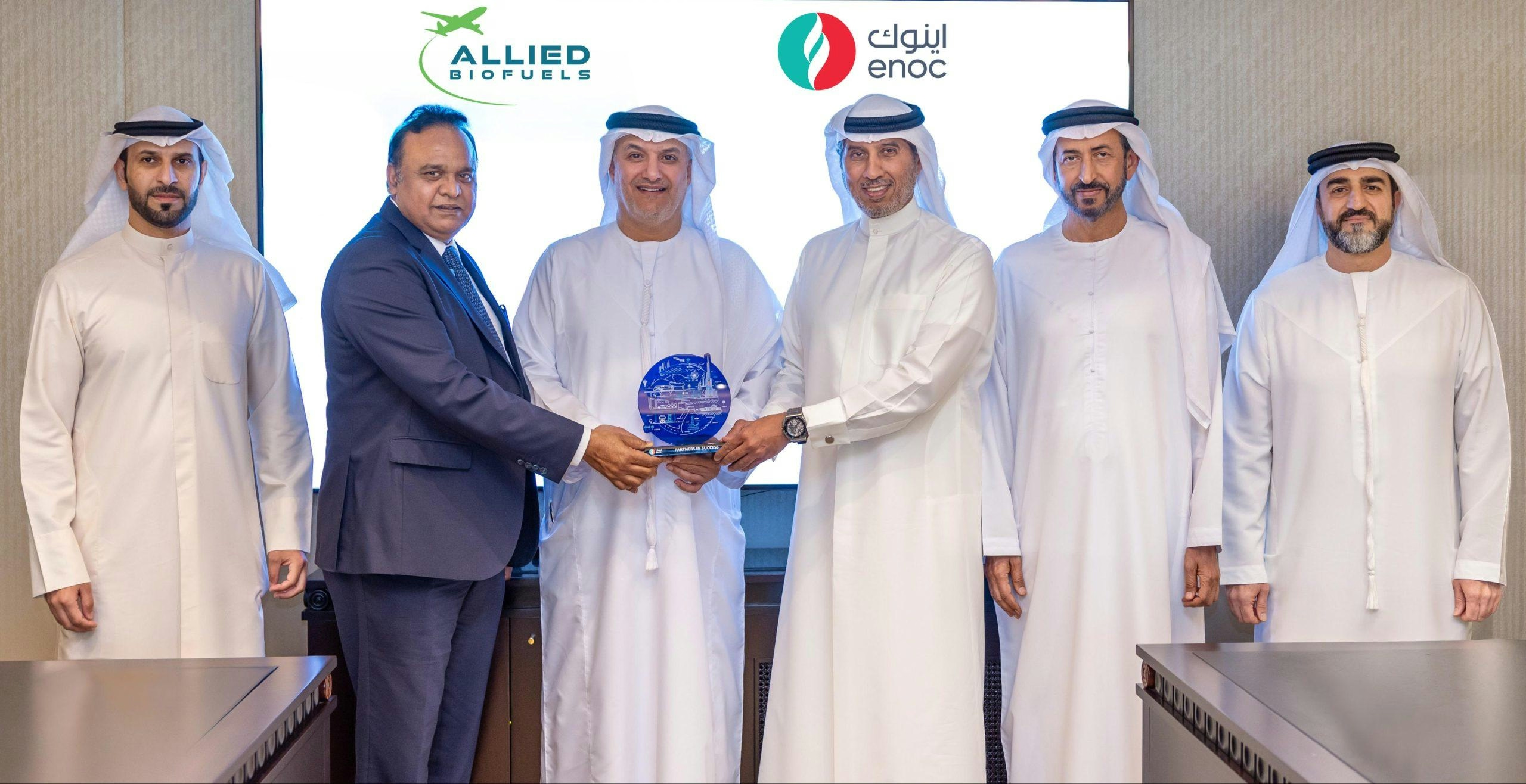
ENOC Group and Allied Biofuels Holding Collaborate to Advance Sustainable Aviation Fuel
Partnership to Support Aviation’s Low-Carbon Transition
Dubai-based ENOC Group, a prominent integrated global energy company, has entered into a Memorandum of Understanding (MoU) with Abu Dhabi’s Allied Biofuels Holding to jointly explore the offtake and distribution of Sustainable Aviation Fuel (SAF) and Electro-synthetic Sustainable Aviation Fuel (e-SAF). This collaboration aims to serve local, regional, and international markets, marking a significant milestone in the aviation sector’s shift toward lower-carbon energy sources.
The agreement outlines the formation of a dedicated working group tasked with evaluating the commercial viability of a long-term distribution framework for SAF and e-SAF. These fuels are slated to be produced at Allied Biofuels’ forthcoming integrated facility in Uzbekistan. Both parties intend to finalize a formal supply contract ahead of the facility’s operational launch, reinforcing their commitment to sustainable aviation.
Strategic Importance and Industry Context
Sustainable Aviation Fuel is widely regarded as one of the most scalable near-term solutions for decarbonizing the aviation industry. However, global demand currently exceeds production capacity. ENOC, as a leading regional supplier of aviation fuels, is well-positioned to help bridge this gap. Allied Biofuels’ Uzbekistan facility is designed to produce both SAF and e-SAF, aligning with the United Arab Emirates’ sustainability objectives and the broader international aviation community’s efforts to reduce emissions.
Hussain Sultan Lootah, Group CEO of ENOC, highlighted the necessity of a collaborative approach across the entire value chain. He stated, “Developing a national SAF ecosystem requires the full value chain to scale together, from production and certification through to distribution and reliable offtake. This agreement reflects ENOC’s strategic commitment to advancing sustainable energy solutions that are aligned with the UAE’s Sustainable Aviation Fuel Roadmap 2030 and Net Zero 2050 Strategy. We are focused on making Sustainable Aviation Fuel commercially viable, operationally dependable, and central to the UAE’s net-zero aviation transition while ensuring that the nation remains at the forefront of clean aviation on a global stage.”
Alfred Benedict, Managing Director of Allied Biofuels Holding, emphasized the significance of the partnership, noting, “ENOC Group is a highly respected energy leader with deep aviation fuel expertise and strong regional distribution capability. This MoU is an important step in developing a credible pathway for SAF and e-SAF from our Uzbekistan facility to local, regional and international markets. As aviation accelerates its transition to sustainable fuels, Allied Biofuels is focused on building a reliable, scalable and commercially viable supply platform that can support long-term decarbonisation across the sector.”
Challenges and Market Dynamics
Despite the promise of SAF, the collaboration faces considerable challenges, including high production costs and the need for substantial investment in advanced technologies and infrastructure. While the agreement is expected to generate increased interest from airlines and aviation companies seeking sustainable alternatives, concerns persist regarding the availability and logistics of SAF supply chains.
The competitive landscape is evolving rapidly, with other biofuel producers such as Bayer and BP forming strategic alliances to meet growing demand. Airlines like Swiss International Air Lines have also partnered with SAF technology firms such as Metafuels. Additionally, global supply dynamics are influenced by the United States, which has been exporting significant volumes of renewable diesel and other biofuels.
ENOC Group’s active engagement across the SAF supply chain—from production to distribution and offtake—underscores its ambition to serve as a strategic enabler of a lower-carbon aviation sector both regionally and globally.

Etihad Airways Suspends Airbus A380 Flights on Key Route

Aditya Birla Group Seeks Approval for Aircraft Leasing in GIFT City

Qatar Airways Highlights Innovation and Connectivity at Arabian Travel Market 2026

Hong Kong's Five-Year Plan Includes Andrew Fan's Aircraft Parts Processing Hub Proposal

ACIA Aero Leasing Delivers ATR72-600 to Air Nostrum

RTX Appoints Jill Albertelli as Head of Pratt & Whitney

TAT Technologies Joins Beyond Aero Hydrogen Aircraft Program

AURAK Study Highlights Barriers to Air Taxi Adoption in Emerging Economies

Xiamen Air Selects Altitude for 787 Maintenance at Heathrow

Etihad and Swissport Extend Global Partnership
