
Orchestrer les insights d’IA pour les transformer en actions

Tendances
Categories
Expert Explains Why the Il-96 Will Not Revive Russian Airlines
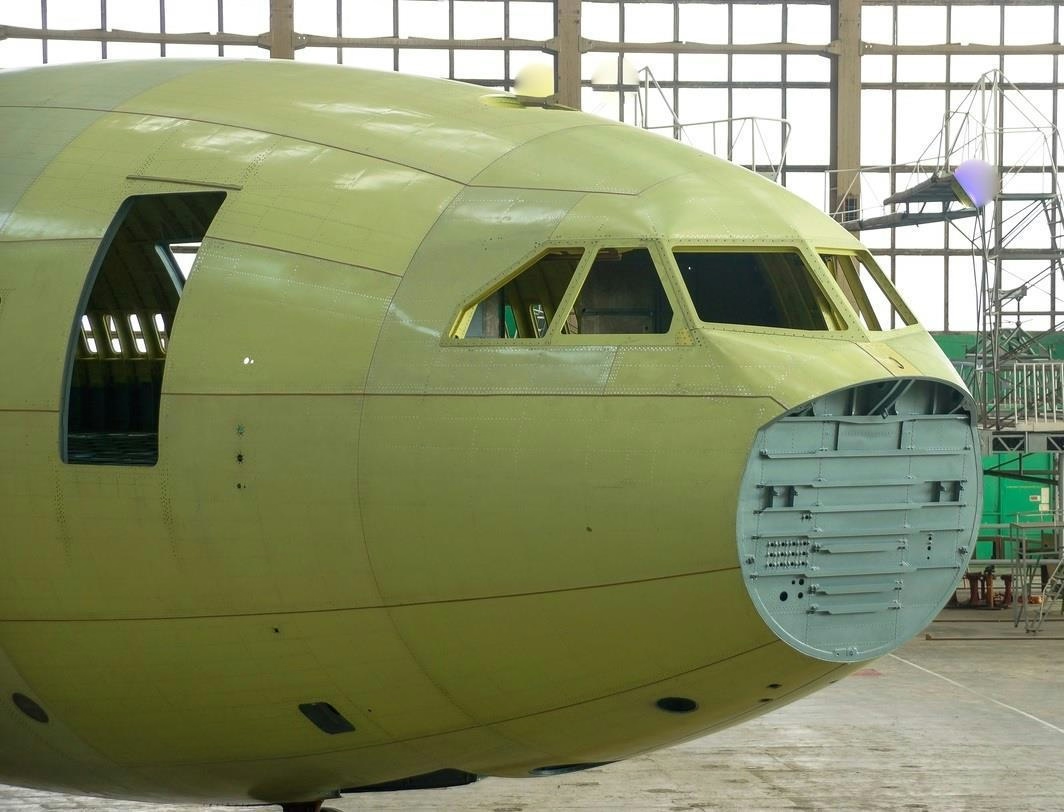
Expert Explains Why the Il-96 Will Not Revive Russian Airlines
Operational Challenges and Production Constraints
Russia’s expansive geography necessitates the use of wide-body aircraft within its aviation sector. However, industry experts remain pessimistic about the Il-96’s potential to become a cornerstone for the country’s commercial airlines. Andrey Patrakov, head of RunAvia, highlights the significant operational difficulties associated with the Il-96. He points out that wide-body aircraft like the Il-96 present more complex repair challenges compared to smaller planes, complicating their maintenance and reliability. Furthermore, production rates are notably low, with approximately one new Il-96 manufactured annually. The majority of these aircraft are reserved for the presidential fleet or other state functions, leaving a limited number available for commercial use.
Impact of Fuel Crisis and Leasing Limitations
The ongoing fuel crisis exacerbates the challenges faced by Russian carriers. Recent flight suspensions to destinations such as Cuba, attributed to refueling issues, illustrate the broader operational obstacles confronting the industry. In this context, the Il-96’s scarcity and demanding logistical requirements diminish its viability as a solution to the sector’s difficulties. Patrakov also expresses skepticism regarding the effectiveness of “wet leasing” arrangements, where aircraft are leased along with crew and maintenance services from foreign operators. He notes that Aeroflot’s recent reliance on wet leases is unlikely to produce significant change, as aircraft merely shift between companies. Moreover, sanctions prevent European and American airlines from providing aircraft on a wet lease basis, rendering such measures isolated and insufficient as systemic remedies.
Market Response and Industry Developments
Reactions within the market to the prospect of reviving the Il-96 have been mixed, with widespread doubts about its competitiveness against more modern and fuel-efficient aircraft. In response, some carriers are extending the operational lifespan of their existing Western-made fleets or exploring alternative options. For instance, Ural Airlines continues to operate its Airbus A320-family jets, while S7 Group has tentatively agreed to begin incorporating Russian-made Tu-214 aircraft starting in 2029. Meanwhile, the Voronezh Aircraft Production Association (VASO), the Il-96’s manufacturer, has announced plans to expand its runway to facilitate testing of wide-body aircraft. Nonetheless, industry observers caution that such infrastructure enhancements are unlikely to overcome the fundamental challenges posed by sanctions, disrupted supply chains, and the scarcity of modern components.
Geopolitical Context and Industry Outlook
The broader geopolitical tensions and persistent Western sanctions continue to overshadow Russia’s civil aviation sector. Airlines face restricted access to essential parts, maintenance services, and new aircraft, further complicating recovery efforts. Given the Il-96’s limited production capacity and operational constraints, experts concur that it is unlikely to serve as a transformative force in revitalizing the industry. While the Il-96 remains a symbol of Russian aerospace capability, prevailing economic and geopolitical realities severely limit its role in addressing the sector’s current struggles.

Etihad Airways Suspends Airbus A380 Flights on Key Route

Aditya Birla Group Seeks Approval for Aircraft Leasing in GIFT City

Qatar Airways Highlights Innovation and Connectivity at Arabian Travel Market 2026

Hong Kong's Five-Year Plan Includes Andrew Fan's Aircraft Parts Processing Hub Proposal

ACIA Aero Leasing Delivers ATR72-600 to Air Nostrum

RTX Appoints Jill Albertelli as Head of Pratt & Whitney

TAT Technologies Joins Beyond Aero Hydrogen Aircraft Program

AURAK Study Highlights Barriers to Air Taxi Adoption in Emerging Economies

Xiamen Air Selects Altitude for 787 Maintenance at Heathrow

Etihad and Swissport Extend Global Partnership
