
Orchestrer les insights d’IA pour les transformer en actions

Tendances
Categories
FAA Investigates Mid-Air Engine Collision on Delta Flight 2255
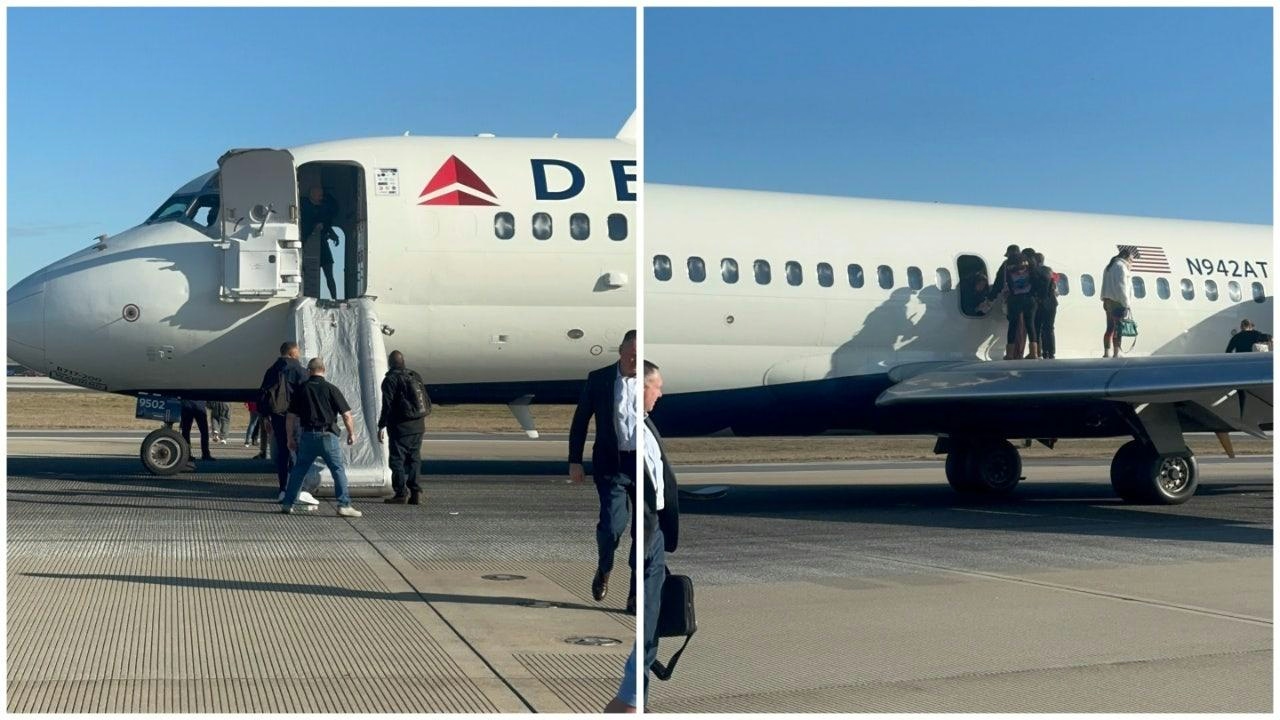
FAA Investigates Mid-Air Engine Collision on Delta Flight 2255
Incident Overview and Immediate Response
Delta Air Lines Flight 2255, traveling from Salt Lake City to Detroit, was compelled to return to Salt Lake City International Airport shortly after takeoff on Saturday due to a bird strike impacting one of its engines. The Federal Aviation Administration (FAA) has initiated a formal investigation into the incident, which occurred during the aircraft’s initial ascent phase. According to a Delta spokesperson, the flight made contact with a bird soon after departure, prompting a safe return and taxi back to the gate. All 157 passengers were subsequently rebooked on an alternate flight and reached Detroit several hours later without any reported injuries.
Rising Frequency of Bird Strikes and FAA Concerns
Although bird strikes remain relatively uncommon, their frequency has been on the rise. An FAA report published in June 2025 documented a 14 percent increase in wildlife strikes between 2023 and 2024. The agency attributes this trend to a combination of expanding wildlife populations—particularly larger bird species adapting to urban environments—and increased air traffic volumes. The report, Wildlife Strikes to Civil Aircraft in the United States 1990–2024, emphasizes the necessity for continuous assessment of airport operations and their interactions with local wildlife to mitigate risks.
Broader Safety Implications and Parallel Investigations
The FAA’s inquiry into Flight 2255 coincides with intensified scrutiny of near-miss incidents at U.S. airports. Notably, a separate investigation is underway concerning a close encounter at New York’s John F. Kennedy International Airport involving Delta Flight 2255 and another passenger aircraft operating on parallel runways. Both flight crews responded promptly to onboard alerts and executed safe landings, yet the incident has raised questions about the coordination between pilots and air traffic control in managing simultaneous runway operations.
This event follows a series of similar near-misses, including a recent case involving Southwest Airlines flights at Nashville International Airport. The FAA is currently reviewing adherence to safety protocols and evaluating whether additional measures are necessary to prevent future occurrences.
While the bird strike on Delta Flight 2255 did not result in injuries or apparent procedural breaches, the aircraft was temporarily taken out of service for thorough inspection and repairs. These ongoing investigations highlight the complex challenges faced by regulators and airlines in maintaining safety amid increasing air traffic and evolving environmental conditions.
As air travel continues to recover and wildlife populations expand, the FAA and the aviation industry confront growing difficulties in safeguarding passengers and minimizing disruptions caused by both natural and operational hazards.

Etihad Airways Suspends Airbus A380 Flights on Key Route

Aditya Birla Group Seeks Approval for Aircraft Leasing in GIFT City

Qatar Airways Highlights Innovation and Connectivity at Arabian Travel Market 2026

Hong Kong's Five-Year Plan Includes Andrew Fan's Aircraft Parts Processing Hub Proposal

ACIA Aero Leasing Delivers ATR72-600 to Air Nostrum

RTX Appoints Jill Albertelli as Head of Pratt & Whitney

TAT Technologies Joins Beyond Aero Hydrogen Aircraft Program

AURAK Study Highlights Barriers to Air Taxi Adoption in Emerging Economies

Xiamen Air Selects Altitude for 787 Maintenance at Heathrow

Etihad and Swissport Extend Global Partnership
